On the Singular Case of the Missing Wheel

Published Post author


We have not dealt with the archeological evidence regarding the transition of the Venethi lands to Slavic lands thus far and for good reason.

Archeology is necessarily a study of material culture and material culture is, well, not necessarily biological or ancestral.  Were a hypothetical modern homo sapiens to leave this earth for the prairies of Manitou and were he to be buried with his “stuff”, an archeologist, call him A, doing a dig 1,000 years from now – pretty much anywhere in the Western (and not only) world would have to conclude that our hypothetical Billy Bob was, in fact, Chinese.  The copious “Made in China” labels would clearly attest to that fact.  If one were to look beyond mere labels and instead insist on examining the “substance” of the finds – as an academic competitor of our future archeologist might claim we should – this latter (and, of course, latter day) archeologist, let’s call him B, might conclude that by the early 21st century we were all firmly American all over the world, what with our Old Navy clothing, our Katie Perry music albums and our Hollywood movies.  Both A and B would be, of course, wrong.

Archeology, as can thus be readily seen, cannot tell us much about the people who lived in a given place if the question that we are asking it to answer for us is of the specific biological identity of the owners of the material in question and where we otherwise know little of such owners.  It would be perfectly acceptable to adjudge an archeological dig as more “Olmec” or more “Indian” – there we are dealing with two separately identified (and geographically dispersed) cultures, each rich in findings also separate and independent from the dig in question.  But how does one determine whether something material is Slavic where one has not defined what objects can be undoubtedly associated with Slavs (and, in some cases, where one has not been able to even come up with the definition of what is a Slav – as some historians and other academics have failed to do).  How does one determine what belongs to culture A vs culture B where both live right next to each other?  How does one determine whether a sample is, e.g., Venethic, where one is unable even to answer who the Venethi were?  For all these reasons, we have been reluctant to tread in this area (similar arguments apply to linguistics which we will tackle but not now).

Nevertheless, one argument that is frequently made about the Venethi to Slav transition is of interest and we feel may be brought up at this juncture because it is both so utterly typical of similar such arguments and because it conjures a counterexample which comes to us, curiously, out of the same time in question but out of another part of the “Venethic world.”

The argument involves a wheel.  More precisely, the argument involves a potter’s wheel.  Sometime at the time of or shortly after the migration of the various Germanic warrior bands (maybe, in some cases, tribes) into the Roman Empire, the area in question suffered a “cultural collapse” which when it began to be reversed it began to be reversed slowly and from a lower civilizational niveau.  The collapse has been associated with the departure of these Germanic bands (or tribes).  The slow reversal with the alleged arrival, settling down and picking up the pieces of what was left by the Slavs.

One of the first and most striking effects of culture collapse typically is the loss of access to the razorblade

In this respect we see a disappearance of sophisticated wheel-based pottery and then a reappearance of simple, hand-made pottery.  The potter’s wheel does not reappear in Central Europe until much later in time.

The Germanic Chieftain NIelsenric demonstrates the use of wheel pottery to Prislavia - a primitive Slav female

The Frankish chieftain Drebo NIelsenric demonstrates the use of wheel pottery to Prislavia – a primitive but highly attractive Slav female

So, let us first note the typicality of this explanation in its depiction of the Slavs as the (relatively) more primitive people.  Once that depiction or, really, assumption is made, the story of the cultural change suggests itself, of course.

The Polish Piast unable to figure out what to do with the wheel is seen clutching the more familiar sword in hopes of mitigating his perplex ions - it's not clear what happened thereafter

The Polish Piast unable to figure out what to do with the wheel is seen clutching the more familiar sword in hopes of mitigating his perplexions – given his moniker (Wheelwright) he may have eventually gotten “it”

Now, one might think, however, that to draw any definitive conclusions from one specific geography may be rather precarious and that if one were not inclined to examine the effects of the collapse of empires in general before opening one’s mouth, at a minimum, one ought to review the happenings around the Roman Empire at the time of its collapse.

(BTW if one ever suggests that, perhaps, just perhaps something different is at work, the word “defensive” appears on the horizon with the words “nationalistic” and “chauvinistic” close behind, at first on stand by, but clearly battle ready – try it out for yourselves – in truth, this whole experience with benevolent academic paternalism makes it easier to relate to the African experience).

We do not usually quote recent sources as we try to dig into the original records and see for ourselves “what is out there”.  However, in this case, given our archeological tangent, we think it fair (and so as to preempt any suggestions of us undertaking any digs ourselves) to make an exception.  The following comes from the article by the cherubic (if slightly more hirsute than your typical aerial baby) Bryan Ward-Perkins  “Why did the Anglo-Saxons not become more British?” in the English Historical Review (published by the Oxford University Press in 2000).  Doctor Perkins is a member of the faculty of history at Oxford University and, as per his information stub, is both a historian and an archeologist by training.  We apologize to Doctor Ward-Perkins upfront for the inevitable flood of emails, then calls, then faxes, then letters that is destined to follow this here publication, as Doctor Ward-Perkins will be called to “recant”, “correct”, “deemphasize” or, at the very least ,”limit geographically” his findings and conclusions (in case this fails, another, more pertinent (of course) authority will be, properly incentivized and then trotted out to contest the below – wanna bet?).  In the meantime grab a beer and read on:

[I]n Britain, and again in contrast to Gaul, Roman ways of doing things disappeared peculiarly fast, and with exceptional totality.  Towns, coinage, architecture in brick and stone, complex industries, and even basic technologies, like the use of the wheel for pottery production, all vanished during the fifth century, probably along with widespread  literacy in Latin… towns themselves disappeared and were sometimes replaced by iron-age hill-forts as political centers; almost all signs of economic sophistication (such as specialized mass-production industries and the use of coin) disappeared.

(Oh, Professor Ward-Perkins also published “The Fall of Rome and the End of Civilization”) .

But wait! (say, the Scientists of the Wheel (i.e., the SOFTWs)):

“An inferior group of invaders – this time the Anglo-Saxons playing the role of the primitive Slavs replaced the local Roman (even if, by then, sub-Roman) population!  Well, duh!  This just proves our point!”

The Professor then says: “This happened autonomously within western Britain, long before the Anglo-Saxons reached his area, even in seemingly heavily romanized regions like modern Gloucestershire. 

jiminius

SOFTWs win the Chirping Jiminy Award for the week (straight from hands of the Jordanes Doubters). Are the Sons of Beeches the next winners?

(BTW The remaining portion of the above article will make it clear that the Professor is not exactly a crackpot fascist or Welsh (or any other) “nationalist” – attaching, for this purpose, all the vitriol that our opponents would, to that term).

And, we can add from ourselves, this too happened in the future Kingdom of Gwynedd (remember the cousins of those Venethi Ceasar drove away from Bretagne? They were, oh yes, in that other Bretagne).[1]

Does this mean that the same happened in Central Europe to the Venethi?  Maybe.  Maybe not (the Professor Doctor notes himself that Gall was different, what with the Franks looking after things).  But, one would think, it behooves the scientists who allegedly study these things (with, we suspect, passion and prejudice though) to at least examine what entails a cultural collapse and whether a cultural collapse must necessarily be indicative of a population exchange –

?

– that it must when such a population exchange is a presupposed conclusion is another matter, of course.

[1] What is the first known of the name Gwynedd?  Oh, yes, here its: “Cantiorix hic iacit/Venedotis cives fuit/consobrinos Magli magistrate“.  And by the way, Venethi may have been a Wallach-like term to denote the “Others” – not one with a German origin but rather with a Celtic one.   More on that soon.

Copyright ©2014 jassa.org, All Rights Reserved

October 9, 2014

On Ventspils & Wyndow

Published Post author

We will now remove ourselves from the notoriously dreary and cold lands of the Polish Gods Jassa, Lado and Nia and travel North to the perennially freezing and wind-swept territories of the Curonian peninsula.

Here in the early 13th century, in what is today’s Latvia, the German monastic order of the brotherhood of something or other was enthusiastically initiating the local Livs, Letts and Estonians into the doctrine of the Christian faith and the reality of what happens to those who do not reciprocate the fervent knights’ whole-hearted belief in their Middle Eastern saviour.

The German crusaders liked their phallic symbols red... bright red

The German crusaders liked their phallic symbols red… bright red

We know of these events because traveling along with the German knights was a German priest who, while staying the background of the fighting, was able to pen some of these events down in his Livonian Chronicle.  Since the priest’s name was Henry (or, really, Heinrich), the chronicle became known as the Heinrici Cronicon Lyvoniae.  It was the first such chronicle dealing with the Latvians and Estonians though it was quickly followed by others.

While engaged in the pious tasks of pillaging and torturing in the name of their Lord and Master Josh von Bethleheim, these Shriners with an attitude came across a simple people who suffered many indignities at the hands of some of the local populace.  These simple people were known to the German crusaders as the Wends and, Henry tells us, they were an extremely impoverished people who had been kicked out of their prior abodes on the Venta river, then been driven out again by the Curonians, and straight into the arms of the waiting arms of the Crusaders.  Thereafter, the Wends, faced with some hostile Latvians, it seems threw in their lot with the Germans playing the role of early day Tlascalans to the Latvians’ Aztecs.

Latvian locals, Henry was so fond of converting

Latvian locals, Henry was so fond of converting (except the one on the right – that one can just be chopped up)

There are only two things remarkable about this story (unfortunately, in the context of the times, the brutality of the situation is not one of them).

The First Interesting Thing

One is that, in addition to giving their name to the town of Wenden, today’s Ventspils, and the river Venta, as per another and later Livland Chronicle, these Wends also gave Latvia its national flag when they appeared at the city gates under “a red banner cut through with white after the manner of the Wends” (see below in bold).  Specifically, and more poetically, let us quote a later chronicle, so inventively called the Livländische Reimchronik (9219 bis 9233):

Von Wenden was zû Rîge komen
zûr lantwer, als ich hân vernomen,
ein brûder und wol hundert man:
den wart daß mêre kunt getân.
die quâmen hovelîchen dar
mit einer banier rôtgevar,
daß was mit wîße durch gesniten
hûte nâch wendischen siten.
Wenden ist ein burc genant,
von den die banier wart bekant,
und ist in Letten lant gelegen,
dâ die vrowen rîtens pflegen
nâch den siten, als die man.
vor wâr ich ûch daß sagen kan,
die banier der Letten ist.“

BTW That is why it is called the REIMchronik – no great magic there.

What is interesting about this is that virtually all of the northern Slavic countries and cities at the time had a red-white motif in their flags and banners (including the flags of Poland and Bohemia) – and this was true whether they were within the realm of Brandenburg or of the Teutonic Order or of the Brothers of the Sword in Latvia.

The Other Interesting Thing

The other, seemingly, remarkable thing about these folks is their name.  Wenden.

Some authors have seized on it as a name indicative of the potential latter day Veneti.  In that telling, these Wends 1) were not Slavs 2) may have been the actual Veneti and 3) being in Latvia, were localized away from the area claimed by the Slavic autochtonic theorists of Poland and Bohemia.  A trifecta.

How silly this is, is easy to see but, unfortunately, for some it also has to be demonstrated.

As to item 3), it would seem that locating ancient Slavs away from the ancient haunts of the Veneti on the Vistula would be useful in bringing down the autochtonic theories.  However, locating ancient Veneti away from the ancient haunts of the Veneti should suggest only that, perhaps, one has not located the ancient Veneti after all (at least not if by that term is meant some form of a non-Slavic Veneti Restpopulation).

As to item 1) we have no basis for speculating whether the Wends of this story were or were not Slavs, Balts, Estonians or someone else entirely (almost – see below).  No record of their language is found anywhere. Nor would such a record be proof of their ethnicity were it ever to be found or be somehow extracted since it ought to be clear that, after living for years among the Balts, these people might well have changed their tongue to a Baltic one.

Further, as to item 2) above, these folks may well have been Slavs and also Venethi if by Slavs one understands descendants of some of the Venethi.  Consequently, item 2) proves nothing in and of itself to push the needle one way or another.

Having said all this, we cannot help but notice too that many of the German knights and missionaries telling the story (including most notably, Henry) arrived in Riga from areas in Saxony, a province of the Empire bordering on formerly Slavic lands which contained Slavic populations for years after their conquest by the Franks.  It would not stretch credulity to suppose that the chronicler of this episode, Henry, himself may have been chosen for this mission to the Far European East for his knowledge of and contacts with the local non-Germanic Wends of the Elbe-Saale area.

In any event, Saxon Germans had previously encountered Slavic Wends aplenty.  if they identified a Latvian tribe as “Wends” a simple explanation of the episode might be that these too were (Slavic) Wends.  We learn, after all, that they were persecuted and ejected by the local Baltic populations who may have perceived them as “different” (or, at least, as different enough).  Certainly Latvia is not far at all from Russia and a tribe of Russians may have wondered into areas they should not have wandered into.

We already know from prior blog entries that the Finnish name for Russia is Venäjä.  Let us now also mention that the Estonian word for Russia is Venemaa.  Consequently, the designation of these people as Wenden here could have been simply an indication of their Slavic identity.  In fact, we specifically know that the Estonians did come into contact with these Wends as the last we hear of the Wends in Henry’s Chronicle is that they are living together with the Swordbrethren knights (hmmmm….) in the town of Wenden and that the town is then stormed by marauding Estonians (do not worry, the knights, their mission being just, of course, prevail).

Incidentally, the Estonian name for the Lettgallian area around the town of Wenden is Vonnu and the Latvian name for the same area is… Cesis. Oh, have we forgotten to mention the Czech (Bohemian) flag?  Here it is (historically, same as Polish – the blue in the current version is a modern addition) in red with just enough of a tinge of white:

Finally, if one is genuinely looking for the ancestors of “a large and populous” people located on the Vistula in the 3rd/4th (?) century, it seems strange to latch onto a small Wendish tribe somewhere in Latvia in the 12th century but ignore or dismiss, often a priori, the large and populous Wendish tribes on the Vistula in the 6th century.  If one is genuinely looking…

We leave with some inconclusive musings on the matter by Johann Daniel Gruber who published the Livonian Chronicle of Henry’s in 1747 (Latin to German translation by Arndt).

It seems Gruber was influenced, inter alia,  by the views of the Italian adventurer Alessandro Guagnini and his (or, if you believe Guagnini (aka Gwagnin) stole the book from Stryjkowski who served under Guagnini, Stryjkowski’s) “A Description of Sarmatian Europe”.  Note Gruber calls both Letts and Wends “Slavs” so we have to take this with a grain of salt.  (We mention Guagnini/Stryjkowski only because we will return to him/them when discussing more about the Venethi).

gruber

***

For more on this topic, please see “Argument 6” from a later post (dealing with Schenker’s book which has the same dumb argument) which I also copy here with some cleanup:

Argument 6
Quantum Arguments

The last argument that Schenker makes is rather bizarre.  He uses the report of Henry of Livonia “who described a clearly non-Slavic tribe of the Vindi which lived in Courland and Livonia… [and whose people] may well be the descendants of the Baltic Veneti.”

Schenker’s statement is puzzling and one has to wonder how any thinking person could have made it.

First of all Schenker (whose citation practice leaves much to be desired) provides zero evidence to support his claim that this tribe was “clearly non-Slavic”.  There is nothing clear here because there is nothing here at all.  Schenker just asserts this.

For Schenker’s argument to hold, we would have to accept a number of very questionable hypotheses were true:

  1. that the Veneti were different from the Balts (as reported by Heirich) but yet were not Slavs;
  2. that these non-Slavic Veneti did in fact live near the Baltic;
  3. that the same non-Slavic Veneti survived as a distinct people for about a millenium, all along avoiding any Germanization, Gothicization, Balticization or Slavicization;
  4. that the continued existence of such a tribe went about unnoticed and unremarked on for the duration of the same millenium until one Heinrich of Lettland stumbled upon them in the first half of the 13th century;
  5. that this Heinrich, a German crusader who must have been intimately aware of the practice of his people (and his presumably) calling the Slavs of his time Wenden, would have called some other non-Slavic tribe by that exact same name (!);
  6. that Heinrich would have done so with respect to a tribe that he encountered in the Baltic-Slavic borderlands; and that
  7. that Heinrich, a writer who conveyed much about the life of the local tribes, would have considered his use of such nomenclature for a “clearly non-Slavic” tribe to be something entirely unremarkable to the point of not observing upon the oddity of the existence of these “clearly non-Slavic” Wends to his readers.

Oh, and that these Wends’ “colours” were the same as those of the other Western Slavic tribes such as Poles or Czechs (as per the later Livländische Reimchronik we hear of  “a red banner cut through with white after the manner of the Wends.”).

Now, to make this kind of an argument is not only to strain the laws of historical probability but to leave them by the wayside entirely.  Here we really are in the world of quantum history and bad faith.

(p.s. otherwise, the book is ok but if we are to take a linguist’s word as to the relationship between the Veneti and the Slavs, we’ll go with Vasmers).

Here is the link to the full post.

Copyright ©2014 jassa.org, All Rights Reserved

October 7, 2014

Polish Gods Part I

Published Post author

We have a relatively thorough discussion of eastern Slavic Gods from Nestor.  We also have commentaries on the western Slavic religious practices from Adam of Bremen, Thietmar, Helmold and Saxo Grammaticus.  However, the central areas of Slavdom, Poland and Bohemia have often been thought of relatively empty areas as regards Slavic religious practices.

Palania – the scrivener must have missed the Polonia memo

There are usually a variety of reasons given for this situation. Some have speculated that the Slavs in those countries, not having come into contact early enough with either Romans or Germans existed in a kind of primitive society which simply found no room for detailed pantheons, involved myths or highly developed heroes.   Others have noted that the early influence and penetration of the Christian Church brooked no dissent with any local, primitive practices quickly and thoroughly stamped out.  For example, the first contemporaneous mention of  Poland was in 965 or thereabouts but already in 966 the “Baptism of Poland” took place whereby the first historical ruler, Mieszko I, converted the country to Christianity.  Whatever simple beliefs the populace possessed were thus thought to have been dealt with within a year or so of the country appearing on the world stage.

Christ arrives in Poland, offering the country a big hug

Giant Christ arrives in Poland, offering the country a Big Hug (a welcome committee is seen on the lower right approaching with some trepidation)

This, however, is far too clean a picture.  While it is true that Poland’s conversion to Christianity was almost instantaneous, as a matter of edicts and laws passed (and helped by the likely contemporaneous violence inflicted), we have to remember that the early Piast state was a rather flimsy creation and, ager the spectacular expansion of MIeszko and his son Boleslaw I, it quickly came under assault by all the powers of the day.

John Paul II responds on behalf of Poland - hug received and acknowledged

Giant John Paul II accepts the Big Hug on behalf of Poland – a love fest for over a thousand years!

As a result most of the state structures collapsed and indeed there was even a so-called “pagan reaction” in the early 11th century whereby Christian clerics were killed or driven off and the whole country plunged into the chaos of civil war and foreign invasions.  While subsequent Piast dukes managed to put most of the country back together, the disastrous 1138 division of Poland at the hands of Boleslaw III resulted in a new break up of the country that nearly led to its final demise.  It was not until the reigns of Wladyslaw the Elbowhigh and Casimir III that the kingdom was saved and strengthened, albeit in a rump state having lost Silesia and Pomerania for the next 600 plus years.

Meanwhile in New York City, things were not going so well

It was only in that rump, barely recognizable state that emerged in the 13th and 14th century that the groundwork was laid for a more enduring project via the establishment of a much strengthened central authority.  It was that central authority that contained now a rebuilt ecclesiastical component and it was that component that for the first time could and, therefore, begun to take its Christianizing mission seriously.  Bishops and priests looked around to see what was then going on in their country and what was going on they did not like.  Thanks to their new laws, statutes and heart-felt sermons we were able, for the first time to get a picture of the pre-Christian spiritual life in Polish central Europe.

Unsurprisingly, the new stability and wealth also brought forth the works of the nation’s first “professional” chroniclers who gave us a broader more historiographic and sometimes more secular view of the country’s pre-Christian roots.  Although virtually all of such sources are dated to the 14th or 15th century the practices they describe are ones that were alive while the authors wrote – of course, we cannot tell whether such practices were also present at the birth of the Polish state some 400 years earlier or whether they were merely a remnant or a new form thereof.


Annales of Jan Długosz
(1450-1480)


Let us begin with the court chronicler Jan Dlugosz and his Annales seu cronicae incliti Regni Poloniae (Annals or Chronicles of the Famous Polish Kingdom).  Then we will work our way backwards as far as we can. This is what he says (from the Codex Regius version of the Annales (of Stanislaw Augustus Poniatowski) circa 1495-1515 – we will spare you the text version of the latin – you can read it for yourself from the manuscript below):

joannisannales

  Let us quote Dlugosz:

“This too is known about the Poles that from the beginning of their people they were idolaters  and believed and honored gods and goddesses, namely Jupiter, Mars, Venus [Greek Aphrodite], Pluto, Diana [Greek Artemis] and Ceres [Greek Demeter], having fallen into the errors of other nations and tribes.  Jupiter they called in their language Jessa, believing that from him, as the highest of the Gods, they receive all the earthly blessings and all occurrences the unfortunate ones but so also the serendipitous.  To him, therefore, more than to the other Gods did they give the greatest praise and the most frequent offerings.  Mars they called Lada.  The imagination of poets made him a leader and a war god.  The prayed to him for victory over their enemies and for courage for themselves, honoring him with the wildest rites.  Venus they called Dzydzilelya and thought her to be the goddess of marriage, so that they asked her to bless them with children and to give them a richness of sons and daughters.  Pluto they called Niya, believing him to be the god of the underworld and the guardian and caretaker of souls, when they leave the body.  To him they prayed that they should be let after death into better dwellings in the underworld.  To such souls/to this god they built in the city of Gniezno the most important temple and pilgrims journeyed there from everywhere.  Wheres Diana, which was thought according to the pagan beliefs to be both a woman and too a virgin, was venerated by matron mothers and virgins alike placing wreaths on her statutes.  Farmers and those who led an agricultural life honored Ceres, and they raced to offer to her grain seeds.  For a god they also took the “weather [Pogoda]” and called the same Pogoda likewise, that is the giver of good air.  There was also the god of life called Sywie.  And because the state of the Lechites happened to arise in a country with many a wood and forest and such country was believed by the ancients to have been inhabited by Diana and that Diana was their [i.e., the ancient dwellers’ of Poland] mistress, whereas Ceres was seen as a mother and a goddess of plentiful harvests which the country needed, therefore these two goddesses: Diana which in their tongue was called Dziewanna and Ceres called Marzanna were especially venerated and worshipped”

joannisgottentotal2

He goes on to say:

“Thus it was that for these Gods and Goddesses the Poles built temples and statues, ordained priests, dedicated sacred groves in appropriate and beautiful places so as to honor these [Gods and Goddesses] and bow before them.  There men and women came together together with children and gave sacrifices and burned domestic flocks and cattle and other animals, and on occasion people prisoners from battle.  They also had a superstitious rite of making offerings to placate their native Gods and, on certain days and times of year they had great festivals, for which people of both sexes were called to towns from villages.  These festivals they celebrated with debauched singing and dancing, sometimes clapping, lewd twisting and other debauchery in songs, games and salacious deeds; while at the same time they called on to the above-mentioned Gods/Goddesses in accordance with their custom.  Rites such as those and some of their relics, even though Poles, as is known, have almost five hundred years ago accepted Christianity, they continue to practice to this day, every year during the Green Holidays [Green Week/Pentecost/polish Zielone Świątki, german Pfingsten], recalling pagan idolatery with a festivity called in their language Stado [i.e., Herd], because great multitudes of people come together for it, who then divided into herds or groups of crazed participants and sybarites, happily celebrate these holidays with partying and leisure” [the text then continues regarding the circumstances of the baptism of Poland – for that see here]

[The Green Holidays were the main feast of spring in early May (see here for information on the Bald Mountain festivities) with Christianity replacing them with the Pentecost (i.e., in the Christian version the descent of the Holy Spirit among the Apostles and other early Christians).]

Here is another example from the 1450 manuscript:

About the author:  Joannes Dlugossius, i.e. & aka, Longinus (1415-1480) is considered the father of Polish historiography.  Długosz’ father was given an estate as a result of his accomplishments at the Battle of Grunwald.  Długosz was educated at Krakow University (then called an academy) and, thereafter, served as a secretary and confidante to the Cracow archbishop Zbigniew Olesnicki.  Afterwards he worked in the service of the King of Poland, Casimir IV Jagiellonczyk the, including as the educator of his children and an ambassador (including, among others, to Rome, Bohemia, Hungary).  Before the end of his life he was to become the archbishop of Lviv, alas he was meant for greener pastures.

For another mention by Długosz of Polish paganism, see his description of the Baptism of Poland in here.


Jan Długosz’s
Insignia seu clenodia regis et regni Poloniae
(1464-1480)


However, regarding Lada, Długosz expressed a slightly different view a few years earlier in a heraldry book he wrote (Insignia seu clenodia regis et regni Poloniae) sometime in the years 1464-1480.  Here he says as follows:

Lada, que ex domo Accipitrum deriuationem sumpsit, deferens babatum cruce signatum et in uno cornu sagittam, in altero retortam, in campo rubeo.  Lada a nominee dee Polonice, que in Mazouia in loco et in villa Lada celebatur, vocabulum sumpsit exinde.

“[following the description of the tamga sign] Lada is a name of a Polish goddess which was venerated in Mazovia in the place and village Lada.”

This is from the Arma Baronum Regni Polonae Erazm Kamień version, Poznań circa 1575 (previously in the Zamoyski Estate (fidei commissum) Library) (here it is Dei not Dee, that is God not Goddess):

klejnotenklein

Note also the “up” and “down” signs, later replaced with an up arrow and down arrow (?). Curiously, in elder Futhark this was the “j” rune (*jēran meaning “year” and also “harvest” and which in English is pronounced Y and the shape of which presumably reflects the ascent and descent of the Sun?).

And this is from the earlier Kórnik manuscript (which has Dee):


Note on The Life of Saint Adalbert (Voytech) in a Manuscript on the Lives of the Saints
(circa 1450) 


Idola polonorum fuerunt ista Alado agyessze.

“The gods/idols of the Poles were the following: Alado, agyessze.”

About the author: That is all there is.  This is literally just a gloss, i.e., a note, written on the manuscript of The  Life of Saint Adalbert.  We know nothing else except that this comes from a Latin manuscript relating to Lives of the Saints (weighing in at 357 pages) at the Petersburg Library and was brought to the world’s attention by Rafal Lubicz.


Postilla Husitae anonymi (aka Postilla Husitae Polonici)
(pre 1450)


Et sic Poloni, adhuc circa Penthecostes Alado gardzyna yesse colentes ydola in eorum kalenda et proch dolor istis ydolis exhibetur maior honor tune temporis a malis christianis quam de deo quia puelle que per totum annum non veniant ad ecclessiam adorare deum, illo tempore solent venire ad colenda ydola.

“Poles even now about the time of the Pentacost honor gods/idols Alado gardzyna yesse… and unfortunately bad Christians honor these gods more than they honor God, because girls/women, who all year do not go to church to honor God, then came to honor these gods/idols.”

About the author: We only know, as per the title, that this was written by a, likely Polish, Hussite priest who, likely, will remain anonymous.  This comes from Aleksander Brueckner in Prace Filologiczne, Volume 4, p. 572, and is ultimately from the Petersburg Library manuscripts. This particular manuscript (Lat. I.Q. 146) was stolen by the Russians likely after the November Uprising around 1833. It was later returned to Poland at the signing of the Treaty of Riga of 1921 concluding the Soviet-Polish War between the Second Polish Republic and the Soviet Union. Unfortunately, it was burned down by the Germans after the Warsaw Uprising in 1944.


Tractatus about Polish Orthography
by Jacob (Jakub) Parkoszowic
(circa 1440)


Nya, quod fuit idolorum

“Every time there was a soft ‘n’ to be written, it was always written with the help of a double ‘y’ before the appropriate vowel…  This writing method was, however, inadequate to differentiate [from other situations], because between ‘Nya‘ which was the name of a [god/goddess/]idol and ‘nia’, a syllable found in the word ‘gniazdo’ [nest], there was no difference in writing.”

This is from the 1830 Samuel Bandtkie edition in Latin:

parkosz

[for more on the topic see here]

About the author: Jacobus Parcossi, Parkosch de Żorawicze, Parkossius was a priest and a four time rector, i.e., Chancellor of (and a one time student at) Krakow University (his four terms of one year each were nonconsecutive, separated by a year under Jan of Dobro, who played the role of Benjamin Harrison in this rectoral sandwich).  His main achievement was the creation of a tractatus (no known title) on Polish orthography, specifically, spelling out rules on the application of Latin letters to Polish phones (as in phonetics, actual phone service was not yet present in Poland). The tractatus survives at Jagiellonian Library in a manuscript from 1460-1470 scribed by one Warzykowski.


Sermones per circulum anni Cunradi
(1423)


Sed proh dolor, nostri senes, vetule et puelle non disponunt se ad oracionem, ut sint digne acecipere spiritum sanctum, sed proh dolor hys tribus diebus qui servandi sunt in contemplacione, conveniunt vetule et mulieres et puelle non ad templum, non orare, sed ad coreas, non nominare deum, sed dyabolum scilicet ysaya lado ylely ya ya.  Quibus dicit Christus: solempnitates vestras odivit anuma mea.  Tales cum dyabolo venerunt, cum eodem [sic] reddeant et nisi peniteant, transient cum yassa lado ad eternam dampnacionem.

“Unfortunately, our old men, old women and girls do not spend much effort on prayers so as to be worthy to take on the Holy Ghost but unfortunately during those three days of the Pentacost that ought to be spent on introspection, there come the old women and the girls not to church, not to prayers, but to dance, not to call God, but the devil, specifically ysaya lado ylely ya ya … those if they do not do penance, will walk with yassa lado to eternal damnation.”

About the author: This quotation is from the Czestochowa manuscript of the Sermons of Conrad (probably Waldhausen?) for the liturgical year.  The year this dates to is 1423 although, if Waldhausen, is the author of the underlying original (and he would not have been writing about Poland being concerned with Czech and German matters), then the original (without the above notes) would have been written about during the life of the same, i.e., 1320- 1369.  We are not, however, interested in the original but in this version.  Source: Manuscriptum CzenstochovienseExpliciunt sermones per manus Johannis de Michoczyn (Johannis/Johannes de Michoczyn (Jan z Michocina) was the copier? Conrad Waldhauser, the author?) located by Rafal Lubicz.


Statutes From the Collection of Nicholas of Pyzdry
aka Statuta provincialia breviter

(no later than 1414)


Item prohibeatis plausus et cantalenas in quibus invocantur nomina ydolorum lado yleli yassa Nya que consueverunt fieri tempore festi penthecosten, cum revera Christi fidelis tunc debent deum invocare denocte ut ad instar apostolorum valeant accipere spiritum sanctum, quem non ex actibus demoniorum merebuntur accipere sed ex fideli catholice fructuose.

“Forbid clapping and singing too in which the names of the gods Lado, Yleli, Yassa, Nya are invoked and which usually takes place during the Pentacost…”

The manuscript where these were first discovered (and labeled statuta provincialia breviter) is in the Ossolineum library. That manuscript houses the Lviv (Lwów) provincial statutes (1415-1417). The below is from an edition of the manuscript by Wladyslaw Abraham from the year 1920:

breviter

However, later it seems another manuscript (from Czerwińsk), now in the Polish National Library in Warsaw came to light of Poznań provincial statutes and now these statutes are referred to (because of a reference at their beginning) as statutes “from the collection of Nicholas of Pyzdry” (Mikołaj Peyser that is z Pyzdr aka Peyser from Sługocinek). That manuscript was published by Jakub Sawicki in 1957. They are dated prior to the year 1414 (and the Lviv (Lwów) statutes are basically a copy of the earlier Poznań statutes). These Peyser statutes are stuck between the statutes of Mikołaj Trąba from 1420 (themselves casting anathemas on those practicing sortilegys) and the latter statutes’ table of contents.

If you compare the above texts, you will notice that the Ossolineum text has tija in lieu of Nya – as Krzysztof Bracha pointed out and as Kolankiewicz suspected, an error.

About the authors: It appears that these statutes were enacted during a Poznań provincial synod (i.e., meeting of the clergy) perhaps at Wieluń/Kalisz (within the Poznań province).  That synod, in turn, was a result of the Council of Constance (during which, among other exciting things, John Hus was put to the stake). The synod was attended Primate of Poland Mikołaj Trąba and the Poznań Bishop Andrzej Łaskarz. Mikołaj Peyser may have been present and may have been a co-author/editor. The statutes seem to have been important enough to be adopted by the Lviv (Lwów) province as noted above. In fact, Łaskarz enacted a longer Poznań version of the statutes at a later (1420) Poznań synod. Those appear to be based largely on the Wieluń/Kalisz statutes (though do not mention the above Divine Names found only in the “provincial” statutes). 


Pentacostal Postilla Sermons
no. 2, no. 4 
& no. 7
by Lucas from Great Kozmin
(circa 1405-1412)


[From Sermo Secundus]:

Hoc deberent advertere hodie in choreis vel in aliis spectaculis nefanda loquentes et in cordibus immunda meditantes, clamantes et nominantes idolorum nomina: ‘Lada*, Yasse‘ et attendere an possit referro ad Deum Patrem? Certe non [.(?)] venit ad summum bonum nisi quod bonum. Non enim festa Liberi, id est Bachi, quales proh dolor celebrant ex remanentiis rituum exsecrabilium paganorum, quales fuerunt praedecessores nostri, pervenire possunt ad aures Dei nisi ad ulciscendum, sicut ascenderat clamor Sodomorm et Gomorrhorum. Nam in hoc festo Liberi fiebant turpes / denudationes et alia turpia, quae deixit Apostolus etiam non nominari gratia Domini Dei, tamem talia iam auctis praedicatoribus cessant et in multis locis cessaverunt…

“To this day they sing and dance and name their Gods “Lada*, Yassa” and others – surely not references to the Holy Father so can anything good come of this? Certainly this not does not lead to the highest good [?]. For we should not allow our ears to freely hear these holidays, that have remained  [derived] from the festivities of the accursed pagans who were our ancestors except perhaps to show the ancient cries of Sodom and Gomorrah. For during those holidays there took place obscene nudities and other abominations that it is not becoming to even name [in the presence of/ because of] God the Father. These events though are disappearing or have already disappeared thanks to the increase in the number of preachers [deployed]…” 

* Following the Corpus Christi manuscript. Ossolineum has “Lado”.

“[nominantes nominorum ydolorum alado yasa … Non est aliud nomen sub celo in quo oporteat non salvos fieri.] Non enim salvatur in hoc nomine [Jassa, Quia, Niya] Lado, Yassa, Nia* sed in nomine Ihesus Christus …” 

“…[They name the names of idols alado yasa… There is no other name under heaven in which we may be saved.] One does not receive salvation through the names of [Jassa, Quia, Niya] Lado, Yassa or Nia* but rather through the name of Jesus Christ…” 

* The first and second bracketed language may be an addition in the Kielce manuscript. The other brackets are an alternative listing in another manuscript (Cracow?) .

“…Non Lada, non Yassa, non Nia, que sunt nomina alias ydolorum in Polonia hic cultorum, ut quedam cronice testantur ipsorum Polonorum.

“…Not Lada, Yassa or Nia, that incidentally are the names of the gods worshipped here in Poland as will attest certain chronicles of the Poles.”


[There is also this potential fragment of Sermo Secundus which appears to be found only in the Kielce manuscript?]

“…ut mos erat polanie, scilicet hijs diebus sanctis nominaciones vtinam non invocaciones, scilicet Leda yassa et quia [nya], que recolo me legisse tempore adolescencie fuisse idola…”

“… as is the custom with the Poles, that on holy days they name – wuld that they did not invoke them – Leda, yassa and quia, which I recall having read in my youth were idols…”


 [from Sermo Quartus (in Kielce manuscript only?)]:

“…eos dicentes lada, yassa, nya, que in quadam Cronica recolo tempore adolescencie mee me legisse fuisse [fuere] ydola in Polonia, unde et iste ritus usque ad tempora nostra pervenit, nam chorea exercebantur puellule [puelle] cum gladiis ac si ymmolande demonibus et non Deo disponebantur et masculi cum fustibus et gladiis armabantur et invicem adinvicem findebantur, more illa quo legitur fecisse sacerdotes baal…”

“…Those that are called Lada, Yassa, Nya, I recall that in youth I read in a certain chronicle that there were in Poland Gods and from those days to our times such rites come that, young women [in his time] dance with swords, as if in offering to the pagan Gods [Baal], and not to [the] God, as well as [dances of] young men with swords and sticks, which they then hit about…”


 [from Sermo Septimus (in Kielce manuscript only?)]:

“…Vnde illi, qui faciebant, vtinam iam non facerentur conventicula et talibus diebus, que lingua Polonorum dicuntur stada, in quibus omnes pariter de vna villa congregati pugnabant contra alios et tunc plures interficiebantur et tales faciebant contra spiritum sanctum, qui vnit et, ipsi dividunt. Na, certe habitare fratres in vnum, in bonum et iocundum dixit Ps. [132.1-3] et post subiungit de vnccione, de ascensione, de ascendante dicens: ‘sicut vnguentum [optimum] in capite, quod descendit in barbam Aaron’ et que vnccio, quo est vnguentum sic in vnitas descendas nisi illa, de qua Johannes in Canonica dicit [1 John 2.27]: ‘ ‘vnccio docebit vos’ in eodem loco, id est in cenaculo, quia datur sepius cenantibus spiritualiter, scilicet dum auditur verbum dei…”

[English translation to come]


About the author: Lucas from Great Kozmin (or Nicolaus Lucas de Jaroslaw olin de Cosmin if you are looking for a mouthful) lived between (approximately) 1370-1412.  He started his studies at Prague University in 1395 and got his B.A. there.  He then lived in Sandomierz where he was the head of a collegiate church school in 1400.  Thereafter, he studied at Cracow University (the later Jagiellonian University) where he got his masters degree in 1403 and, thereafter, began to teach the liberal arts at the same university.  He later studied theology at Cracow and got another B.A. in 1410.  His master was Nicholas (Mikolaj) from Pyzdry In 1411 he was chosen to be the Rector, i.e., Chancellor of Cracow University.  He is know to have defended Jan Hus (who, as noted above, was put to fire in 1415).  Lucas is last mentioned alive at the end of June 1412 but for the school year 1413-1414 he is listed as deceased (whether that is related to the information provided in the immediately preceding sentence is not currently  known).

The above quotations come from one of his Pentacostal sermons are part of his Postylla, a series of sermons dedicated to Bishop Wojciech Jastrzebiec.  The Postylla survive in several manuscripts:  the Ossolineum Library (above shown version); the Collegiate Church at Kielce [this includes the portion referring to sword dances]; Jagiellonian Library (without the beginning parts); in parts, perhaps (uncertain), in the Polish National Library  (from the Bieszow Library); and outside of Poland in Prague’s Capitula Library; and in Cambridge at Corpus Christi College.

The relevance of Lucas is at least threshold.  First, his is the earliest (known) source that lists Polish Gods by name.  In fact, he refers to them three times and each time uses the same spelling lending some additional credibility to his account (or at least to his orthographic prowess).

Second, he refers to earlier Polish chronicles as referencing such Gods, thereby, potentially, taking us to times before the 15th century.  In fact, elsewhere, he says (as per Kielce manuscript):

In quadam Cronica recolo tempore adolescencie mee legisse fuisse ydola in Polonia, unde et iste ritus usque ad tempora nostra pervenit, nam chorea exercebantur puellule cum gladiis ac si ymmolande demonibus et non Deo disponebantur et masculi cum fustibus et gladiis armabenatur et invicem findebantur…” (see above for translation).

Third, and less relevantly, for all his bluster and dismissiveness, the 19th century historian Alexander Brueckner who ridiculed the idea of the above being trustworthy sources for the names of Polish Gods (tracing Dlugosz and all earlier sources solely to the above mentioned Statuta provincialia breviter which he considered unreliable), was apparently unaware of the mentions in the above sermons.  (This may be because he derived his knowledge of the topic from various, then popular, compilations that were put together by others).

(Of course, if one reads Brueckner, an unavoidable conclusion might be that, upon seeing this, he would just claim that the Statuta Breviter are derived from Lucas from Kozmin who just made it all up.  In other words, Brueckner never showed that the source was actually a single document but rather he just took the earliest one, assumed that it was the source of all the latter (none of these latter ones cites the Statuta Breviter so, again, it is just his supposition that all originated with the Statuta) and then proceeded to discredit it).

Finally, a lot of time in the literature has been spent on the mythical “Quia” whose name was supposed to have been placed between the Lado/a and the Yassa in the second occurrence of this list and which, it was speculated, may have been the “Kiy”or “Kij” of Kiyev or, perhaps, some legendary smith figure (koval = smith; what a koval does is “kuy” or hits, i.e., hits the iron) a la Hephaestos.  We just do not see any such name in the above – let us know if you disagree.

For the full text of the sermon see here.


Earlier Sources


Although no earlier Polish sources are known (yet), there are some earlier Czech sources which mention Czech/Slavic gods/goddesses.  For example, the previously discussed (in the context of the Zlowene gloss) Mater Verborum (from 1240 though the notes/glosses may have been added at a different time – Patera & Baum‘s book/article provides interesting criticism for some unbelievers with “Lada” listed as a falsified gloss (along with other gods), presumably, by Vaclav Hanka, though they are not explicit on this) proves useful here as well by mentioning, some have thought, Lada but as Venus (rather than, as with Dlugosz, Mars).  Further, the same identifies Yassa with Isis suggesting that either that is true or that Hanka was aware of what Tacitus’ Germania says about “some of the Suevi.” (For that see here). More mysteries.

venus

(On the other hand, a much much later source (or compilation really), Sacra Moraviae Historia (the Life of Cyril and Methodous) by Jan Jiri  (Joannes Georgius) Ignac Stredovsky (1710)  equates Ladon with Mars following Dlugosz’ interpretatia romana. On p 53 of the same you will also find other divine references, amongst them, a reference apparently to Yassa, the highest of the Gods here too but in Moravia known as Chasson sive Jassen.  We do not discuss these gods here as they properly belong in the Czech section which is to come).

Copyright ©2014 jassa.org, All Rights Reserved

October 4, 2014

On the Criticisms of Jordanes

Published Post author

Jordanes has been criticized by so many people as to approach the level of critique applied previously only to Tacitus’ writings.  Jordanes’ most recent batch of critics reaches to Herr Doktor Professor Mommsen and has continued unabated thence.

Mommsense

Mommsen was a giant (Avar?) in his field, recognized as such even by other giants themselves (e.g., Mark Twain).  We will not delve into his interpretations of Getica here for that is not the time but we do bring him up because he is representative of a certain attitude that has, shall we say, infected, the topics we are studying here.  With that said, let us briefly look at Mommsen’s persona before looking closer at the words and arguments of his spiritual Nachfolger as relates to Jordanes and the Venethi.

Mommsen was, of course, like all methodical German (though he was Danish) scientists of the time, an unbiased, scientific, source on all things ancient and this, very much in contradistinction to the various Czech and other Slavic hysterio-nationalists.  His unbiased views were best expressed by the master himself in the Vienna Neue freie Presse on October 31, 1897, when he called the Czechs ‘‘apostles of barbarism’’ who would swamp German cultural achievements in ‘‘the abyss of their Unkultur.’’

At this opportunity, he also provided some useful advice – to be taken up by future Viennese – by noting that the German response to the Czechs had to be tough, because ‘‘the Czech skull is impervious to reason, but it is susceptible to blows.’’ It is unclear, whether Mommsen reached this conclusion relying purely on his formidable deductive powers or whether actual experimentation was conducted.

momsense

Be that as it may, this incident reveals Mommsen as proudly belonging not merely to the “wie es eigentlich gewesen” school of history writing but also to the “wie es mit dir geshehen wird, wenn du eben nicht…” school of futurology.  

His multiple talents unquestioned, let us leave Mommsen to his proper due and look at some of the Mommsense that cannot be laid on the shoulders of the master but rather has to be placed with his current disciples.

Professor Theodor Moominsen facing his own Unkultur

Theodor Moominsen – winner of the Nobel Prize in Literature (1902) – facing the demons of his own Unkultur

At the beginning, we note that there seems to be an inverse relationship (and a logarithmic one at that) between time passed from the drafting of Getica and the number of brave academicians willing to assert that they know better wie es eigentlich gewesen ist than the people who lived in those days.  We understand, of course, that to exist, even if for only the alloted fifteen minutes and, even if only in academia, one has to publish.

And we most certainly ascribe these (in our view) biases to the world of academia and most certainly not to the fact that some publishers of this kind of stuff may or may not be German (or, err… Austrian) with names like the Oesterreichische Akademie der Wissenschafen, Franz Steiner Verlag, etc, etc, etc.  Certainly no one has shown that any such publication houses or their authors are or have ever taken any monies from or were given any tax-breaks by the German (and related) government(s) (though, let’s be honest, if they have, so what, really?).

On the other hand, matters being discussed here being important, it would seem prudent to take greater care with facts, sources and, especially, interpretations.   In discussing, any of this it is important most of all to honestly say what we do know and what we do not know.  We do know what Jordanes wrote.  The list of what we do not know is far longer.

On the Detraction of Jordanes

Up front let us note something.  It is certainly true, as some would have it that the fact that the Venethi are found where later the people now called the Slavs are found does not mean that the latter are the descendants of the former (note, again, we do not care about linguistic descendants here – just real ones). However, given that we all agree they do occupy the same space just at different points in time, it then seems to us that the burden of establishing that they are not the same people should shift to the proponents of the allochtonous theories.  It is incumbent on these folks to show both:

1) what happened to the Venethi – where did they go, these “populous tribes”? and also

2) where did the Slavs come from to replace them (these also so populous tribes)?

While many attempts have been made to establish the second point, the academic literature is completely silent on the very first question (though, of course, Jordanes does provide hints).

Now let us examine the claims against Jordanes.

We are told that Jordanes is generally “unreliable.”  This is quite a claim given that Jordanes posits to be related to the Amal house of Theodoric and having his own grandfather (and possibly father) serve this Gothic house.  Indeed an Ostrogoth (or Alan in some tellings) such as Jordanes telling this story adds credibility to his claims.  For one thing he would have had inside knowledge and understanding (certainly compared to Procopius) both as a result of his ethnos and, more specifically, as a result of his family’s connections.  But also, as an Ostrogoth – whose people  had conquered the Venethi (and plenty of others it seems) – Jordanes would have had no reason to sugarcoat anything related to the Venethi or to try to establish an “ancient past” for them – his entire attitude towards them seems to be quite neutral and unbiased.  Short of having an actual Slav or Antae come forth and tell us the story, any reasonable person will have to agree that Jordanes is the best one could wish for.

We are told that Jordanes’ Getica is based on the Cassiodorus longer Chronicle.  In his preface, Jordanes, however, mentions only a book belonging to a certain Senator as being a source of much of Getica. The word Cassiodorus does not appear in the Getica at all.  Therefore, discussing the faults and abilities of Cassiodorus in the context of Getica is mere speculation.  This speculation comes from Mommsen and is based on the reference to “written records” of the Goths.  The fact that Ablabius (note the name – think Laba/Elbe) is cited as being one of the Gothic authors seems to not have mattered to Mommsen.

We are told, on the other hand, that it be likely that certain passages of Getica are simply Gothic oral tradition or have been just made up.  But for this there is also no proof other than speculation.  In fact, we know written sources were involved and we know some were oral and we also know that Jordanes filled in some blanks – we know all this because he comes out and says so – and not after water torture but right up front.  The question of which passage is attributable to which source, however, is the kind of thinking that people in the real world do not spend time on, for they know that any answer must necessarily be composed of high quantities of hot air.

We are told that, as to the Venethi, Jordanes used two different sources (at least).  Whether that should matter or not (isn’t more better, at least sometimes?) is here beside the point.  The current point is that the only evidence of this is that the “same” river (pol) Wisla is referred to as Vistula, then Viscla, then Vistula again in the same paragraph (elsewhere it’s Visclae).   This, however, assumes that Vistla/Viscla and Vistula in fact were the same river in the Romans’ minds.  But were they?  (Pliny says only that Visculus sive Vistla) Further, were they the same in Jordanes’ mind?  (One also ought to ask about the minds of the scriveners since we only have late copies of the Getica).  If so, then he seems to have been rather sloppy.  If not, then regardless of the names, what does that tell us?  There is, however, no easy and clear line here to concluding that Jordanes used more than one source for this passage.  (See below regarding maps – we are not discussing that here since a coup d’grace this early on would not be as delicious as it ought to be).

We are told, recently, that somehow Jordanes wrote in opposition to Procopius.  The discussion of the Venethi seems to have become wrapped into this interpretation.   But there is nothing to suggest that Jordanes’ stature (and the stature of his sponsor we can only guess at) was anywhere near that of Procopius – or that Procopius who was a senator would even have noticed .  The Venethi, Slavs and Antae of Jordanes and the Slavs and Antae of Procopius are side stories, at best.  If one were to want to have an argument with Procopius, it would seem strange to have one on such a side issue.  It is also unclear whether Procopius (or anyone) would have even noticed what Jordanes wrote (he was not a bishop or at least there is no proof of his position as other than that of a monk).

We are told that Jordanes is not consistent (and, therefore, either ignorant, making things up or ill informed) by first discussing the Antae and Sclavenes as two separate categories of the archetype Venethi but then referring to each of the three names as separate peoples.  But this is just silly.  Jordanes is clear that there was one group called the Venethi before, the new people are chiefly called Sclavenes and Antes.  But that implies that there are also others.  This is no different than the practice of medieval scholars who, once these identities have crystallized, would describe Czechs and Poles as separate peoples of the Slavs but would refer to the other Slavs who seemed to lack a permanent polity, simply as Slavs (or Wends).  In fact, the progression is visible since the initial Frankish authorship discusses Slavs (including Mieszko and Boleslaw in Poland) only as Slavs but later German scholars speak of Czechs, Poles, Carinthians, Russians and other Slavs with the Slavs now acting basically as a residual category.  That there were other tribes of the type “Slav” at the time is attested to by Procopius who, in discussing the return trip of the Heruli states that they went back through the lands of the various tribes of the Slavs.  These other Venethi may have had other specific names that Jordanes was not aware of or they may have just called themselves Venethi.  This seems hardly surprising.  (And to be clear, we are not claiming that the Venethi were one “Ur-Slavic” tribe as opposed to one general designation for a whole bunch of separate groups).

We are told that the name Venethi was not in then current “common” use (in the 500s) the way that Jordanes states it was.  This is a bizarre claim and one only needs to read Getica to see that… Jordanes at least used the term.  But seriously, Jordanes does not say that the Venethi was to be applied to the people raiding Roman territory.  A normal reading of his Venethi passage suggests a rather unremarkable conclusion.  Venethi were the progenitors of Antae and Slavs.  There may be other people Venethi whose names Jordanes does not know.  Such other Venethi may be smaller tribes attached to Antae or Slavs but the umbrella group Venethi are also people who may currently (in the 500s) be living back in the old Venethi haunts on the Baltic.  (Further, whether they do or not, is irrelevant since the claim that they do is entirely separate from the claim that the Slavs and Antae derived from the Venethi).  To be more blunt, how many other authors of the sixth century do we have that discuss Slavs in any level of anthropological detail including their background?  Other than Procopus and Jordanes, none.  So, 1/2 of those authors discussing these topics used the name Venethi, the other 1/2 used the name Spori.  To talk about “common usage” of a term when the topic itself is at best obscure and talked about by a sample size of two authors is to waste everyone’s time.

We are told that somehow and for some reason Jordanes wanted to attach the currently relevant tribes of Slavs and Antes to the Venethi.   But the question is why would that have mattered to Jordanes?  And, if this was a major point, why make it as a side reference in the book on Goths?  If it really mattered to Jordanes to show that nothing changes beyond the frontiers of the Empire, he certainly could have written more about that.

To claim that the Venethi were of any interest to Jordanes is to leave the realm of reality and enter a twilight zone of speculation.  Everything that Jordanes wrote suggests that the Venethi were, to him, a minor reference in a minor paragraph in one of his works concerning itself with an entirely different topic – the Goths (vide the title of the book) – he was not focused on the Venethi except as related to the Antes and Slavs and, he wasn’t very focused on the Antes and the Slavs either.  It is also for that reason, that there does not seem to be any reason for him to have lied or misstated facts related to the Venethi.  Would he have called the victor over the Antes, Vinitharius just to spice up his lies?

Moreover, in his other work Romana which does not deal with the Goths he limits himself only to discussing Slavs and Antae but if he were interested in stressing this connection why not throw it in, in Romana as well?

Of course, it is also possible that Jordanes was an entirely faithful compiler of partially untrustworthy sources.  The problem with saying anything about this, however, is that we are now speculating about the veracity of sources not only not in our possession but ones whose identity or even whose very fact of existence is, to put it generously, uncertain.

We are told that the episode of Boz comes from oral tradition applied to the Antes.  But there is no basis for this assertion.  We are alternatively told that it must have had a Greek source (as opposed to Cassiodorus) because of the Anti spelling used there by Jordanes is Greek and there is no evidence that Cassiodorus spoke Greek.  But Jordanes spoke Greek and there is no reason not to think that he could have switched back and forth between Latin and Greek as regards personal names.  Moreover, as per above, we do not even know whether Cassiodorus’ chronicle was a source used by Jordanes.  Even if it was to speculate now as to what languages Cassiodorus spoke seems rather silly – we do know, or at least we think we know, that he went to Constantinople at some point after the collapse of Theodoric’s kingdom – would he have done so, had he not known how to communicate with the appropriate social strata?

Who knows.

All we know is that Jordanes says what he says.  And we do not even know that because no original autographed manuscripts exist – the most ancient one seems to have burned down in Mommsen’s house and the other ones may well have been written by Greeks.

What about the title Vinitharius, “conqueror of the Venethi” as applied to Boz and the Antes?

We are told that the Boz episode Jordanes (or others, in turn, copied by Jordanes) have copied from the account of Ammianus Marcellinus’ discussion of Vithimiris’ war on the Alans, thereby giving the Antes a “pre-history”.  (Incidentally, a discussion on “Gothic” names may well be in order soon too).   However, Jordanes, who did not seem to have had much pride in authorship (listing elsewhere several sources he used), at no point claims to have used Marcellinus.  Moreover, there is no evidence that Vithimiris was Vinitharius.  But let’s say we are taking about the same person.  Vithimiris may well have fought both the Alans and the Antes (the crucifixion was not in Marcellinus and neither is the name Boz).  Or maybe the Alans were also of the Antes or the Antes of the Alans (see, e.g., “Slavs who were previously called Alans” or the claims that Antes may not have been Slavs sensu stricte whatever that means).

Further, at a minimum Jordanes (or someone before him) would have had to have invented the title Vinitharius and, likely, also the name Boz (BTW if Boz is not a Slavic name then we can conclude rather safely that not only Slavs were not Venethi but also that Slavs never existed and continue not existing to this day [3]).

We have even seen people claim that Vinitharius was a real title but seeing the Antes (and not the Venethi) and needing to explain the inconsistency of their whooping at the hands of Vinitharius, Jordanes went back and fabricated the earlier section on the Antes, Slavs and Venethi.

When asking as to why Jordanes (or someone prior to him) would have had an interest in such petty fabrications we ought expect no answers and we receive none.

And this is quite aside from the fact that, as per Jordanes, he had about three days to summarize the entire chronicle he was copying.  Perhaps he could think quickly on his feet and make up the most elaborate contortions but (there is a reason why police interrogators want to get a suspect talking ASAP after his capture) it is just as likely that, strapped for time, he copied more than he made up.

We are, finally, told that he must have used multiple maps – one “normal” and one being of the Peutinger non-projection type.  This is because the Slavs were, according to Jordanes, bound by the Vistula on the North and also because different spellings of Vistula were used by our noble author.  We are then told that Jordanes was a good Christian and respectful of past authority (but, apparently a fibber or, at least, a slob) and, faced with irreconcilable inconsistencies in his maps, his brow sweating with confusion and steam coming out of his ears like an android on instruction-overload kept repeating “error, error, error” while writing nonsense in his pages of the Getica.

The Goddess Perplexia - mistakenly associated with Jordanes

Jordanes, though not in the best of health, never suffered from any documented cases of exploding head

There is no evidence for any of this, however.  We know exactly nothing as to what maps (if any) Jordanes used.

mommsen2

An actual case of a Delusiosa Grandiosa Explosiosa

Moreover, the reference of the Sclaveni’s domains extending as far north as the Vistula is entirely consistent with a “regular” map being used.  Vistula, both lower and upper, is north of something.  That something (which happens to be Moravia/Pannonia) in turn is where Jordanes locates his Slavs.  A sideways, “east is up” map is entirely unnecessary for this statement to make sense.  Neither is a Peutinger-type map necessary.  Moreover, for the claim of Jordanes’ being confused to work, one would also have to argue that not only did Jordanes use an east is up or Peutinger map but also that he did not appreciate the fact that on such a map north was really “left”.  We do not know who Jordanes’ taskmaster was but, if all of that were true, one has to seriously question the judgment of this unfortunate patron.

It is, of course, possible that Jordanes used one, two or a billion maps of entirely different projections but to derive such a conclusion from the word Vistla versus Vistula and the statement that the Venethi were bound by a river on the north, seems, to us, a bit much.

But this stuff actually does raise an interesting point…

Venethi on the Peutinger Map

The Peutinger Map has been alleged to be based on an early fifth century or maybe even early third century map.  We will not quibble with such eminently sagacious assertions. (Of course, such versions could have been changed over time, etc).  Instead, let’s take a look at what we have…

And look we can – now – because the Peutinger Map, being item 324 in the Codex Vindobonensis  (named after Vienna aka Vindobona, an ironic nomen omen name, it seems to us, given this current exercise) has been generously (and recently) digitized and placed on the Internets.  This, we think, will have a healthy, democratizing effect on the state of the research in this area…

So what does the Peutinger Map show regarding the Venethi?

First, there are at least three Venethi tribes shown on the map.  We will ignore, for now, the Venethi of Gall (and Wales) whose ships fought Ceasar (see 1A2 on the map) .  This leaves us with two other Venethi.

These include the Venethi of the Danube (Venedi) (7A4):

anubevenedi

But they also include the Venethi of Sarmatia (Venadi) (7A1):

 venethisarmatiae

Second, it should be (should be…) relatively straightforward to understand that the Venethi discussed by Jordanes as being the “source” of Antes and Slavs are the Venethi of Sarmatia that reside on the shores of the Northern (or Germanic) Ocean.

One look at the Peutinger Map further establishes that these Venethi are shown as completely unbounded by any river. [2]

Third, if this map is merely a reproduction of the state of knowledge in the third (or, would one prefer, fifth?) century then, we are most curious, why the Venethi are found anywhere around the area that Jordanes mentions his Slavs and Antes to be in (i.e., the Danube delta)?


jiminius

No doubt many papers can now be written about how:

(A) the Peutinger Map is a vicious Slavo-nationalistic forgery;

(B) the map was actually authored by Jordanes who used a time travel vehicle to…yes, you guessed it… time travel, all as part of his plot to link the Venethi to the Slavs and Antes (which plot was key to his strategy of arguing with Procopius that… something or something);

peutingerplot

Jordanes arrives in the 3rd century in a plot to to insert the Peutinger Map with its Venethi into the flow of history – the evil mastermind was successful yet again

(C) the Peutinger Map’s original zwar was the correct description of places shown but the portions showing the Venethi were clearly altered after the map’s publication (by Slavic hypernationalist saboteurs working hand in hand with the mysterious Order of Jordanes) [3];

(D) in a post-national Europa we are all Freunde, errrrr… friends, that is, and we should no longer  look at the past but look solely to the Zukunft! Err… you know vat vee meenz.

To all that, we can only say:

Gute Nacht & Viel Glück! [4]

[1] Attempts have been made to do just that by suggesting that Boz was a… Goth and that the Antes (here it is Procopius that gets attacked rather than Jordanes) were “Pontic Goths” who, contrary, to Procopius’ statemens on their language being the same as that of the Slavs, actually spoke a Germanic tongue.  As far as we can tell the only argument for this is that some of the (few) known Antes names could have been Germanic in the sense that some people elsewhere, heretofore considered Germanic, may have carried similar names.  Assuming arguendo that  that were the case (and that names are a trustworthy indication ethnicity – a subject for another day),  one would think that the simplest solution to this “conundrum” would be to consider the possibility that some of those “Germanics” elsewhere (e.g., the Gothic king Radagaisus, in several sources unfamiliar with Slavs called “Scythian”) were not Germanics at all rather than arguing that the Antes, described by both Procopius and Jordanes as being the same as Slavs in manner and language and all else, were Germanic…  But we know of at least one author who instead chose not to follow Occom’s razor in this instance, championing his own theory of Pontic Goth hot air.  In any event, we have said already too much on this.  While we are willing to take up some of our precious time responding to, what we see as, wrong-headed theories, we will not entirely waste it entertaining theories that are, in the immortal words of Wolfgang Pauli, “not even wrong”.

(Incidentally, if the Antes were not Slavs and given that we have no record of the Sclavines ever migrating northward from the Danube (they just keep attacking the Byzantines), the subsequent appearance of the Slavs literally everywhere  in Eastern Europe would be that much more impressive as regards the Slavs’ reproductive capacity).

[2] But Venethi don’t get your hopes up – you actually are bound, it’s just that the people who penned this thing together did not know that the Baltic was not an ocean – not having discovered Scandinavia – or rather, thinking the latter was an island (the biggest of the four east of Cimbria in Tacitus).

[3] It is said that if you turn off all the lights on the 11th of November and hold the Venethi sections of the Peutinger Map close to your nose an image appears directly behind the map.  German old men and wise women who claim to have seen this phenomenon swear by Wodan that it was an image of an evil spirit who would utter these words: Scha- ffa- rik.  The Austrian High Commission for the Cultures and Arts denies these claims wholeheartedly though one commissioner was heard suggesting that, in the alternative, the apparition may be that of an ancient Germanic chieftain – Zavaricus.

[4] Of course, it is possible that the Venethi were at the Danube at some point the past and that that is what later, faced with Antes and Slavs, confused Jordanes who first connected the Slavs and Antes with those Danubian Venethi and then sought to locate their ancestors elsewhere, with the Sarmatian Venethi providing a “solution”.  However, this would be a slightly different and more limited theory than the general “Jordanes was confused” theory as it would, at the very least, have to agree to locate both groups in the same geography.  And, of course, such a theory would also have to explain the alleged population exchange – now, however, not taking place in some Sarmatian terra incognita on the Baltic who knows when but rather right in the Romans back yard at some point between 200-400 OTOH and early 500s OTOH.  All of this is possible, of course, but one fears only at the cost of creating even more Ptolemaic orbits.

Copyright ©2014 jassa.org  All Rights Reserved

September 23, 2014

Wends in Early Western Sources – Jonas Bobiensis, Fredegar Anonymous & Others

Published Post author

It is worth mentioning that other sources – in Western Europe – though sparser and of somewhat more recent vintage also seem to make the connection between Slavs and Venethi.  As far as we know, there is no source indicating that they borrowed from Jordanes or were even aware of his work.  Consequently, if in fact Jordanes is seen as an example of Byzantine historiography (i.e., as opposed to a copy of Cassiodorus of Ravenna), then these writers may be seen as a second, quite independent confirmation of the validity of the Slav-Venethi connection.

Jonas Bobiensis

One of the earliest Western European sources is Jonas Bobiensis’ classic hit Vitae Columbani (Life of Saint Columbanus) (written in relevant parts circa 639-643 and excerpted in part in the Fredegar Chronicle) where it is said (Book I, 27):

Interea cogitatio in mentem ruit, ut Venetiorum qui et Sclavi dicuntur terminos adiret caecasque mentes euangelica luce lustraret ac ab origine per avia oberrantibus veritatis viam panderet.” (roughly: “to the Veneti who are also called Slavs”)*

For a detailed discussion see here.

Fredegar Anonymous

Then we’ve got Freddie.  The Chronicarum Quae Dicuntur Fredegarii Scholastici or “Fredegar Chronicle” (written in relevant parts circa 659) talks of the Slavs (Book IV, 48, as published in Monumenta Germaniae Historica in 1883) as follows:

anonymousfredegarous

The only surviving picture of Fredegar the Anonymous

Anno 40, regni Chlothariae homo nomen Samo natione Francos de pago Senomago plures secum neutiantes adcivit, exercendum negucium in Sclavos coinomento Winedos perrexit.  Sclavi iam contra Avaris coinomento Chunis et regem corum gagano ceperant revellare.

(roughly: Slavs that are of/are also known as the Veneti; this interpretation is consistent with the Avars being seen by the writer as being part of the Huns in the very next sentence (Huns being part of Avars would make no sense)

Later, the same Freddie says (Book IV, 68):

Eo anno Sclavi coinomento Winidi in regno Samone neguciantes Francorum cum plure multetudine interfecissent et rebus expoliassint, haec fuit inicium scandali inter Dagobertum et Samonem regem Sclavinorum.” (same)

For a detailed discussion see here.

Saint Boniface

Saint Boniface in his letter (written in 745-746) to King Ethelbald of Mercia writes as follows:

Et Uuinedi, qued est foedissimum et deterrimum genus hominum, tam magno zelo matrimonii amorem mutuum observant, ut mulier viro proprio mortuno vivere recuset.  Et laudabilis mulier inter illos esse iudicatur, quia propria manu sibi mortem intulerit et in una strue pariter ardeat cum viro suo.

Roughly: “And the Wends are a people uncouth and worst of all, and the zeal of their marriage/love is so strong that a woman on the death of her husband refuses to live on her own.  And that one is judged praiseworthy among them, who brings death to herself with her own hand and burns in one pyre with her husband.”

bonifacius

The above comes from The Letters of Saint Bonifacius (Michael Tangl editor, 1916).

Incidentally, this “suttee” type practice – albeit for men and women both apparently and only upon the death of a chieftain – is also mentioned among the Serbs (?) by Masudi and a more “humane” practice of first chopping off of the head and only then burning was mentioned by Thietmar for pre-baptismal Poland (to come).  However, the practice was not unknown to the Germans either – see the Sigurdlied with its Brunhilde.  Procopius, with reference to the Heruli mentions a hanging of the women rather than a pyre.  Ibn-Fadlan also speaks of a Rus funeral pyre in a famous passage.

(Bishop) Salomon

One of the Bishops of (ironically?) Constanz (on the Lake Venethi), Salomon II or Salomon III (sometime between 875-919) compiled or funded the compilation of (take your pick) a Latin dictionary (Glossae Salomonis) which also contained some German words.

The sources used for this dictionary or encyclopedia or, if you will, commentary/ies (germ: Glossen) apparently used an earlier book from Regensburg which has also been dated to the 9th century.

There is also a so-called Spanish dictionary (which bases itself on several earlier works, including Isidore’s Ethymologies) of that Regensburg book from around 750 which may have served as a source for the Regensburg version.

In the Regensburg version of the dictionary (see work of Steinmeyer/Sievers) there is an entry that goes as follows:

UUandalus id est uuinid

[“Wandal is a Wend” – the double “u” was, well, now you know why a double u is the name of the letter “w” which itself did not exist before the 12th century]

We have not been able to confirm the exact laanguage but note that the following appears in the Saint Gallen version of the same (we note that the Glossae Salomonis exists in more than than one version)**:

Saint Gallen version

Saint Gallen version

This does not say that the Venethi were Slavs but merely suggests Vandals and Wends to be the same.  (Now, that is a line of thinking that we are not going to take up since, it seems to us, at this time, that to try to put an equal sign between Wends/Slavs and Vandals is a bit of a “cause” and one that, in any event, appears entirely unnecessary to the main Venethi question).***

Nonetheless, this is clearly a mention of Slavs (described as Wends) and if more proof is needed we note  that another of those versions of Glossae Salomonis is the Prague Codex (X A 11).  This version, known as Mater Verborum, is famous for the fact that it contains little annotations in Czech thereby providing Czech translations of certain words (and then some as will examine in subsequent posts).  For purposes of our investigation what is of interest is that the word Wandal in the Mater Verborum has been “annotated” with Zlowene.  This would thus link the Slavs to the Venethi/Wends albeit via a discussion of Vandals – the one minor glitch being that the Saint Gallen windiculu becomes wandiculu in the Prague version.  And now for the centerpiece:

zlowene

Prague version

This also hints at an entirely new etymology of the word Slavs – Slovene – a word used frequently by all Slavs (in contrast to Sclavi) to describe themselves and a word – Zlowene – which, obviously, contains the “Vene” or “wene” of the Venethi.

There is a question as to the dating of the Prague version – it is dated to sometime between the 9th-13th century.  Of course, the annotations are another matter. (And, we ought to add the Mater Verborum has apparently been tampered with by Vaclav Hanka, a 19th century forger.  Adolph Patera provided an analysis of the glosses found it and concluded that roughly 2/3 were fake – his view of Zlowene is not clear).

We will leave it to armchair etymologists to ask whether Zlo-wene were “bad” Venethi or were rather Z-Lovene as in “those who hunt” but, perhaps, really, “those who fish” – there was all that water in Venether Bay…

Widsith or the Bard’s/Traveller’s Tale

The Travels of the Bard is an Anglo-Saxon poem/song that comes to us from the 8th century (and maybe earlier) having been transcribed in the so-called Book of Exeter.  Aside from the description of some battles of the Goths at the Vistula, it has the following to say about the traveling bard’s travels in Venethi country (inter alia, of course, as the poem is quite long):

Mid Sveom and mid Geatum and mid Sudhdenum Mid Venlum ie vas and mid Varnum and mid Vicingum; Mid Gesdum i.e. vas, and mid Vinedum, and Gesslegum

(I traveled [or was] with the Sveami [?] and the Gettae and with the southern Danes; and with the Vinlans [?] I was and with the Varns and with the Vikings; and with the Gesdams and with the Wends and with the Gesslegams [?])

For a more detailed discussion of Widsith see here.  Also see Conybear and Altsächsische und Angelsächsische Sprachproben.

Wulfstan’s Travels

Wulfstan (a friend of the better known Otter) was a Danish navigator whose voyage to Truso made its way into King Alfred’s Description of Germany – a book allegedly authored by the Anglo-Saxon Wessex king who apparently was interested in geography when not bashing Viking heads.  This now is Wulfstan’s story (before 900):

“Wulfstan said that, leaving Schlesvig in seven days and nights sailing without any break he arrived at Truso [famous Eastern Baltic Viking port].  And always he had the country of the Wends on his right, on the left though Laeland, Falster and Skania (Sconeg).  And all those countries belong to Dennmark.”

For a more detailed discussion of Wulfstan’s travels (and a mention of the Wends in the Ohthere part) see here.  See also Scriptores rerum Danicarum (p 118);

Incidentally, a description of the country of the Wends is also found in the motherwork for the above tale, i.e.,  King Alfred’s Description of Germany but we will not tackle that here except to note that the “country of Amazons” mentioned by bin-Yakub is also described here as Maeg(h)daland being north of (White) Croatia.  This seems to be Mazovia, i.e., aMazovia or aMazonia, where as we learn in subsequent blog entries the locals venerated the goddess Lada.

For a more detailed discussion of the geography of Alfred’s Orosius see here.

See also Altsächsische und Angelsächsische Sprachproben;

Wessobrunn Commentaries

The Wessobrun Prayer is one of the oldest German poems.  It comes from the Wessobrun Abbey in Bavaria.  What else comes from that abbey, however, are the various associated commentaries (written circa 790-814).  Amongst those are the following explanations of terms in a section about the names of various provinces (Hec nomina de uariies prouintiis):

Pannonia. sic nominator illa terra meridie danobiae; et uuandoli habent hoc.” (Pannonia a country on the Danube; and Vandals live there [or have it]”;

A few lines, thereafter:

Sclauus et avarus.  huni. et uuinida” (Slav and/vs Avar.  Hun and/vs Wend);

And then:

UUandali. huni, et citta auh uuandoli.” (citta presumably means Scythians who are “(also?) Vandals”)

Here is the same in an 1827 version courtesy of Wilhelm Wackernagel:

weesobruzzi

Although this middle line of names has been explained as a chiasmus (look it up), it is, honestly, unclear of what to make of it.  Nevertheless, it is another connection (of some sort) between Slavs and the Venethi.

(Interestingly, a few lines below a list of cities follows with Spira (Speyer) called nimitensis civitas – a city of the Nemeter or… Nemcy?)

There are other sources that discuss Wends and Slavs as synonymous but they come later – Adam von Bremen, Helmold and Saxo Grammaticus will concern us when discussing Western (or Elbe) Slavs.  (For another source discussing the various connections see G.H. Pertz, Ueber eine fraenkische Kosmographie des siebten Jahrhunderts, Berlin 1847).

For now, let us conclude this section by making a reference to a source that does not discuss Wends but does discuss Slavs and, interestingly, in a slightly different way (it also denies Vandals were ever called Wends).

Chronicon Vedastinum

The Cronicon Vedastinum is a “universal chronicle” (partly based on the Annales Vedastini but also on other sources) that was written in the second quarter of the 11th century at the Abbey of Saint Vaast in Arras, France.  The passage in the Chronicle that is of interest is the following:

Ostrogothas sibi vicinos, qui longissimam oceani Germanici ripam insidebant, a quibus illi discesserant Gothi, quos notavimus ex Asia in Europae Galliam transisse, primo invadunt, sed mox repulsi, agilitate corporum confisi et agmine suorum, rursus crebro pertemptant, donec federatos recipiunt.  Alanos, quos dicunt Sclavos, pugna sibi pares, sed humanitate — in pignora sua primo die nota deseviunt.  Nam maribus — beluina vivunt sevitia.  Wandalos, quos nunc appellant Guenedos, attemptaverunt, suis victoriis faclie applicavere.  Gens Suavorum, id est Alamannorum, Gallis saepenumero infesta, et ipsa Hunis cessit foederata.

 chronicon


chronicon2

This, of course, does also point us to think about the discussion as to why the first Poles were referred to as Palani.  E.g., “cum Bolizlauo Palaniorum duce” (Joannes Canaparius in Vita Sancti Alberti) or  “Polania ergo tanti sepeliens floret martyryii pignora” (in the Reichenau Hymns/Prayers) or Bolizlaus Sclavigena, dux Bolanorum” (in Gesta Chuonradi of Wipo of Burgundy).  Compare that with the current Polonia version where all the “a”‘s go away replaced with “o”‘s.

For more on this topic see here.

* Incidentally, the “Sc” or “Sk” is strange in that no Slavic people use the “k” sound as part of their name.  It is always Slovenes or Slovaks (or rather these are the English version of Slavic names) not Sklovenes or Sklovaks.  In fact, the Slavic sound is actually a “sw” sound or, alternatively, a “su” sound.  The closest being among the ancient peoples being the Suavi (who are also mentioned by Jordanes) Suabi or Suavi (see  – but who really were Germanic.  A topic for another time.  See also discussion of the Zlo-vene below.

** Several “Salomon” codices of the dictionary in question contain such language.  See, for example, Muenchner Einzelblatt (187), Stiftsbibliothek Einsiedlen Codex 293, Admonter Stiftsbibliothek Codex III, St. Gallen Stiftsbibliothek Codex 905 (folio 1026), British Library  (Codex Ms. Add. 18379).  Steinmeyer & Sievers count 11 versions including the “Zlowene” Prague Codex (see their book Die Althochdeutschen Glossen, Berlin 1893).

*** Yes, it is strange that both the Venethi and Vandals have similar names and apparently lived in similar areas.  However, this hardly proves a connection.  For one thing, if the Vandals came from Scandinavia (and they were not called Vandals then), they could have overnighted in some valley in Venethiland, say, Vene[ther]thal and gotten their Van-thal name that way.  We know that, at least after their breakout across the Rhine and, likely earlier, they were a Germanic people (Greuthingi, Theuringi, Silingi, etc all had Germanic-named leaders… probably).  See also the reference in the Annales Vedastini section of this post – “Vandals who were never called Venethi/Wends.” In any event the Regensburg version also contains the Isydorian explanation of the Vandal name based on the river Vandalus – supposedly Vistula (also present in Kadlubek and his legend of Wanda).

In any event, the name of “Vandals” appears numerous times in the Frankish annals and often in reference to Western Slavs.  We do not discuss these unless also accompanied by a reference to Venethi or Wends.  This is so even when Vandals are clearly discussed and by Vandals Slavs are meant – see, for example, the references to the Slav terminated Life of Saint Martinus (Vita Sanctorum Marini) whose Vita was terminated by the Slavs, either while praying/conducting prayers in the middle of a dale (burnt to death) – note to self – if you believe the Tegernsee version or, in another variation, because he refused to give the Slavs directions (perhaps, if you want to combine the two, because he thought prayers were more important than talking to Slavs – again, non-Slavs – note to self).

Copyright ©2014 jassa.org, All Rights Reserved

September 19, 2014

On the Arrival of the Croats

Published Post author

croatsarrive

The arrival of the Croats – as it actually happened

The most widely cited source on the arrival of the Croats (on the historical scene, that is)* is De Administrando Imperio (Of the Administration of an Empire) written, supposedly, by well-intentioned but tragic Byzantine Emperor Constantine VII (Porphyrogenitus or purple-born) sometime between 948 and 952.  The book survives in four manuscripts, seven printed editions in Greek, Latin, Russian, Croat and an edition in English from 1949 (no doubt there are German editions too) which also contains an extensive description of the interrelation among all of these.

In any event, the story of the Croats is told in chapters 29 and 30 and, to some extent, in 31.  Although told in three different chapters, the story is roughly the same.  We learn the following.  Croats originally lived in White Croatia (by white the writer seems to indicate “unbaptized”) “beyond Turkey [and beyond Bavaria] and next to Francia”.  Some Croats stayed and remain thralls to King Otto (presumably before he chose to call himself Emperor or perhaps the Byzantine author did not care).  The name “Croats” means in the Slav language “those who occupy much territory.”  Their Slav neighbors in the old country were “White Serbs” (i.e., Sorbs, the Serbs who stayed North).  This roughly corresponds to some area above the Carpathians – probably around Cracow.

We also learn that from these White Croats there split five brothers and two sisters.  The brothers’ names were Kloukas, Lobelos, Kosentzis, Mouchlo and Chrobatos.  The sisters names were less imaginative: Touga and Bouga.  They came down to Croatia and defeated the Avars who had earlier taken over the country from the Romani (i.e., the Byzantines).  At first they continued to be subject to the Franks but then due to shabby treatment revolted and fought the Franks and won (under a leader (not certain whether this was Franks’ leader or Croats’) named Kotzilis.  Then the Croats asked to be baptized by the Pope and so became Catholic.  At some point they also asked for the “protection” of the Emperor Heraclius.  Not sure whether this was immediately upon their arrival or at some later point.

There is also a story of how the Avars (in Chapter 30) or Avars but maybe Slavs (in Chapter 29) took the city of Salona.  Essentially, from that city the Byzantines would go out raiding the country.  When the Avars or Slavs came back from an expedition they noticed their villages plundered and waited to see who dun it.  It turned out to be Byzantines who showed up for more spoils.  Long story short, the Avars (or Slavs) took the Byzantine garb and rode back to Salusa taking it by surprise.

A number of things are, therefore, interesting about all of this:

First, this last story is roughly the same as the story of Lestek/Lech (the First) from the Chronicle of Kadlubek (and later Polish chronicles).  It is, of course, possible that Kadlubek read De Administrando Imperio (not clear if he could read Greek but translators did exist).  But, if not, then we have a quandary of how this legend came North.  Is the story of Lech a younger one and perhaps some group of Croats returned back North bringing with it this story?

Second, the Croats come to Croatia from the North and are, therefore, not technically “southern” Slavs (ditto for the Serbs).  But this is exactly the opposite the route chartered for the Slavs by Nestor (Slavs came North from Pannonia) and, much later, the Polish chronicles (e.g., Dlugosz having the Slavs come from Pannonia).  We note however that there was a “White Serbia” and “White Croatia” in the North – so that the Croats could have come from there and stopped by Bohemia – dropped off Czech – and headed further down to present day Croatia/Serbia?  (did they encounter any “original” Wends either in the North or in the Balkans/Alps?) While inconsistent with Nestor’s telling, this may not matter.  We note that Nestor strove to derive Slavs (and indeed so have the various other later authors who spoke of Slavs as coming from the South) from the biblical Japhet – so in his telling Slavs must have come from the South (and indeed all Europeans) unless Noah were to have been placed in Europe – thus Nestor’s travel direction is one of necessity.

Third, Constantine has trouble separating Avars from Slavs (and elsewhere he calls Attila king of the Avars).  Ok, this is less interesting.

Fourth, the Croat princes’ names do not look very Slavic or at least some of them do not.

Fifth, Chrobatos, the quintessential Croat’s name looks like Chrobry (i.e., Boleslaw Chrobry).  Well, maybe.

Sixth, the story of brothers we also know from Nestor’s Chronicle where both Sczech (Czech?) and Chorbat are present as founders of Kiyev.  See above for this point – are the three founders of Kiev the original founders of the “Rus”, Bohemia and Croatia?

Seventh, it is entirely unclear what happened to the White Croats – unlike the Sorbs no remaining population survived under that name though some Croats are later mentioned by Nestor somewhere around the Carpathians (as an interesting aside, the Avarii are mentioned by Ptolemy as living near the Carpathian mountains).  So were these Serbs/Sorbs and Croats just passing through the Northern “Wendish” lands on their way to eastern Germany, Bohemia and Croatia?  Are the northern Slavs (Wends) related to these?  For example, how related were the Obotrites and Veleti (“many people” so “Vidovari”?) with the Sorbs of southern east Germany? 


The dreaded Avar "Yellow Projectile" being foiled by an evading Croatian princess

The dreaded Avar “Yellow Fire” being foiled by an evading Croatian princess (not clear if this is Touga or Bouga)

* Same for the Serbs (see chapter 32) but we will not consider them in this post.

Copyright ©2014 jassa.org, All Rights Reserved

September 16, 2014

On the Veneti and Vindelici in Strabo’s Geography

Published Post author

Strabo (64-63 B.C. – c. A.D. 24)

Strabo wrote his Geography (Geographica) before Tacitus, Pliny the Elder and before Ptolemy.

(note: We look at the VIndelici and the Veneti of Bretagne here.  Regarding Strabo’s discussion on the Adriatic Veneti see here)

Let’s start with a piece from his description of northern Italy (Book IV, Chapter VI):

***

“Next, in order, come those parts of the mountains that are towards the east, and those that bend round towards the south: the Rhaeti and the Vindelici occupy them, and their territories join those of the Elvetii and the Boii; for their territories overlook the plains of those peoples. Now the Rhaeti reach down as far as that part of Italy which is above Verona and Comum (moreover, the “Rhaetic” wine, which has the repute of not being inferior to the approved wines of the Italic regions, is made in the foot-hills of the Rhaetic Alps), and also extend as far as the districts through which the Rhenus runs; the Lepontii, also, and Camuni, belong to this stock. But the Vindelici and Norici occupy the greater part of the outer side of the mountain, along with the Breuni and the Genauni, the two peoples last named being Illyrians.  All these peoples used to overrun, from time to time, the neighbouring parts, not only of Italy, but also of the country of the Elvetii, the Sequani, the Boii and the Germans. The Licattii, the Clautenatii, and the Vennones proved to be the boldest warriors of all the Vindelici, as did the Rucantii and the Cotuantii of all the Rhaeti. The Estiones, also, belong to the Vindelici, and so do the Brigantii…

***

Then let’s briefly skip over to Gall (Book IV, Chapter IV) (West Lugdunensis and Belgica):

***

“After the aforesaid tribes, the rest are tribes of those Belgae who live on the ocean-coast.  Of the Belgae, there are, first, the Veneti who fought the naval battle with Caesar; for they were already prepared to hinder his voyage to Britain, since they were using the emporium there [perhaps see G-wynedd in Wales].  But he easily defeated them in the naval battle, making no use of ramming (for the beams were thick), but when the Veneti bore down upon him with the wind, the Romans hauled down their sails by means of pole-hooks; for, on account of the violence of the winds, the sails were made of leather, and they were hoisted by chains instead of ropes. Because of the ebb-tides, they make their ships with broad bottoms, high sterns, and high prows; they make them of oak (of which they have a plentiful supply), and this is why they do not bring the joints of the planks together but leave gaps; they stuff the gaps full of sea-weed, however, so that the wood may not, for lack of moisture, become dry when the ships are hauled up, because the sea-weed is naturally rather moist, whereas the oak is dry and without fat.  It is these Veneti, I think, who settled the colony that is on the Adriatic (for about all the Celti that are in Italy migrated from the transalpine land, just as did the Boii and Senones), although, on account of the likeness of name, people call them Paphlagonians. I do not speak positively, however, for with reference to such matters probability suffices.  Secondly, there are the Osismii (whom Pytheas calls the Ostimii), who live on a promontory that projects quite far out into the ocean, though not so far as he and those who have trusted him say.  But of the tribes that are between the Sequana and the Liger, some border on the Sequani, others on the Arverni.”

***

Here is what he had to say about Germania in Book VII (Chapter I):

***

“Now the parts beyond the Rhenus, immediately after the country of the Celti, slope towards the east and are occupied by the Germans, who, though they vary slightly from the Celtic stock in that they are wilder, taller, and have yellower hair, are in all other respects similar, for in build, habits, and modes of life they are such as I have said the Celti are.  And I also think that it was for this reason that the Romans assigned to them the name “Germani,” as though they wished to indicate thereby that they were “genuine” Galatae, for in the language of the Romans ‘germani’ means ‘genuine.'”

***

The friendly Gaelic Asterix

Incidentally, this is a curious passage because Strabo (as later Ceasar & Tacitus) calls Germans those who were “genuine” (i.e., before mixing with others) Galls.  In this common Roman view, the Germans were not a separate people but simply the Ur-Galls (a “purer” but also more savage, less civilized version of the same).

and the fierce Germanic Asteric

and the fierce Germanic Asteric

This was upsetting to some German scholars of the early 20th century so they set out to prove that not only were Germans not Galls but rather those tribes that history has claimed as Galls were instead Germans (see the rather conclusively titled, Sudgermanen by Braungart regarding the “Germanic” (not even Celtic now!) Boii, Vindelici, Rhaeti, Norici, Taurisci).

But let us continue:

***

“…while some of the tribes of the Suevi dwell inside the forest, as I was saying, others dwell outside of it, and have a common boundary with the Getae. Now as for the tribe of the Suevi, it is the largest, for it extends from the Rhenus to the Albis; and a part of them even dwell on the far side of the Albis, as, for instance, the Hermondori and the Langobardi; and at the present time these latter, at least, have, to the last man, been driven in flight out of their country into the land on the far side of the river.  It is a common characteristic of all the peoples in this part of the world that they migrate with ease, because of the meagerness of their livelihood and because they do not till the soil or even store up food, but live in small huts that are merely temporary structures; and they live for the most part off their flocks, as the Nomads do, so that, in imitation of the Nomads, they load their household belongings on their wagons and with their beasts turn whithersoever they think best. But other German tribes are still more indigent. I mean the Cherusci, the Chatti, the Gamabrivii and the Chattuarii, and also, near the ocean, the Sugambri, the Chaubi, the Bructeri, and the Cimbri, and also the Cauci, the Caülci, the Campsiani, and several others.”

***

And further:

***

“And near [the Hercynian (Black) Forest] are the sources of both the Ister [Danube] and the Rhenus [Rhein], as also the lake [Lake Constance] between the two sources, and the marshes into which the Rhenus spreads.  The perimeter of the lake is more than three hundred stadia, while the passage across it is nearly two hundred.  There is also an island in it which Tiberius used as a base of operations in his naval battle with the Vindelici. This lake is south of the sources of the Ister, as is also the Hercynian Forest…The country of the Rhaeti adjoins the lake for only a short distance, whereas that of the Helvetii and the Vindelici, and also the desert of the Boii, adjoin the greater part of it. All the peoples as far as the Pannonii, but more especially the Helvetii and the Vindelici, inhabit plateaus. But the countries of the Rhaeti and the Norici extend as far as the passes over the Alps and verge toward Italy, a part thereof bordering on the country of the Insubri and a part on that of the Carni and the legions about Aquileia. And there is also another large forest, Gabreta [Bohemian Forests]; it is on this side of the territory of the Suevi, whereas the Hercynian Forest, which is also held by them, is on the far side.”

***

Now the Venethi or Vindelici that are mentioned here are those that lived near Lake Constance (Lake Venetos) and that we already mentioned in earlier blog posts.  The battle that Strabo is referring to was one fought between the Romans (Drusus & Tiberius) and the Vindelici a confederation of “Celtic tribes” as per mainstream learning.  The battle took place in 15 A.D. One interesting aspect of this is that the same mainstream learning both admits that the Celtic Vindilici lived at Lake Constance and also denies that Slavs ever lived there.  Literally speaking, this is undoubtedly true.  It is also interesting however that at least some of the place names around Lake Constance remind one of Slavic words.

bregenz


Take, for example, the biggest city in Western Austria – Bregenz – a place where the Carinthian Slavs, sensu stricte, never set foot – we all agree (except as tourists).  It is located on the shore of the lake.  The word “shore” has many words for it in German – Ufer, Kueste, Rand, Kante.  Similar words exist in all Germanic languages.  E.g., strand.  In Slavic languages “shore” is “břeh” (Czech), “brzeg” (Polish), “breh” (Slovak), “берег” (i.e., bereg) (Russian, Ukrainian).  In fact, in Poland there is the town Brzeg which, conveniently for our purposes, had a significant German population from the 13th century.  The Germans called the town Brieg.  Now, of course, there is the German word Berg, as in “mountain”.  In fact Berg is cognate with the various Slavic brehs and beregs.  But while there are obviously plenty of mountains around in the neighboring Alps, the town of Bregenz itself is not on any mountain but rather on the shore.  Of course, we are told and this may indeed be true that the town of Bregenz is named after the Vindelic tribe of the Briganti.  That may be true though that only begs the question of why were Brigantii called Brigantii  (or it may be that the tribe was named after the town which puts you back in the same place).  And if you go up into Bavaria along the shore of Lake Constance you will, a ways inland, come to the town of Stetten – not Stettin, today’s Szczecin but rather Stetten.  Nevertheless…;

Let us go back now to Strabo (you can look around Lake Constance further, of course, and see what you think…BTW there are other Stettens around Lake Constance – in Germany and Switzerland – and then there is one in Vienna, er Vindibona too)

Now then this comes in Chapter II (right after a rather fascinating discussion of how Crimea was named after the Danish Cimbri who, in a prelude to later Viking raids, sailed to the Black Sea – which way, around? or via Russia!?):

***

“Of the Germans, as I have said, those towards the north extend along the ocean; and beginning at the outlets of the Rhenus, they are known as far as the Albis; and of these the best known are the Sugambri and the Cimbri; but those parts of the country beyond the Albis that are near the ocean are wholly unknown to us. For of the men of earlier times I know of no one who has made this voyage along the coast to the eastern parts that extend as far as the mouth of the Caspian Sea; and the Romans have not yet advanced into the parts that are beyond the Albis; and likewise no one has made the journey by land either. However, it is clear from the “climata” and the parallel distances that if one travels longitudinally towards the east, one encounters the regions that are about the Borysthenes and that are to the north of the Pontus; but what is beyond Germany and what beyond the countries which are next after Germany — whether one should say the Bastarnae, as most writers suspect, or say that others lie in between, either the Iazyges, or the Roxolani, or certain other of the wagon-dwellers — it is not easy to say; nor yet whether they extend as far as the ocean along its entire length, or whether any part is uninhabitable by reason of the cold or other cause, or whether even a different race of people, succeeding the Germans, is situated between the sea and the eastern Germans. And this same ignorance prevails also in regard to the rest of the peoples that come next in order on the north; for I know neither the Bastarnae, nor the Sauromatae, nor, in a word, any of the peoples who dwell above the Pontus, nor how far distant they are from the Atlantic Sea, nor whether their countries border upon it.”

***

A rather honest conclusion but he already told us much.

Then, onto Chapter III and the description of Dacia:

First about the Mysi:

***

“Now the Greeks used to suppose that the Getae were Thracians; and the Getae lived on either side the Ister, as did also the Mysi, these also being Thracians and identical with the people who are now called Moesi; from these Mysi sprang also the Mysi who now live between the Lydians and the Phrygians and Trojans. And the Phrygians themselves are Brigians, a Thracian tribe, as are also the Mygdonians, the Bebricians, the Medobithynians, the Bithynians, and the Thynians, and, I think, also the Mariandynians. These peoples, to be sure, have all utterly quitted Europe, but the Mysi have remained there. And Poseidonius seems to me to be correct in his conjecture that Homer designates the Mysi in Europe (I mean those in Thrace) when he says, “But back he turned his shining eyes, and looked far away towards the land of the horse-tending Thracians, and of the Mysi, hand-to‑hand fighters” for surely, if one should take Homer to mean the Mysi in Asia, the statement would not hang together. Indeed, when Zeus turns his eyes away from the Trojans towards the land of the Thracians, it would be the act of a man who confuses the continents and does not understand the poet’s phraseology to connect with Thrace the land of the Asiatic Mysi, who are not “far away,” but have a common boundary with the Troad and are situated behind it and on either side of it, and are separated from Thrace by the broad Hellespont; for “back he turned” generally means “to the rear,” and he who transfers his gaze from the Trojans to the people who are either in the rear of the Trojans or on their flanks, does indeed transfer his gaze rather far, but not at all “to the rear.”  Again, the appended phrase is testimony to this very view, because the poet connected with the Mysi the “Hippemolgi” and “Galactophagi” and “Abii,” who are indeed the wagon-dwelling Scythians and Sarmatians. For at the present time these tribes, as well as the Bastarnian tribes, are mingled with the Thracians (more indeed with those outside the Ister, but also with those inside). And mingled with them are also the Celtic tribes — the Boii, the Scordisci, and the Taurisci. However, the Scordisci are by some called “Scordistae”; and the Taurisci are called also “Ligurisci” and “Tauristae.”

***

Then we get the following tidbits (after a brief mention of the noble savage Scythians):

***

“It is but fair, too, to ask Apollodorus to account for the Mysians that are mentioned in the verses of Homer, whether he thinks that these too are inventions (when the poet says, “and the Mysians, hand-to‑hand fighters and the proud Hippemolgi”), or takes the poet to mean the Mysians in Asia. Now if he takes the poet to mean those in Asia, he will misinterpret him, as I have said before, but if he calls them an invention, meaning that there were no Mysians in Thrace, he will contradict the facts; for at any rate, even in our own times, Aelius Catus transplanted from the country on the far side of the Ister into Thrace fifty thousand persons from among the Getae, a tribe with the same tongue as the Thracians. And they live there in Thrace now and are called “Moesi” — whether it be that their people of earlier times were so called and that in Asia the name was changed to “Mysi,” or (what is more apposite to history and the declaration of the poet) that in earlier times their people in Thrace were called “Mysi.” Enough, however, on this subject. I shall now go back to the next topic in the general description.”

***

Before going back to the discussion of the Getae:

***

“So, too, at the time when Byrebistas [also Boerebistas leader of the Getae] against whom already the Deified Caesar had prepared to make an expedition…”

“As for the Getae, then, their early history must be left untold, but that which pertains to our own times is about as follows: Boerebistas a Getan, on setting himself in authority over the tribe, restored the people, who had been reduced to an evil plight by numerous wars, and raised them to such a height through training, sobriety, and obedience to his commands that within only a few years he had established a great empire and subordinated to the Getae most of the neighbouring peoples.  And he began to be formidable even to the Romans, because he would cross the Ister with impunity and plunder Thrace as far as Macedonia and the Illyrian country; and he not only laid waste the country of the Celti who were intermingled with the Thracians and the Illyrians, but actually caused the complete disappearance of the Boii who were under the rule of Critasirus, and also of the Taurisci.”

***

And then about their relations, the Daci:

***

“But there is also another division of the country which has endured from early times, for some of the people are called Daci, whereas others are called Getae — Getae, those who incline towards the Pontus and the east, and Daci, those who incline in the opposite direction towards Germany and the sources of the Ister.  The Daci, I think, were called Daï in early times”

“The Marisus River flows through their country into the Danuvius, on which the Romans used to convey their equipment for war; the “Danuvius” I say, for so they used to call the upper part of the river from near its sources on to the cataracts, I mean the part which in the main flows through the country, of the Daci, although they give the name “Ister” to the lower part, from the cataracts on to the Pontus, the part which flows past the country of the Getae. The language of the Daci is the same as that of the Getae. Among the Greeks, however, the Getae are better known because the migrations they make to either side of the Ister are continuous, and because they are intermingled with the Thracians and Mysians. And also the tribe of the Triballi, likewise Thracian, has had this same experience, for it has admitted migrations into this country, because the neighbouring peoples force them to emigrate into the country of those who are weaker; that is, the Scythians and Bastarnians and Sauromatians on the far side of the river often prevail to the extent that they actually cross over to attack those whom they have already driven out, and some of them remain there, either in the islands or in Thrace, whereas those on the other side are generally overpowered by the Illyrians. Be that as it may, although the Getae and Daci once attained to very great power, so that they actually could send forth an expedition of two hundred thousand men, they now find themselves reduced to as few as forty thousand, and they have come close to the point of yielding obedience to the Romans, though as yet they are not absolutely submissive, because of the hopes which they base on the Germans, who are enemies to the Romans…”

***

Finally, discussing the Peucini and the Sarmatians:

***

“Near the outlets of the Ister River is a great island called Peuce; and when the Bastarnians took possession of it they received the appellation of Peucini.  There are still other islands which are much smaller; some of these are farther inland than Peuce, while others are near the sea, for the river has seven mouths.  The largest of these mouths is what is called the Sacred Mouth, on  which one can sail inland a hundred and twenty stadia to Peuce…”

“Now the whole country that lies above the said seaboard between the Borysthenes and the Ister consists, first, of the Desert of the Getae; then the country of the Tyregetans; and after it the country of the Iazygian Sarmatians and that of the people called the Basileians and that of the Urgi, who in general are nomads, though a few are interested also in farming; these people, it is said, dwell also along the Ister, often on both sides. In the interior dwell, first, those Bastarnians whose country borders on that of the Tyregetans and Germans — they also being, one might say, of Germanic stock; and they are divided up into several tribes, for a part of them are called Atmoni and Sidoni, while those who took possession of Peuce, the island in the Ister, are called “Peucini,” whereas the “Roxolani” (the most northerly of them all) roam the plains between the Tanaïs and the Borysthenes.  In fact, the whole country towards the north from Germany as far as the Caspian Sea is, so far as we know it, a plain, but whether any people dwell beyond the Roxolani we do not know. Now the Roxolani, under the leadership of Tasius, carried on war even with the generals of Mithridates Eupator; they came for the purpose of assisting Palacus, the son of Scilurus, as his allies, and they had the reputation of being warlike; yet all barbarian races and light-armed peoples are weak when matched against a well-ordered and well-armed phalanx. At any rate, those people, about fifty thousand strong, could not hold out against the six thousand men arrayed with Diophantus, the general of Mithridates, and most of them were destroyed. They use helmets and corselets made of raw ox-hides, carry wicker shields, and have for weapons spears, bow, and sword; and most of the other barbarians are armed in this way.  As for the Nomads, their tents, made of felt, are fastened on the wagons in which they spend their lives; and round about the tents are the herds which afford the milk, cheese, and meat on which they live; and they follow the grazing herds, from time to time moving to other places that have grass, living only in the marsh-meadows about Lake Maeotis in winter, but also in the plains in summer.”

***

Then we have this from Book VII, Chapter 6 (note at the time, Byzantium was Byzantium, not yet Constantinople):

***

“And above Byzantium is situated the tribe of the Astae, in whose territory is a city Calybe, where Philip the son of Amyntas settled the most villainous people of his kingdom.”

***

And finally we turn to Pannonia in Book VII, Chapter 5 (this time with a picture):

***

thraciadacia

“The remainder of Europe consists of the country which is between the Ister and the encircling sea, beginning at the recess of the Adriatic and extending as far as the Sacred Mouth of the Ister. In this country are Greece and the tribes of the Macedonians and of the Epeirotes, and all those tribes above them whose countries reach to the Ister and to the seas on either side, both the Adriatic and the Pontic — to the Adriatic, the Illyrian tribes, and to the other sea as far as the Propontis and the Hellespont, the Thracian tribes and whatever Scythian or Celtic tribes are intermingled with them. But I must make my beginning at the Ister, speaking of the parts that come next in order after the regions which I have already encompassed in my description. These are the parts that border on Italy, on the Alps, and on the counties of the Germans, Dacians, and Getans. This country also might be divided into two parts, for, in a way, the Illyrian, Paeonian, and Thracian mountains are parallel to the Ister, thus completing what is almost a straight line that reaches from the Adrias as far as the Pontus; and to the north of this line are the parts that are between the Ister and the mountains, whereas to the south are Greece and the barbarian country which borders thereon and extends as far as the mountainous country. Now the mountain called Haemus is near the Pontus; it is the largest and highest of all mountains in that part of the world, and cleaves Thrace almost in the centre. Polybius says that both seas are visible from the mountain, but this is untrue, for the distance to the Adrias is great and the things that obscure the view are many. On the other hand, almost the whole of Ardia is near the Adrias. But Paeonia is in the middle, and the whole of it too is high country. Paeonia is bounded on either side, first, towards the Thracian parts, by Rhodope, a mountain next in height to the Haemus, and secondly, on the other side, towards the north, by the Illyrian parts, both the country of the Autariatae and that of the Dardanians. So then, let me speak first of the Illyrian parts, which join the Ister and that part of the Alps which lies between Italy and Germany and begins at the lake which is near the country of the Vindelici, Rhaeti, and Toenii.

A part of this country was laid waste by the Dacians when they subdued the Boii and Taurisci, Celtic tribes under the rule of Critasirus. They alleged that the country was theirs, although it was separated from theirs by the River Parisus, which flows from the mountains to the Ister near the country of the Scordisci who are called Galatae [Galls], for these too lived intermingled with the Illyrian and the Thracian tribes. But though the Dacians destroyed the Boii and Taurisci, they often used the Scordisci as allies. The remainder of the country in question is held by the Pannonii as far as Segestica and the Ister, on the north and east, although their territory extends still farther in the other directions. The city Segestica, belonging to the Pannonians, is at the confluence of several rivers…”

“The tribes of the Pannonii are: the Breuci, the Andizetii, the Ditiones, the Peirustae, the Mazaei, and the Daesitiatae, whose leader is Bato, and also other small tribes of less significance which extend as far as Dalmatia and, as one goes south, almost as far as the land of the Ardiaei…  I was saying in my geographical circuit of Italy that the Istrians were the first people on the Illyrian seaboard; their country being a continuation of Italy and the country of the Carni; and it is for this reason that the present Roman rulers have advanced the boundary of Italy as far as Pola, an Istrian city.  Now this boundary is about eight hundred stadia from the recess, and the distance from the promontory in front of Pola to Ancona, if one keeps the Henetic country on the right, is the same.  And the entire distance along the coast of Istria is one thousand three hundred stadia.”

“Next in order comes the voyage of one thousand stadia along the coast of the country of the Iapodes; for the Iapodes are situated on the Albian Mountain, which is the last mountain of the Alps, is very lofty, and reaches down to the country of the Pannonians on one side and to the Adrias on the other.  They are indeed a war-mad people, but they have been utterly worn out by Augustus.  Their cities are Metulum, Arupini, Monetium, and Vendo.  Their lands are poor, the people living for the most part on spelt and millet.  Their armour is Celtic, and they are tattooed like the rest of the Illyrians and the Thracians.  After the voyage along the coast of the country of the Iapodes comes that along the coast of the country of the Liburni, the latter being five hundred stadia longer than the former; on this voyage is a river, which is navigable inland for merchant-vessels as far as the country of the Dalmatians, and also a Liburnian city, Scardo.”

“…After the Rhizonic Gulf comes the city of Lissus, and Acrolissus, and Epidamnus, founded by the Corcyraeans, which is now called Dyrrachium, like the peninsula on which it is situated. Then comes the Apsus River; and then the Aoüs, on which is situated Apollonia, an exceedingly well-governed city, founded by the Corinthians and the Corcyraeans, and ten stadia distant from the river and sixty from the sea… After Apollonia comes Bylliaca, and Oricum…”

“…and the Adrias begins.  Now the mouth is common to both, but the Ionian is different in that it is the name of the first part of this sea, whereas Adrias is the name of the inside part of the sea as far as the recess; at the present time, however, Adrias is also the name of the sea as a whole. According to Theopompus, the first name came from a man, a native of Issa, who once ruled over the region, whereas the Adrias was named after a river.” [compare the river Oder/Odra]

“…whereas the Little Scordisci lived on the far side of this river,and their territory bordered on that of the Triballi and the Mysi.   After the country of the Scordisci, along the Ister, comes that of the Triballi and the Mysi (whom I have mentioned before), and also the marshes of that part of what is called Little Scythia which is this side the Ister (these too I have mentioned).  These people, as also the Crobyzi…”

***

Now, read that last paragraph and the peoples it mentions and ask yourself, assuming first you had not read the above post, what stock do you think they are from? 

Copyright ©2014 jassa.org, All Rights Reserved
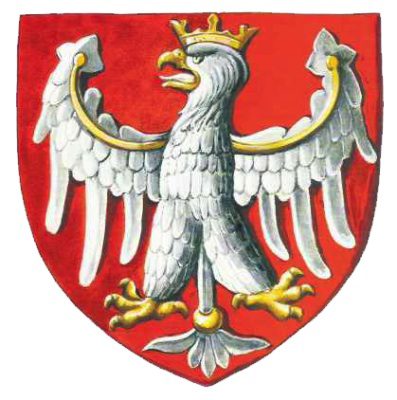
September 15, 2014

On the Veneti in Ptolemy’s Geography

Published Post author

After Pliny the  Elder and Tacitus comes Ptolemy.  Here is what he has to say about the Venethi (we provide context from both the section on Germania and on Sarmatia).

Ptolemy’s ( 90 A.D. and 168 A.D.) Geography

This is from Book II, Chapter 10 (Germania):

germania

On the geography of Germania we learn:

“The western boundary of Germany is the river Rhine, and its northern boundary is the Germanic Ocean, of the shore of which the following is a description… After the mouths of the Rhine river [you have the following rivers: Vidrus [?], Amisia [Ems], Visurgis [Weser?] and Albis [Elbe].”

Then we are told we come to the “Cimbrian peninsula”, i.e., Jutland (or Dennmark). At which point we get (going up and then back down) “the cape after the Albis [Elbe], the next cape, the next one, the northernmost, the first cape after the bend, the easternmost part of it, the next one below this one, a bend towards the east…”

and then “the mouths of the Chalusus river, the mouths of the Suevus river, the mouths of the Viadua river and the mouths of the Vistula river, the head of the river, the source which is to the west and is said to be towards the Albis [Elbe]“.

Now the interesting thing here is that we do not know which rivers are Chalusus, Suevus or Viadua (the latter two have each been identified as the Oder).  Vistula is, supposedly, the river Wisla (or Vistula).  Seems straightforward there…

Then we see who lives in this Germania:

“Those that inhabit Germany on the other side of the river Rhine, if we go towards the north, are the Bructeri minores and the Sygambri, below whom the Suevi Langobardi; then the Tencteri and the Incriones between the Rhine and the Abnobaei mountains; and then the Intuergi and the Vargiones and the Caritni, below whom the Vispi and the Desert of the Helvetii until those mountains we referred to as the Alps.

… the Bructeri up to the Amisia river … to the north the Cimbri; after the Saxons from the Chalusus river to the Suevian river the Farodini, then the Sidini up to the Viadua river, and after these the Rugiclei up to the Vistula river….

Of the people of the interior and those who live inland the most important are the Suevi Angili, who are to the east of the Langobardi extending towards the north and up to the central part of the Albis river, and the Suevi Semnones, whose boundaries beyond the Albis extend from the area we mentioned towards the east up to the Suevus river, and the Burguntae, who inhabit from there to the Vistula.

…Back below the Semnones the Silingae have their seat, and below the Burguntae the Lugi Omani, below whom the Lugi Diduni up to Mt. Asciburgius; and below the Silingae the Calucones and the Camavi up to Mt. Melibocus, from whom to the east near the Albis river and above them, below Mt. Asciburgius, the Corconti and the Lugi Buri up to the head of the Vistula river; and below them first the Sidones, then the Cotini, then the Visburgii above the Orcynius valley…

…There are three islands located above Germany at the mouths of the Albis, which are called Saxon…   Above the Cimbrian peninsula there are three other islands which are called the Alociae islands… East of the Cimbrian peninsula there are four islands called the Scandian islands, three of them smaller… but one of them very large and the most eastwards at the mouth of the river Vistula… It is properly called Scandia itself; and its western region is inhabited by the Chaedini, its eastern region by the Favonae and the Firaesi, its northern region by the Finni, its southern region by the Gutae (Gautae) and the Dauciones, and its central region by the Levoni.”

This is from Book III, Chapter V of Ptolemy’s Geography (Sarmatia):

Sarmatia

We are first told about the geography of Sarmatia:

“European Sarmatia is terminated on the north by the Sarmatian ocean adjoining the Venedicus bay and by a part of the unknown land, a description of which is the following [refers to four rivers: Chronus, Rubonis, Turuntus and Chesinus [supposedly, Pregel, Memel, Duna and Neva.

The terminus of its seacoast is located on that parallel extending thru Thule … the terminus of Sarmatia, which extends southward thru the sources of the Tanais [Don] river…

It is terminated in the west by the Vistula river and by that part of Germania lying between its source and the Sarmatian mountains but not by the mountains themselves, the position of which has been indicated; on the south by Iazyges Metanastae then from the southern terminus of the Sarmatian mountains to the beginning of the Carpathian mountains … and by the following part of Dacia along that parallel up to the mouth of the Borysthenes [Dniepr] river, and the shore of the Pontus which is near the Carcinitus river [somewhere in the Crimea].”

The description of Sarmatia veers eastwards but then Ptolemy returns to who lives in Sarmatia:

“The Greater Venedae races inhabit Sarmatia along the entire Venedicus bay;

and above Dacia are the Peucini and the Basternae; and along the entire coast of Maeotis are the Iazyges and the Rhoxolani; more toward the interior from these are the Amaxobii and the Scythian Alani.

Lesser races inhabit Sarmatia near the Vistula river.

Below the Venedae are the Gythones, then the Finni, then the Sulones; below whom are the Phrungundiones; then the Avarini near the source of the Vistula river; below these are the Ombrones, then the Anartophracti, then the Burgiones, then the Arsietae, then the Saboci, then the Piengitae and the Biessi near the Carpathian mountains.

Among those we have named to the east:

below the Venedae are the Galindae, the Sudini, and the Stavani, extending as far as the Alauni; below these are the Igylliones, then the Coestoboci and the Transmontani extending as far as the Peuca mountains.

Back from the Ocean, near the Venedicus bay, the Veltae dwell, above whom are the Ossi; then more toward the north the Carbones and toward the east are the Careotae and the Sali; below whom are the Gelones, the Hippopodes and the Melanchlaeni; below these are the Agathyrsi; then the Aorsi and the Pagyritae; then the Savari and the Borusci to the Ripaeos mountains; then the Acibi and the Nasci; below whom are the Vibiones and the Idrae; and below the Vibiones bordering on the Alauni are the Sturni, and between the Alauni and the Amaxobii are the Cariones and the Sargati; near the bend of the Tanis river are the Ophlones and then the Tanaitae; below whom are the Osili extending as far as Rhoxolanis; between the Amaxobii and the Rhoxolani are the Rheucanali and the Exobygitae; and between the Peucini and the Basternae are the Carpiani, above whom are the Gevini, then the Bodini; between the Basternae and the Rhoxolani are the Chuni, and below the mountains named from these are the Amadoci and the Navari.

Near Lake Byce dwell the Toreccadae, and near Achilles Cursus the Tauroscythae; below the Basternae near Dacia are the Tigri and below these are the Tyrangitae. Below the bend of the Tanais…”

It is clear from this that the key word is “below”.

Copyright ©2014 jassa.org, All Rights Reserved

September 13, 2014

On the Veneti in Tacitus’ Germania

Published Post author


Sarmatian Veneti in 
Tacitus’ Germania (about 98 A.D.)

The relevant parts of Tacitus’ account begin with the discussion of several tribes, some of whom are clearly described by the author as non-Germanic (chapter 43).  Tacitus writes:

“Nor less powerful are the several people beyond them [Nariscans, Marcomanians and Quadians]; namely, the Marsignians, the Gothinians (?), the Osians and the Burians, who altogether enclose/follow the Marcomanians and Quadians behind. Of those, the Marsignians and the Burians in speech and dress resemble the Suevians. From the Gallic language spoken by the Gothinians, and from that of Pannonia by the Osians, it is manifest that neither of these people are Germans; as it is also from their bearing to pay tribute. Upon them as upon aliens their tribute is imposed, partly by the Sarmatians, partly by the Quadians. The Gothinians, to heighten their disgrace, are forced to labor in the iron mines. By all these several nations but little level country is possessed: they are seated amongst forests, and upon the ridges and declivities of mountains. For, Suevia is parted by a continual ridge of mountains; beyond which, live many distinct [other] nations. Of these the Lygians are most numerous and extensive, and spread into several communities. It will suffice to mention the most puissant; even the Arians (?), Helvicones, Manimians; Elysians and Naharvalians.”

(Retro Marsigni, Cotini, Osi, Buri terga Marcomanorum Quadorumque claudunt. E quibus Marsigni et Buri sermone cultuque Suevos referunt: Cotinos Gallica, Osos Pannonica lingua coarguit non esse Germanos, et quod tributa patiuntur.  Partem tributorum Sarmatae, partem Quadi ut alienigenis imponunt: Cotini, quo magis pudeat, et ferrum effodiunt. Omnesque hi populi pauca campestrium, ceterum saltus et vertices montium iugumque insederunt. Dirimit enim scinditque Sueviam continuum montium iugum, ultra quod plurimae gentes agunt, ex quibus latissime patet Lygiorum nomen in plures civitates diffusum. Valentissimas nominasse sufficiet, Harios, Helveconas, Manimos, Helisios, Nahanarvalos.)

Beyond these Lygians, Tacitus then lists (chapter 44) the Gothones and, “immediately adjoining” them, the Rugians and Lemovians “upon the coast of the ocean.” Then the Suiones/Suionas, “situated in the ocean itself,” and the bordering Sitones/Sitonum.  Here Tacitus also mentions the Aestii (chapter 45).

So now, seemingly going from the Southwest to the Northeast we come, in chapter 46 of Germaniae, to the end of Suevia:

“Here Suevia ends. I do not know whether to class the tribes of the Peucini, Venedi, and Fenni with the Germans or with the Sarmatians. The Peucini, however, who are sometimes called Bastarnae, are like Germans in their language, manner of life, and mode of settlement and habitation. Squalor is universal among them and their nobles are indolent. Mixed marriages are giving them something of the repulsive appearance of the Sarmatians.”*

(Hic Sueviae finis. Peucinorum Venedorum que et Fennorum nationes Germanis an Sarmatis adscribam dubito, quamquam Peucini, quos quidam Bastarnas vocant, sermone, cultu, sede ac domiciliis ut Germani agunt. Sordes omnium ac torpor procerum; conubiis mixtis nonnihil in Sarmatarum habitum foedantur.)

Thereafter:

“The Venedi have adopted many Sarmatian habits; for their plundering forays take them over all the wooded and mountainous highlands that lie between the Peucini and the Fenni. Nevertheless, they are on the whole to be classed as Germans; for they have settled homes, carry shields, and are fond of traveling – and traveling fast – on foot, differing in all these respects from the Sarmatians, who live in wagons or on horseback.”*

(Venedi multum ex moribus traxerunt; nam quidquid inter Peucinos Fennosque silvarum ac montium erigitur latrociniis pererrant. Hi tamen inter Germanos potius referuntur, quia et domos figunt et scuta gestant et pedum usu ac pernicitate gaudent: quae omnia diversa Sarmatis sunt in plaustro equoque viventibus.)

Then some more on the Fenni (Finns (?)):

“The Fenni are astonishingly savage and disgustingly poor. They have no proper weapons, no horses, no homes. they eat wild herbs, dress in skins, and sleep on the ground…”

(Fennis mira feritas, foeda paupertas: non arma, non equi, non penates; victui herba, vestitui pelles, cubile humus…)

So where does this all leave us so far?

First, it is apparent that Germaniae was a geographical entity in the eyes of the Romans that encompassed groups other than “Germans” sensu stricto.

Second, it is interesting to note that Tacitus has difficulties deciding whether any of the peoples relevant to our discussions that is the Veneti or peoples who live next to them should be considered Germans or Sarmatians (these being the two categories that he is willing to entertain for them).  Importantly, he also takes us through his ethnic classification thinking process.

He notes that, as to the Peucini, they should be viewed probably as Germans on account of their language, way of life but too on account of their squalor and indolence (or at least of that of their leadership).  Let’s leave out the typical German squalor and indolence aside.  We are told that one of the distinguishing characteristic here was:

1) language – presumably Germanic was different from Sarmatian;

But too, the “way of life”.  What does Tacitus think is the German vs Sarmatian way of life? We learn from his description of the Veneti that the following factors were apparently relevant here:

2) settled homes (Germans) vs nomadic life style (Sarmatians);

3) movement on foot (Germans) vs movement on horse or wagons (Sarmatians);

4) limited movement (Germans) vs wide plundering forays (Sarmatians); (this might be a function of item 2 – traveling on foot vs traveling horseback – horseback = wider range = more plundering)  (note that this is written before the Voelkerwanderung);

5) defensive armor/shields (Germans) vs no shields (?) (Sarmatians);

It would seem that, as to the Veneti, Tacitus was willing to qualify them as German because they met the German criteria at items 2, 3 and 5; on the other hand, their forays seem to have suggested to him that they were more Sarmatians with respect to item 4.  Notice he said nothing about 1 either.

This is in contrast to the Peucini who are Germans, in Tacitus’ book, on account of 1 as well as, maybe (he does not explicitly say), 2-5.

The Fenni are not discussed in a Germanic-Sarmatian taxonomy and we leave them to their nuts and berries.

So it seems that the Veneti, whoever they were, were Germanic more by custom than by ethnicity.

Third, we learn roughly where the Veneti fall in this description (end of the world or close to it) and, then more specifically, that the Veneti make their “plundering forays… over all the wooded and mountainous highlands that lie between the Peucini and the Fenni” suggesting that that is also where the Veneti “lie” i.e., between the Peucini and the Fenni.  Now if the Fenni are Finns then this might suggest that the Veneti are between the Finns and the Peucini.  We do not know who the Peucini were but, a reasonable guess would be that they lived south of the Finns as the Finns are almost the last people listed (going South to North).  Now, the Aestii, the Suitones and Sitones were mentioned first which, if Aestii means Estonians and if Estonians were where they are now and if being listed “first” (even if in a different chapter) means that you come “first” when seen from the South or West, then this would put the Peucini and the Veneti either North or East of them (i.e., of the Aestii) – somewhere around Novgorod or Petersburg of today (in fact, in the Estonian and Finnish languages, Russian is referred to as Venedi).

Fourth, Tacitus never mentions the Vandals.  They do not exist as a tribe or a confederation of tribes in his list.  The Goths do.  The Langobards do.  The Suevi (hmmmm…) do.  But not the Vandals.  It seems that as of 98 A.D., at least, there were no Vandals.*

Of course, none of this proves a Slav-Veneti link conclusively.  One might legitimately ask the question too whether, even if they were at the mouth of the Vistula, could the Veneti just have been the ancient Prussians/Lithuanians/Latvians or some variation thereof?

* Tacitus does mention an ancient descendant of the Germanic God Tuisco whose name was Vandilij and that some nation may have corresponded to that name but he does not then list this god or people as an existing tribe: “In their ancient songs, their only way of remembering or recording the past they celebrate an earth-born god Tuisco, and his son Mannus, as the origin of their race, as their founders. To Mannus they assign three sons, from whose names, they say, the coast tribes are called Ingaevones; those of the interior, Herminones; all the rest, Istaevones. Some, with the freedom of conjecture permitted by antiquity, assert that the god had several descendants, and the nation several appellations, as Marsi, Gambrivii, Suevi, Vandilij, and that these are nine old names.”

* note – the same “Veneti” passage has been translated in slightly different ways.  The above translation is Harold Mattingly’s.  That was a 1948 translation later used by Penguin in its Germania.  We include here other translations.

The same from Thomas Gordon’s 18th century translation:

“Whether amongst the Sarmatians or the Germans I ought to account the Peucinians, the Venedians, and the Fennians, is what I cannot determine; though the Peucinians, whom some call Basstarnians, speak the same language with the Germans, use the same attire, build like them, and live like them, in that dirtiness and sloth so common to all. Somewhat they are corrupted into the fashion of the Sarmatians by the inter-marriages of the principal sort with that nation: from whence [the Sarmatians] the Venedians have derived very many of their customs and a great resemblance. For they are continually traversing and infesting with robberies all the forests and mountains lying between the Peucinians and Fennians. Yet they are rather reckoned amongst the Germans, for that they have fixed houses, and carry shields, and prefer travelling on foot, and excel in swiftness.”


The same from the Church/Brodribb translation:

“As to the tribes of the Peucini, Veneti, and Fenni I am in doubt whether I should class them with the Germans or the Sarmatæ, although indeed the Peucini called by some Bastarnæ, are like Germans in their language, mode of life, and in the permanence of their settlements. They all live in filth and sloth, and by the intermarriages of the chiefs they are becoming in some degree debased into a resemblance to the Sarmatæ. The Veneti have borrowed largely from the Sarmatian character; in their plundering expeditions they roam over the whole extent of forest and mountain between the Peucini and Fenni. They are however to be rather referred to the German race, for they have fixed habitations carry shields, and delight in strength and fleetness of foot, thus presenting a complete contrast to the Sarmatæ, who live in waggons and on horseback.”

Copyright ©2014 jassa.org All Rights Reserved

September 6, 2014

On the Veneti in Pliny (the Elder)’s Natural History

Published Post author

The “Sarmatian” Venethi were already known to the ancient authors.  Here are a few citations from Pliny the Elder (Naturalis Historiae, written about 77-79 A.D.) and Publius (or Gaius) Cornelius Tacitus’ De Origine et situ Germanorum (Germania, written about 98 A.D.) that most are already aware of but that should serve as the beginning of any discussion on the topic.  We present the relevant sections of these two works.

Sarmatian Venethi in Pliny The Elder’s Natural History (about 77-79 A.D.)

In Book IV (96-97) of his Natural History, Pliny writes:

Incipit deinde clarior aperiri fama ab gente Inguaeonum, quae est prima in Germania. mons Saevo ibi, inmensus nec Ripaeis iugis minor, inmanem ad Cimbrorum usque promunturium efficit sinum, qui Codanus vocatur, refertus insulis, quarum clarissima est Scatinavia, inconpertae magnitudinis, portionem tantum eius, quod notum sit, Hillevionum gente quingentis incolente pagis: quare alterum orbem terrarum eam appellant. nec minor est opinione Aeningia.

(Leaving these however, we come to the nation of the Ingævones, the first in Germany; at which we begin to have some information upon which more implicit reliance can be placed. In their country is an immense mountain called Sevo, not less than those of the Riphæan range, and which forms an immense gulf along the shore as far as the Promontory of the Cimbri. This gulf, which has the name of the ‘Codanian,’ is filled with islands; the most famous among which is Scandinavia, of a magnitude as yet unascertained: the only portion of it at all known is inhabited by the nation of the Hilleviones, who dwell in 500 villages, and call it a second world: it is generally supposed that the island of Eningia is of not less magnitude.) 

(translation after John Bostock & H.T. Riley (1855) from http://www.perseus.tufts.edu)

 “quidam haec habitari ad Vistlam usque fluvium a Sarmatis, Venedis, Sciris, Hirris tradunt, sinum Cylipenum vocari et in ostio eius insulam Latrim, mox alterum sinum Lagnum, conterminum Cimbris. promunturium Cimbrorum excurrens in maria longe paeninsulam efficit, quae Tastris appellatur. XXIII inde insulae Romanis armis cognitae. earum nobilissimae Burcana, Fabaria nostris dicta a frugis multitudine sponte provenientis, item Glaesaria a sucino militiae appellata, barbaris Austeravia, praeterque Actania.

(Some writers state that these regions, as far as the river Vistula, are inhabited by the Sarmati, the Venedi, the Sciri, and the Hirri, and that there is a gulf there known by the name of Cylipenus, at the mouth of which is the island of Latris, after which comes another gulf, that of Lagnus, which borders on the Cimbri. The Cimbrian Promontory, running out into the sea for a great distance, forms a peninsula which bears the name of Cartris. Passing this coast, there are three and twenty islands which have been made known by the Roman arms: the most famous of which is Burcana, called by our people Fabaria, from the resemblance borne by a fruit which grows there spontaneously. There are those also called Glæsaria by our soldiers, from their amber; but by the barbarians they are known as Austeravia and Actania.)

Further, in Book IV he writes some passages about the Germanic tribes (98-99):

Toto autem mari ad Scaldim usque fluvium Germaniae accolunt gentes, haud explicabili mensura: tam inmodica prodentium discordia est. Graeci et quidam nostri |XXV| oram Germaniae tradiderunt, Agrippa cum Raetia et Norico longitudinem DCXXXVI, latitudinem CCXLVIII,” 

(The whole of the shores of this sea as far as the Scaldis, a river of Germany, is inhabited by nations, the dimensions of whose respective territories it is quite impossible to state, so immensely do the authors differ who have touched upon this subject. The Greek writers and some of our own countrymen have stated the coast of Germany to be 2500 miles in extent, while Agrippa, comprising Rhætia and Noricum in his estimate, makes the length to be 686 miles, and the breadth 148.)

“Raetiae prope unius maiore latitudine, sane circa excessum eius subactae; nam Germania multis postea annis nec tota percognita est.

(The breadth of Rhætia alone however very nearly exceeds that number of miles, and indeed we ought to state that it was only subjugated at about the period of the death of that general; while as for Germany, the whole of it was not thoroughly known to us for many years after his time.)

“si coniectare permittitur, haut multum ora deerit Graecorum opinioni et longitudini ab Agrippa proditae.” 

(If I may be allowed to form a conjecture, the margin of the coast will be found to be not far short of the estimate of the Greek writers, while the distance in a straight line will nearly correspond with that mentioned by Agrippa.)

“Germanorum genera quinque: Vandili, quorum pars Burgodiones, Varinnae, Charini, Gutones. alterum genus Inguaeones, quorum pars Cimbri, Teutoni ac Chaucorum gentes.”  

(There are five German races; the Vandili, parts of whom are the Burgundiones, the Varini, the Carini, and the Gutones: the Ingævones, forming a second race, a portion of whom are the Cimbri, the Teutoni, and the tribes of the Chauci.) 

Then he continues Book IV with the following (100-101):

“proximi autem Rheno Istuaeones, quorum . . . . . mediterranei Hermiones, quorum Suebi, Hermunduri, Chatti, Cherusci. quinta pars Peucini, Basternae, supra dictis contermini Dacis.”

(The Istævones, who join up to the Rhine, and to whom the Cimbri belong, are the third race; while the Hermiones, forming a fourth, dwell in the interior, and include the Suevi, the Hermunduri, the Chatti, and the Cherusci: the fifth race is that of the Peucini, who are also the Basternæ, adjoining the Daci previously mentioned.) 

“amnes clari in oceanum defluunt Guthalus, Visculus sive Vistla, Albis, Visurgis, Amisis, Rhenus, Mosa. introrsus vero nullo inferius nobilitate Hercynium iugum praetenditur.”

(The more famous rivers that flow into the ocean are the Guttalus, the Vistillus or Vistula, the Albis, the Visurgis, the Amisius, the Rhine, and the Mosa. In the interior is the long extent of the Hercynian range, which in grandeur is inferior to none.)

“in Rheno autem ipso, prope C in longitudinem, nobilissima Batavorum insula et Cannenefatium et aliae Frisiorum, Chaucorum, Frisiavonum, Sturiorum, Marsaciorum, quae sternuntur inter Helinium ac Flevum. ita appellantur ostia, in quae effusus Rhenus a septentrione in lacus, ab occidente in amnem Mosam se spargit, medio inter haec ore modicum nomini suo custodiens alveum.”

(In the Rhine itself, nearly 100 miles in length, is the most famous island of the Batavi and the Canninefates, as also other islands of the Frisii, the Chauci, the Frisiabones, the Sturii, and the Marsacii, which lie between Helium and Flevum. These are the names of the mouths into which the Rhine divides itself, discharging its waters on the north into the lakes there, and on the west into the river Mosa. At the middle mouth which lies between these two, the river, having but a very small channel, preserves its own name.)

So, we learn not only about the Venethi here for the first time in Roman writings (but see Strabo) but also a little bit about Roman sense of geography (e.g., note the river Vistula, Vistla, Wisla; note also that, other than Guthalus (we think Oder/Odra) the rivers here are listed East to West).

BTW we have included the references to Germanic tribes mostly because the section is small enough all together that such a reference, we thought, could be useful without being too distracting.  WE do not repeat that for the next work concentrating only on the Venethi and those specific Germanic and other tribes that lived near them.

Other Venethi in the “Natural History”

As a post scriptum we ought to mention that Pliny also wrote about the non-Sarmatian Veneti.  Here are a few examples:

Gallic Veneti (Galia Lugdunensis) (note these “Venethi” are written by Pliny as Veneti whereas the Sarmatian ones are written as the Venedi) (Natural History, Book IV, 107):

Lugdunensis Gallia habet Lexovios, Veliocasses, Caletos, Venetos, Abrincatuos, Ossismos, flumen clarum Ligerem, sed paeninsulam spectatiorem excurrentem in oceanum a fine Ossismorum circuituDCXXV, cervice in latitudinem CXXV. ultra eum Namnetes, intus autem Aedui foederati, Carnuteni foederati, Boi, Senones, Aulerci qui cognominantur Eburovices et qui Cenomani, Meldi liberi, Parisi, Tricasses, Andecavi, Viducasses, Bodiocasses, Venelli, Coriosvelites, Diablinti, Riedones, Turones, Atesui, Segusiavi liberi, in quorum agro colonia Lugudunum.

(That part of Gaul which is known as Lugdunensis contains the Lexovii, the Vellocasses, the Galeti, the Veneti, the Abrincatui, the Ossismi, and the celebrated river Ligeris, as also a most remarkable peninsula, which extends into the ocean at the extremity of the territory of the Ossismi, the circumference of which is 625 miles, and its breadth at the neck 125. Beyond this are the Nannetes, and in the interior are the Ædui, a federal people, the Carnuti, a federal people, the Boii, the Senones, the Aulerci, both those surnamed Eburovices and those called Cenomanni, the Meldi, a free people, the Parisii, the Tricasses, the An- decavi, the Viducasses, the Bodiocasses, the Venelli, the Cariosvelites, the Diablinti, the Rhedones, the Turones, the Atesui, and the Secusiani, a free people, in whose territory is the colony of Lugdunum.)

Gallic Veneti (Galia Aquitanica) (Natural History, Book IV, 109):

Pictonibus iuncti autem Bituriges liberi qui Cubi appellantur, dein Lemovices, Arverni liberi, Vellavi liberi, Gabales. rursus Narbonensi provinciae contermini Ruteni, Cadurci, Nitiobroges Tarneque amne discreti a Tolosanis Petrocori.  Maria circa oram ad Rhenum septentrionalis oceanus, inter Rhenum et Sequanam Britannicus, inter id et Pyrenaeum Gallicus. insulae conplures Venestorum et quae Veneticae appellantur et in Aquitanico sinu Uliaros.

(Again, adjoining the province of Narbonensis are the Ruteni, the Cadurci, the Nitiobriges, and the Petrocori, separated by the river Tarnis from the Tolosani. The seas around the coast are the Northern Ocean, flowing up to the mouth of the Rhine, the Britannic Ocean between the Rhine and the Sequana, and, between it and the Pyrenees, the Gallic Ocean. There are many islands belonging to the Veneti, which bear the name of “Veneticæ,” as also in the Aquitanic Gulf, that of Uliarus).

Paphlagonian Veneti (Natural History, Book VI, 5):

ultra quem gens Paphlagonia, quam Pylaemeniam aliqui dixerunt, inclusam a tergo Galatia, oppidum Mastya Milesiorum, dein Cromna, quo loco Enetos adicit Nepos Cornelius, a quibus in Italia ortos cognomines eorum Venetos credi debere putat, Sesamon oppidum, quod nunc Amastris, mons Cytorus, a Tio LXIII p., oppida Cimolis, Stephane, amnis Parthenius.”

(Beyond this river [the river Billis] begins the nation of Paphlagonia, by some writers called Pylæmenia; it is closed in behind by the country of Galatia. In it are Mastya, a town founded by the Milesians, and then Cromna, at which spot Cornelius Nepos also places the Heneti, from whom he would have us believe that the Veneti of Italy, who have a similar name, are descended. The city also of Sesamon, now called Amastris, Mount Cytorus, distant sixty-three miles from Tium, the towns of Cimolis and Stephane, and the river Parthenius.)

According to Bostock & Riley:

“Paphlagonia was bounded by Bithynia on the west, and by Pontus on the east, being separated from the last by the river Halys; on the south it was divided by the chain of Mount Olympus from Phrygia in the earlier times, from Galatia at a later period; and on the north it bordered on the Euxine.. Strabo also, in B. xii., says that these people afterwards established themselves in Thrace, and that gradually moving to the west, they finally settled in the Italian Venetia, which from them took its name. But in his Fourth Book he says that the Veneti of Italy owe their origin to the Gallic Veneti, who came from the neighbourhood known as the modern Vannes.”

Incidentally, for our readers Paphlagonia will be the site of Viking Rus raids in the 9th century.

Finally, Pliny, of course, mentions the “actual” Venetia (Venice) a number of times (e.g., Natural History, Book VI, 218):

Septima divisio ab altera Caspii maris ora incipit, vadit super Callatim, Bosporum, Borysthenen, Tomos, Thraciae aversa, Triballos, Illyrici reliqua, Hadriaticum mare, Aquileiam, Altinum, Venetiam, Vicetiam, Patavium, Veronam, Cremonam, Ravennam, Anconam, Picenum, Marsos, Paelignos, Sabinos, Umbriam, Ariminum, Bononiam, Placentiam, Mediolanum omniaque ab Appennino, transque Alpis Galliam Aquitanicam, Viennam, Pyrenaeum, Celtiberiam. umbilico XXXV pedum umbraeXXXVI, ut tamen in parte Venetiae exaequatur umbra gnomoni. amplissima diei spatia horarum aequinoctialiumXV et quintarum partium horae trium.

(The seventh division begins on the other side of the Caspian Sea, and the line runs above Callatis, and through the Bosporus, the Borysthenes, Tomi, the back part of Thrace, the Triballi, the remainder of Illyricum, the Adriatic Sea, Aquileia, Altinum, Venetia, Vicetia, Patavium, Verona, Cremona, Ravenna, Ancona, Picenum, the Marsi, the Peligni, the Sabini, Umbria, Ariminum, Bononia, Placentia, Mediolanum, all the districts at the foot of the Apennines, and, beyond the Alps, Gallia Aquitanica, Vienna, the Pyrenæan range, and Celtiberia. A gnomon thirty-five feet in length here throws a shadow of thirty-six feet, except in some parts of Venetia, where the shadow just equals the length of the gnomon; the longest day is fifteen equinoctial hours, plus three-fifths of an hour.)

Copyright ©2014 jassa.org, All Rights Reserved

September 5, 2014