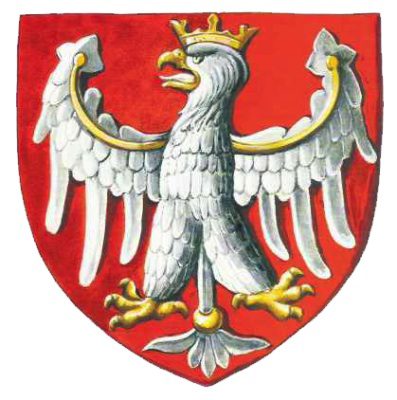
On the Names of Poland Part II

Published Post author

We will come back to some descriptions/names of early Poland (including bin-Yakub‘s) in part III – but in the meantime we thought to take a detour (why not!?) describing some interesting etymologies of the name.

Some hypotheses as regards the name of Poles or Poland follow (we are trying to be complete and creative rather than trying to propose that each of those is equally likely).  We also note that some of these hypotheses are complementary (e.g., Poles maybe named after Lachs but Lach was a reference to a type of a field – lęda – not to a person or they were named after Eastern Polans but those in turn were named after fields or after lędy, etc.):

Named After Fields

This is the most common interpretation of the name.  This is also the interpretation given by Nestor in PVL to the name Polyane around Kiev (i.e., those Eastern Polans that would then become Rus, once the Rus took them over).

serfs

The serf overseer with his feared “skinny boomerang” – the bane of the fleeing peasant – doing what he does best – some good ol’ honest overseein’

On the other hand, at a minimum, this could not have meant “people who harvest fields”, i.e., it did not have an agricultural connotation but rather may have meant people who live in fields as in meadows or open fields.  Further, it is a strange name to give to a people who lived in a heavily forested country.

Named After Forest Clearings

Could Polyane refer to “polana” a forest clearing?  Initially, in Latin scripts Poland was many times referred to as Polania and to this day there is a Latin Polonia.  Possible, but it makes little sense to refer to a people who live in such a large country on the assumption that most of them live in small clearings.

polanne

Polane celebrating having set themselves up in “just the right kind of clearing”

Further, etymologists tell us that we then should have seen a different form of the adjective polski – polanski.  Also, the word Polak may come from pole but it is unlikely to come from polana.

Named After Lędy

Ledziny (or lędy, singular lęda) are fields but not in the sense of “pole” i.e., not the usual ones for cultivation of crops but rather fields that were were a result of the slash and burn agriculture allegedly practiced by the early Slavs.  This was a theory advanced by Rostafinski (of the beech fame).  (He also derives Vends/Wends from “wedzic”, i.e., to smoke fish, by drying them, i.e., to deprive them of water (i.e., wend)).

Thus, for example, the name of the Lendizi – a southeastern Polish tribe (aka Lędzianie) – would be the same as the Lachs or Polachs or Polaks or Poles.  Such a tribe was mentioned in 844-845 by the Bavarian Geographer as Lendizi.  This same tribe was mentioned by Porphirogenotos in De Administrando Imperio (Λενζανηνοί) as well as by Al-Masudi (“Landzaneh“).

finnish

Yo! That’s how we roll – gotta problem with that?

This etymology actually seems to make sense but only to explain the word Lachy which although applied originally with respect to the Lendizi, the Russians and others who lived next to the Lendizi then, in the same form applied to all Poles (and indeed to Pomeranians, Silesians, Mazovians and Polabian Slavs as well). (See PVL).

Named After Eastern Polans

A corollary of this is that, although the Eastern Polyane are mentioned by Nestor as the original inhabitants of Kiev, they disappear quickly after the Rus conquest of Kiev (about 882-885) (though Nestor mentions that some still live in Kiev as of the time of the writing of the PVL, i.e., in the early 12th century).  At the time of the Bavarian Geographer’s writing about the lands East of the Frankish kingdom, no Poles existed on his list.  Then they are there in Poland “ready to go” at least since mid-10th century.

fleeingrus

Polyane – fleeing the Rus – only 50% would make it

Note also that while there is a Gniezno (nest) in Poland and that was the first capital of the country, there is also a Gnyozdovo in Russia just West of Smolensk.

So was Poland really a Russian venture?  Or putting it less provocatively, are Poles a tribe (or some of the tribe) driven from Russia (specifically Kiev) by the Varangian Rus some time in the second half of the ninth century?

Named After Lech

One of the popular interpretations has been that the Poles are named Po-lechu, i.e., after Lech their original founder.

lechreconstruct

Lech (modern reconstruction based on DNA sampling)

As we have seen, however, the existence of Lech cannot be proven before the 12th century Dalimil Chronicle and there he was actually named Czech (i.e., Lech means a young man).  Only, the later Greater Poland Chronicles and the Czech Pulkava Chronicle first mention Lech as the Urvater of the Poles.  Note that the Kadlubek Chronicle, which came after Dalimil but before the other two, mentions Lechites and mentions a number of “Lestkos” as in “sly” but does not mention a tribal leader by that name as leading the Poles into Poland as is mentioned later (e.g., in GPCs and in Dlugosz where Poles arrive from the South).

Now, there was a Czech leader named Lech who perished fighting Charlamagne in 805… So were these Lechites (the alternative name for Poles) perhaps refugees from Bohemia?  (There is an interesting, somewhat later, story that connects the flight of a certain Czech family from Bohemia, the Varshovtzi, to the founding of Warszawa or Warsaw in Poland).

Also there was a famous battle in 955 between Otto I and the Hungarians at Lechfeld (look – it’s got a field and a Lech (!)) named after the River Lech which was named after…

ottonians

Otto I (on the right in the shorter shorts) and his most loyal knights celebrate their victory over the Hungarians

Named After Lech (but with Lech being a variation of the Norse “Lag”)

This is the theory that has Poland founded by Vikings.  Allegedly Old Norse Lag means “companion”.  Thus, the Viking companions would have founded Poland much like the Varangian Rus founded Russia.

vikingi

“Dago, methinks it’s time to put away the flail and the attitude and start milkin’!”

There seem to be no facts that support this (a fact admitted even by Nazi scientists who sought to establish this during WWII after the occupation of Poland).  In fact, what speaks against it the most is that the name Lachs/Lengiel was employed (and is  employed) almost exclusively in the East by Russians, Lithuanians, Ukrainians and Hungarians but never by Germans or Scandinavians.

The theory of conquest was popular among the Polish szlachta (there is that Lach again… or Lech if szlachta is from Geschlecht) at the end of the 18th century to explain why the szlachta lived it up while the peasantry was so remarkably downtrodden (first they thought they were Vandals, then Sarmatians, then Norsemen).  It was later of interest to Polish defeatists who saw Poland partitioned (Lelewel, Szajnocha) and thereafter it was picked up by German historians after WWI when reborn Poland threatened Germany’s Eastern flank.

(incidentally, some members of the Anglo-Saxon historiography establishment sought to prove that the venal szlachta were really Asiatic Sarmatians while the Polish peasantry was of Gothic origin…)

Named After Polanow, the Town

There is a town in Poland named Polanow (in southern Pomerania or northern Greater Poland, if you will).  Already the Greater Poland Chronicles suggested that the country is named after that town.

polanow

(from the Polish National Library)

Incidentally, next to that town there is also the town of Pustow which sounds (a bit) like Piastow…

polanow

Named After Boleslaw the Great 

So was bolaniorum really the correct version and Poland is named after Boleslaw the Great?Given the number of “P” polaniorum manuscripts we think unlikely.   Interestingly, Poland with “B” as in Buluniia (no, not bulimia) also appears in Al-Idrisi‘s much later Tabula Rogeriana and in several other places…

ottoiii

Boleslaw Chrobry greets the young Otto III at Gniezno – A.D. 1000

Named After the Alans

It was named after the Alans as Poles are the remnant of the Scythian Alans (the “former Massagetae” according to Ammianus Marcellinus) most of whom went West with the Vandals and Suevi (and then onto Africa).

alani

Alani on the Peutinger Map (in the far off grid 8A3)

After all Boleslaw is named pALANioru(m) duce above and we know from the Annales Vedastini about those “Alanos, quos dicunt Sclavos.” Here is that piece again:

alanosque

We think unlikely – if anything the Polish tradition mentioned Vandals.  (Although later it began to mention the Sarmatians who may have been Alans… hmmmmmm).  And are Vandals just some conglomeration of Venethi and Alans – they did set out together in 406 or so… (we think this unlikely too).

Named After the North Star

A theory mentioned in 1745 by Benedykt Chmielowski has the name Poland derived from “Polo Arctico, that is the Northern Star towards which did the Polish Kingdom lay, just as Spain was named Hesperia from the Western star Hesperus.”

wewillnameit

“No, not that one! The one on the left!!!!!”

Named After the North Pole

This is a variation on the above.  We cannot recall who came up with that one though it seems to have merited at least some debate in Polish ethnographic circles.

northpole

The subfreezing temperatures made well functioning port-a-potties into highly coveted real estate (the “Polish” flag will be touched up in post production)

Named After a Colchian Field

The same Chmielowski also suggests another etymology, that of a Colchian field, with Colchis being a part of today’s Georgia which was visited by the Argonauts in their quest for the Golden Fleece (remember those Paphlagonians…).

colchis

Colchis – in all its pink glory

Named After the Baptism of Poland

‘Polac’ means to ‘pour onto’.  Already the Czech Vaclav Hajek in his Kronyka Ceska (from 1541) suggested that Poles were those Slavs (or Lechites) who underwent baptism.  They were “polani” (i.e., poured onto) with water.  Apparently, Czech missionaries would ask “are you ‘polani‘ already?”  If this “Catholic” or, rather, “Christian” etymology were correct then, by definition, only those Poles that were baptized were real Poles.  This seems interesting if slightly preposterous.

polanie

966 A.D. – KQTZ brings it to you as it happened

Named After a Croatian City of Pula (or Pollentia)

After all the Poles (or Lech at least) supposedly came from Croatia (according to Jan Dlugosz) and there is a Krk island in Croatia so there should be a Polania or something in Croatia and, of course, there is: Colonia Pietas Iulia Pola Pollentia Herculanea or the modern city of Pula which was founded by “Illyrians” (or someone before them).

pula

Eeeeee… if this is true, what were they thinking moving North!?

Oh yes, it’s also on the Peutinger Map!

pollantia


Named After Vlakhs

Nestor writes in the PVL:

Over a long period the Slavs settled beside the Danube, where the Hungarian and Bulgarian lands now lie.  From among these Slavs, parties scattered throughout the country and were known by appropriate names, according to the places where they settled. Thus some came and settled by the river Morava, and were named Moravians, while others were called Czechs.  Among these same Slavs are included the White Croats, the Serbs and the Carinthians.  For when the Vlakhs attacked the Danubian Slavs, settled among them and did them violence, the latter came and made their homes by the Vistula, and were then called Lyakhs.”  

The strange thing here is that the paragraph on the Lyachs follows a settlement by most of the other Slavs in their lands already.  That is, the attack of the Vlachs (either the Romanized population of the Balkans or the Byzantines are presumably meant) seems to apply (or could be read to apply) solely to the Lyachs.  Are Lyachs those who were driven out by the Vlachs?  Or are they perhaps somehow the original Vlachs (in pursuit of Slavs)?

brambram

The most famous Vlach of all “No Slavs… you cannot get away!”

Named After Lany

A “lan” is a portion of a field.  So if not the whole field, perhaps some of it?  One of our readers suggested this and we thought worth including this etymology as well.  Tell us what you think.

lanlan

The Polish “lany” were a place where fertility cults thrived

The Plain Truth?

Although neither Linde nor Brueckner suggest this etymology, it is conceivable that the Polish word “plony” (as in harvest) derives from plain as in flat (they suggest its original meaning was simply “booty” both of fields and that taken from the enemy).  However, the “pole” etymology was always tad suspect since by accepting it we were to accept that the forested Polish countryside was full of open fields – or at least more so than other areas of Europe.  On the other hand, we do know that the Great Northern European Plain is well, plain – whether covered by forest or by fields or whatever else the area is flatland.  In Latin the word us planum and means “level ground” i.e., plain…

huntingbuffalo

Lech hunting “zubr” on the Great Plain of Poland [dramatization]

This would seem anecdotally supported by reports of Polish ethnographers who claimed that, e.g., Gorale claimed not to be Poles – when asked why that would be given they speak the same language, the Goral in question (a gazda – look it up) was confused because, he said, he is not a Pole as, of course, he lives in the mountains so how could he be a Pole…  (Incidentally, the Nazis after their conquest of Poland exploited these kinds of musings by declaring a new “privileged” minority – the Goralenvolk – most of the leadership of this short lived “minority” were executed after the war).   Similarly, by this logic Pomeranians were “not Poles” because they lived by the sea and Silesians by the Sleza mountain in the highlands.

Copyright ©2014 jassa.org, All Rights Reserved

December 19, 2014

On Krak or Krok (or Crocus?)

Published Post author

King Krak is a legendary monarch of Poland.  King Krok a legendary ruler of Bohemia.

The Polish Krak (known from the Master Kadlubek Chronicle and from the Greater Poland Chronicles) fought many wars, founded (and gave his name to) the city of Krakow, had to deal with a dragon, was succeeded by a son who killed another one of his son’s and then, when the crime was discovered, by a daughter – Wanda – who was of legendary beauty and who rallied her people against an Alemanic prince (only later called “German” by the name of Rittiger by the Polish Chronicler Jan Dlugosz) so smitten with her that he first tried to invade her country and then just could not bring himself up to an open war with Wanda.

vavelske

The conflict between Krak and the Dragon was largely due to a case of athlete’s foot combined with the sharing of a soaking tub

The Czech Krok, after whom a castle was named, was also a great man though more in the nature of a wise man.  He lacked male offspring but had three daughters: Kazi, Tetka and, most importantly, the magician Libuse.  It was Libuse who married the simple ploughman Premysl, the founder of the Premyslid dynasty.

dalimilkrok

Dalimil’s Krok

dalimilkrok2

And the same in “English” so to speak

BTW in this the Czech Krok legend (known from Cosmas and Dalimil) is different from the Polish one since the former connects Krok to the Czech ruling house whereas the latter does not make such a connection to the Polish House of Piast.  The reason for this may be that the Polish version stems out of the (likely) formerly Czech lands of Krakow (Little or New Poland) and does not tie easily (nor has it been expressly tied by any chroniclers) to the legend of Piast known in Gniezno (Great or Old Poland).

But what is the origin of the legend?  Where does the name come from?  The Polish chroniclers by using the name Graccus suggested a relationship with the ancient Romans by the same name.  But perhaps a different source presents itself.  Note that in the Polish version, the Poles are associated with Vandals and Wanda, the daughter of Krak, is about fight an Alemannic prince…

The Real Crocus/Chrocus?

History, via the mouth of Gregory of Tours in his History of the Franks (or Decem Libri Historiarum), knows of an Alemannic Crocus (or Chrocus or Croscus) (with the -us suffix being a typical “Latinization” of the name) who raided with his comrades the Roman province of Gaul around the years A.D. 253-258 causing much damage including the destruction of the temple of Vasso Galatae (and causing the martyrdom of Saint Didier the third Bishop of Langres).

This is what Gregory says:

“Valerian and Gallienus receive the Roman imperial power in the twenty-seventh place, and set  on foot a cruel perscution of the Christians.  At that time Cornelius brought fame to Rome by his happy death and Cyprian to Carthage.  In their time also Chrocus the famous king of the Alemanni raised an army and overran the Gauls.  This Chrocus is said to have been very arrogant.  And when he committed a great many crimes he gathered the tribe of the Alemanni, as we have stated, by the advice, it is said, of his wicked mother, and overran the whole of the Gauls, and destroyed from their foundations all the temples which had been built in ancient times.  And coming to Claremont he set on fire, overthrew and destroyed that shrine which they call Vasso Galatae in the Gallic tongue…” (History of the Franks, Book I, 32 (Chrocus and the Shrine in Auvergne))

The Epitome de Caesaribus (41, 3) also speaks of a Crocus as a king of the Alemanni, this time serving the function of a Roman general/warlord in Britain (York) in July of the year A.D. 306.  It is not clear whether this was the same or a different Crocus.  But either there is a mistake or it is a different Chrocus as over 40 years separate these the events in these two accounts.

This is the text:

“Constantine [the Great], son of imperator Constantius and Helena, ruled thirty years. While a young man being held as a hostage by Galerius in the city of Rome on the pretence of his religion, he took flight and, for the purpose of frustrating his pursuers, wherever his journey had brought him, he destroyed the public transports, and reached his father in Britain; and by chance, in those very days in the same place, ultimate destiny was pressing on his parent, Constantius.  With him dead, as all who were present — but especially Crocus, King of the Alamanni, who had accompanied Constantius for the sake of support — were urging him on, he took imperium.” (Translated by Thomas M. Banchich)

Finally, and this is perhaps even more of interest, the Chronicle of Fredegar, which copies portions of the History of Franks, also mentions Crocus… but this time he is a King of the Vandals, leading them along with the Alans and the Suebi across the Rhine in that fateful year A.D. 406 (i.e., 100 years after the Epitome episodewhen these tribes crossed into the Roman Empire and made their way to Gaul, Spain and then, now Vandals and Alans only, to Africa.  Some believe that Fredegar was mistaken here but we were tempted, given the Vandal connection, to mention this and reproduce the following (from Fredegar):

chrocus1

Fredegar’s Vandalic version of Crocus

So what does the above say?

Chrocus rex Wandalorum cum Suaevis et Alanis egressus de sedibus, Galleas adpetens, consilium matris neequissimam utens, dum ei dixisset: ‘Se novam rem volueris facere et omen adquirere, quod alli aedifficaverunt cuncta distruae et populum, quem superas, totum interfice; nam nec aedificum meliorem a praecessorebus facere non potes neque plus magnam rem, per qua nomen tuum elevis’.  Qui Renum Mogancia ponte ingeniosae transiens, primum ipsamque civitatem et populum vasta vit; deind cunctasque civitatis Germaniae vallans, Mettis pervenit, ubi murus civitatis divino noto per nocte ruens, capta est civetas a Wandalis.  Treverici vero in arenam huius civitates, quem munierant, liberati sunt.  Post haec cunctas Galleas Chrocus cum Wandalis, Suaevis et Alanis pervagans, alias ubsidione delivit, aliasques ingeniosae rumpens, vastavit. Nec ulla civetasaut caster ab eis in Gallis liberata est.  Cumque Arelato obsederint, Chrocos a Mario quaedam militae captus et vinculis constrictus est.  Qui ductus ad poenam per universas civitates, quas vastaverat, impia vita digna morte finivit.  Cui Trasemundus successit in rignum.  Alamanni adversus Wandalos arma commovunt.  Uterque consencientes singulare certamen prilliandum, duos miserunt.  Sed et ille qui a Wandalis missus est ab Alamannos superator.  Victusque Trasemundus et Wandali, secundum placetum cum Wandalis, Suaevis et Alanis de Galllias praetermissis Spanias adpetivit, ibique multos christianorum, pro fide catholica interfecit.

Essentially, “Chrocus king of the Vandals, left his dominions together with the Suevi and Alans, eager to attack Gaul following his mother’s wicked advice, for she had said to him: ‘if you wish to carry out a new exploit and gain renown destroy all that others have built and kill everyone you conquer; for you cannot build a better building than you forefathers nor carry out a greater deed with which to make a name for yourself.’  Thus, after crossing the Rhine through Mainz, by means of an ingenious bridge, he first devastated this city and decimated its people.  After fortifying all the cities of Germania, he arrived in Metz, where the city wall collapsed when a divine wind was unleashed during the night and the city was captured by the Vandals.  The inhabitants of Trier, however, were saved by taking refuge in their city amphitheater, which they had fortified.  Afterwards, Chrocus, crossing the whole of Gaul with Vandals, Suevi and Alans, destroyed some towns by means of a siege and devastated others by ingeniously busting in.  And there was no city or fortress in Gaul that was saved from them.  However, when they were besieging Arles, Chrocus was captured and put in chains by a soldier called Marius [perhaps the Emperor usurper].  And led to execution through all the cities he had devastated, his impious life ended with the death he deserved.  Thrasamund reigned after him.  Then the Alamanni went to war against the Vandals and, as both parties agreed that there should be a single combat, they sent two warriors.  But the one sent by the Vandals was defeated by the Alaman.  And as Thrasamund and his Vandals were thus vanquished, after leaving Gaul together with Suevi and Alans, as it had been agreed, they attacked Spain and there they slew many Christians for their Catholic faith.”

[the translation is by Agusti Alemany; the same passage is repeated in the Chronicle of Moissac though there we have “Choroscus/Chrocus/Chroscus,” Croscus/Crochus” and “Croscus/Crochus”]

Note that here Vandals lose and move on to Spain.  In the version by Gregory of Tours, Vandals lose in Spain with a Suev champion defeating a Vandal one and then move on to Africa.  In each case the Vandal king at this point is Thrasamund.  This kind of David-Goliath one on one combat to settle affairs is also found in other places, e.g., in the combat between the Slav and Saxon champions (Slav won this one) much later in Germany.  Note also that the Alamanni here seem to be distinct from the Suevi.  The latter come with Chrocus and his Vandals and Alans into Gaul and also leave with him once the Alemanni defeat the Vandal champion.  All in all, it is difficult to establish whether the Gregory or the Fredegar account is correct (or more correct since each has major issues).  For example, Gregory has Chrocus’ Alemanni martyr one Vicentius who is known to have met that fate in the early 400s.  But Fredegar also varies his timeline widely, e.g., by mentioning that Chrocus was succeeded by Thrasamund, a Vandalic king who ruled in the late 5th and early 6th century (almost 100 years after the Rhine crossing by the Vandals, Suevi and Alans).  Of course, Gregory also has Thrasamund be the king.  In reality, the trek to Africa was under Geiseric.*  Whoever may be closer to the truth, in Fredegar we have Alemanns in one on one combat with Vandals and we have Chrocus…

This Vandalic interpretation was then picked up by Annonius (Aimonius) in his de Gestis Francorum (Book III) in the year 1008.

Could Master Kadlubek (who is known to have perused ancient sources) also perused Fredegar’s Chronicles from 600 years earlier to come up with the story of Krak?  Or the slightly more recent Aimonius?

(Note that Krakow could have been named after the crowing of crows not after any Krak – such an etymology is mentioned, in the alternative, by the GPCs).

Kadlubek never connected his Polish Gracchus to the Allemanic or Vandalic Chrocus of the past – just mentioned the connection of Graccus to the city of Cracow.  However, another writer then made the connection explicit.  Alberic of Trois-Fontaines (Albericus Trium Fontium) a Cistercian monk and chronicler who wrote a chronicle of world events through the year 1241 (written between 1232-1252 (some people think in 1246)) when Cracow was already a well known city and a capital of (then divided) Poland) in which, under the year 413 he describes the invasion of Gall again by the Vandals and the Alans led by Craco/Crosco a duke/king in Cracoviae/Craconie (variations depending, it seems, on the manuscript):

alberik2

Keeping in mind that Master Kadlubek’s Chronicle would then have already been written (Kadlubek passed away in 1223), could Alberic have had a chance to glance at it or was the connection to Cracow a figment of his own imagination (or not)?

In any event, we think the Alemanic and Vandalic connections are of interest in light of the Krak legend.  It is harder, however, to connect (even if ephemerally) this to the Czech version of Krok.

Next time when we touch this subject we will talk about the Norse angle, that of Hrolf Kraki‘s saga.

* Also, Fredegar was, supposedly basing his version of events on the work by Hydatius (Idacius) the bishop of Aquae Flaviae (Chaves or Chiaves) in Gallicia (Spain), from circa 427 to 470 who was an author of a  Chronicle (itself one of the continuations of Jerome) and who would have been closer to these events (for example, he discusses the plundering of Spain in 408-410 by the Vandals, Suevi and Alans).  Yet the timeline given by Hydatius supposedly is closer to the 250s as specified by Gregory of Tours.

Copyright ©2014 jassa.org, All Rights Reserved

December 14, 2014

On the Names of Poland Part I

Published Post author

The earliest mentions of Polish rules speak of various names but the name Poles or Poland does not at first appear.

Widukind of Corvey

Instead we read, for example, about:

Misca (or Missacam) regem, cuius potestatis erant Sclaui, qui dicuntur Licicaviki, duabus vicibus superavit, fratremque ipsius interfecit, predam magnam ab eo extorsit.

(Roughly: [Wichmann the Younger] twice defeated MIeszko [in 963/?/965] who was the leader of Slavs named Licikaviki, killed his brother and forced him to pay great tribute/took great bounty [or, if you prefer, “extorted”]).

This is from Widukind of Corvey‘s Rerum gestarum Saxonicarum sive annalium libri tres (On the Deeds of the Saxons in (or aka) Three Books of Annals) Book 3 chapter 66 (Gero propter iuramentum dimisit Wichmannum) (below is the text of the 1532 first print Basel edition):

licikavikiThis book was written sometime between 967-968 then apparently continued until 973.  The above reference is to Wichmann’s working with the Veleti/Lutici against Poland’ s Mieszko I.  We already mentioned this source in discussing Mieszko’s name and note here yet again that he is the leader of Slavs called Licikaviki.  Interestingly, the very next chapter (discussing the margrave Gero) discusses Slavs called Lusiki as you can see above.  We reproduce that here in slightly more clear format:

Eo quoque tempore Gero preses Sclavos qui dicuntur Lusiki (Quomodo Gero Lusiki vicit) potentissime vicit et ad ultimam servi tutem coegit, non sine sui tamen gravi vulnere nepotisque optimi viri casu, caeterorum quoque quam plurimorum nobilium virorum.

The Lusiki are, clearly, Lusatians, i.e., today’s Sorbs.  Could Licikaviki be a misspelling of the same?  Unlikely, as one is attacked by Wichmann, the other by Gero.

[Incidentally, the Lusatians are different from the Lutici/Veleti.  The former were and are living in Southeast Germany around Cottbus/Chociebuz).  The latter were a tribal federation in Northeast Germany.  These two were two of three large Slavic confederations West of the Oder River – the third one being the Northwest Obodrites].

Gerhard from Augsburg

Another source of information, however meager, is Vita sancta Uodalrici (The Life of Saint Ulrich) by Gerhard from Augsburg written sometime in 983-993.

So first we have a reference to Mieszko as follows (from the 1595 print edition):

augsburg1

He then writes under the year 992:

“Obiit Misica dux Vandalorum

(There died Mieszko duke of the Vandals).

Clearly, people in the West were not entirely clear as to who the Slavs were.

John Canaparius

The first time the name Poland appears is in the 997 Life of the Martyr Saint Voytech (Adalbert of Prague) (Sancti Adalberti Pragensis episcopi et martyris vita prior).  Saint Voytech (Adalbert) was sent by Boleslaw the Brave to convert the Prussians.  Unfortunately, the Prussians did not want to be converted resulting in an early state of Sainthood for Voytech.  His half-brother Radim (Gaudentius) (who became the first Archbishop of Gniezno) survived the trip and told the story (later immortalized also in the famous Gniezno Doors) to the Abbot of the Benedictine monastery of Sts. Boniface and Alexius in Rome.  That Abbot, John Canaparius, then penned the book Life of the Marty Saint Woytech.  In any event, it is in that opus that the name Poland/Polish first comes up.

Specifically, we read there that a Czech magnate Soběslav Slavníkovec left on a campaign together with his buddy “bolizlavo (Boleslaw) palanioru(m) duce” (i.e., duke of the Polans or Polanian duke).  The below is from the Guelferbytano codex:

palanioru

Other manuscripts of the same have the following versions: poloniorum, bolaniorum, polaniorum, polonorum and a corrected pulaniorum.  Similarly, Boleslaw is featured as: bolezawo, bolezlao, boleslauo, bolisclauum and boleslao.[1]

But where does the name come from?  That is a topic for next time.


[1] Incidentally, the same document also contains the first mention of (medieval) Prussians and of the city of Gdansk.  The scrivener had some trouble with writing the latter (see too notes below in the lower left hand corner:

gydannzyc

Copyright ©2014 jassa.org, All Rights Reserved

December 8, 2014

Slavs & Veneti

Published Post author

We have been reluctant to take a definitive position on the question of the relatedness of the Slavs to the (Baltic) Venethi/Veneti/Venedi.  The reason for this is simple.  The connection is one which it is impossible to definitively establish with the information we have at thus far. Absent new data or new methodologies, it is unlikely that anyone will ever know the truth of he matter “for sure”.  But, that said, we can confess that we are leaning towards admitting a connection.  There are several reasons for this and we enumerate them here:

1) Jordanes – he makes the connection clear and, given his background as an Ostrogoth (or maybe an Alan) living close to the time when the Slavs would have separated themselves from the larger Venetic group, he is of all those who have offered an opinion on the topic, the one best qualified to do so; that his conqueror of the Antes is named Vinitharius also seems to bolster the argument (while it has been argued that this was really Vithimiris, the name Vinitharius is separately attested in the letters of Cassiodorus which, unlike his Gothic History, did survive);

2) Peutinger Map – the map which was put together prior to Jordanes’ Getica (two or three centuries earlier) clearly indicates a group of people named the Venethi at the mouths of the Danube where Slavs are “later” found.  At the very least this indicates yet another place (in addition to the Vistula basin) where we first see the Venethi and then see the Slavs.  Were that a coincidence, it would be a strange one indeed.  The same  map, of course, also shows the Sarmatian Venethi up in the North;

3) Wends – numerous Western European authors, none of whom are known to have relied on Jordanes, refer to the Westernmost Slavs as Wends.  Another coinicedence?  While some say that this is merely a case of a name transferred, it is an odd transfer if true.  The Germanic transferors namely are not “old” east Germanic tribes but relative newcomers to the area, the Franks, the Saxons and the Bavarians.  But these peoples would, if the common telling of the story is correct, have never shared a boundary with the Wends.  They would instead have bordered the east Germanic Goths, Vandals and others.  Thus, one may ask whether they should have instead referred to the Slavic “newcomers” as Goths and Vandals instead? (they did later refer to them as Vandals at least but this sems to hav be inspired by Slavic historiography rather than anything coming originally out of their own German tradition.  Moreover, the Bavarians and Longobards referred to the Carinthian Slavs as the Windische.  But this too is strange as the Venethi, in the usual telling of the story, were found on the Baltic not in the Alps so whose name was being transferred to them and why?;

4) Location, location, location – to put it simply, this is where the Venethi were and this too is where the Slavs now are.  While this may seem simplistic, the burden of proof is on those arguing that the Venethi were not Slavs to show that otherwise is the case.  While certain Germanic tribes may have stayed in and passed through, e.g., Poland, the fact of an army passing through a territory does not equal the automatic complete displacement of the population.  Thus, both Napoleon and Hitler conquered large swaths of Russia but, in the end did not replace the indigenous population.  But, you might say, they lost.  Ok, but what of the Golden Horde or the Lithuanians?  They actually did conquer and hold Russia.  Were the Russians gone then from Kiev?  Of course, not.  The Gothic and other armies were likely just that – marauding bands of warriors like the Vikings much later on (incidentally, no one has located their landing site – Gothiscandza – though logic would suggest that rather than crossing the wide Baltic Sea to land at the Vistula, they would have gone via island hopping over the Danish Jutland peninsula; th ‘three mouths’ of the Vistula suggests rather the Oder than the Vistula).  They may have even taken Slavic (and other) women as wives but in all likelihood they were mostly male marauders at least at the bginning of their journey.  This view is also consistent with today’s approach to the Volkerwanderung which stresses a rather limited role for the “Volk” in such a Wanderung;

5) Where are the Venethi? – anyone arguing for the nonautochtonous nature of the Slavs must also account for what happened to the Venethi, a nation described as “populous” by Jordanes and one which Ptolemy already divided into greater and lesser races suggesting, again, their copiousness;

6) Are they Slavs or rabbits? – many a commentator has over the years pointed out the demographic difficulty of Slavs taking over wide swaths of Europe in such a short timeframe.  This is, of course, possible (that is, this is not a mathematical and biological impossibility) but it is unlikely;  Moreover, it is worth pointing out that there is very little to show for the most famous of the Slavs, those of Procopius – it cannot be even shown that these Slavs are the ones that settled the former Yugoslavia without even looking at the Czech lands, Poland and Pomerania/Polabia; in fact, as we have discussed already earlier, it is likely that all of the former Yugoslavia and Czechoslovakia as well as Poland and eastern Germany were settled by the Slavs from the North); the most that can be said of the southern Slavs is that they assimilated the Bulgars but otherwise dissolved themselves in the Greek speaking population of Greece; as pointed out before, if this is so then the group of Slavs responsible for the settlement of all the other Slavic lands would have had to come from an even smaller subgroup of the whole;

7) Furtive conquerors? – outside of the Balkans we do not have any contemporary records of Slav migrations.  This lack of documentation of Slav arrival is in obvious contrast to the arrival of just about any other group in Central and Eastern Europe including the Germanic tribes of all stripes, the Huns, the Alans, the Avars, the Hungarians, the Mongols, the Lithuanians and the Turks.  In fact, the Byzantines never mention the Slavs as arriving on the borders – they seem unsurprised that the Slavs are where they are complaining only about Slavic raids into Byzantine territory.  This is in stark contrast with their description of the arrival of the Avars at about the same time.  In fact, in several places, Byzantine authors (for example, Theophylact Simocatta) call Slavs Getae – a nation well known to the eastern Romans.  Of course, it’s possible that poor recordkeeping in the medieval, post Roman space and the relative remoteness of the Slavic lands are to blame but be that as it may this seems to be  another one of those not entirely convincing but highly suggestive pieces of information;

8) Genetics – recent genetic studies also seem to support an autochtonic concept of the Slavs (also of Indo Europeans generally but that is a separate discussion).  Although we have generally shied away from discussing genetics here as its application in historiography is in its infancy and virtually all the studies conducted involve rather small sample sizes, we again feel that what’s there now should be mentioned, if only tentatively (most of these studies look solely at the male-only or female-only line, leaving all the other stuff “in between”);

9) Heruli – in about 509-512, the Heruli remigrated from the Balkans back to Scandinavia (to Thule).  As per Procopius (Wars), they went first through the lands of the Slavs (before hitting some empty territories – we think in today’s eastern Germany since they then arrive among the Rugii – although it is possible that they passed through portions of Poland too, that seems a rather out of the way way to go – not to mention more mountainous).  This suggests that already then – only 60 years or so after the fall of Attila – the Slavs occupied lands north of the Danube; if they spread after the outmigration of the Germans, the Slavs did so very fast);

10) River Names – contrary to what had beeen asserted by some authors, it appears that the various river names in, e.g., Poland have a stronger Slavic connection than a Germanic one; take, Vistula; the Roman authors call it, in places, Vistla or Viscla – the Slavs Viswa (Wisla) but the Germans Weichsel; of course, this does not suggest tha the name is Slavic but it does suggest that the Slavs got the name right but the Germans did not; even if the Slavs would have gotten the name from the remaining Venethi, this raises the question how is it possible that th Slavs being newcomers were able to get that but the Germanics who lived next to the Venethi for centuries never appropriated the Venetic name; this is in addition to the curious fact the Roman spelling with the -st, -sc seems reminiscent of the same sound “w” found in Viswa (Wisla) and also in Greek sources in “Sclavenoi”; incidentally, Wisla has been derived from a Slavic word for bog (but also, e.g., ‘wiosla’ – paddles);

11) Other Place Names – We have a rather extensive etymology of many place names in Germany that clearly date back to the Wendish period.  The Germans (or Franks and Saxons really) came into these areas and assimilated the local population.  No one questions that.  And yet, all of that assimilation notwithstanding, we can easily show where the Obotrite, Veleti and Lutizi tribes lived just by opening up a modern map.  One might think, therefore, that a similar process would have taken place in Poland and the Czech/Slovak lands – indeed in Russia.  But that is not the case – we are not aware of any place names that have a Germanic etymology and that are dated to the era preceding the Frankish expansion.  None.

If the Germanic tribes (as opposed to bands of roving males and their slavegirls) lived here and left, they left in their entirety and in a major hurry.  But then how did the Slavs inherit the various hydronyms that supposedly do not have a Slavic etymology?  Were the Venthi the ones hiding in the forests as the Germanics roved the countryside? Then they suddenly came back only to run into Slavs?  Someone has to be hiding somewhere for this story to be true it seems.

12) Slavs – the name Slav deserves a separate blog post but we will say only this here – as of now we are not aware of any other ancient tribe name that would contain the VEN of the VeNEthi other than Zlovene (i.e., Slavs) with the Antes possibly picking up the NT of the VeNeThi.

Were the Slavs the Zlovenei? I.e., the ones that got “caught”?

But what about the fact that:

i) Water – Slavs did not possess an extensive maritime vocabulary as would be found with seafaring peoples?  This argument is made by Antoine Meillet (others seem to parrot him with or without attribution but with no analysis in any event).  He bases his entire argument on three words (grebacostrov and something else)… Strangely, for Meillet already Pliny describes an island called “by the natives” Austrovia and it is not a river island it seems.  But undoubtedly it is an island of the East or where Eostre was worshipped or something like that…  He also does not show  which of the various peoples who were known to be seashore dwellers did possess a rich maritime vocabulary; that is there is no base case;  he appears dismissive and unconvincing in his rejection of various proposed Slavic water-related words;

As far as the amber/Bernstein argument is concerned (not something he discusses), all that proves – if even that – that a certain portion of the amber trade came to be dominated by Germanic speakers and that others may have adopted the successful German word (e.g., the Polabian Slavs had fallen so far as to use the Germanic word for ‘father’ yet no one (we think) would seriously suggest that the Polabians did not know the concept of fatherhood prior to meeting Germans);  we will return to this subject in the future;

Incidentally, in the Balkans, the Slavs were apparently seen as excellent mariners even if their ships were not large…

ii) Trees – Slavs did not know certain trees that grew in Germania? – objections to this claim were previously addressed in our prior posts (click here) and we will not revisit those at the present juncture;

iii) Tongues – Venetic is a centum language whereas Slavic languages are of the satem variety?; this is misleading.  No one knows what language was spoken by the Sarmatian Veneti (technically, we do not even know what language the Slavs spoke before the first written Slavic records began appearing at the end of the first millenium); the reference here is solely to the Adriatic Venetic which has had some words reconstructed on a limited set of inscriptions, i.e., no one even knows whether it was a centum language (although such a theory has been proposed by some scholars);

iv) Romans did not know of Slavs? – perhaps they did not; but if the Venethi were Slavs then this statement is misleading too – the Romans may not have known the term Slav or known Slavs by that name but that certainly does not prove that they did not know of people who – only later after the fall of the Empire – became known to the world as Slavs – which itself may have been merely a result of one of the Venethic tribes being the one stumbling into the Byzantines (as previously observed, in Western Europe, the alternative ‘Wends’ was used for a few hundred years more;

v) Those Slav Others – the word Venden/Venethen is Germanic for the generic “others”? – actually, that word is Walch or Wallach or Welch and that word certainly was used to describe various peoples at the edges of German influence (e.g., Wallachs in Moldavia or the Welch in Britain);

On the other hand, the etymology of Venethi is more than uncertain with Germanic, Celtic and Slavic being proposed – perhaps the most obvious is a connection with the Baltic languages, e.g., in Old Prussian (wundan) and Lithuanian (vanduo) refers to water such that the Venethi would mean simply those who live by the water; see the following (wasser = wundan) from the Elbing Dictionary:

wasser

So maybe the Venethi were Balts?  (Note that the Lithuanians, for example, refer to Belorussians not as Wends but as gudai, suggesting at the very least that some Goths have passed through Belorussia at some point).

However, “wedzic/vendzic” means to get rid of water (i.e., to smoke, e.g., fish) in Slavic – see also “wedka/vendka”, i.e., fishing rod.  We leave that for you to noodle on;

We note also that all the Venethi out there, i.e., the Adriatic Venethi, the Gallic Venethi, the Welsh (?) Venethi, the Paphlagonian Venethi, the Illyric/Macedonian Venethi and the Baltic Venethi seemed to have dwelt on one shore or another.  One might say that in Europe that is easy to do but surely there were plenty of tribes located inland as well.  Was this perhaps a designation, in some ancient tongue, of all such tribes that were coast dwellers?

Incidentally, it has been claimed that it was Safarik who first suggested the Venethi were Slavs.  This is not true – the first known connection comes from Martin Kromer, the Bishop of Warmia/Ermland who argued that the Slavs were not Vandals (the prevalent theory till then) but rather that they were Sarmatians and brethren to the Veneti.  He also came up with the idea that various tribes may well have passed over Venetic/Slavic lands while the locals just kept their heads down and went about their business – again, this is not therefore a 20th century invention by any means.

Finally, and this is important – no one is claiming that the Venethi were Slavs – quite the opposite – the argument is rather (consistent with Jordanes) that the Slavs were one of the tribes of the Venethi.  A tribe that was known to the Byzantines who were the cultural super power of the day and who then extended the Slav name to other Venethic tribes further away – see, for example, how the name Alemanni or Schwaben or Saxons became – for different people in different places – a name for all the Germans.  One might say, however, that the name Slav was also a name given by the Slavs to themselves in various geographies – this is fair but one also has to admit that all of those geographies were ascribed by chroniclers like Jordanes to the Slavs proper – what about central and northern Poland or north east Germany?  See for example the recent discussion of the Sukow-Dziedzice culture and its supposed differences with other “Slavic” cultures.

PS Some people have brought our attention to sources regarding the Enetoi that are older than the ones we have, thus far, discussed.  We are aware of those and will cover them at some point in the future – do not worry!

Copyright ©2014 jassa.org, All Rights Reserved

December 2, 2014

Czech Gods Part I

Published Post author

We’ve been preparing several new posts in November.  Here is the first of these (in draft form very much so) published in November (Hawaii time).  The others will have to wait till the next month (December):

Czech Gods

When discussing Czech Gods, the situation is slightly different than with Polish Gods.  The beginning is very auspicious. Already Cosmas speaks of Father Bohemus (the later Czech) as follows:

cosmas

Cosmas

“He established their first dwellings and rejoiced in the guardian deities that he carried with him on his shoulders, now erected on the ground.”

cosmas2

More Cosmas

The later Dalimil Chronicle says similarly in Czech rhymes: “I bra se lesem do lesa, dedky sve na pleciu nesa.”  What the names of these “dedky” (deos or, maybe, ancestor spirits) was, Dalimil does not tell us; incidentally, the reference is not to “children” – they had to walk.

svenapleciunesa

“dedky sve na pleciu nesa”

However, most likely due to the earlier conversion of the Czech lands to Christianity, the stronger position of the Czech state throughout the early Christian period as well as, perhaps, the relatively smaller size of the Czech lands and hence smaller number of nooks and crannies where pre-Christian beliefs could hide, the record is poorer.  Thus, while in describing Polish Gods we were able to use largely unvarnished sources such as sermons and synodal statutes and did not then spend much time on historians or historiographers other than Jan Dlugosz (and then only to help us launch the project),  i.e., the writers of the 16th century and later such as Maciej from Miechow, Martin Kromer or Alessandro Guagnini/Stryjkowski (all of whom wrote extensively about Polish Gods and all of whom increased (!) the number of Polish Gods described while also quoting no sources other than Dlugosz thus lending their work an air of confabulation), in describing Czech Gods we, by necessity, have to start later, use sources whose veracity may be questioned (and which rely occasionally on the work of various earlier Polish writers such as Jan Dlugosz and Maciej from Miechow) that and work our way back as best as we can.  If that is not too upsetting to the reader, we ask that he continue.

We begin rather late in the game by examining the work of Johannes Georgius Stredowsky namely his Sacra Moraviae Historia published in 1710.  Therein Stredowsky lists the following Gods starting with the superior gods of the heavens:

Chasson/sive Jassen (i.e., the Polish Yassa/Jessa/Jesza) with a Latin name Sol, Phoebus;

Ladon (i.e., the Polish Lada) with a Latin name Mars (consistent with Dlugosz);

Zelon sive Dobropan, interpretatio romana Mercury;

Hladolet being Saturn;

Chrworz being Typhon;

Marzena (as in Dlugosz) aka Diana;

Nocena (i.e., night) being Luna;

Ziwena being Ceres;

Pohoda serving the role of Serenitas;

Mokosia, i.e., Pluvia;

Pochwist vel Nehoda, i.e., Interperios (i.e., bad weather, Pochwist, of course, also being present in Dlugosz)

Continuing with the gods of the underworlds:

Merot i.e., Pluto;

Radamass i.e., … Radamass (hmmmm; also Radagaisus as in Radagost of the Polabian Slavs?);

Ninwa (Polish Nia?), i.e., Proserpina;

Cassani seu Dracice with Eumenides being the Latin version;

Sudice, i.e., Parca;

Wyla, i.e., Hecata;

Trzibek, i.e., Lues;

And finally, the terrestrials (earthly spirits):

Lel (Castor);

Polel (Pollux);

Ssetek/vel Skrzitek (Lar, domestic spirit);

Diblik (Vesta).

Attachments follow:

sacramoraviae5

sacramoraviae6

sacramoraviae7

Since 1710 is a bit late in the game, we ought to ask what are Strebowsky’s sources.  He lists the following sources (all of which are from the 17th century though one cites a 16th century source):

– M. Pavel Stransky’s Respublica Bojema (i.e., the Bohemian Republic) published in 1643 (chapter 6 n 2);

– Bolelucky’s Rosa Bohemica Life of St (Bohemian Rose, the Life of Saint Woytiechi/Adalbert) published in 1658 (Book I c 8 par 10);

– Krystian Gottfried Hirschmentzel in MS Welehradski’s Vita SS. Cyrilli et Methudii published sometime in 1667 (I. 1 6 (or par?) 2);

– Wencel (Vaclav) Jan Rosa’s Grammatica Linguae Bohemicae (the Grammar of the Bohemian Language) published in 1672 (Book 4 chapter 11);

– Jan Tomas Pessina’s Prodromus Moravographiae published sometime in 1663 1 3 6 (or par) 5;?

I have not been able to locate the specific passage in Hirschmentzel’s book but attach the relevant pages from the other sources listed under the authors’ names.  Feel free to trace to see what names came from which sources.

Stransky’s Respublica Bojema stransky1a

stransky2a

stransky3a

Bolelucky’s Rosa Bohemica

alberti1rosaalberti222223arosaalberti3aarosaalberti41rosaYikes, the one on the top left is fugly!

Rosa’s Grammatica Linguae Bohemicae

thesaurus1

Pessina’s Prodromus Moravographiae

Hirschmentzel’s Vita SS. Cyrilli et Methudii 

Hajkova Kronika Ceska

Since Stransky, in turn, lists the famous (or infamous) Hagec i.e., Hajek, i.e., Wenceslaus (Vaclav) Hajek z (from) Liboczan and his Hajkova Kronika Ceska, i.e., the Czech Chronicle published in 1541 we include the relevant page (describing the events occurring in the year 709) (Stransky also lists the Pole, Martin Cromer on p 266 but since Cromer is derivative of Dlugosz (and not Czech) we did not discuss him here);

hajek

 Mater Verborum

What about earlier sources?  Well, we have some ideas… But for now we leave you with the always giving Mater Verborum which, in describing Roman gods, dutifully features Czech glosses.  As mentioned before, these have been adjudged to be Hanka’s forged glosses (forged in the 19th century)… probably.  In any event, we feel that, with that warning we can include these here so enjoy these nonetheless.

Thus, we have:

Diana (ginana appolinis luna snarii plide pagani aur un suguie dnr) with a gloss stating “Devana letnicina y perunova dei or Devanna

diana

Ecate (or Hecate) (trulia Pnocticla (or) vel uoctiula) where the definition includes a gloss of “Morana”hecate

and Venus (dei libidinis) where the corresponding word is “Ladavenus

Incidentally, to leave this off with Cosmaswith whom we began: who or what is Josa in this gloss right next to “anon domino”? (in year of our Lord  … 1087 when Vratislav II entered Sorbia/Meissen; rex something?)

vratislavia

A Cosmic mystery?

Copyright ©2014 jassa.org, All Rights Reserved

December 1, 2014

Dreaming of Caesar and the Western Veneti

Published Post author

It is common knowledge that much of the place names in eastern Germany are of Slavic origin.  In general, such names are characterized by endings such as -in (e.g., Berlin), -en (e.g., Dresden, Bremen), -an (Doberan),ow (e.g., Guestrow) or -itz (e.g., Chemnitz). [1]  Here is a map of northeastern Germany:

germany

So even in this small area we have: Berkenthin, Dobbertin, Kroepelin, Tessin, Penzlin, Murchin, Rambin, Warin, Dahmen, Demen, Gnoien, Goeren, Bad Doberan, Lassan, Buetzow, Ducherow, Krakow (!) am See, Neubukow, Rastow, Marlow, Malchow, Wustrow, Sassnitz, Zinnowitz, Crivitz, Ribnitz, etc.

And, of course, there are others of different types, e.g., Jatznick, Woldegk, Blowatz, Velgast or, in the south, Leipzig or Cottbus, etc.

None of this is surprising given the Slavic presence in those parts since, at least, the middle ages.

Since we were talking about Paphlagonia the prior time, let’s move to the opposite side of Europe now and ask a question.  This is the question.  Let’s say there were Slavic settlements in France and let’s say their endings would have been the same as the above types in Germany, i.e., -in, -en (call these group 1), -ow (call these group 2) and -itz (group 3), what would they look like in French?

We, of course, can’t be sure but we can guess.  Here are our guesses and you can tell us, of course, that we are way off.  We think the suffixes are likely to be the following: -in, -en  or -an as the first group; –off or -iff as the second group; and -ic or -ec corresponding to the third group.  Here is a map of a portion of France, specifically a part of Bretagne west of Vannes:

france

Here are some group 1s: Primelin, Plomelin, Goulien, Esquibien,  Plovan, Pluguffan;

Group 2: Plogoff;

Group 3: Plouhinec, Landudec, Plogonnec, Pouldreuzic;

And what of Douarnenez, Plozevet, Pouldergat, Guengat, Treogat (-gast?).  (Throwing in -on, you also get Gourlizon and Mahalon.  Adding in -oc, you get Tremeoc).

This pattern continues throughout Bretagne, particularly in its southern and southeastern portion (though not exclusively).  E.g., Meslin, Treffrin, Naizin, Credin, Quintin, Gourin, Penestin, Plerin, Goudelin, Lesneven, Pleven, Pleslin, Goven, Seglien, Plaudren, Pledran, Lehon, Guiscriff, Quistinic, Pourdic, Pornic, Binic, Briec, Ploubazlanec, Plouezec, Tredarzec, Landrevarzec, Locquirec, Severac, Plouagat, Pleumergat, Langast, Plouguenast. We also get other places that have vaguely Slavic names. E.g., Bubry, Bieuzy, Plesse, Plesidy, Plouisy, Plouha.  And near the town of Fougerges we have Vendel.  Much further south we have a few others.

galliamap

Some of these suffixes are, occasionally, found outside of Bretagne (e.g, Hourtin) and there are many other names in Bretagne.  We must also point out that many of the above names ought to have clear French or Celtic etymologies.  So, of course, we are not suggesting that Bretagne is some sort of lost Slavic colony…

Though you will notice the Namnetes (Nemcy?) nearby.  And, of course, there are the Ossismi – they are, apparently, also known as Ostimioi – a name meaning “the last” – see, ost, last?  Of course, that name is actually closer to, e.g., the Polish ostatni (the last).   We could not resist…

Nevertheless, given the mention of the Venethi there during Ceasar’s times (after whom the town of Vannes is named) we must point out that nowhere else in Europe do we find so many Slavic-like (let’s call them that) names outside of areas that had previously been clearly settled by Slavs (i.e., Slavic countries and portions of Germany and Austria).  We must also remember that it has been two thousand years since the days of Ceasar…

When the Venethi with their neighbors fought the Romans they were referred to as Gauls.  What was that rebel leader’s name again?  Oh  yes, Viridovix say the learned books – Viridovix of the Venelli.

Except, funny, that the below says Viridovic…  maybe it’s just the particular case …or maybe it’s his Croatian brother…

“Multae res ad hoc consilium Gallos hortabantur: superiorum dierum Sabini cunctatio, perfugae confirmatio, inopia cibariorum, cui rei paum diligenter ab iis erat provisum, spes Venetici belli, et quod fere libenter. homines id quod volunt credunt. His rebus adducti non prius Viridovicem reliquosque duces ex concilio dimittunt quam ab iis sit concessum arma uti capiant et ad castra contendant. Qua re concessa laeti, ut explorata victoria, sarmentis virgultisque collectis, quibus fossas Romanorum compleant, ad castra pergunt.”

(Ceasar, About the Gallic War, Book 3).

We gently remind our readers (even the ones with term papers or dissertations coming up) of the below copyright restrictions.

[1]  Other Slavic suffixes are also present in Germany though less commonly, e.g., -ast or -ost (e.g., Velgast).  And, of course, there are other Slavic places that do not contain any such suffix (e.g., Leipzig, Luebeck, Rostock).

Copyright ©2014 jassa.org, All Rights Reserved

October 31, 2014

On a Paphlagonian State of Mind

Published Post author

There are lots of Zagoras (literally “beyond the mountain”).

Some are in Poland.

Others in Croatia.

Yet others in Bulgaria (e.g., Stara Zagora).

There is one in Greece, where Slavs likely reached.

(Strangely, there is even one in Morocco (there it is likely a Berber name, see, e.g. Sahara although stories of a Moroccan Nekur/Nukur/Nakur/Nekor where the royal guard was composed of Slavs (though perhaps just slaves?) have come up in the past and it is told that after a rebellion they set up their own “village of the Slavs” though some argue it was just a “village of the slaves”).

However, what is interesting is that a Zagora has been in at least four different sources mentioned in Paphlagonia – a place where lived yet another tribe of the Venethi.  One of them is Arrian  of Nicomedia (c. AD c. 86 – c. 160) (Zagora).  The other Marcian of Heraclea (4th century) (Zagoron, p 73).  Ptolemy has his own version (Zagorum in Galatia).  Finally, the Peutinger Map shows a Zacoria.  There is also a local river, Zalecus mentioned in some of these sources (though as Halega in the Peutinger Map).  Zagora is likely the later Gazuron or Calippi.

Here is a nineteenth century version/imagining on a map by the geographer Heinrich Kiepert:

KiepertPaphlagonia

Copyright ©2014 jassa.org, All Rights Reserved

October 26, 2014

Strangers in Strange Lands – Histories of the World Part II

Published Post author

Jews in Spain

Hasdai bin Shaprut was a vezir and maior domo to a local caliph Abd ar-Rahman in Cordoba.  The legends of his wisdom and learning are, well, legendary.  He was instrumental in curing the Christian King Sancho and helping him win back his crown (in exchange for a few border castles that went to the caliph).  He was involved in receiving embassies of Constantine Porphirogenetus (helping translate a tome of Dioskyrides) and Otto I, at that time not yet emperor (helping the ambassadors not insult the caliph).

Lastly, and in keeping with our theme here, we note that it was during Hasdai’s time in office that the famous four rabbis on the way from Bari to Sebast got themselves captured (or really the ship they traveled on was captured)  by admiral Romahis (aka Damahas) with the result that they got sold off in different ports – one, Moses, being sold in Cordoba.  It is likely that Hasdai was then Moses’ protector and sponsor.

All of which is irrelevant for our purposes here.

Except one thing.  Hasdai being in the thick of it all at the Cordoban court came across some traders who mentioned to him that there was in the East a Jewish state run by a khagan named Joseph.  Yes, it was the Khazars.  This piqued his curiosity (apparently he was tired of hearing that only the Jews can’t have their own state because they haven’t accepted Jesus as Christ – an assertion aid doff the mark in its very foundations even at the time as many stateless Slavs could testify, e.g., close to the events in question the Slavs of the Rus where the Rus ran things).   So he decide to send an emissary with the letter to the Khazars.

part2

Which way to the Khazars?

The first attempt was unsuccessful at Constantinople as the Byzantines likely fearing some sort of alliance between the Khazars and the caliphate sent the embassy back on the apparent pretext that it was not safe to travel between Constantinople what with all the bandits, robbers and the generally deteriorating road conditions given the late season, etc, etc, etc.

Pissed, Hasdai sent another embassy but this time through the middle of the European continent.  It turned out that there were at that time in Cordoba as part of another embassy of a  two Jewish travelers – Joseph & Saul.  They came from the “country of Gebalim” who, we learn earlier from his letter, “of the Slavs” [al-sequeliba].  They told Hasdai that “iz no problem.”

gebalinenz

“We will give your letter to the King of the Gebalim.  He will send the letter to the Israelites that live in Hungary.  Who will send it to the Rus who then will send it to the Bulgars [presumably Volga Bulgars even if those had already been driven towards the Danube by the Khazars] and from there the letter will be sent to where you want it to be sent.”

Who was this “King of the Gebalim”?  We will likely never know though there are some papers on the topic.  Perhaps a Croat king or one Serb?  But maybe a Czech potentate?  That would certainly be the simplest explanation for the path being suggested by the ambassadors.   (whether the letter and/or the response were opened and read by the Gebalim is not mentioned in the literature but it seems improbable that they would not be).

gebalinenz2And no the letter was obviously not in German.  We are showing a German translation from 1840 by Joseph Zedner in his “Auswahl historischer Stuecke aus Hebraeischen Schriftstellern (2Jh – Gegenwart)” (Selection of historical pieces of Hebrew writers from the 2nd century to the present).

PS The source documents were apparently discovered in the year 1562 by Isaac ben Abraham (ben Yehuda Akrish) on his trip from Constantinople to Egypt. He then published a 32 page book in Constantinople about the year 1577.  The book has four parts with the Hasdai letter and King Joseph’s reply being on pp 16-23 and 23-26, respectively.  (We are not currently in possession of it).  A reprint in Latin followed in 1660 in Basel by Johann Buxtorf.  A printing in Cracow also occurred.  After Zedner a French version was published by Carmoly in Brussels in 1847 and a German one (different from Zedner apparently) came out by Seeling Cassel in Berlin in 1848 (this one with the reply only).

Copyright ©2014 jassa.org, All Rights Reserved

October 26, 2014

Sons of Beeches

Published Post author

Of all the theories of Slavic origins none has been so convoluted as the “beech” theory and none has proven more resilient.  We will consider it in a few separate postings.

beech

At the root(s) of the problem

The beech theory goes back to the speculations of Jozef Rostafinski in his 1908 article “O perwotnych siedzibach i gospodarstwie Slowian w przedhistorycznych czasach” (or “About the Prehistoric Dwellings of the Slavs”).

rostacover

Rostafinski was neither a linguist nor an archeologist nor a historian but, appropriately for the theory, a botanist.  Undeterred by the apparent lack of relation between his chosen pursuit and the question of the Slavic homeland, he proudly decided to stake out a claim for the botanists in this debate.

We might begin by stating that he started off rather ambitiously by first taking a position on the name “Lach/Lech” and its etymology.  Having firmly established where that was from (we will not bore you with that part except to say he claims it is from “lenda” or “lyada” which meant an empty space later for cultivation – perhaps due to fire farming), he proceeded to locate the Slavic homeland by analyzing bushes and shrubs.  That was, however, not enough for him so, now really reaching, he stepped onto the ornithologists’ feet (claws?) and also analyzed bird names (vultures, storks, egrets).  With that done he proceeded to analyze the etymologies of the Slavic names for iron (concluding it had a Scythian origin but that that was ok because even the Greeks learned some iron making from the Scythians).  He then concluded that the name of the turnip has a Slavic root (repa) and that turnips made their way to the Greeks from the Slavs about five centuries before Christ (which, among other things, according to him, demonstrates conclusively that the Slavs were way ahead of the Germans at that time civilizationally).    Then it was onto grains and cereals (conclusion: initially Slavs did not know rye or wheat).  Then a discussion of the pastoral lifestyle of the Slavs and the circle the wagons origin of the stable (conclusion: Slavic stables were freestanding – Germanic part of the house).  In between Rosafinski threw in an etymology of the word “vend” – he claims it meant smoking (as in fish) (e.g., Polish word “wedzenie”).

Oh, we almost forgot, as to those shrubs and bushes.  Rostafinski was of the opinion that the Slavs did not know (originally) the following trees: beech (fagus silvatica), larch (larix), fir (abies) and yew (taxis baccata) (or at least some of their subtypes).  Incidentally, he makes the same claim about Balts.

Since, he reasoned, these trees did not (at his time) extend east past the so-called (made up) Koeningsberg-Odessa line and since the Slavs did not have their own names for these trees, they must not have originally lived in the areas where those trees grew.  Therefore in his map he places the Slavs east of this line. The map follows:

rostafinskimap

Rostafinski, based on other evidence (see above), specifically places the Slavs at the edge for the steppe-forest zone somewhere in Russia – in contact with the Greeks until the Scythians came in between them.  Note that most of the other points that Rostafinski made to support his thesis (see above) has been ignored but the tree stuff entered the mainstream of Slavic homeland research.  (All other beech theories are derivative of Rostafinski’s).

The argument is thus based on a number of premises (one might venture, principally, that a few tree names can be highly instructive in establishing the origins of entire peoples but let’s let that one lie).  Let’s list some of the more obvious ones:

1) The beech zone in antiquity was the same as the beech zone today.

That this is not true was supposedly shown already by Henrik Birnbaum in 1979 who placed the reach of the beech, so to speak, only up to the Elbe.

On the other hand, Bukovina is a historic country in Ukraine and Moldova.  What that specific part of the world was called during Roman times, we do not know nor do we know whether there were any beeches growing there.

More recent studies show that the current reach of the beech was reached only between 500-1000 A.D. (Giesecke, et al.).  This would be possibly consistent with Birnbaum.  (On the other hand, beech pollen has also been found in the Pripyet area – which would, no doubt, suggest to some that the homeland of the Slavs is in Siberia…)

2) The etymology of the above tree names is not Slavic and, in fact, is Germanic.  For example, the Germans must not have borrowed the name from the Slavs.  Nor can this be a common Indo-European name (or at least not one that the Slavs could partake in).

However, the reasons for asserting this word as German are less than clear.  The Gothic word is posited to be bok or boka.  It has been stated that, in some cases, the German o, corresponds to the Slavic u (e.g., Donau <> Dunaj).  This is obviously true except that (A) it is true in some cases only, (B) this argument says absolutely nothing about the necessary direction of the borrowing (if there were any) in the general case nor in the specific case of buk.

Alternatively, it has been stated that the old German word was buohha, i.e., with a u and that the k (as in book) shows that the Slavic is a borrowing (the u is not a problem here because the Slavic and the AHDeutsch both feature a u – now the h vs k is the problem).  In this context, it is worth noting that, as per the Elbing dictionary, the old Prussian name for the tree was bucus or bukus.  Now the old Prussians lived within the Kaliningrad-Odessa line so the question would have to be asked whether these forest dwellers also learned the name buk (maybe some late borrowing?) or whether they learned from the Slavs who first learned it from the Germans… (BTW German authors actually make this claim for Lithuanian – but a bit harder to do so for Old Prussian).

Incidentally, the beech is also part of an argument made by Johannes Hoops that Indo-Europeans originated in Germany precisely because the beech does not grow east of the Kaliningrad-Odessa line and because they had their own word for it.  It is not clear if that would make Slavs live next to the Germans or simply not Indo Europeans (we suspect the latter).

3) The Germans lived in the “beech zone” throughout antiquity.

We can assume that this is true for some though, possibly, not all Germanics (e.g., Goths in the Ukraine).

4) Had they been able to, the Slavs would have (before they met the Germans) taken their time to distinguish and name these trees.

The German-Polish historian Brueckner, however, claimed that the Slavs have called the beech tree grab, i.e., the hornbeam.  That is they either did not differentiate between the two trees or transferred grab to the hornbeam from the beech.

5) The Slavs did not, for example, have their own names for these trees which they then only changed to the German names.

See above.

Copyright ©2014 jassa.org, All Rights Reserved

October 26, 2014

On Strangers in Strange Lands – Histories of the World Part I

Published Post author

Travelers from far off places, if they manage to have their travels recorded, are a real boon to historians.  Thousands of gallons of ink have been spilled and many an academic post obtained and maintained thanks to a fortuitous turn at a fork taken by a few strangers from a strange country or by a couple of sailors way out of their depth.  We tell now some of their stories as they relate (perhaps) to the story of the peoples discussed here.

Indian (?) Sailors in Gaul 

…there is Cornelius Nepos, who is more dependable as an authority because he is modern.  Nepos… adduces Quintus Metellus Celer as witness of the fact, and records, that Metellus reported it as follows.  When Celer was proconsul of Gaul, certain Indians were presented to him as a gift by the king of the Boii.  By asking what route they had followed to reach there, Celer learned  that they had been snatched by storm from Indian waters, that they and traverse the intervening region, and that finally they had arrived on the shores of Germany.

venethiingall

Venethi?

This is from Pomponius Mela‘s Description of the World Book 3, par 45 – section on Scythia (written about AD 43).  Mela was using this anecdote (as related by Nepos c110 BC – c25 BC originating from, ultimately, proconsul Celer c103 BC – c59 BC) to illustrate that beyond the Caspian Sea there was also the same Ocean as surrounded the rest of the world (since Indians came from that direction) and not some frozen land instead (“without a border and without end”).  Later some Slavicists used the same story to argue that these Indians were really Vindians or Venethi.  Others argued against that interpretation.  It seems to us that the story is more likely to refer to the Venethi than true Indians from India (although it’s more likely to refer to a number of peoples than to Indians).  On the other hand, Celer was consul in Cisalpine Gaul (Italy, really), not even Narbonensis (the province in the south of France) and that is presumably where he met the Celtic (?) Boii gift givers of humans (the Boii who gave their name to Bohemia were also at times located in Cisalpine Gaul) so where these gentle sailors got caught, where they came ashore, where they were from and, ultimately, who they were, is anyone’s guess.  Nonetheless, whatever the truth as to that matter, such a truth bears no light on the question of the identity of the Venethi as nothing more is said by Mela of these travelers, their customs, their language or anything else relating to them for at all that matter.

Finally, it is worth mentioning that Pliny retells the same story but with Suevi as the gift givers of the “Indians”.  Does that mean that the Boii were Suevi? (like Bohemians are now Slavs?)

Slavic Hippies (?) in Constantinople

Three men, Sclavenes by race, who were not wearing any iron or military equipment, were captured by the emperor’s [Heraclius’] bodyguards.  Lyres [or, perhaps, the Slavic gusle] were their baggage, and they were not carrying anything else at all; and so the emperor enquired what was their nation, where was their allotted abode, and the cause of their presence in the Roman [i.e., Byzantine] lands.  They replied that they were Sclavenes by nation and that they lived at the boundary of the western ocean, the kagan had dispatched ambassadors to their parts to levy a military force ad had lavished many gifts on their nation’s rulers; and so they accepted the gifts but refused him the alliance, asserting that the length of the journey daunted them, while they sent back to the kagan for the purpose of making a defence these same men who had been captured;  they had completed the journey in fifteen months; but the kagan had forgotten the law of ambassadors and had decreed a ban on their return; since they had heard that the Roman nation was much the most famous… for wealth and clemency, they had exploited the opportunity and retired to Thrace; they carried lyres [or gusle?] since it was not their practice to fire weapons ohm their bodies, because their country was ignorant of iron and thereby provided them with a peaceful and trouble free life; they made music on lyres because they did no know how to sound forth on trumpets.  Because for whoever finds war foreign, it is said that such a person should take up musical exercises.  Listening to this the sovereign, liked this nation, welcomed them warmly, and them alone among all the other barbarians who came into contact with him, admiring their height and the bountifulness of their members, he sent on to Heraclea.

The story comes from Theophylact Simocatta‘s Histories (at 160).  A substantially similar tale is relayed also by Theophanes in his Chronographia (226) except that here the trip took place in 18 months, the Slavs never made it to the kagan but went straight to the Byzantines and the emperor admired their age/youth (?) (not their height) and their bodybuild (not their members). The story seems curious on a number of levels.

Slavic Hippie becomes temporarily agitated as he recounts his experience with Khan

Slavic Hippie becomes temporarily agitated as he recounts his experience with Khan

For one, if the Slavs were not familiar with ironmaking, why bring them in as allies as the kagan intended apparently?  Further, whether the trip to the kagan was 15 or 18 months, it seems exceedingly long unless the Slavs were traveling  from Ireland or Siberia.  That any people, hippies, beatniks, peaceniks or whatever, would willingly travel to anyone styling himself a kagan (the etymology proposed being that of “khan of khans”) to tell him basically “Here we are to give you word from our leaders.  Ok, you ready?  Here it is: fuck off”, seems slightly doubtful (though stranger things have, on occasion, happened; on this at least Theophanes seems more convincing since in his telling the Slavs went straight to the Romans).

One thing is, of course, for sure: Byzantine emperor Heraclius (reigning in 610-640) was way flaming gay (not that there is anything wrong with that).

Rus Spies (?) in the Frankish Lands

[Emperor Theophilius] sent with them some men who called themselves, that is the people to which they belonged, Rhos; according to them, their king, called kagan, sent them to [Theophilius] in friendship.  [Theophilius] asked in [his] letter that the emperor graciously give them permission and help to return to their country through his empire because the roads by which they had travelled to Constantinople fell into the hands of barbarian and exceedingly wild trines and would not wish to expose them to great danger.  Having diligently investigated the reasons for their arrival, the emperor [Louis the Pious] established that they belonged to the people of the Sueoni [Swedes].

This little juicy tidbit comes from the Annals of Saint Bertin and describes a Byzantine embassy out of Constantinople to the Franks bringing with it these “Rhos”.  The Byzantine emperor is  Theophilus (ruling 829-842) and the Frankish emperor is Louis the Pious (in power 814-840) with the incident taking place in the year 839 at Ingelheim on Rhein (where Louis held court).

There was something about the leader of the Rus that made Louis the Pious suspicious

There was something about the leader of the Rus that made Louis the Pious suspicious

It seems, at least from today’s perspective (thus far), strange that such a long detour would have been advisable to return the Rhos back to the “kagan”.  Of course, much here is rivetingly strange.  First, again the kagan (see the story of the Slavenes above)?  What’s up with that guy?Why did the kagan send these tokens of his friendship to the Byzantine emperor?  Did they have any special talents?  Why did the emperor decide to send them back?  Why is the Rhos leader called a kagan?  Were the Rhos under the Khazars then?

The French/German emperor was also confused it seems.  Seeing as Germany was at the time being raided by Vikings, knowing that such Vikings were Swedes and suspecting these ones may well be spies, the Frankish emperor thought better of aiding these particular Rhos and decided to keep them around explaining to the Byzantine embassy that he would aid them should they turn out to be ok.

However, Louis the Pious died the next year at Ingelheim and the Frankish country fell into a civil war resulting in the creation of future France, Germany and an in-between land (disputed territory).  It is not clear, whether the poor (or not so poor) Swedes were able to make it back home or whether they perished of hunger in some dungeon once their jailer fell in the fighting.

So that’s for Part 1 of this mini-series.

Next up, Histories of the World Part 2, the long-awaited, much-demanded, Jews in Space!

Oh, wait, actually Jews in Spain but it’s almost as good!

But this blog is about Slavs!?  What gives?  Stay tuned!

Copyright ©2014 jassa.org, All Rights Reserved

October 20, 2014