Category Archives: Polabians

Various Placenames with Suavic Suffixes Present in Western Europe

Published Post author

A reader sent a map of non-Slavic countries that have Slavic or potentially Slavic place names with the ending -itz or -itzen (corresponding to the Slavic -ic or -ice). As we understand it, these may also include similar suffixes including, in Denmark, -itse or Italian (in the northeast only) -iza or -izza or -iazze or -ici (but generally not -is if too far from the Slovene border but maybe it should have included Pradielis, Micottis, Debellis and the like? Presumably not Italian Calice either – German Kalch or Stenico). Further, classic German names like Fritz (but yes for Afritz), Fritzen or names ending with -spitz are not shown here (unless of course Rötspitze is also Welitzkees). Nor are more remote sufffixes such as -itsch unless an -itz version can be documented. For example, we understand Kartitsch was earlier Kartisa but that may come from Latin. But the current Zedlach was Cetulic. Sometimes there is an exception – Goritschach (next to Dragnitz) was Goriče; similarly Gorintschach was Gorinčiče – though it seems not all these have been so designated). Nor is Trins (former Trunnis) shown nor the like other examples. Not included is Spiss (Spiš?). For more on the Carinthian names see the work of Heinz-Dieter Pohl. In general, the coverage here includes Germany, Austria, Denmark and Italy (Italy itself is very complicated given the diverse ethnic mix there in antiquity). We’ve noticed that “duplicates” of the same name are included like Ober- and Niederedlitz. To be fair, it’s not clear whether choosing a single version of those would be more precise. Some, we understand, are former names that are reported in that form historically but may no longer be written that way (or may no longer be around). For example Abstritz is seemingly Engelsdorf. There is no Schrofitze, Mauritze, Bodenitze that we know were there before Some have been renamed into more German sounding names during the 19th or 20th century. This map includes mostly locations but also river, mountain and other topographical names. The list does not include other common Slavic names such as those ending with -in or -ow or variations of those or, for that matter, clearly Slavic word names that do not have any of these suffixes. Again, it’s just a list of the names with suffixes -itz, -itzen and similar endings.

Austria:

Germany:

Copyright ©2025 jassa.org All Rights Reserved

April 5, 2025

Brussels Manuscript

Published Post author

Here are the Brussels Manuscript (that “other” manuscript also being the main source of the Corvey edition from the Abbey where it was presumably originally penned) pages of the Thietmar Chronicle that discuss Redari/Veleti Gods and Goddesses. The Thietmar Chronicle is known from four sources: the Dresden Manuscript which is preserved in digital copy (and which seems to have been written by Thietmar himself), the Brussels Manuscript of the Corvey revision, the Gotha fragment of the Corvey revision and another Corvey fragment found by Professor Marvin L. Colker which is currently stored at the University of Virginia where Colker was a professor of classics (and some of which may have ended up for sale by the auction house Christy’s).

Note that the Latin text is from Robert Holtzmann’s 1935 edition and comes from the Brussels Manuscript, that is the Corvey version. The English translation is David A. Warner’s who, following Werner Trillmich, supplements his translation with Corvey but the below fragments do not include such supplements. Since the language is somewhat different from the Dresden autograph, the translation is imperfect and does vary from the text in a few places.

 Book 6 (22-25)

…After this, the Liutizi joined us.  They came, with images of their gods preceding them, on the day before we were to have arrived at the river Oder.

Although I shudder to say anything about them, nevertheless, in order that you, dear reader, may better understand the vain superstition and meaningless worship of this people, I will briefly explain who they are and from whence they have come.  In the region of the Redrarii, there is a burg called Riedegost which has three corners and three doors.  It is surrounded everywhere by a great forest which the inhabitants hold to be inviolable and holy.  Two of its doors offer entry to all.  The third door faces the east and is the smallest.  It opens on to a path leading to a lie that is located nearby and is utterly dreadful in appearance.  In the burg, there is nothing other than a skillfully made wooden shrine supported on a foundation composed of the horns of different types of animals.  Marvellous sculpted images of gods and goddesses adorn its outer walls, so it seems to the observer.  Inside, stand gods made by human hands, each with a nam inscribed and frightfully clothed with helmets and armour.  Among them, Swarozyc occupies the first place and all the heathens honour and worship him above the others.  Their banners may never be removed from this place except in time of war an then only by warriors on foot.

To carefully protect this shrine, the inhabitants have instituted special priests. When they convene there to offer sacrifices to the idols or assuage their anger, these priests sit while everyone else stands.  Murmuring together in secret, they tremble and dig in the earth so that, after casting lots, they may acquire certainty in regard to any questionable matters.  When this is finished, they cover the lots with green grass and, after placing two spears crosswise on the ground, humbly lead over them a horse which they believe to be the largest of all and venerate as sacred.  That which the casting of lots had already revealed to them, should also be foretold by this almost divine beast.  If the same omen appears in both cases, it is carried out in fact. Otherwise, the unhappy folk immediately reject it.  An ancient but equally false tradition also testifies that, if the harsh savagery of a long period of internal warfare is imminent, a great boar whose teeth are white and glistening with foam will emerge from that same lake and appear to many witnesses while happily disporting itself in the mire with a terrible shaking.

Each region of this land has a temple and a special idol which is worshipped by these unbelievers, but the burg mentioned above has precedence over all.  When going to war, they depart from here and, if they return victorious, they honour the place with appropriate gifts.  Just as i have mentioned, they carefully inquire, by casting lots and consulting the horse, what their priests should offer to their gods.  Their unspeakable fury is mitigated by the blood of human beings and animals. There is no individual lord who presides over all of these people who are collectively referred to as Liutizi.  When important issues are discussed at an assembly, there must be unanimous agreement before any action can be undertaken. If one of their countermenopposes such a decision during an assembly, he is beatern with rods.  If outside the assembly, and openly, he must either lose everything through burning an immediate confiscation, or he must come before that body and, in accordance with his status, pay compensation for his sin.  These unbelieving and fickle people nonetheless demand reliability and great loyalty from others.  They make peace by offering hair cut from the top of their heads and grass, and by joining their right hands, but the desire for riches will easily move them to violate it.  Such warriors, once our servants, now free because of our wickedness, came with their gods for the purpose of supporting the king.  Dear reader, avoid both their society and their cult!  Rather, hear and obey the mandates of divine scripture! If you learn and commit to memory the faith declared by Bishop Athanasius, the things that I have recounted above will rightly appear meaningless to you.

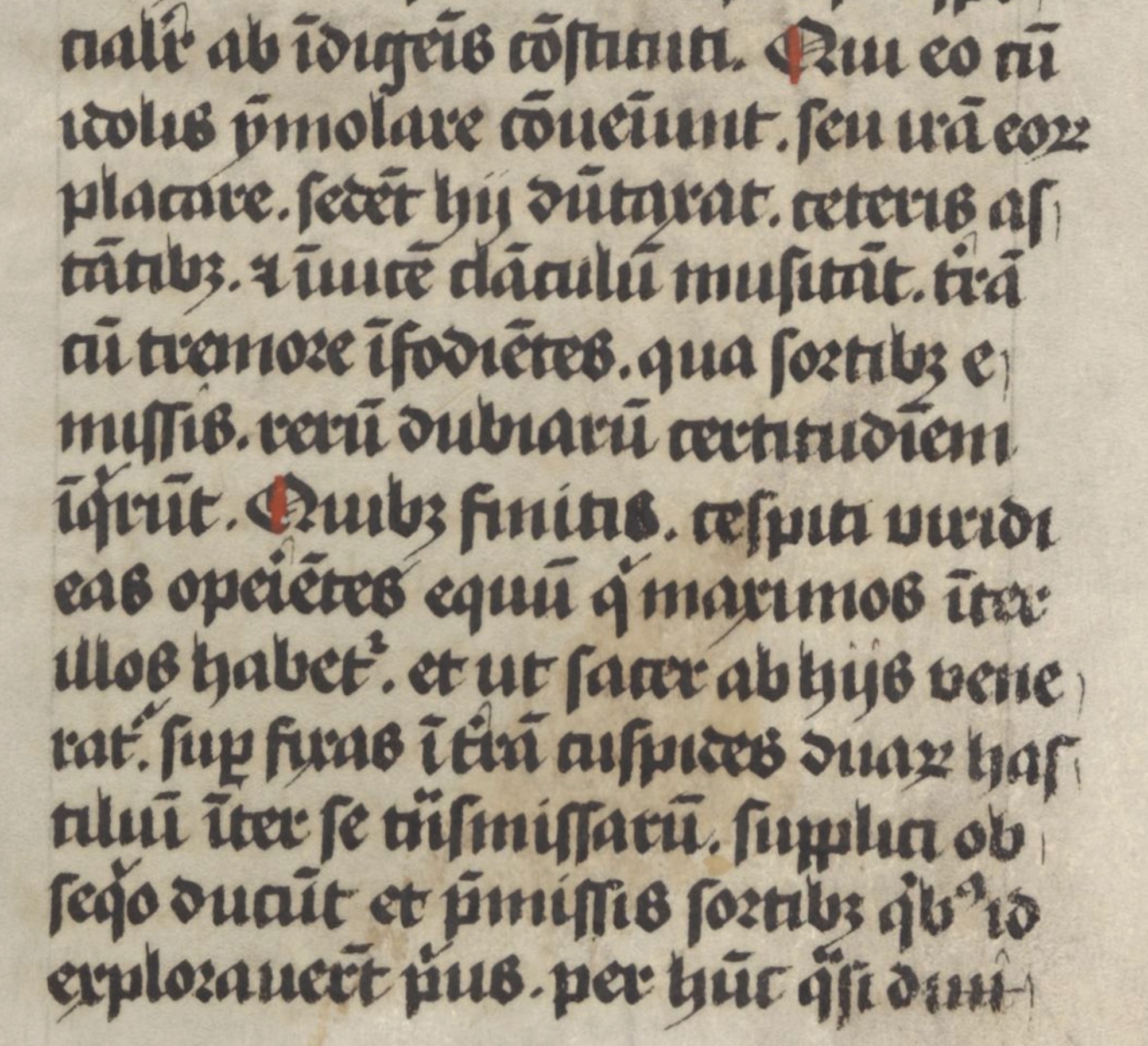
Post hec Luidizi pridie, quam Oderam fluvium attingerent, nostris sociantur, deos suos se precedentes secuti.  

Quamvis autem de hiis aliquid loqui perhorrescam, tamen, o lector amate, ut scias vanam eorum supersticionem et inanem populi istius execucionem, qui sint et unde huc venerint, strictim enodabo. Urbs est antiqua quedam, que Riedegost vocitata, in pago Rederirun, et st tricornis et tres in se continens portas, unaqueque oer singula cornua, quam undique silva ab accolis intacta et venerabilis maxima circumdat.  Due eius porte cunctis introeuntibus patent; tercia, que orientem respicit et minima est, tramitem ad mare iuxta positum et visu nimis horribile monstrat, que nulli facile patet. In eadem urbe nichil est aliud nisi fanum de ligno artificiose compositum, quod pro basibus diversarum bestiarum cornibus sustentatur, Huius parietes exterius ornant varie imagines deorum et dearum mirifice, ut cernentibus videtur, insculpte; interius autem dii stant manufacti, singuli nominibus suis insculpti, galeis et loricis terribiliter vestiti, quorum primus Zuarasice dicitu et pre ceteris a cunctis gentibus veneratur et colitur. Vechilla quoque eorum, nis ad expedicionis necessaria, et tunc per pedites, nullatenus moventur.

Ad hec curiose tuenda ministri sunt specialiter ab indigenis constituti. Qui eo cum idolis ymmolare   conveniunt seu iram eorum placare, sedent hii, dumtaxat caeteris astantibus, et invicem clanculum musitant terram cum tremore infodientes, qua sortibus emissis rerum dubiarum certitudinem inquirunt. Quibus finitis cespiti viridi eas operientes, equum, qui maximus inter illos habetur et ut sacer ab hiis veneratur, super fixas in terram cuspides duarum hastilium inter se transmissarum supplici obsequio ducunt et, premissis sortibus, quibus id exploraverunt prius, per hunc quasi divinum denuo auguriantur.  Et si in duabus hiis rebus par omen apparet, factis completur; sin autem, a tristibus populis hoc prorsus omittitur. Testatur idem antiquitas vario errore delusa, si quando hiis prope seu alonge rebellionis asperitas immineret, quod e mari predicto aper maximus et candido dente de spumis lucente exeat seque in volutabro voluntando terribili quassacione multis ostendat.

Quot regiones sunt in hiis partibus, tot templa habentur et singula demonum spulchra ab infidelibus coluntur, inter que civitas memorata principalem monarchiam optinent.  Hanc ad bellum properantes salutant, ipsam prospere redeuntes muneribus debitis honorant, et, que hostia placabilis diis offerri a ministris debeat, per sortes et per equum, sicut prefatus sum, diligenter exquiritur.  Hominum et pecudum sanguine ineffabilis eorum furor mitigatur.

Hiis autem, qui Luidizi communiter vocantur, dominus nullus specialiter presidet . Usanimi vero consilio ad placitum sua necessaria discucientes, in rebus efficiendis omnes concordant.  Si quis vero ex provincialibus in placito eis contradicit, fustibus verberatur et, si forinsecus palam resistit, aut omnia incendio et continua depredacione perdit aut in eorum presencia pro qualitate sui pecunie quantitatem pro emendacione persolvit.  Ipsi quoque infideles et per omnia instabiles ab aliis magnam stabilitatem et fidem exigunt.  Pacem abraso crine supremo cum gramine datis dextris affirmant. Sed ad eam perturbandam pecunia facile corrumpuntur. Horum cultum et consorcia, lector, fugias, quin pocius mandata divinarum scripturarum sectando adimple: et fidem, quam Athanasius episcopus profitebatur, attendens, hec, que supra memoravi, nichil esse veraciter probabis.

Book 7 (64)

…The Liutizi returned to their homeland in an angry mood and complaining about the dishonor inflicted upon their goddess. One of Margrave Herman’s retainers, had thrown a rock at a banner which bore her image. When their servants sally related this event to the emperor, he gave them twelve pounds as compensation. When they attempted to cross the swollen waters of the Mulde, near the burg Wurzen, they lost yet another image of their goddess and a most excellent band of fifty milites. The rest returned under this evil omen and, at the instigation of wicked men, tried to remove themselves from the emperor’s service. Yet, afterwards, a general assembly was held at which their leading men convinced them otherwise…

…Sed Luitici redeuntes irati dedecus dee sue illatum conqueruntur.  Nam hec in vexillis eorum formata a quodam Herimanni marchionis socio lapide uno transiecta est; cumque hoc ministri eius imperatori dolenter retulissent, ad emendacionem duodecim talenta perceperunt.  Et cum iuxta Worcin civitatem Mildam nimis effusam transire voluissent, deam cum egregio quinquaginta militum comitatu alteram perdiderunt.  Tam malo omine domum residui venientes a servicio cesaris se malorum instinctu abalienare nitebantur; sed post habito suo communi placito a prioribus suis convertuntur…

The link to the pictures from the Dresden Manuscript is here. The full passages regarding Suavs in the Thietmar Chronicle cited above are here (Book VI) and here (Book VII).

Copyright ©2025 jassa.org All Rights Reserved

March 31, 2025

Hanover Eggs

Published Post author

Johan Parum Schultze (or Schultz) (baptised Sep 30, 1677, buried April 25, 1740) was, for over 40 years, the Schultze, that is “village head” of Süthen in the so called Hanover Wendland. His father, Jürgen Niebuhr, came from the village of Karmitz to the north of Süthen. Starting in 1720 Johan began writing a chronicle of the local Slavic life that came to be known as the Chronicle of Wendland. The original manuscript disappeared in 1856 but the chronicle survives in a copy and has been published a few times. Schultze wrote with the intention of preserving stories of the local events and people but he also wanted to preserve the language of the Wends which at that time was dying out. He wrote: “I have undertaken in this 1725th year to record something of the Wendish language for posterity… I am now 47 years old. When I and three other people are gone from our village, no one will likely know what a ‘dog’ is called in Wendish (local Slavic).” He was right to be concerned – the last speaker of local Wendish passed away in 1750.

Of interest to this blog, Schultze describes an interesting (probably fertility) custom previously followed in the village:

“Before the year 1690 there was a custom, wherein those young women who had married the prior fall, were required the following Easter to hand out cooked and painted eggs, going house to house around the village. To each person they gave two. Did not matter whether the recipient was young or old.”

Copyright ©2025 jassa.org All Rights Reserved.

March 8, 2025

Suavs Change Hands

Published Post author

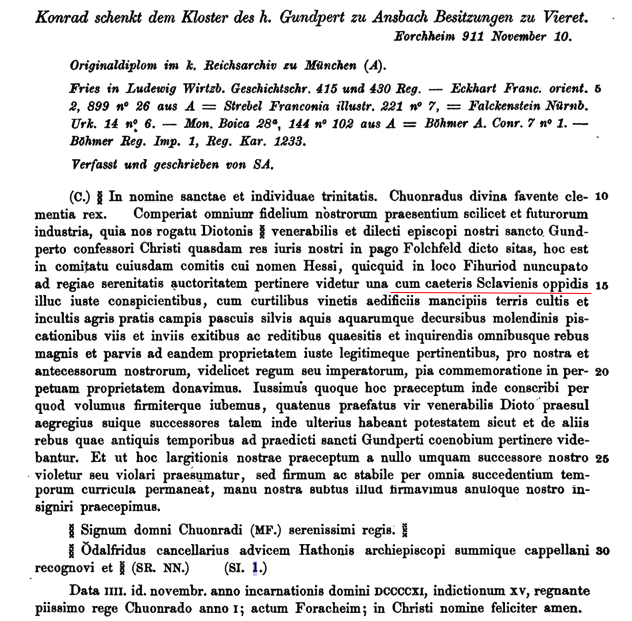
On November 10, of the year 911, Leszek was likely running the show somewhere around Gniezno, his young son Siemomysł helping him out. Mieszko, the first historically attested ruler of Poland very likely hadn’t been born yet. Almost 350 miles to the southwest of Gniezno, however, there lay a place on the RIver Main called Fihuriod (today’s Viereth-Trunstadt) west of Bamberg. In it, as in Gniezno, the local Suavs were tilling the land and having an altogether swell time. Unbeknownst to them, on that very day a new Frankish king had just gotten elected.

Conrad I, like a savvy politician, started his reign in the nearby Forchheim by doling out goodies.  He hadn’t been king but a few hours when his scribes, upon the request of the venerable Dioto the Bishop of Würzburg, were already busy assigning Fihuriod and “all other Suavic places” and possessions in the vicinity (including the important tilling seasons) to the well-deserving monks of the abbey of Ansbach operating under the holy patronage of Saint Gumbertus.

“In nomine sanctae et individuae trinitatis. Chuonradus divina favente clementia rex. Comperiat omnium fidelium nostrorum praesentium scilicet et futurorum industria, quia nos rogatu Diotonis venerabilis et dilecti episcopi nostri sancto Gundperto confessori Christi quasdam res iuris nostri in pago Folchfeld dicto sitas, hoc est in comitatu cuiusdam comitis cui nomen Hessi, quicquid in  loco  Fihuriod nuncupato ad regia cerenitatis auctoritatem pertinere videtur una cum caeteris Sclavienis oppidis illuc iuste conspicientibus. cum curtilibus vinetis aedificiis mancipiis terris cultis et incultis agris pratis campis pascuis silvis aquis aquarumque decursibus molendinis piscationibus viis et inviis exitibus ac reditibus quaesitis et inquirendis omnibusque rebus magnis et parvis ad eandem proprietatem iuste legitimeque pertinentibus, pro nostra et antecessorum nostrorum, videlicet regum seu imperatorum, pia commemoratione in perpetuam proprietatem donavimus. lussimus quoque hoc praeceptum inde conscribi per quod volumus firmiterque iubemus, quatenus praefatus vir venerabilis Dioto praesul aegregius suique successores talem inde ulterius habeant potestatem sicut et de aliis rebus quae antiquis temporibus ad praedicti sancti Gundperti coenobium pertinere videbantur. Et ut hoc largitionis nostrae praeceptum a nullo umquam successore nostro violetur seu violari praesumatur, sed firmum ac stabile per omnia succedentium temporum curricula permaneat, manu nostra subtus illud firmavimus anuloque nostro insigniri praecepimus.

Signum domni Chuonradi (MF.) serenissimi regis.
Odalfridus cancellarius advicem Hathonis archiepiscopi summique cappellani recognovi et g (SR. NN.) (SI. 1.) Data IIII. id. novembr. anno incamationis domini DCCCCXI, indictionum xv, regnante piissimo rege Chuonrado anno l; actum Foracheim; in Christi nomine feliciter amen.”

Here is a more global picture of the relevant location:

Copyright ©2024 jassa.org All Rights Reserved.

December 26, 2024

Poenitentiale Merseburgense

Published Post author

Karl Heinrich Meyer notes in the appendix to his compendium on Suavic religion (Fontes historiae religionis Slavicae) certain passages from the Merseburg Penitential (Poenitentiale Merseburgense) which may or may not refer to Suavic customs. Nevertheless, given that some of these may in fact have a Suavic origin we include them here. The ones included are only the ones mentioned by Meyer and represent his choice of those that appeared to him to be most likely connected with Suavs.

For the complete penitential (which contains a total of 169 different punishable offenses (some quite, including those shown here, gross) see F.W.H. Wasserschleben’s Beitraege zur Geschichte der vorgratianischen Kirchenrechtsquellen (Leipzig, 1839, page 88) and also Die Bussordnungen der abendlaendischen Kirche (Halle, 1851, page 387) by the same author (which also includes other versions of similar penitentials).

The manuscript itself is Merseburger Dombibliothek nr. 103 (from the 9th century).

Cap. 22: Si quis sacrilegium fecerit, id est quod aruspici vocant, qui auguria colunt, sive per aves aut quocunque malo ingenio augeraverit, III ann. cum pane e.a. poen.

Cap. 23: Si quis per ariolos, quos divinos vocant, aliquas divinationes fecerit, quia hoc daemonum [or daemonicum] est, V ann. poenit., III ex his in pane et aqua.

Cap. 26: Si quis sortes sanctorum, quas contra rationem vocant [or Si quis sortes, quas sanctorum contra rationem vocant], vel alias sortes habuerit, vel qualecunque alium malum ingenium sortitus fuerit vel veneraberit, III ann. poen.

Cap. 27: Si quis ad arbores vel ad fontes, vel ad cancellos, vel ubicunque, exceptum in ecclesia, votum voverit aut solverit, III annn. cum pane et aqua poeniteat, quia et hoc sacrilegium vel daemonium est; et qui ibidem ederit aut biberit, annum integrum cum pane et aqua poeniteat.

Cap. 32: Si quis, quod in Kalend. Januar. multi faciunt, quod adhuc de paganis residit, in cervolum [o cervolo], quod dicitur, aut in vecola [or vetula] vadit, III ann. poen., quia hoc daemonum [or daemonicum] est.

Cap. 34: Si quis mathematicus fuerit, i.e., per invocationem daemonum mentes hominum tulerit aut debacante [or debacchantes] fecerit, V ann. poen., III ex his i.p.e.a.

Cap. 36: Si quis ligaturam fecerit in herbas vel quolibet ingenio malo incantaverit et super Christianum ligaverit, scias eum fidem Dei amisisse, III ann. poen., I ex his i.p.e.a.

Cap. 48: Si qui simul edunt festivitates in locis abuminandis more gentium, III ann. poen. i.p.e.a.

Cap. 50: Si quis secundo et tertio idolis immolaverit per vim, III annn. poen., II sine oblatione communicet.

Cap. 74: Si quis sanguinem animalium manducaberit nesciens, aut morticinum aut idolis immolatum, IV menses poen., i.p.e.a., si autem scit, II ann. sine vino et carne.

Cap. 103: Si qua mulier semen viri sui in cibum miscens, aut inlicitas causas fecerit, ut inde plus ejus amore suscipiat, III ann. poen.

Cap. 108: Si quis [or aliquis] infans per ignorantiam gustaberit idolis immolatum aut morticinum, aut aliquid abhuminabile, III ebdom. poen.

Cap. 167: Si quis emissor tempestatum fuerit, VII ann. poen., III ex his i.p.e.a.

Copyright ©2022 jassa.org All Rights Reserved.

December 26, 2022

Wiltzi vs the Huns & Goths – Osantrix & Dietrich of Bern – Part I

Published Post author

In those days there erupted a quarrel between Dietrich’s two new friends: Etzel the king of the Huns and Osantrix the mighty king of the Wiltzi. The reason for this quarrel was as follows.

As Etzel searched year after year for a wife, [his advisors] suggested Helke the daughter of King Osantrix. He, therefore, sent ambsassadors to the king of the Wiltzi to plead his case. The proud Osantrix, however, refused the Hun the hand of his daughter and the envoys were forced to return having failed in their task.

Among the leaders of these envoys there was a young duke by the name Rodolf who had had the opportunity to see Osantrix’ both daughters: Helke the older one and the younger Bertha who was just fifteen. Since he grew particularly fond of the recently bloomed Bertha, he announced to Etzel that there could not be found on the whole Earth more beautfiul maidens as the two royal daughters.

So Etzel thought to try again and sent for Rüdiger the duke of Bechelaren [Rüdiger von Bechelaren or Rytygier?], who was considered as the smartest and most cunning man among all the heroes of the Huns and who, already as a young man, had come to know Osantrix  Etzle entrusted him with the task and ordered him to head out north once again and to have an honest talk with the king of the Wiltzi. “But if Osantrix should refuse this time as well” Etzel concluded his speech “you should not hide from him that he should then quickly prepare his kingdom for my army of Huns.”

Osantrix received his old friend Rüdiger graciously and hosted him with great honors for three days. But in the morning of the fourth day, Rüdiger wnet before the king’s throne and spoke thus: “Allow me, o’ king that I should fulfill my embassy from the land of the Huns. King Etzel, whose rule is greatly respected in all the lands, sends you greetings through me and wishes you and your kingdom God’s blessing. He is so inflamed with love for your daughter that he cannot be held back from her and for this reason asks through me once more for he hand. By reason of his great heroism, Etzel has become most famous among kings and it would certainly make sense to have him as a friend and son in law.”

“You choose your words well Rüdiger,” answered Osantrix, “and fulfills your master’s embassy well but it does not sit well with me that I should give my daughter to the king of the Huns who is of much lower birth than me, especially since I love my child more than all my kingdom and country. You are always welcome in my hall old friend but king Etzel should not hold out hope to become my son in law and my heir!”

“If you refuse the king of the Huns your daughter’s hand great lord,” replied Rüdiger darkly, “then you should expect that he will cause great harm to your lands. Thus, be prepared that he should move against your with his armies.”

“You are a brave man, Rüdiger,” said Osantrix laughing, “you faithfully fulfill the tasks that are given to you and you shall not come to harm from that. The king of the Huns may come when he pleases, we fear him not! He will soon come to feel that the men of the Wiltzi have sharp swords and use them often.”

As Rüdiger returned with this message, Etzel commanded to blast the war horn and quickly gathered his troops so as to avenge humiliation done unto him. Very shortly he had collected more than ten thousand men, with whom he went out, without tarrying, against Osantrix. With sword and pike he crossed the borderlands and ravaged and burned everywhere he came.

Given the unexpected swiftness of the assault, Osantrix was at first able to send only a small army against Etzel which army was led by king Aspilian who owed Osantrix allegiance. Yet with this host were Aspilian’s three giant brothers – Aventrod, Etgir and Widold – each of whom possessed the strength of fifty men. Trusting in his giants, Aspilian bravely faced the numerically superior Hun army. The giants bested many men – Widold alone killed three hundred – but eventually they were overcome by the great numbers and had to seek safety in flight. King Etzel had his men gave chase and most of the remnants of Aspilian’s army were destroyed – yet the three brothers escaped for they ran faster than even the nimble stallions of the Huns. They went to Osantrix and announced to him the approach of the victroious Huns. On hearing this, the king immediately raised all able-bodied men of his land and moved towards the enemy with more than fifteen thousand fighters. The three brothers went ahead of the host and, upon encountering the Huns, used their heavy iron rods to strike down all who stood in their way. Osantrix drove bravely forth and so it happened that as the day came to an end, Etzel had lost the battle and had to flee into the thicket of the nearby woods. Osantrix pursued him to the edge of the forest but did not think it wise to enter the dense woods in the middle of the dark night. So he ordered his tents erected close to the border of the forest in order to continue the chase in the morning.

Among Etzel’s warriors there was in the first row the bold duke Rodolf who had pleaded Etzel’s case for Helke and who spoke the language of the Wiltzi. It was he with three hundred of the best Hunnic riders who crept in the middle of the night to the edge of the forest and slew Osantrix’ watch. With that done, he stormed into the middle of Osantrix’ camp together with his Hun warriors, all armed to the teeth. Blowing loud horns and screaming wild cries he brought down all that came his way. The Wiltzi were taken by surprise and in their dismay were only slowly gathering themselves. And so it passed that Rodolf and his men were able to slay a thousand without losing a single man.

Thereupon Rodolf returned to Etzel in the woods and so through his boldness achieved that Osantrix and his confused army could not continue their pursuit of the Huns come next morning but rather had to first arrange themselves. And so Etzel could complete his escape untouched. But Rodolf did not accompany him. Rather with Etzel’s agreement he took his three hundred swords and surreptitiously followed the Wiltzi host. For he thought to try one more time to obtain Helke and to achieve that with cunning which force failed to bring about. And as he became aware that Osantrix turned back to his capital, he stopped in a great and thick forest and so spoke to his companions: “This wood is uninhabited and no human tracks are visible anywhere nearby. You can take a rest here and turn one of these rock heights into a watchtower in which you can wait until I return. I plan, for the benefit of our master, to make my way into Osantrix’ fortress under the guise of a traveling knight. But if when winter has passed and the spring comes to this country I had not yet returned then you should return home and bring news to King Etzel that I have found death in his service.”

He left them his rich clothes and almost all the gold and silver, put on an old soldier’s uniform and rode away without companions, his head hidden by the deep fallen rim of a hat. AS he came in the vicinity of the Wiltzi fortress, he combed his hair in the fashion of an old man and smeared his face with the juice of a certain root so that he had the appearance of a very old man.Bent deeply over his steed’s neck, he rode to the king’s hall and humbly asked permission to enter. As this was allowed, he walked at a slow pace to Osantrix’ throne and spoke so: “Grant me an audience, by your royal grace, o’ mighty lord!” Thereupon the king answered suspiciously: “You speak our language with a foreign accent, just like a Hun. Who are you and what do you desire here?” “I was born in the Hunlands,” answered Rodolf, “and was a respected man there like my father. I am called Sigurd and I have fled Etzel’s wrath. Since we refused to ride with him, he cursed out our entire clan: he had laid low with the sword both of my brothers and had the same fate prepared for me had I not fled his wrath. Though before I departed the Hunlands, I burned down five of King Etzel’s outposts and killed all the living there. I then came here for I knew that you hate the king of the Huns as much as I do.”

“You performed a good deed there,” replied Osantrix, “if this is so, I shall give you property in my country and will take you up among my companions.”

“I will gladly remain at your court,” said Rodolf, “if you grant me a house and a position and if your entourage should prove friendly towards me.” The king thought this was well spoken and took him in among his men. Rodolf spent the entire winter there under the name ‘Sigurd of the Hunlands’ and earned the king’s full trust. Yet his goal of seeing and speaking to the king’s daughters he did not achieve for the maidens were very carefully guarded in a tower and were and were never allowed to come down to the court.

At the beginning of spring, there arrived a king from Swabia by the name of Nordung who intended to lobby for the hand of Helke, the older of the daughters. Nordung was a mighty and brave king in the prime of his manhood and Osantrix was not averse to granting him Helke’s hand for therewith he could gain an ally against the treacherous Etzel. To the king – who did not wish to have anything to do with female matters – there seemed no one more suitable to bring up this matter with his daughter as the old Sigurd of the Hunlands – a man who had always proven himself extraordinarily polite and skillful. And so he spoke to Sigurd thusly: “You have earned the full trust of my heart, o’ Sigurd, for you have always shown yourself here to be a wise, virtuous man. Indeed, you have proven more faithful and more discrete than any other of my entourage. Thus, I have chosen you as an important messenger. You will go to the tower to my daughter Helke and you will investigate her heart to see whether she would be inclined to accept king Nordung’s request. I have selected you so that nothing should prematurely become known of this whole matter. Take heed that no one should learn of this affair!”

Sigurd was thrilled to have been selected for this task but he did not let on and asked the king rather to send another for, as he said, he garb and weaponry were not of the kind that would allow him to enter into the presence of a king’s daughter. Thereupon, Osantrix quickly gave him the most exquisite garments and weapons and thus endowed did Sigurd make his way towards the tower. When Helke heard that a messenger was coming to her sent by her father, she received him, surrounded by her female servants, exceptionally well  and spoke: “You must be a wise and a clever man if my father had sent you, a foreigner, to me; very well, tell us the message that the that the king gave you!” To this Sigurd answered: “The king, o’ noble maiden, had sent me with a matter that no one should know other than you and your sister Bertha. For this reason, I ask you should promise us your silence and come with me down there to the garden. Your servants can see us there talking but none will be able to hear us.”

On hearing this, to listen to Sigurd’s message, Helke asked her sister to take two cushions to the garden and walked down with Bertha and the messenger to a shady tree under which there stood a stone bench. After both maidens had been sworn to silence, Sigurd announced then Nordung’s purpose but, since he saw that Bertha did not seem pleased with this news, he stood up straight, tossed aside the hair that had been covering his brow and spoke with flashing eyes and trembling voice thusly: “Now can you finally learn the whole truth, beautiful ladies! Till now I have deceived men and women, deceived your father, deceived king Nordung and deceived the two of you. I am not Sigurd the Old but Rodolf the duke and emissary of king Etzel. Once already have I witnessed your great beauty and have reported that there is no one on man’s Earth that can be compared to you, whether in grace, in virtue or in charm. That is why he had sent me once more to you, Helke and I have pledged my life to win both of you for you should know that I am enflamed with love for your sister Bertha and I will either have her or perish. Bertha grew red as she heard this confession but Helke was pale in surprise and anger. “Do you hear what this traitor says, sister?” she cried out, “he is notSigurd but Rodolf, Etzel’s man who had previously slain five hundred of our greatest heroes and who now wants to deceive our father and us. Hurry up and call our father, so that he should take this fabulist prisoner and have him hanged from the highest tower of the castle!”

“Before this should pass and you have broken your promise to me,” cried Rodolf with a threatening voice and grasping his sword, “you will die both with me. So think this over well high queens and do not refuse me an agreement to take to Etzel. You do not need to sit forever in a lonely tower for he will give you all that you could want: beautiful, great palaces, many virtuous knights and high-born ladies in waiting. Dukes will carry your clothes so that you will become the first Queen of the world.”

Copyright ©2022 jassa.org All Rights Reserved.

March 3, 2022

On Raunonia

Published Post author

We discussed Pliny the Elder and his Veneti a few years ago here. But there was a section that preceded the text cited that we did not mention as it, seemingly, did not have anything to do with the Veneti. On closer examination, however, perhaps it is worth bringing it up:

“We must now leave the Euxine to describe the outer portions of Europe. After passing the Riphæan mountains we have now to follow the shores of the Northern Ocean on the left, until we arrive at Gades. In this direction a great number of islands are said to exist that have no name; among which there is one which lies opposite to Scythia, mentioned under the name of Raunonia, and said to be at a distance of the day’s sail from the mainland; and upon which, according to Timæus, amber is thrown up by the waves in the spring season. As to the remaining parts of these shores, they are only known from reports of doubtful authority. With reference to the Septentrional or Northern Ocean; Hecatæus calls it, after we have passed the mouth of the river Parapanisus, where it washes the Scythian shores, the Amalchian sea, the word ‘Amalchian’ signifying in the language of these races, frozen. Philemon again says that it is called Morimarusa or the “Dead Sea” by the Cimbri, as far as the Promontory of Rubeas, beyond which it has the name of the Cronian Sea. Xenophon of Lampsacus tells us that at a distance of three days’ sail from the shores of Scythia, there is an island of immense size called Baltia, which by Pytheas is called Basilia. Some islands called Oönæ are said to be here, the inhabitants of which live on the eggs of birds and oats; and others again upon which human beings are produced with the feet of horses, thence called Hippopodes. Some other islands are also mentioned as those of the Panotii, the people of which have ears of such extraordinary size as to cover the rest of the body, which is otherwise left naked.”

(translation after John Bostock & H.T. Riley (1855) from http://www.perseus.tufts.edu)

Now Baltia is likely the name responsible for the Visigothic dynasty of the Balti and perhaps also for the Baltic Sea. The Cronian Sea is likely the sea around Kurland. The Baltic itself may well be referred to as the Dead Sea by the Cimbri. Which brings us to Raunonia. This island, associated with amber by Pliny, brings to mind Rana or the Suavic name for the island of Rügen whose Suavic occupants were called the Rani and where the temple of Svantovit once stood. Raunonia lies opposite of Scythia, where there is amber and Pliny mentions it immediately before describing what appears to be the rest of the Baltic Sea heading East.

Also noteworthy are Pliny’s Riphaean Mountains which run West-East here with what is described regarding the Baltic coming after one passes over these mountains. This suggests the Sudetes perhaps together with the Carpathians. Strangely, the first Czechs are said to have settled on Mount Říp which is just south of the Sudetes. Now Rügen is not a day’s sail from the mainland – it’s considerably closer – still, this seems a small objection given all the other factors.

Copyright ©2021 jassa.org All Rights Reserved.

December 26, 2021

Jecha, Nohra, Kraja

Published Post author

To the east of Sondershausen in Thuringia lies the village of Jecha. We discussed it here (as well elsewhere occasionally) very briefly. On the other, western, side of Sondershausen we find the Jechaburg. The recorded names of the place are:

  • Gigenberg 1128
  • Jechaburg 1148, 1196
  • Gechenburg 1197

Other names may have included Gigeburg, Jechaborg  (12th century), and Jecheburg as well as Jichaborg, Jechaborg, Gicheburg and Jechaburc in the 13th century. In 1360 the name appears as Jhecheburgk.

Legend has it that the name is of a pagan goddess that the ancient locals, presumably Thuringians, worshipped here. Why goddess? Well, maybe because the Jechaburg is at the foot of the Frauenberg mountain.

Based on a reading of Widukind as well as Annalista Saxo, it has been conjectured that it was here that the Hungarians were beaten by Henry I in the year 933 and 934.

Curiously, Jecha could have a Hungarian connection. Gyeücsa or Gyeusa was a Hungarian prince who, however, was born around 940, that is after these events.

Are there any Suavic names nearby?

Well, there is Trebra to the South, Nohra to the NW and, if you keep going West, there is Kraja. You would think Kraja at least should be Suavic. But if Trebra and Nohra are too then what about Bebra or Nebra (of the Sky Disk)? This seems tenuous. And yet Kraja?

On older maps, like this  one you can see Poelede which, however, is, probably not Suavic, to the West. If you move east you come, some ways off, across Kolleda (today’s Kölleda) and then Burchwenden. Still, this is very little. Only when you cross the Unstrut you get Mart Roelicz, Ochnicz (today’s Oechlitz?), Schletta and, of course, Cracou.

Other Suavic towns appear here as well: Zscheiplitz, Gleina, Nissmitz, etc. If you go further South, Suavic names project further West (as far as the area of Erfurt) but at this latitude, this is likely it. So, is it possible that this Jechelburg and Jecha are Suavic? Sure but given the distances to Suavic settlements we can say possible but not very certain.

Copyright ©2021 jassa.org All Rights Reserved.

November 26, 2021

Diddly-odel-oh-ee-dee-yodel-oh-dee

Published Post author

That certain parts of Austria, even relatively western parts have been settled by Suavs is not controversial. We can only point to the names of villages and mountains to establish that. Thus, for example, on the borders of Carinthia we have the Gross Venediger mountain near the town of Pregratten, the nearby Mullwitz as well as Pasterzen glaciers or Windisch Matray or Matrey. Just northwest of those Krimml.

Curioously,the name of the Venediger range apparently has nothing to do with the Windische but rather either with the city of Venice (Venedig) or with the name of a mysterious group of foreign people who lurked in the mountains (described in Teutonic lore almost like leprechauns or dwarves – check out this Wikipedia entry for more on these Walen or Venedigermandln who wrote their secrets regarding treasures in Krkonoše aka Riesengebirge, Jizerské hory aka Isergebirge and, apparently also in the Eastern Alps, in the so-called Walenbücher).

This basically runs through northern East Tirol.

Here is a map showing Suavic placenames in Austria. I don’t know how accurate it is (or its source) but it seems to accurately portray the common understanding of the extent of Suavic colonization of the area.

Note that this map comes to an end right where Austria becomes “thinner” getting into Tirol (except that East Tirol is covered). In fact it stops along the north-south Kufstein-Krimml line (though the map does not show Krimml as Suavic).

Is that right? Well, certainly, once you move further west there are fewer Suavic names. Nevertheless, fewer does not mean none. And so, further northwest, you could maybe make a case for Birgitz and Pafnitz which appear in the neighborhood of Innsbruck (the capital of Tirol) as well as for Scharnitz in the north close to the German border as well as Gschnitz in the south (and just to the West of Vinaders and Venn). And a bit further west is Dormitz.Maybe you could also ask questions about Venetberg and Wenns.

But what about much further West?

Well, at some point we asked the question of the origin of the name Bregenz. The city sits on the shores of the Bodensee and, were it found is East Germany, its name would no doubt be explained with a Slavic etymology (breg meaning shore). However, when the same etymology was applied years ago to Bregenz, the immediate and enduring objection was that Slavs never made it that far West. We had questioned the definitiveness of that conclusion pointing out the number of –ow ending names around Bodensee such as Lindow, Langnow, Argow, Hagnow (today Hagnau am Bodensee), Rychow (aka Rinchow, today Reichenau), Metnow (see here or here) or ElekowBurgowTergenowTettnowRhynow, Hegnow, ReitnowLiggnowBetznow, LaymnowGoslowHerisowLustnowHennowUnpinow, Elgow, Elsow, Kromnow (see below for location), another (?) UnpinowYllnow, another Gossow, Klingnow, Lengnow, KinnowWillisgowBrittnowMetznow, Berow, Raittnow, Winow, Signow, Langnow, Tergernow, Witnow, Tottnow, Warnow (same as below?), another Witnow, SiglowRainhartsowHoppfowHannowSirnowDietizowDurnowTurndow, Buchow (see here and  here). Or in an early article Varnow/Warnow (today’s Fahrnau).

While some of the stems here are clearly Teutonic, the suffixes are suggestive of Suavic. The -ow suffix does not seem to appear much in center-west or northwest Germany ory for that matter, in the Teutonic heartland of Scandinavia (outside of the -skovs in Denmark that refer to a forest).

Of course, there were also other Suavic sounding names not ending in -ow such as Prasbin or Kislec (today Kisslegg), Engelitz or Mogletz/Möglitz slightly to the north. And here is another Kremlen in the Bodensee area. We also pointed out other names such as Belgrad (see here) that are clearly Suavic. We even had a little blurb on Slavs in Switzerland (see here). And some of these areas made it into the Spruner Swabia map which, however, we did not yet discuss here.

I am certainly not the first person to ask theses questions – the most recent attempt to bring some light to this came from Jožef Šavli, Matej Bor and Ivan Tomažič in their “Veneti” book. For the “establishment” views see Robert von Planta’s and Andrea Schorta’s Rätisches Namenbuch.

We thought now that it might be interesting to look at some of the actual maps from the time periods when these names were still used in more or less a Suavic-looking/sounding form.


So let’s get deeper into this !


Below with some overlap you see Elgow (today Elgg; same as above?), Eglisow (today Eglisau), Altnow (today Altnau), Hennow (today Henau by Uzwil; same as above?), Herisow (today Herisau; same as above), Rhynow aka Rynow (today Rheinau; same as above?), Vlnow (today Illnau; same as above?), Langenow (Unter- and Oberlangnau in Germany), Gossaw (Gossow? see below for another Gossow; today Gosau).

North of Rhynow there was Halow just northwest of Dorflingen.

And further west, as we leave the Kleckgow (that is Gau) we had Bernow by Koblenz, now seemingly subsumed by Leibstadt.

Now remember the -gow suffix is spposed to indicate a Gau. For example, many of the above names appear in the Turgow (aka Turgau) (what the etymology of that is is also interesting, considering that tur, for example, is the Suavic word for an “auroch”). Further, the -aw endings are supposed to refer to water though such a name for water has not been attested in a Germanic language as far as I know. But then what do you do with names that do have an -ow suffix but not -gow? At the very least we are dealing with a peculiar overlap among Germanic and Suavic naming conventions.

It turns out that such -ow suffixed names do appear – though very infrequently and usually in clusters – even further out south. Thus, around we have Furstenow (today Furstenau) and Alvenüw (today Alvaneu).

Clüver 1620s

Once again, you might say that since these stems are obviously Germanic this is just a reflection of the confluence of conventions as mentioned above or, at best, this fact just proves that the Suavic tradition of -ow suffixes somehow made it into Switzerland. And yet, as already mentioned above,  you do not see that in Westphalia (well, except for Crakow) or Scandinavia. And yet next to the Germanic Alvenuw are today’s Surava (near Perendellaberg) and Stierva. These may be Celtic (the -ava suffix is IE) and Surovas is a name attested elsewhere in Switzerland but the “elsewhere” is in parts we are about to discuss.

Im any event, if we move towards Zurich we get more of the same though in fewer numbers.

We run into Gudisow (today’s Gundisau next to Russikon), Hitnow (today’s Hitnau) and Oberhitnow and Ylnow (though this seems to be the same as Vlnow, today’s Illnau, already mentioned above).  Again, these are written with the -ow suffix, not the German -au suffix.

Mercator 1585

Again, some of these could be Suavic but others are clearly Germanic.

Once you get deeper into Zurichgow we have Gossow (today’s Gossau), Wolrow (today’s Wollerau; elsewhere Wolraw, Woffrauw?) and Uffnow (today’s Ufenau; later Uffenauw – same as Ussnow from here?; nearby also Lutzelauw).

Mercartor 1585

Next to Wolrow (below already updated to Wolrau), curiously we also have Altwinden (whose today’s location I’ve been unable to pinpoint). To the east, less convincingly, Ober- and Unter- Schwendi.

Seutter/Lotter 1740

Oh, and do not forget Grinow (Grynau) at the southeastern tip of the Ober See (next to Uznach).

Mercator 1585

Another Langenow (and this is quite clearly not a Suavic name though has a Suavic prefix) is  the northwest side of the lake complex.

What the Babenwag next to Hirzel referred to, we will not presume to guess but that too is at least slightly interesting.

A bit to the west we have Knonow (today’s Knonau). 

Just east of Knonow – here shown as Kronow (surely not Kronów!?) – we have Rossow.

If you head northwest from Knonau, you will come to the area that was the subject matter of this post. Here we find the towns described as having some/all of its population be Wendish: Muri, Birchi (today’s Birri) and Wolen (today’s Wohlen). Birri is the villa primitus silva fuit, sed exculta ad hominibus, qui vocantur Winda.

The others mentioned in that other post as Suavic were Butwil, Hermenswil and Althuesern. Althuesern was also referred to in the property listings of the are in 1027-1210 (?): cum [villa] plus esset silvosa, exstirpata est silva ab hominibus, ui vocantur Winda. Didn’t immediately locate them but did find that Aristau next door to Birri was once called Arestovw (though also Arnestouw and Arenstovw). Further, if you go along the River Reuss where it meets the Aare, you will find Windisch.

Just south of Knonow and west of the Zugersee, you have Hanow (today’s Hanau, north of Gyslicken, today’s Gisikon).

If you want to go past the Sempachersee (aka Sur See) you have Willisow (Willisau) with a clear Teutonic prefix (indicating the owner?).

Nearby we also have Ober- and Nieder Vrnow (today’s Ober- and Niederurnen). Further east Nesselaw (aka Nesslauw aka Nesslau, compare Niesiołów near Włocławek) and Kromenaw (today’s Nesslau-Krummenau; compare with, for example, Kromonov, later Crumenaw, earlier Crumpow now Kromnów in Silesia). I mentioned these here some time back. Of course, these have an -aw suffix but figured they ought to be mentioned here. Further, if you follow today’s route 16 east towards Liechtenstein, you will come close to Mount Slewiz/Ischlawitz (see here).

Hurtern 1619-1640

If you move southwest from the Zurichsee and Obersee you get to Der Vier Waldsteten See where we have Gerisow (today’s Gersau) near Switz (elsewhere Swytz). As for Sarnen (of the White Book fame with its William/Wilhelm Tell story) which here is written as Saruen (Sarven?), Silenen and Swanden, I am inclined to reserve judgment.

Mercator 1595

Just on the outskirts of Lucerne you had Linow now subsumed by the bigger city.

Ok, let’s now switch directions.

Let’s go back to Bregentz aka Bregenz and move down southwards along the ridge of the mountain range depicted in the Justus Danckerts map of the area (1651-1700) (from the Nova et Accuratißima Galliae Tabula, Vulgo Royaume De France). Close by is Pruc (couldn’t immediately locate) but is that a Suavic name? But then we also have Ruthin (today’s Rüthi).

A bit further to the east we find Nittesaw, Langenaw, Bitzaw and Statpernaw. Some of these may have German stems even if the suffix could be Slavic. Still, this side of the Lech there is nothing,

Danckerts 1651-1700

And then we get to Pludentz (or Pludertz; today’s Bludenz). Is Pludentz a Slavic name? Well, like Bregentz it has the -entz suffix but that certainly could be Germanic. The corresponding Polish suffix would have to be something like the nasal -ęcz or – encz. And if we included Pludentz in the Slavic column, we’d presumably have to consider Tenatz, Castelz, Ragatz, Eschens, Malans, Serneüs aka Serneus and maybe even Vadutz which after all (as Vaduz) is the capital of Liechtenstein. And after all there was a Dschann – now Schaan – nearby which makes you think of the translator of the Chronicle of the Slavs, Francis Joseph Tschan (and note Wartau below!). So let’s not do that (though interestingly, nearby there is a Radin and Vandans and Matschwitz).

And then we get to Küblitz aka Chüblitz (today’s Küblis). Here is another take of the same area (here note Wartau (or Werdaberg? elsewhere, it seems, Wartaw; today’s Wartau) guarding the Rhein).

Matthäus Merian 1622?

Still, kubeł/kubło meaning “bucket” is supposedly a Germanic borrowing  in Polish (originally Suavic wiadro which, nachdem Herrn Brückner, was joined by kubeł from Kübel, itself from Latin cupella meaning “barrel”) and the -itz suffix, well, it’s only one such example.

And, after all, much farther west we find the following -itzes:

  • Ginitz aka Chunitz aka Chinitz (today’s Köniz) and Pimplitz (today’s Bümplitz) and further west Galmitz (today’s Ulmiz?) or, for that matter, Wola, today’s Wohlen on Wohlensee),

Nicholas Sanson, 1660

  • Bodnitz (locate yourself),

  • Not to mention, again, the eponymous Switz which itself lies next to Ruditz/Raditz (today’s Rudenz) and, again, the nearby Sarnen,

Hurtern 1619-1640

Here is the sam Ruditz as Raditz.

  • Seritz aka Siritz (today’s Sierentz near Basel and the Wies river),

Ioannes Ianssonius Keere 1680

  • A bit closer, near Chur, Damintz (aka Daminitz; today’s Tamins ). Note Scharins (today’s Scharans) as well as Ziran nearby. Ziran or Ziraun-Reschen is in Romansh (or rätoromanisch) (aka Zillis-Reischen). And yet we have towns such as Žirany in Slovakia or Żerań in Poland. We leave the nearby towns of Tschappina and Tartar (near Cazis) alone.

Cluverius 1670-1690

In fact, Wojciech Kętrzyński once argued that Constance/Konstanz may have been Suavic because it had once been shown on some maps as Kostnitz. This is unlikely since the earliest mention was  it seems, Constancia.

And what about Stadonze aka Stadonce aka Stadoentz (today’s Stadönz) between Berken aka Boricken and Graben on the Aare?

But let’s go back to Küblitz/Chüblitz and ask what about the nearby Rany (Pany? As in today’s Panybach?) or the Walgow (Walgau?) river (or Gau?)? Or Slepina (or for that matter the Ascharina) mountain?

Who knows.

Cluverius 1670-1690

But then you keep moving southeast and you come to Smolencz (already in 1585 Mercator; Ortelius Molenz). Now, what do you do with that?

Danckerts 1651-1700

Well, for one thing it’s interesting to observe that nearby you also have Semetz (today’s Zernez?) and further south the Slavic but also Italian sounding Cepino/a (another Cepina/os are in northern Italy). Then there is Stadolina on the Italian side.

But getting back to Smolencz. It seems this is an error (though a very curious one to have come up with the potentially Suavic “Sm” beginning) since an earlier version of the map by Lazius shows Molencz (we were unable to locate either). On the other hand, that same map shows Semetz as Servecz naturally raising the potential for the presence of the Serbs. In fact, nearby we have today’s town of Vinadi.

Lazius 1561

Going back west you have towns such as Samnün or Samün (today’s Samnaun) and, following the Inn southwest, Schlin (today’s Tschlin), Lavin, Susch (here Sus) and, most interestingly, Zernetz (today’s Zernez, compare with Żernica aka Deutsch Zernitz in Silesia). Note, again too Serneüs/Serneus near Vadutz.

Cluverius 1670-1690

There are also some interesting mountains nearby. We will come back to this area but note Piz Plavna east of Zernez.

Moving briefly further west again we have Mount Gemsengrad (Gemschgrätli) in the Stockhorn chain south of Bern. Note too Strüssligrat – presumably then “grat” means something in some local dialect? Maybe some reader can help explain. You can see this here.

Or here.

Compare this with Gotschnagrat below.

Anyway, of course, just as with -ow or -itz, I am not claiming that every -entz ending is Suavic. It is not but some of these could be and that is why we ought to examine the history of each such name.

What is also interesting that some of these Suavic-like names continue on the Italian side of the Austrian and Swiss borders.

In Austria by the Italian border we have Vent (and, of course, Venter Tal). When we hop across the border to Italy, we are in Alpi Venoste. Here we have Allitz or Alliz next to Lasa or Laas. Further east Partschins as well as Sciaves (Schabs) and Varna (Vahrn). Further west, Curon Venosta or Graun im Vinschgau with Plawenn or Piavenna next to it. Now Plauen is clearly Suavic if it appears in lands understood to have been Suavic. For example, Plauen (Vicus Plawe) in Saxony – as in Heinrich von Plauen and Heinrich Reuß von Plauen – comes from the Suavic plavna. In fact, this is a great place to remind you of the above-mentioned Piz Plavna.

Oddly, there is also Slingia or Schlinig nearby so feel free to loop in the Vandals. Further west Pis Sesvenna and Piz Pisoc. All in all, however, not very impressive.

At the Swiss-Austian-Italian “triborder”, however, we have Piz Lad. On the Swiss side the mountain Curuna Lada (Valsot) between a mountain called Krone and Fil Spadla. The term lada means “wide” (so Curuna Lada would mean a “wide crown” ) in Sursilvan but Sursilvan is not spoken in the part of Graubünden canton where the Curuna Lada sits (nor on the border where Lad sits). The same term appears in Rumantsch Grischun but this is like the esperanto of Romansh languages.

And there are other interesting names: Piz Tasna, Piz Arina, Piz Tschütta, Piz Mundin.

On the Swiss-Austrian border, near the above-mentioned town of Vinadi we have the town of Spiss (compare with Polish Spisz – first written as Spis – but then what is the etymology of Spisz? See Rospond and, more recently, Nalepa). Further west Madrisa, Chlein, Piz Buin. Less convincingly Roggenhorn. No one doubts that -horn is a German suffix but the prefix? Then also Gorihorn, GorigratGotschna, Gotschnagrat (compare this with Gemsengrad) and Jägglisch Horn. And, of course, there is Mount Strela strzała (arrow in Polish/Suavic), strahlen (to shine in German) or stella/Estrella (star in Latin-based languages)

Let’s go back to the Italian side. What about Piz Sesvenna? Further southwest, could Trepalle be Slavic? Tiran aka Tirano (but then what about Tirana in Albania?)? Acqua del Vescovo? Piz Trevisina? I doubt it.

But what about just back across the Swiss border, the Lago di Poschiavo or, really, Poschiavo itself? Of course, the Italian Schiavo comes from Sclavi. Further west we have Piz Tschierva (presumably from the Suavic for “red” – itself derived from the, probably Polish, cochineal from which red dye was made), Piz Salatschina, Piz Gross Pulaschin (today’s Polaschin, supposedly from Latin polex !?) and, even more interestingly, Piz Corvatsch (south of Samedan). Is this somehow related to the Croats (as is the French name for a “tie” – cravate)?

Seems preposterous? The official explanation demands it to come from corvus, that is crow!

Well, bear with us!

Piz Corvatsch (the -tsch suffix is similar to -tz or -tz) opposite from the also Suavic-sounding Piz Lagrev and closer but less Suavic-sounding Piz Surlej.

Hopping over a piece of Italy to get back into Switzerland further west we come Piz Corbet. Is that cognate with Corvatsch? What of the nearby Mesocco? And, more interestingly, Fil de Dragiva? Across the Italian border from which we have Zerbi.

Ignore the towns of Prosto or Grono and you still have Bosco Gurin near Pizzo Biela and Pizzo Cramalina. We will leave Pizzo Alzasca out of these speculations. And if you go further north from Biela towards Lucerne you will find Wendenstöcke, WendenjochWendengletscher and Wendenhorn.

There are other names in the general Alps area that appear on the old maps, some of which are still used and that we will let you find. For a sample you can start here (note not all of them or even most of them are likely Suavic but all of them deserve a more systematic look than has been given them thus far):

  • Brienz aka Brientz
  • Tschiertschen aka Tschiersen (compare this with the Suavic word for a “hornet” – szerszeń Polish, pronounced “shershen”)
  • Lentz
  • Cazis
  • Tujetsch
  • Uznach
  • Rutin near Merch, Mons Lintthal, Glaris
  • Seerutin
  • Servantia (near Verossaz)
  • Kukalinberg near Schmitten
  • Alpe Naga
  • Dubino near Sasocobo (near Lake Como)
  • Fornice
  • Polese (there is another Polese near Padua) on Tesino river north of Molano;
  • Gora and Samolice (?) nearby;
  • Misauco (same as Messoco?)
  • Puster Thal (empty? in South Tirol)
  • Arytow (near aschwandeii)
  • Purgew
  • Alpeler Seelin
  • Knonow & Rossow (this spelling is uncertain)

There is also Zamos (or Zambs?) near Voltepach/Clausen though this is an even less likely candidate.

Now, do you recall that Piz Corvatsch? Well, let’s go even further West. Here we come to the River Sorba (Torrente Sorba) with its own Sorba Valley and, of course, Mount Sorba. Nearby there is a town of Pila.

If you continue west you will come to Bielciuken, Orsia, then Torin, Chissin and another Pila and others. About halfway between Chissin and Gemsengrad in the north lies the Rhone valley where we find Granges aka Gradetsch aka Gradetz about which I wrote here. Just east of it we have Venthone, Inden and Varen.

What about on the Swiss-French border? Well, there is this:

  • Doulina (near Verrand – today Dolonne or Dzeulena)

Furthermore, check out this Masurian reference.

Today this goes by the same name – La Masure. Ridiculous? Probably, given that there are other La Masures in France – near Nantes and Rennes but also on the French-Belgian border – same area where Perunnic names are aplenty. Bretagne Veneti? Or are those too far east of them?

Interestingly, aside from Poland, there is also a Masurica in Serbia and then a number of similarly sounding names in India.

Oh, and about halfway between Gemsengrad and

I am certainly not suggesting that these are all necessarily Suavic. In fact, few or none of them may turn out to be Suavic. However, I am certain that, as with the above Swiss names, there has been no proper scientific investigation of these Italian names. Further, it should be uncontroversial that most of the names in all these regions are hardly Suavic and indisputably German, Italian and French names predominate. What’s interesting to us is not to show that these regions are covered by Suavic nomenclature but rather that there may be, contrary to any known suggestion, some of Suavic Wortgut present there. Because of the Ostsiedlung we know what Suvaic prefixes such as -ów, -ice, -in/-ina/-ino look like in German. When their German vesrions appear Switzerland or western Austria, however, they are discounted because, by accepted hypothesis, the Suavs could not have settled there. Of course, similarities do occur, even across continents, and no one would propose to suggest that the Wanda people of Africa are somehow descendants of the Vandals or of the Polish Princess Wanda of Kraków. Nevertheless, eliminating the impossible does not translate into necessarily also eliminating the improbable. The question then is why not have an academic discussion of what the above suffixes would look like if the names they were attached to had been mangled by the French, the Italians or the Dutch – not just the Germans.

We leave you with the Swiss cheese map showing most of the names that were highlighted above in the “Let’s get deeper into this!” section as well as a few of the highlighted names from the introductory section.

Once again, the place names around the Grossvenediger and to the East are clearly Suavic. The few place names around Innsbruck may or may not be Suavic. Finally everything to the West of that is the subject of this post. Note that what this looks like is as if Suavic colonization reached (started from?) the southeastern or maybe even eastern part of Switzerland and may have extended as far West as northwestern Italy but was then “cut through” in the Tirol area. Also, aside from a few place names around Bern/Lucerne, the entire center and West of Switzerland shows no clear signs of any Suavic settlement.

Copyright ©2021 jassa.org All Rights Reserved.
May 9, 2021

On Luticios and their Minerva, Gardina Yesse

Published Post author

We return to this inscription, the stone on which it was once etched had apparently been incorporated into a local cathedral wall.

The meaning of the inscription is not entirely understood. Specifically, there is the confusing Ladae. Several theories have been proposed:

  • it’s the name of the wife of Titus Puniceus who along with the hubby donated this altar to Minerva (unusual to have the wife’s name first but, hey, maybe she was the one with the dough); the CVR. is in that case referencing cūrāre, in the sense of “donating”; presumably then it would not be Ladae T.Puniceus but rather Lada et Puniceus;
  • it refers to a curia, a rada (“wheel” (?) because, well, they sat in a circle…) a body of local officials (like the Chruch curia) and Mr. Titus;
  • it refers to Ladas the ancient Greek Olympic runner (cursor);
  • it refers to a Morin or Breton word for a “causeway” over a marsh;

The first of these would be of interest to us since it would be an attestation of the name Lada in the ancient world (third century?). The other three are also of interest but we will not discuss them now.

Incidentally, the Latin cūrāre may mean any of procure, heal, look after or govern. But CVR., as noted above, usually referred to the act of donation.

Other possibilities include curator as in “caretaker” (in which case Lada would be the protector of Minerva or vice versa?). But the noun’s case does not work; presumably, again you would have to say that this should be read “et” rather than “Ladae T.”

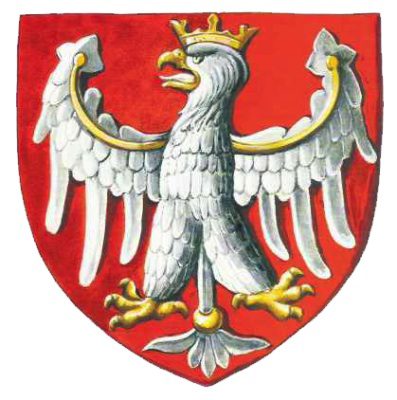
From myself, I can add the word curis which refers to a “spear”.  This is interesting since there is another inscription P. VAL. LADAE which features a thyrsus (a pine-coned spear) above the inscription and a caduceus (a messenger’s wand) below. Noteworthy is the fact that the Polish coat of arms lada features two arrows/bolts/spears (?).

The Morini were, of course, based in Tarvana (Czerwona? 🙂 ) and rebelled against the Romans right about the same time as the Bretagne Veneti.

I will note also that the arrows above can also be interpreted as “up” and “down” signs as shown in the second version of the coat of arms. I’ve already mentioned that the rune *jēra- contains the same symbols albeit arranged differently. It’s worth asking whether these rune portions, rather than just referring to the harvest, could have referred to the entire “year”. Specifically, note that for half the year the Sun is ascending and for the other half descending. The “trees” featured on ancient pots could then be viewed as simply showing a count of years. Hence in this context, the tree of life on an urn could mean the age of the deceased. All of this is a topic for another discussion.

Finally, Janssen suggested that it could refer also to Lada, the Suavic Goddess about Whom he first learned from Grimm. Schneider, noted that Lada was a spouse of the”Lycian” Jupiter. Whether he really meant Leto, the mother of Apollo and Artemis is unclear (more on that below and we will explore the topic in more detail later). In this respect, we also note that Giovanni Villani made the following statement in 1903:

“It seems that the name Lada ought to refer to an epithet of Minerva hiding the name of a local divinity.”

Now, as for this “local” divinity, it is worth noting also that this was found in 1427 in the area of Nijmegen in the Netherlands.

Also from the northwest of Continental Europe comes the following inscription:

(LUTATIIS SVEBIS was found at the foot of the Hunerberg in 1541)

Sed Liutici redeuntes irati dedecus deae suimet illatum queruntur. Nam haec, in vexillis formata, a quodam Herimanni marchionis socio lapide uno traiecta est 

Liutici were earlier known as the Vuilzi, perhaps referring to wolves (wilk meaning “wolf”). If the above connection to Leto is accurate then this may be another connection given that Leto was apparently given help by wolves (indeed, some argue that Lycia’s name comes from a reference to wolves or, alternatively, means “illuminated” – referring to Leto’s son – Apollo).

ON the other hand, maybe this is just a name of some Lutatius or Lutatia. An earlier mention talks of LVTATIAS SVEBAS.

Rybakov may have underestimated Lada’s range of worship (though he did get the Venedskiy zalyv right)

Copyright ©2021 jassa.org All Rights Reserved. 

April 2, 2021