On a Light-er Note

Published Post author

In Germanic languages the word for summer is, well, summer applied as follows:

  • sumor (Old English);
  • simmer (West Frisian);
  • zomer (Dutch);
  • sumar (Old Norse/Icelanding);
  • sommar (Swedish);
  • Sommer (Danish, Bokmål Norwegian);
  • sommar/sumar (New Norwegian);

These have, seemingly, little to do with the Slavic “summer” or:

  • Leto (Czech/Slovak/Russian);
  • Lato (Polish);
  • Lito (Ukrainian);
  • Leta (Belorussian);
  • Ljeto (Serbian/Croatian);
  • Poletje (Slovenian);

lighter

It might come as a surprise then that Old English months of June and July (roughly) bore the following names:

June

  • lida (as per Bede’s On the Reckoning of Time or De Temporum Ratione);
  • Ærra Līþa (as per George Hickes’ 1703 in De antiquae litteraturae septentrionalis utilitate sive de linguarum veterum septentrionalium usu Dissertatio epistolaris)

July

  • lida (as per Bede’s On the Reckoning of Time or De Temporum Ratione);
  • ærra litha (as per the 1031 Biblia Cattoniensis);
  • Æftera Līþa (as per George Hickes’ 1703 in De antiquae litteraturae septentrionalis utilitate sive de linguarum veterum septentrionalium usu Dissertatio epistolaris);

Ærra Līþa literally means “ere” or “before,” presumably, Midsummer.   Æftera Līþa literally means “after” Midsummer (?).  There may also have been Þrilīþa meaning (?) “Third Midsummer” (perhaps in those years which had 13 months). (Whether these have anything to do with the, e.g., Polish lipiec (July) we do not discuss here.  Suffice it to say that there seems to be a connection to the Slavic summer).

Perhaps (as per dictionary.com) this is related to lithe, i.e., Old English liðe “soft, mild, gentle, meek,” from (alleged) Proto-Germanic *linthja (cognates: Old Saxon lithi “soft, mild, gentle,” Old High German lindi, German lind, Old Norse linr, “with characteristic loss of “n” before “th” in English”), from PIE root *lent- “flexible” (cognates: Latin lentus “flexible, pliant, slow,” Sanskrit lithi).  In Middle English, used of the weather. Current sense of “easily flexible” is from c. 1300. Related: Litheness.  (though one has to ask whether the loss of the “n” really happened in English if the word was lithi already (that is already without any “n”) in Sanskrit).

And what of light?

In this telling June/July would be the lithe or mild months. It is also hard not to notice the similarity of these words (as well as the Slavic Lato or Ljeto or Leto) to words such as lethargic. Is there a relation to summer?  Perhaps.  In Latin “deep sleep” or lethargy were called sopor and the God of Sleep was… Somnus.  The cognates of that one are, supposedly, the following: Sanskrit svapnah, Avestan kvafna-, Greek hypnos, Lithuanian sapnas, Old Church Slavonic sunu, Old Irish suan, Welsh hun “sleep,” Latin sopor “a deep sleep.”  And then there is Old English swefn, Old Norse svefn “a dream”.  Not to mention the Polish/Czech/Slovak sen which has the identical meaning of “a dream.” (Same for Serbo-Croat/Slovene san(je)).

brueckner1

brueckner2

Brueckner’s arrogance wafts off the paper

Further, what appears to be March was called in Germanic languages (among other versions) hlythahlyda, hlydmonath.  Whether this has anything to do with the, e.g., Polish name for February – luty – we leave to the readers.

Copyright ©2016 jassa.org All Rights Reserved

January 23, 2016

Widukind on Slavic Saturn with Some Miscellany

Published Post author

We have had something to say about Widukind, the chronicler of the Saxons (Res gestae saxonicae sive annalium libri trespreviously.  And we will have more to say later.  However, for now, we note a curious passage in Book III, chapter 68 (chapter 66 of the same book mentions the Licikaviki) that mentions a bronze idol of… Saturn (father of Jupiter) captured from the Slavs – possibly at Stargard/Oldenburg – by “Duke” Hermann Billung.

The cast of characters includes:

  • Duke Hermann Billung – a servant of Emperor Otto I for Saxony and margrave of the so-called Billung March from 936 to 973 (though never officially a “duke”/Herzog).  He was the younger brother of Wichmann the Elder.
  • Wichmann the Elder – although not mentioned in the below tale, it was Wichmann the Elder’s outrage at having his younger brother Hermann be named „princeps militia“ (military leader) of the East Saxon areas, that caused him to rebel against Otto I – a rebellion soon suppressed.
  • Wichmann the Younger – together with his half-brother Egbert, he continued his father’s rebellion against his uncle duke Hermann and to aid him in this he went to the Slavs.
  • Duke (King) Mistivoj (Mistav) – duke of the Obodrites, perhaps the son of Nakon/Nacco; although he fought against the Saxons, he lost and became their ally which, perhaps, led to the Saxons favouring him in his conflict with Selibur (who was the duke of the Wagrians but also perhaps Mistav’s brother).  Later in life he participated in Otto II’s campaigns against the Saracens in Italy and, according to both Thietmar and Helmold, turned on the Germans in 983 during the Great Slav Uprising.
  • Duke (King) Zelibor (Selibur) – duke of the Wagrian Slav portion of Obodrite Confederation – perhaps the brother of Mistav (and hence, perhaps, the son of Nakon).  He allied with Wichmann the Younger against  Hermann Billung.  Apparently, he thought he should have been made duke (or, if you will, king) of all the Obodrites.

Sidenote 1: 

Mistav/Mistivoj’s daughter Tove became the second wife of Harald Bluetooth of Denmark.  She (and Mistav/Mistivoj) are mentioned on the so-called Sønder Vissing Runestone where it says: Tōfa lēt gørva kumbl, Mistivis dōttiR, øft mōður sīna, kona Hara[l]ds hins gōða, Gōrms sonar (or “Tofa, the daughter of Mistivoj, the wife of Harald the Good, son of Gorm, had this monument raised for her mother.”  What Mistivoj’s wife’s (and Tove’s mother’s) name was, however, we do not know.

vissing1Sidenote 2: 

It is possible that Sweyn Forkbeard was the child of Harald with Tove.  Sweyn Forkbeard fathered Cnut the Great with another Slavic princess – Świętosława (Sigrid the Haughty or Gunhild of Wenden). If so, then Cnut would have been Slavic on his father’s side as well.  It is also possible that Świętosława was the sister of Cnute (which name she would not have borne unless a connection existed to Slavs in the family); see “Santslaue soror CNVTI regis nostri”  in the Hyde Register, i.e., “Liber vitae of the New Minster and Hyde Abbey Winchester” (British Library Stowe MS 944):

SantslauesororCNVTIregisnostri

That is all just background and now for the story:

basel1

Once again, the 1532 Basel edition

Deeds of the Saxons

Book III, Chapter 68 Regarding two minor kings and Wichmann

(Bernard & David Bachrach translation)

“There were two minor kings under the jurisdiction of Duke Hermann who had inherited enmity toward each other from their fathers.  One was named Selibur and the other Mistav.  Selibur ruled the Wagrians.  Mistav ruled the Obodrites.  They frequently brought accusations against each other.  Finally, however, Selibur was convicted after an investigation by the duke, and condemned to pay fifteen talents of silver.  Taking this fine very badly, Selibur decided to raise arms agains the duke.  But since he did not have sufficient forces to fight against him, Selibur sent a messenger to ask Wichmann for aid against the duke.  Wichmann, who thought that there was nothing more pleasant than to have some means of troubling his paternal uncle, immediately set out with is companions to join with the Slav.  However, as soon as Wichmann gained entry into the stronghold, it was immediately laud under siege by the enemy, who surrounded it with a wall.  An army commanded by the duke also besieged the fort.  In the meantime, whether by chance or by prudent counsel, Wichmann left the stronghold along with a few others, pretending as if they were going to seek aid from the Danes.”

“Within a few days, the food for the fighting men and the fodder for the baggage animals began to give out.  There were those who said that the Slav had only undertaken a sham rather than a true war.  It seemed incredible that a man, who had been accustomed to war from his youth, could have made such bad preparations.  They argued that this was, instead, a plan conceived by the duke so that he might be able to overcome his nephew by whatever possible means, so that he could recover him safely in his fatherland rather than allowing him to perish utterly among the pagans.  So the garrison, burdened by hunger and by the stink of their cattle, was forced to exit the stronghold.”

“The duke spoke bitterly to the Slav about his treachery, denounced him as wretched because of his actions.  The duke then received this response from the Slav: ‘Why do you accuse me of treachery?’ he said.  ‘Behold, here are men whom neither you nor your lord emperor were able to overcome.  They stand here unarmed because of my treachery.’  The duke was silent after receiving this answer.  He deprived the Slav of the lands that he held under the duke’s authority.  The duke then handed this territory with full authority to the son of the Slav, whom the duke darker had received as a hostage.  The duke imposed a range of punishments on Wichmann’s soldiers, and gave booty from the stronghold as a gift to his open soldiers.  On hi victorious return to the fatherland, the duke brought forth an idol of Saturn made of bronze, which he had found among the other spoils in the fort, as a great spectacle for his people.”

basel2better

(LXVIII. De duobus regulis et Wichmanno.

Erant duo subreguli Herimanno duci, inimicitiae a patribus vicariae relicti; alter vocabatur Selibur, alter Mistav. Selibur preerat Waaris, Mistav Abdritis. Dum invicem quam saepe accusantur, victus tandem ratione Selibur condempnatus est quindecim talentis argenti a duce. Eam dampnationem graviter ferens arma sumere contra ducem cogitavit. Sed cum ei belli copiae non sufficerent, missa legatione postulat presidium ab Wichmanno contra ducem. Ille nichil iocundius ducens, quam aliquam molestiam inferre posset patruo, cito cum sociis adest Sclavo. Ut autem suscipitur in urbem Wichmannus, statim urbs obsidione vallatur ab inimico. Ductus quoque exercitus a duce urbem obsedit. Interim, casu nescio an prudenti consilio, Wichmannus cum paucis urbem est egressus, quasi ad extra[143]henda sibi de Danis auxilia. Pauci dies intererant, dum victus bellatoribus et pabulum iumentis defecerat. Fuerunt etiam qui dicerent Sclavum speciem quidem belli gessisse, non verum bellum. Incredibile omnimodis fore hominem a puero bellis assuetum bellicas res tam male preparatas habuisse; sed id consilii machinatum ducem, ut quoquo pacto posset nepotem vinceret, ut saltem in patria salutem recuperaret, quam inter paganos penitus perdidisset. Fame itaque urbani ac foetore pecorum aggravati urbe egredi sunt coacti. Dux Sclavum austerius alloquens de perfidia et nequam eius actibus arguit, hocque ab eo responsi accepit: «Quid me», inquit, «de perfidia arguis? Ecce, quos nec tu nec dominus tuus imperator vincere potuistis, mea perfidia inermes assistunt.» Ad haec dux conticuit, eum suae ditionis regione privans, filio ipsius, quem antea obsidem accepit, omni ipsius potestate tradita. Milites Wichmanni variis poenis afflixit, urbis predam suis militibus donavit, simulacro Saturni ex aere fuso, quod ibi inter alia urbis spolia repperit, magnum spectaculum populo prebuit victorque in patriam remeavit.)

Copyright ©2016 jassa.org All Rights Reserved

January 19, 2016

Not Everyone Is Hannibal

Published Post author

Here is a simple topographic map of North Central Europe:

version1 Say you wanted to invade the Roman Empire and you were coming down from the Danish Jutland Peninsula.  How would you do it if you did not care for crossing mountains, hills and other hard to pass natural barriers?  Here is one way.  The red lines are the “lazy man’s invasion routes” and the blue line is an approximate Roman border (obviously it changed over time).

version1z

Now compare this to the Ketrzynski map of Slav settlement (again, only in Germany and only West of the Elbe-Saale, i.e., Uaba/Souava line):

ketrinski3

More on the Hammer of Thor here.

Copyright ©2016 jassa.org All Rights Reserved

January 18, 2016

Can It Be True?

Published Post author

We have to admit that, when reading Ketrzynski’s claims we were skeptical.  Indeed, we still are skeptical about some of his derivations and, as we said before, not every Wind or Wend may be connected with the Wends, Veneti or Slavs.  Some of these may have to do with the wind or with the wending of the rivers, etc.  Likewise, not every Culm strikes us as Slavic nor every –itz (although on this last point, oddly enough, the -itz names seem to be present only in those parts of Germany where Slavs were either documented or were suspected by Ketrzynski).  So in that sense he may be overestimating various Slavic place names.

On the other hand, it is also the case that:

  • there were a number of place names in Germany that seem Slavic to us that were not included by Ketrzynski – one of the reasons for this may simply be that he did not have a computer to zoom in and out and would have included them had he known about them;
  • he excluded from analysis, honestly stating that he was no expert on non-Germanic names, a number of names that appear Slavic but that are in other countries such as Italy (most obviously) but also France and the Netherlands (a topic of some posts on this site);
  • it is likely that in Ketrzynski’s time many former Slavic names had been so altered that by the 19th century when he wrote, it’d have been impossible to recreate their Slavic character – here names with the German ending -au come to mind;
  • even going through his list – which is only about 150 years old – we notice that some names are no longer findable.  They are listed in older sources (i.e., he did not make them up) but are impossible to locate – perhaps because they were renamed (even putting aside the Nazis’ policies on renaming Slavic names, some names may have been changed just in the course of time);

Therefore, it is just as likely that he undercounted Slavic names.

In any event, prudence, honesty and scholarship dictated that we should look at some of Ketrzynski claims to be Slavic.

We were skeptical but then we came across these.

Krakow

We will go back to this one more time.  The fact that there is a Cracow in Poland surprises no one.

krakowska

But there is a Krakow am See in Eastern Germany too.  That Cracow counts as Slavic and that too is not questioned.

krakow

However, that there should be a Cracow on the West bank of the Rhine should surprise people.  And it should surprise them not just for the similarity of sounds.  It should surprise them because the name was reproduced on maps with the “classic” Slavic -ow suffix.  We already posted its location but, what the heck, here is another map:

crakow

Interestingly, the Germans spell the Rheinish Crakow and the Mecklenburgian Krakow with an –ow suffix but the Polish Krakau one with an -au.  Just this should be enough to ask how many -au ‘s in Germany are really Slavic.  (Of course, we may have gotten this wrong – maybe the Polish Cracow is really a German town).

krokowskis

The three Cracows

To see that Carraca was also a town of the Beluni tribe of Venetia (or West of Venetia as Ptolemy claims) consult Ptolemy’s Geography.

On how an -ow becomes an -au see below.

Belgrad & Co

Wait, what? Belgrade, the capital of Serbia?  No, not that one.  The one in Pomerania that was called Belgard and after World War II became Białogard?   The one on Bodensee.  You know the Bodensee (the Lacus Veneticus), the home of the Vindelici who must have absolutely, positively been Celts.  The Bodensee which has Bregenz on the Austrian side also has (or had) a bunch of interesting town names on the German, that is, Schwabian or as we say Suevian, side around the beautiful town of Lindau.  Thus, we have Belgrad says Ketrzynski.

Naaaaaaa… no way – he must be lying…

belgrattskisHmmm… Probably just a random fluctuation in the ether….

belgrrat

The three Belgrads

But surely we are not suggesting that the nearby town Allwind was Windisch, i.e., Slavic?  Surely, it means it’s “all windy here”…

altwinden

Altwinden!?

Our view – this proves nothing…

And, speaking of things that prove absolutely nothing, here Grod – in the same area.

grottskis

Whether Edelitz, Engelitz or Lengatz could be Slavic (not to mention Beuren and Butzen) we leave to you.  And if you really want to “conspiracy theory” here, note that Belgrad is in Gemeinde Reutin.  That Reutin contains the classic Slavic -in suffix is no doubt also coincidental.

belgratt

That Kochlin is also in the same Gemeinde just shows the depth and perfidy of the Slavic conspiracy here.

kochlin

And the Kremlen has nothing to do with anything of the same name.

And the frequent references to Isner, Isiga or Isen have nothing to do with the Slavs either:reutinisa

We could go on (and so we will)

Suffice it to say that, it seems to us, that Ketrzyski was onto something here.  Something that seems perhaps somewhat insane but maybe not too insane.

Do you think that Pitz is a Slavic town?  It has a Slavic -itz ending but, c’m on, German names also have -itz’es (e.g., der alte Fritz).

What if the Pitz sits next to a Wiesle?  Is it different then?

pitz

Is Schlewiz a Slavic mountain name?

What if it was called Ischlawitz before?

ischlawitz

Apparently, still not.

What about Granges?  That is a French name and appears in a number of places in the Alps.  To be clear here we are talking about the Western Alps – not somewhere next to Slovenia!

What if you knew that the town had been called Gradetz before?

granges

Strange as all this may be, it all seems like a coincidence.

Surely, a town like Obertal was, is and forever bleibt Deutsch?

Would it matter if we knew it was previously called Britznach?

britznach2

We say hell no!  Makes no difference whatsoever!

But what if the Britznach had (before it was a Britznach) been recorded as a Britzina vel Brissina?

britzina

We already mentioned Krakau coming from Krakow but many such cases exist.

Fahr Out Man!

Here is a beautiful postcard of Mecklenburg.  It shows, amongst other towns, the town of Warnow.  The town of Warnow is said to derive its name from the Polabian Slavic tribe of Warni – a tribe that was a member of the Obodrite Confederation.

ostseeska

So far so good.

Now, here is a question, what does Warnow in Mecklenburg have to do with the town of Fahrnau which is located in the southwest corner of Germany in Baden Wurttemberg?

warnowskos

The two Warnows

Seemingly nothing – they could not be further apart within Germany (at least current Germany – given its many lost wars, there is only so much German territory we can work with here to make our point).

Which makes the following historic set of names of the town Fahrnau somewhat strange:

fahrnau

We are not saying that all of these are indicative of some great Slavic (really Wendish or Venetic) empire but it’s hard not to admit that Ketrzynski may have “something” here and not to complain that “mainstream” historiography has not really bothered to offer an answer to Ketrzynski’s questions for over a century and a half – its performance has been, to put it politely, dismal.

Stutgard

Stuttgart has the same etymology as Belgard (or Belgrade) and Stargard.  But what does that mean?  That Stuttgart is Slavic or that Stargard is not Slavic?  Or are we going to split the difference?  But Stuttgart has a -t not a -d, right?  It does but it didn’t always:

gratten

It is supposed to have been built as a horse farm (or stud farm), i.e., Stuotengarten or Stutengarten. And what of Bebling? Berlin, Barlin?  Or should these be Berling and Barling?  As to the Hebrew gadar, that is way beyond our competences.

And if you think this is just too crazy, take a look at this 16th century Mercator map showing a Winada – today’s Winnenden between Schorndorf and Marbach am Neckar slightly northeast of Stuttgart.

And some links to other interesting names:

such as these -ins or these oddly familiar names (e.g., Barlin or Moskau) or these Bretonian names.

Make of it what you will but we are quite confused here.

Copyright ©2016 jassa.org All Rights Reserved
January 12, 2016

Kętrzyński Strikes South

Published Post author

Here is Wojciech Kętrzyński’s attempt at locating Slavic place names in south Germany, Western Austria and Switzerland:

ketrinski To the East of the green line we have Slavs, Germans in parts of Austria and more Slavs in southern Austria.  Ketrzynski  was not interested in those areas since their Slavic history (or present) were well known.

So once we combine the North and the South, this is what we get – again West of the Elbe-Saale/Solawa line (and we now have Krakow by Duisburg in there too – see the circle).  As we said before, Kętrzyński did not include any non-German speaking countries so the Netherlands, Belgium, Italy, France and Britain are left out of this:ketrinski3
Or:

ketrin4

We will have more to say about this.  But in the meantime the Norican theory of Nestor and the Vindelici theory are looking mighty appealing.

Did we mention that there was a theory that derived Germani from Gera/Gora, i.e., mountain?  That is mountain men?  (e.g., Gorale).

Copyright ©2016 jassa.org

January 11, 2016

Veneti Spinning on the Wheel of History

Published Post author

[the answer to question 3 in our puzzle from the prior entry is obviously Galava – the name for the Roman fort at the town of WaterHEAD.  But Galava is no doubt Celtic, after all it has that -ava ending, ya know like, say Solava, Morava or Varsava (as to the other Qs, your guess is as good as ours)]

Now onto other things…

That (social) science hypotheses travel in circles should surprise no one.  These days it has become fashionable to question the Slavic nature of the Veneti (or, more precisely, the notion that the Slavs derive their ancestry from a people previously referred to as the Veneti).  However, not so long ago precisely this was dogma.  According to that most critical of the critics, Aleksander Brueckner, ancient reference to the Slavs included the Veneti (including the Veleti of Ptolemy).  The same viewpoint was adopted by the German Max Vasmer who concluded that:

“[Based on the old sources] there is no doubt that the Veneti were Slavic.”

vasmerskis

(Of course, Vasmer is talking here about the Vistula Veneti and the Danube Veneti but says nothing about any other Veneti.  The context was Vasmer’s review of Walter Steller’s book which set out the so-called “Slawentheorie”.  Vasmer ridiculed Steller’s work mercilessly including the belief that the Veneti were Germanic.  Since Steller did not have a view on Gallic, Adriatic or Paphlagonian Veneti (his aim was “only” to prove that there was no such thing as Slavs so he did not care about Veneti outside of the current boundaries of Slavdom) Vasmer likewise did not have to take the view on other Veneti.)

Where We Are – Something Else

Nowadays, when Germanic Veneti theories are no longer acceptable due to their
“problematic” associations, it is instead fashionable to say that the Veneti may have been “something else” (non-Germanic, non-Slavic, perhaps “Illyrian” – whatever that may mean).  Based on our review of past sources, however, this seems to be a bit of a cop out – perhaps designed to prevent peoples (in this case Slavs) from feeling like they have too long a history in one place.  There simply seems to be too much evidence that they were the ancestors of most of the northern Slavs (perhaps too, though less likely, of some Balts) were the “Vistula” Veneti.

(And, as we are fond of pointing out, if the Vistula Veneti were, as all sources seem to indicate at the Vistula, then there is not much room for any Germanic kingdoms in the area at the time of Tacitus/Ptolemy with the possible exception of the Burgundians and the Goths (the latter, most likely, if at all, at the mouth of the Oder and, as we know, there only temporarily before setting shop in Ukraine)).

Where We Are – Somewhere Else

An alternative “theory” has been to grant the Veneti Slavic status (or at least not argue about it) but move them “somewhere else” – to the Pripyet marshes or the Carpathians or anywhere but here.  Take a look at this helpful map (it also helpfully explains that the Lugii were Vandalic – just in case you did not get that):

maps

That is, the thinking seems to be that “if they can’t be Germanic or at least Illyrian then they shouldn’t be at the Vistula at all!”  Any Veneti should be offended by this suggestion – whether they be Germanic, Illyrian, Slavic or Ottoman, since Ptolemy – the only ancient author that we know actually aimed to (and did) produce a geographic work on the area – squarely places the Veneti on the Vistula and even names the a portion (or all?) of the Baltic Sea – the Venetic Bay.

Ptolemy who?  What did he write!?

geografia

(note too that Tacitus says nothing about the geographic location of the Veneti or, put differently, where the “Hic” is in Hic Suevia finis)

Where We Go Next?

Where will they place the poor Veneti in the next century?

Copyright ©2016 jassa.org

January 7, 2016

Puzzle

Published Post author

Question 1: Why is there a Rusland on this map?

Question 2: What is the name of this lake?

Question 3: What Roman fort may have been located at the place called Waterhead up above? (hint: See the Itinerarium provinciarum Antonini Augusti – or see below*)

questions

Another interesting example from the same source (Itinerariumagain, in Britain):

Item a Calleva Isca Dumnuniorum mpm CXXXVI sic
Vindomi mpm XV
Venta Belgarum mpm XXI
Brige mpm XI
Sorbiodoni mpm VIII
Vindogladia mpm XII
Durnonovaria mpm VIII
Muriduno mpm XXXVI
Isca Dumnuniorum mpm XV

You can read more about, for example, the town of Salisbury (aka Sorbiodoni aka Sorvioduni) in the county of Wiltshire (of course!) over here.  Strange, no?

* Clanoventa or Galava (i.e., Waterhead).

Copyright ©2016 jassa.org

January 4, 2016

On the Waters of Jassa – in the West

Published Post author

We’ve already brought up some strange rivers in the East that some claim to be of “Alanic” origin here.

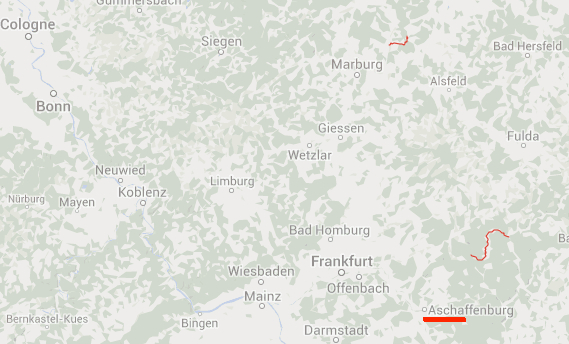
However, similar rivers exist in Germany too (and in between but we will get to that).  Take for example, the Jossa.  It is one of the few German river names that ends with an -a suffix.  But, you might say a Jossa is no Jassa.  True, but we have the following recorded names for the same river:

  • year 1358  – Iozza
  • 1359 – Iazza
  • 1376 – Iazza
  • 1391 – Iosza (!)

A town nearby is also called Jossa.  Its recorded history is as follows:

  • year 850 – Jazaha
  • 1167 – Jazaha
  • 1213 – Jazzaha
  • 1239 – Iazahe
  • 1240 – Jaza
  • 1326 – Jaaza

The Jat is as the below citation from the source (Deutsches Gewaessernamenbuch by Albrecht Greule) an “unclear Bestimmungswort.”

jossa2

Perhaps, as the author muses, Celtic.  He also relates it to Jahr and to the OCSlavonic word jado (I ride) and to the ON Jabbeke/Jatbeka (a town in Westflanders!).  Then, of course, there are the Jatvingi…

rivers1

and what’s with the ash?

In any event, there is also a nearby stream Josbach which – just as the Jossa – originally had an “a” in place of the “o”.  Thus, its names are recorded as:

  • year 1196 – Jazbach
  • 1280 – Jazpach
  • 1350 – Jaspach

josbach

josbach2

There was also the Joessnitz (now Kaltenbach) previously Iezniz (“Eschenbach” or Ash stream).

jossnitz

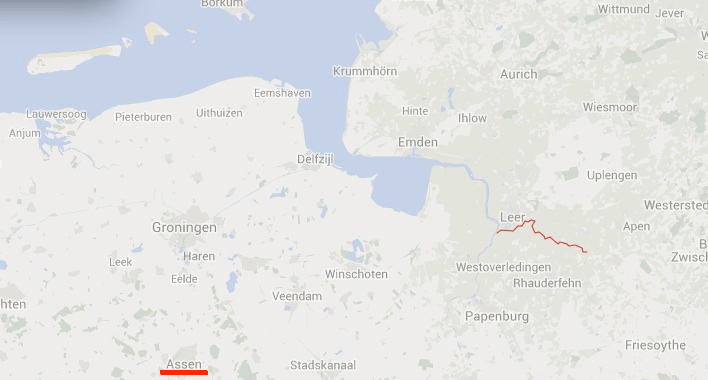
And so on.  And in the North we have the river Leda which, it seems, originally, was also spoken with an -a”: see Lathamuthon (the mouth of Latha).

rivers

and again what’s with the ash? not to mention Veendam

leda2

So now we have Jassa and Leda in West Germany.  Remains of the Celts?  Of passing Alans?  Or of Suevi vel Suavi?

Copyright ©2016 jassa.org

January 3, 2016

On Kętrzyński and His Crazy Theories

Published Post author

Wojciech Kętrzyński was born Adalbert von Winkler but soon learned that the Winkler name was one his father adopted to make life easier for the family in the Polish provinces incorporated into the German Empire (the family was actually Kashubian; Winkler is a translation of the Polish Kętrzyn, Kętrzyno a town in Kashubia from which the family came which town also gave the family the Kętrzyński name).  Adalbert grew up speaking German as his first language until about sixteen.  It was at that time that his sister (both were now orphans) revealed the family lineage to him.  This discovery sparked a rebellious streak in Adalbert, he renamed himself back to Kętrzyński and learned Polish.  He became a historian, an ethnographer and later in life the director of the Lviv (Lwow or Lemberg) Ossolineum Library.  During his prolific life he produced a torrent of works including some very interesting works about Germany.  He was a subscriber to the theory that the Slavs were the ancient Suevi/Suavi.  It will be, therefore, quite unsurprising for the reader to discover that Kętrzyński kicked the tires on some of the town and place names in Germany.  As a recognition of his labours, after World War II the town of Rastenburg in East Prussia was renamed Kętrzyn.

ketrinskas

Courtesy of many hours spent mindlessly inputting these by our interns (no holidays for them this year, we fear), here is a map of the names Kętrzyński identified as Slavic in northern and western Germany only (he also produced a list for southern Germany which we will not be getting into here).

A few comments are in order first, however:

  • we do not necessarily agree with all the place names Kętrzyński designated as Slavic (e.g. the various place names containing Wind or Wend do not necessarily indicate the presence of Slavs/Wenden);
  • there are other names that we do think are candidates for being Slavic but that did not make Kętrzyński’s list (he admits that he could not locate some and states that a few dozen names would not move the needle on his views one way or another); after all, Kętrzyński did not have Google (but look towards Borken, Velen, Heiden, Reken on the East side of the Rhein, maybe, maybe not);
  • Kętrzyński did not review any place names in France or the Benelux countries stating that he was not qualified to do so (but look in Germany towards the Maas – Kerken, Straelen, Kempen – maybe, maybe not; Dutch Venlo on the Maas appears as Vendle on earlier maps);
  • as mentioned, Kętrzyński’s placenames below leave out southern Germany (again, he has a separate list for that); thus, for example, the Moinu-Winidi and Ratanz-Winidi (west of Nuremberg) are not shown;
  • since no one doubts the existence of Slavs east of the Elbe and Saale, we eliminated all the Slavic names Kętrzyński identified that were East of the Elbe-Saale (i.e., Solawa) line; consequently, what you are looking at are only the Slavic names West of the Elbe-Saale/Solawa (the line marked in light green); put differently, you may presume everything to the East of that line to have been Slavic at the relevant time (marked dark green);
  • Kętrzyński mentions the river Lippa/Lippe and the town of Kamen on the same river;
  • he also mentions a town on the left bank of the Rhein at about the place where the Ruhr joins the Rhein – a town under the name of  Kraiokauwe (1480), Krakau (1493), Krackauawe (1498), Krackauwe (1541), Kracow/Cracow (1579), Craeckouw/Crackouw (1594) or Cracouwe (1598).  We had our interns locate this town and show its location on a 1633 – Mercator/Hondius map – it now lies within the town of Krefeld in Germany.

ketrinskais2

Note that the above roughly jives with the following German map showing the Teuton-Slav border.  Roughly, though not exactly.

And this is Cracow southwest of Duisburg on the left, i.e., Western… bank of the Rhine (there is, of course, also a Krakow in East Germany but no one questions that one as Slavic):

cracowgermany

For the Alemannic (Suevic?) or Vandalic king Crocus see our last year’s post.

Copyright ©2015 jassa.org

December 30, 2015

On Jason & the Argonauts

Published Post author

Some of the Suebi sacrifice also to Isis.  I cannot determine the reason and origin of this foreign cult, but her emblem, fashioned in the form of a Liburnian [or small/light] ship, proves that her worship came in from abroad. (Cornelius Tacitus, Germania)

argo

USCGC

Some actually believed Tacitus’ statement verbatim to be the truth.  Isis was worshipped in Rome and, apparently, had a maritime connection.  Thus, in the Kalendarium Rusticum, the 5th of March was in Rome the day of the Isidis navigium.  For example, we have Apuleius in his Metamorphoses Book 11 give this statement by Isis:

“The morrow that from the present night will have its birth is a day that eternal religion hath appointed as a holy festival, at a period when, the tempests of winter having subsided, the waves of the story sea abated, and the surface of the ocean become navigable, my priests dedicate to me a new ship, lade with the first-fruits of spring [!], at the opening of the navigation.”  (see also Lactantius Instit. i. 27).

Jacob Grimm thought that the mysterious goddess Isis was the Germanic goddess Zise/Ziza who was apparently worshipped in the area of Augsburg (i.e., in Swabia) which was allegedly called Zisaris of old.  We say allegedly because the sole reference for that is a 14th century poem by Küchlin for Peter Egen the new mayor of Augsburg.  (Incidentally, the suggestion that Zisa, Cisa was a Germanic name (in the Nordic sense) is itself worthy of a polemic – note too below the reference to the Vindelici):
zisa

Further, the Chronicle of Rudolf of Saint Trond (Gesta Abbatum Trudonensium),relates that in 1133 at Inda (Vinda!? supposedly, Muenster!) a ship was secretly constructed in a forest and then wheeled to Aix and then onto Mastricht and further.  The people engaged in this enterprise were apparently dancing and playing music (to the consternation of the priests).

gesta1

gesta2

The carrying of ships also occurred at Ulm (again in Swabia) and in Tuebingen.  This is attested by the prohibitions against the practice issued by the local authorities in 1530 and 1584, respectively (in each case this was an event that occurred on Shrove Tuesday).  A similar festival is attested at Mannheim on the Rhine and Brussels, Belgium (Ommegank).  Whether these have anything to do with Isis is unclear.

However, another possibility presents itself.

If Isis was really Isaya or Yassa then a ship reference becomes tantalizingly suggestive.  Remember that Johannes Georgius Stredowsky’s  Sacra Moraviae Historia lists a deity by the name of Chasson sive Jassen.  Theres should be little question that this is the same as Yassa, Yessa, Jessa.  But what of the “n” at the end?  Here, we suggest that the Czech Jassen or Polish Jas could be identified with a ship.

Which ship?

jason

Argonaut Council meets

Why, the Argo, of course.  The ship of Jason and the Argonauts.  (We’ve, of course, already made this suggestion when discussing the legends of the name of Poland where Colchis – the location of the Golden Fleece – makes an appearance.  The fact that Colchis included a province called Suania სვანეთი, aka Svaneti makes this suggestion even more delicious – for more on the same, see Menander the Guardsman).

For a similar line of thought (albeit without a Slavic connection) see George W. Cox’s “The Mythology of the Arian Nations”, (vol 2, p 119).

Regarding the Roman ship that was made an offering for Veleda, you can see here.  If Lada was really the prior Veleda then the fact that she (he?) was a protector/guardian of Jassa gives further flavour to this reasoning – see “Alado gardzyna yesse“.

Copyright ©2015 jassa.org

December 27, 2015