Thietmar (Book V)

Published Post author

We presented the Slavs and Slavic place names in the first four books of Thietmar’s Chronicle here.  We now continue with Book V (translation is David Warner’s).

Chapter 7 [year 1002]

“…The course of Ekkehard’s life loas so worthy that his lord allowed him to hold the greater part of his benefice as personal property.  He forced the free-born Milzeni under the yoke of servitude.  With flattery and threats, he won Duke Boleslav [III] of Bohemia, called the ‘Red”, for  his military service and turned the other Boleslav [Chrobry of Poland] into a personal ally.  He acquired the office of duke over all of Thuringia by the election of the whole populace.  With only a few exceptions, he reckoned on the support of the eastern counts and therefore of the duchy.  All of this came to such a miserable end.”

Chapter 9 [1002]

“Meanwhile, Boleslav [Chrobry of Poland] , a son far inferior to his father Miesco, rejoiced over the death of Margrave Ekkehard.  Shortly after this, he assembled an army and seized Margrave Gero’s march as far as the river Elbe.  Then, with siege troops sent ahead, he captured the burg Bautzen [Budisin], with all its possessions,and immediately thereafter attacked Strehla.  Secretly, he also tried to bribe the residents of Meissen who were always happy for something new.  One day, when they realized that most of the garrison had left to find fodder for the horses, Duke Gunzelin of Kuchenburg led them in an assault on the east door, in that part of the city inhabited by ministeriales known in Slavic as Withasen [witeź].”

“After killing Bezeko, one of Count Herman’s ministeriales, they took up arms and met at the count’s chamber where they threw large rocks at the window and loudly demanded that Ozer, the lord of the city, be handed over to them for execution.  But the miles Thietmar, having no other protection that the room itself, asked them: ‘Why are you doing this?  What madness so seduced you that, forgetful of the benefits bestowed by Margrave Ekkehard and your willing invitation, you rise up to destroy his son?  If you wish to reveal the reason for such an outrage, either publicly or secretly to one of us, on behalf of my lords and all of us, I firmly promise you an agreeable settlement of the offence and security regarding your future concerns.  As for the man you seek to have handed over, namely so that he can be killed, you will not received him as long as we are living.  We are few and you should know for certain that we will either die together or leave this city unharmed.’  After they had heard this and consulted among themselves, the attackers granted the garrison freedom to leave.  Then, they sent messengers to summon Duke Boleslav and received him with open doors.  Hence, the words of the scriptures were fulfilled: ‘They may rejoice when they act wickedly, and exult in evil things and again.  Their beginnings are as honey and their end as absinthe.'”

Chapter 10 [1002]

“Elated by this success, Boleslav occupied the entire region up to the Elster and secured it with a garrison.  Then, when our people gathered together to resist him, that deceitful man sent a messenger who announced to them that these things had been done with the favour and permission of Duke Henry.  He added that Boleslav would in no way injure the inhabitants and, if Henry came to power in the realm, he would assen  to his will in all things, but if otherwise, he would willingly do whatever pleased them,.  Considering this, our people believed the beautiful words and shamefully advanced to him as if to their lord, thereby exchanging their inborn honour for supplication and unjust servitude.  Hoe unequally are our ancestors and our contemporaries compared!  In the days of the illustrious Hodo, this man’s father Miesco, would not have dared to wear furs when entering a house in which he knew him to be or to sit while he was standing.  May God forgive the emperor for making a lord out of a tributary and raising him to the point that, forgetful of his father’s customs, he might dare to gradually drag his superiors into subjection and seize those caught with the shameful hook of temporal wealth to the detriment of both slaves and free.”

Chapter 11 [1002]

“Also the other Boleslav [III], the Bohemian ruler nicknamed ‘the Red’ and generally a source of the worst impiety, departed from his usual custom and supported Duke Henry…”

Chapter 15 [1002]

“From there [Thuringia], Henry went to Merseburg where he was received by Abbot Heimo and by his faithful count Esiko [24 July].  Esiko had manfully held this city along with Allstedt, Dornburg and all their possessions until his lord arrived, though this had greatly angered Ekkehard while he lived.  Here also were Archbishop Liawizo of Bremen and Giselher of Magdeburg with other colleagues: Rethar of Paderborn, Bernward of Hildesheim, Arnulf of Halberstadt, Ramward of Minden, Eid of Meissen, Bernhar of Verden, Hugh [II] of Zeitz.  Also present were dukes Bernhard and Boleslav with the margraves Liuthar and Gero and the count palatine Frederick.  Many others were also there, both bishops and counts, but it would take too long to give their names individually.  All of these received the king with humble devotion.

Chapter 18 [1002]

Except for Liudger, everyone who had served the previous emperor offered his hand to the king and swore to aid him faithfully.  Meanwhile, Boleslav schemed to acquire the burg Meissen at whatever cost.  Because it was not advantageous to the realm, he got nowhere with the king and only barely succeeded in securing it for his brother-in-law Gunzelin.  He himself received the regions of Lausitz and the Milzeni.  Margrave Henry, my cousin, held Boleslav in great esteem and aided him freely and amicably in whatever way he could.  As he prepared to escort Boleslav, departing well rewarded and with the king’s permission, he saw an armed multitude gathering and moving to attack them.  May God be my witness, this was without the involvement or knowledge of the king!  When he wanted to discover the cause of this great tumult, and resolve it so that more damage might not arise, he was barely able to get away and lead his companion out by breaking the exterior door.  Out of his entourage, some warriors were plundered by the surging mob while others though severely wounded escaped death with the help of Duke Bernhard.  Because they had entered the royal court armed and refused to leave when ordered, the penalty they paid was justified by their own offense.  Boleslav saw this as part of an evil plot and, deeply disturbed, blamed the king although unjustly.  After bidding farewell to Henry and firmly promising his aid, should it ever be required, he quickly returned to his own lands.  When he arrived at the city of Strehla, he immediately set fire to it and abducted a large part of the populace. At the same time, he sent back representatives through whom he tried to attract as many of the king’s supporters as possible.  Soon afterwards, when this came to the king’s ears, he asked his dependents to inquire about the secret plots of the Slav and, if possible, to capture his spies.”

Chapter 23 [1002]

Meanwhile, because the power of a consort and successor always inspires fear, the duke of the Bohemians, Boleslav [III], castrated his brother Jaromir and wanted to suffocate the younger brother in his bath.  Then he sent both brothers and their mother into exile.  Then, ruling alone like the noxious basilisk, he oppressed the people unspeakably.  When they could no longer bear the weight of this outrage, they secretly called Wlodowej [Duke of Bohemia 1002 – 1003] from Poland, whose name means power of the army.  He was a poisonous snake who treated his people without any respect for the law.  After Boleslav the basilisk had been deposed, this one was unanimously elected in his place because of his consanguinity and because of the people’s affection.  I can say one thing about him that is incredible and not to be copied by any Christian, namely that he could not endure even one hour without drink.  As this was the only path of escape open to him, Boleslav fled to Margrave Henry, then his neighbor, who seized him as an enemy because of past injuries.  Afterwards, because he had arrived as a guest, he was set free and, being fond of his life, he went to the like-named son of his aunt who was his equal in shamefulness though unequal in ability.  Inclined to better advice, the other one went to the king, then residing oat Regensburg, and recognized him as his lord with humble subjection and the promise of loyalty.  He received what he sought from him as a benefice and, after being treated warmly in all matters, returned in peace.

Chapter 24 [1002]

“…In the expectation of receiving the abundant support promised by the Italians, the king sent Duke Otto of Carinthia and Verona, Otto the son of Count Heribert, Ernst the son of Margrave Leopold, and a few others to resolve the situation [December 1002 to beginning of January 1003].

Chapter 29 [1003]

Meanwhile Duke Wlodowej died and the brothers who had been expelled along with their mother were recalled by the repentant Bohemians.  But Boleslav, the ruler of the Poles, collected an army and expelled them again.  He then restored his exiled namesake to his previous dignity and went home, with his plots deeply concealed.  He knew that his cousin would be too vindictive towards those who had supported his expulsion and hoped that at a more auspicious moment he might himself intervene.  And so it actually happened.  When Boleslav [III] of Bohemia perceived that his people dedicated themselves to paganism in all security, his own impiety was fortified for breaking the peace treaty which he had confirmed by oath.  Thus, when all the great men had been assembled before him in one house, he himself killed his brother in law by striking him in the head with a sword and then, with his evil supporters, this bloody and deceitful man who was unworthy of half the days conceded to him, killed the others although they were unarmed and it was the holy season of Lent.

Chapter 30 [1003]

The rest of the people, in great fear because of this, secretly sent representatives to Boleslav of Poland who revealed the magnitude of the shameful deed and asked him to rescue them from fear of the future.  He heard these things with pleasure and immediately asked the other Boleslav, through a faithful representative, to come to him at a certain citadel for a personal discussion regarding matters of mutual interest.  The younger Boleslav agreed to this, came to the agreed-upon place, and was affectionately received by him.  The following night he was blinded by the other’s henchmen thereby ensuring that hew would never treat his people in that manner again or even be able to rule there.  He was also sent into a long exile.  On the following day, the elder Boleslav travelled quickly to Prague where he was introduced and unanimously acclaimed as lord by the inhabitants who were always happy to have a new ruler.  As his world power increased, his willfulness became much greater than is normal in a restrained mind.  Note this well, dear reader: he who becomes too proud in prosperity will often be brought lower in adversity.  It is affirmed by scripture that a wise man does not do this.”

Chapter 31 [1003]

“The king learned all of these things from hearsay, and accepted them with the due seriousness of a patient mind.  At least, he imputed to his sins whatever misfortune occurred in the kingdom in his time.  Therefore, as seemed most opportune to him, he ignored everything that had happened to the Bohemians, and sent representatives to Boleslav with the following demand: if he wished to retain the land he had recently occupied, by the king’s grace, as the ancient law requires, and serve him in all things faithfully, the king would agree to his requests.  If otherwise, he would oppose him with arms.  Boleslav received this legation unworthily, though it was just and well composed, and therefore deservedly brought revenge on himself in the future.  When the Lenten fast was finished, as I have mentioned, the king followed the custom of his predecessors by celebrating Easter, in an appropriate manner, at Quedlinburg [28 March].  There, as befits such a great feast, he ignored both Boleslav‘s evil presumption and Henry’s ambitions and enjoyed the company of his familiars.  On the same occasion, the king bestowed royal gifts on Dukes Otto and Ernst, recently returned after their disastrous defeat, and consoled them with fatherly encouragement.  He also received representatives of the Redarii and the people known as the Liutizi and, claiming these rebels with the sweetness of gifts and the joy of promises, turned them from enemies into friends.”*

* Warner’s note: this refers to “Henry II’s controversial decision to form an alliance against Boleslav Chrobry with the pagan confederation of the Liutizi.”

Chapter 32 [1003]

“After this, the king celebrated the Rogation days, which should be observed by all the faithful of Christ, at Merseburg [3-5 May].  There he learned of the open rebellion of Duke Boleslav and Margrave Henry.  Then he celebrated the feast of Pentecost at Halberstadt [16 May].  After this, he travelled to Bavaria where he initially tried to defeat Henry, who was offering resistance with the help of Boleslav but afterwards concentrated on quashing conspiracies instigated elsewhere.  In this regard, he learned that Ernst whom he had recently honoured and Bruno [Henry II’s brother, later the bishop of Augsburg] , his own brother, had also joined the conspiracy.  They were heedless of what has been written: ‘Virtue lacking council fails of its own weight.’  To restrain their arrogance, the king gathered his supporters from all sides and, at the beginning of August, wasted the lands of Margrave Henry, thereby forcing him to abandon his residence and hide wherever he could.  Anyone aware of the cause of the margrave’s stubbornness would say that his actions were necessary: the higher powers may not withdraw something firmly promised to a faithful servant without alienating the devotion of others,  Tho those, I respond, every dominion in this world derives from God and whoever rises against it offends the divine majesty.  One must weather the sudden burst of injustice with the rudder of patience and, with humble supplication await a consolation which will be truly useful.  I think it better to ascend the heights gradually rather than incur a sudden and insurmountable ruin.  I admit that I would defend my cousin in some other way, if I did not fear to violate that truth which must be honoured by all faithful people.”

Chapter 33 [1003]

“In many ways, the proverbs of the ancients have been confirmed: the old crimes of humankind bring forth new acts of evil and shame.  For Margrave Henry’s father had often opposed the father of the king, as if an enemy rather than one of his milites, and himself admitted that he had supported the emperor’s side because of a boon promised under oath.  In similar fashion, Margrave Henry had been faithful to Otto III until the latter’s death and serve King Henry strenuously up to this unhappy time.  The king was still intensely aware of their fathers’ rivalry, but I believe that the love of Christ would have moved him to let it go entirely unpunished, if only he had not seen Margrave Henry in the company of his other enemies, opposing him so cruelly and openly.  Although Margrave Henry alone might appear guilty in this crime, it was not undertaken without the advice of others from the very beginning.  Because betrayal is deemed particularly shameful in this world, however, he preferred to pursue the matter, with his conscience groaning, rather than increase his own blame by endangering others.  Thus, he who once zealously defended the realm from the enemy now opened it to pillaging.  He secretly received aid from Boleslav though it did him no good.”

Chapter 34 [1003]

“When the king was traveling to a place called Hersbuck, the royal treasure, having been sent ahead, was seized by the margrave’s miles Maganus and his band.  Dividing the booty among themselves, they returned happily to the burg at Ammerthal.  The king followed and, after preparing for a siege, forced them to ask only for their lives., through intercessors, and to return both the burg and booty.  Then, after the burg had been virtually destroyed and the many Poles divided among his men, he set forth for the castle at Creussen where Margrave Henry’s brother, Bukko, was supposed to be guarding the Margrave’s wife, Gerberga, and his children.  From outside, Margrave Henry and his supporters fought the army which had surrounded the burg on all sides…”

Chapter 36 [1003]

“Meanwhile, as the king was besieging Margrave Henry’s burg at Creussen, Boleslav was straining with every effort to injure him in some way.  Secretly collecting an army, he sent representatives to demand that his brother-in-law, Gunzelin, surrender the burg of Meissen into his power and renew their old alliance as he had promised.  Gunzelin knew, however, that with Boleslav’s entry he would virtually be excluded from the king’s favour and from his own domain.  Thus, he offered the following response: ‘Everything you ask from me other than this, dear brother-in-law, I will freely provide and, if ever the opportunity arises for doing what you ask, I will not refuse.  But my lords retainers are with me and they would not suffer such things [senioris mei satellites(!)].  And, if this were revealed, my life and all that I possess would be endangered.’  When Boleslav heard this message, he put the messengers under guard and ordered his army to hasten to the Elbe.  He hollowed them, the next morning, after the character of the fords had been determined.  At the burg Strehla, because it was his daughter’s morning gift, he declared that the occupants had nothing to fear from him but that they should not try to warn their neighbors by crying out.  Without delay, the duke ordered the army to divide into four parts and reconvene in the evening at the burg Zehren.  Two detachments were sent ahead to ensure that they would not be troubled by the margrave.  In one day, the whole fertile region of Lommatzsch was ravaged with fuire and sword and had its inhabitants abducted.”

Chapter 37 [1003]

“Here, it might be recalled how Boleslav Chrobry who was so often accustomed to deceive others was himself fooled by the garrison of the citadel of Muegeln.  When they were besieged by the detachment sent against them they asked: ‘Why are you doing this?  We know your lord to be the best and hold him above us.  Just go on, and have no doubt that we will follow with our families and possessions.’  After they said these things their enemies ceased to harass them and reported to their lord that the garrison would arrive shortly.  Nevertheless, when Duke Boleslav saw that his retainers arrived late at the agreed-upon spot, and that the garrison stayed at home, was very angry and threatened to punish this false allies.  The next morning, at sun-up, a huge amount of booty was sent ahead.  A large part of the enemy drowned in the Elbe, but the rest returned home uninjured and divided the booty, assigning the best parts to God and their lord.  There were at least three thousand captives and eye witnesses have said that the actual number was still larger.”

Chapter 38 [1003]

“Margrave Henry, now perceiving that he had failed, hurried to the burg Kronach where he found Siegfried, the young son of Count Siegfried, who awaited him with aid.  Siegfried saw no hope of a rebellion in those parts, whether at his own or Henry’s instigation.  At last, after they had talked for a long time, Henry set the burg on fire and, together with lord Bruno and his remaining supporters, went to Boleslav the invader of Bohemia.  Siegfried, his hope of open resistance frustrated, did not go with them, but instead returned, intent on making amends fro what he had done.  The king had followed his enemy to Kronach and was pleased to see that he had taken the trouble to destroy everything.  Then he sent Bishop Henry of Wuerzburg and Erkanbald, abbot of Fulda, to burn and destroy the burg Schweinfurt.  When they arrived, Margrave Henry’s illustrious mother, Eila, received and greeted them, as was proper for such persons.  As soon as she understood the nature of the king’s orders, she became agitated and hurried to the church, declaring that she would rather die in the flames than cooperate in the burning of this building by departing alive.  Hence, the previously mentioned lords, putting aside secular concerns in favour of the love of Crhist, modified the punishment and merely pulled down the walls and outbuildings.  They also mollified the sorrowful woman with the promise that they would themselves restore everything, whenever the king’s favour permitted.”

“After he had restated all the count’s property and distribute it along with his benefice, the king went to Bamberg where he dismissed his army and celebrated the birth of the Mother of God with joyful festivities [8 September].  From thence he went to the forest of Spessart and relaxed from the labour of the expedition with the pleasure of the hunt.  Having passed a pleasant autumn there, he travelled through Franconia to Saxony where he announced that he would undertake an expedition against the Milzeni during the upcoming winter.  After this, he celebrated the birth of the Lord at Poehlde with spiritual and secular splendor, according to the custom of his predecessors.”

Chapter 39 [1004]

“…The king granted this and the prelate, traveling in a wagon as was his cutom, went to his estate at Trebra where he departed from this world after two days, on 25 January.”

Chapter 44 [1004]

“…Whatever he demanded from his most beloved Tagino, he received as a gift from his abundant good will.  Concerning the bishoprics of Meissen and Zeitz, he ordered a complete restoration, by royal power, because in this instance the earlier situation could justify the removal.  Therefore, I will compose a reface and sing songs of Christ with these verses.”

Copyright ©2017 jassa.org All Rights Reserved

March 19, 2017

Writing Your Own History

Published Post author

We have received some emails bemoaning the lack of quality English language works regarding Central European history that are also not woefully out of date.  While it’s true that the offering here is not as rich as it could be, there are some decent books that fit the bill.

For example, regarding Poland, we have the “eminently readable” newly updated version of Adam Zamoyski’s The Polish Way, now retitled “Poland, a History.”  We don’t agree with everything in the book (how about a history of Poles as opposed to of Poland) but, hey, we don’t have to.

So, if you fear being rendered comatose by the lifeless print of internationalist ideologues like Norman Davies (and don’t want to fill the coffers of putschistic twiteratti like Paul Barford), buy Zamoyski’s book.

Of course, Poland is not a stand in for the entire region (though given the country’s changing borders the above manages to touch a bit upon Ukrainians, Belarussians, Lithuanians and others) and we still await similar books about the histories of other Central European nations.

The one thing that we are still waiting for is a serious work regarding the early history of the peoples of Central Europe.  Certainly, that terrain ought not to be left to off the cuff nonsense (Schenker) or purposeful confabulations (Wolfram, Pohl & others).

Copyright ©2017 jassa.org All Rights Reserved

March 16, 2017

Agatho and the Slavs

Published Post author

We have previously discussed the letters of Pope Gregory the Great.  But a less known and yet interesting seventh century source on the history of the Slavs is the following letter from Pope Agatho (Pope from June 26, 678 till his death on January 10, 681).  The letter was addressed to the Sixth Ecumenical Council (aka the Third Council of Constantinople) which took place on November 7, 680 (and whose topic was the “Monothelite” heresy).

Agatho – looking good circa 1000

The council was the result of efforts by Byzantine Emperor Constantine IV to restore relations with Rome (the context being that the Byzantines had just survived the Arab siege of Constantinople in 678).   The emperor sent a letter to Pope Donus but this one died in the meantime.  Agatho who became his successor sent representatives  to the council.  They also carried a letter from the Pope which was then read to the attending patriarchs.

The letter was first published by Gian (Giovanni) Domenico Mansi (see here if you can’t get enough of Mansi) an Italian theologian in 1765 as part of volume 11 of his Sacrorum Conciliorum Nova et Amplissima Collectio.

In the letter Agatho mentions that he is relying on the consensus of synodical assent (based on prior councils held in the West in preparation for the Constatinople council) from bishops and missionaries working among “the Langobards, Slavs, Franks, Gauls, Goths and Britons.”

The Letter

“In the first place, a great number of us are spread over a vast extent of country even to the sea coast, and the length of their journey necessarily took much time. Moreover we were in hopes of being able to join to our humility our fellow-servant and brother bishop, Theodore, the archbishop and philosopher of the island of Great Britain, with others who have been kept there even till today; and to add to these various bishops of this council who have their sees in different parts, that our humble suggestion [i.e., the doctrinal definition contained in the letters] might proceed from a council of wide-spread influence, lest if only a part were cognizant of what was being done, it might escape the notice of a part; and especially because among the peoples, as the Longobards, and the Slavs, as also the Franks, the French, the Goths, and the Britons, there are known to be very many of our fellow-servants who do not cease curiously to enquire on the subject, that they may know what is being done in the cause of the Apostolic faith…”

“Primum quidem, quod numerosa multitudo nostrorum usque ad oceani regiones extenditur, cujus itineris longinquitas in multi temporis cursum protelatur.  Sperabamus deinde de Britannia Theodorum consamulum atque coepiscopum nostrum, magnae insulae Britanniae archiepiscopum et philosophum, cum aliis qui ibidem usque hactenus demorantur, exinde ad nostram humilitatem conjungere, atque diversos hujus concilii servilis nostra suggestio fierer, ne si tantum pars, quod agebatur, cognosceret, partem lateret: et maxime, quia in medio gentium, tam Langobardorum, quamque Slavorum, nec non Francorum, Gallorum, et Gothorum, atque Britannorum, plurimi consamulorum nostrorum esse noscuntur…”

Copyright ©2017 jassa.org All Rights Reserved


March 11, 2017

Ptolemy’s Secrets

Published Post author

Ptolemy’s Geography is a rather extensive work and we have only began to scratch its surface.  In order, to dig a little deeper, we asked ourselves whether or not there are places listed in Geography that could conceivably be Slavic or related to the Veneti.  We went through the entire book starting with the East (Books V, VI and VII).  Most of these are likely simply Indoeuropean but since the exercise is fun, bear with us.  We start with Book V.  The others we leave for later if there is interest.

Book V

Chapter 1
(Pontus and Bithynia)

  • Prusias (in Bithynia)
  • Bogdomanis region
  • Libyssa
  • Prusa on the Hypius river
  • Prusa near Mount Olympus

Chapter 2
(Asia)

  • Assus
  • Lebedus
  • Lycus river
  • Iasus
  • Juliogordus (town in Lydia)
  • Nysa (town in Lydia)
  • Sala

Chapter 3
(Lycia)

  • Cragus Mountains
  • Podalia
  • Nysa
  • Megiste island

Chapter 4
(Galatia)

  • Zagorum
  • Olgassys mountains
  • Zagira (Paphlagonian town)
  • Sacora (Paphlagonian town)
  • Germanicopolis (!)

Here it is also worth mentioning that “[i]n the interior of Paphalgonia toward the west are the Tolistobogi, whose towns are” among others:

  • Germa colonia
  • Vindia
  • Tolastochora

Chapter 5
(Pamphylia)

  • Syedra
  • Lysinia
  • Milyas
  • Prostama
  • Adada
  • Olbasa
  • Dyrzela

Chapter 6
(Cappadocia)

  • Iasonium promontory
  • Cotyora
  • Ischopolis
  • Scordiscus [Scordisci were supposedly Celts that lived in modern day Serbia]
  • Piala
  • Zela
  • Sarvena
  • Odoga [think Ladoga]
  • Maroga
  • Siva
  • Sobara
  • Olbasa
  • Siala
  • Ladana
  • Zimara
  • Orsa [think Orsza]
  • Iassus
  • Nyssa

Chapter 7
(Cilicia)

  • Issicus bay
  • Cydnus river
  • Issus
  • Olbasa
  • Castabala

Chapter 8
(Asiatic Sarmatia)

on the Pontus:

  • Sinda village
  • Oenathia [Venethia?]
  • Udon river [Don? Odin?]

“Its cattle feed in the Sarmatian meadow lands in the region near the unknown land of Hyperborean Sarmatia; and below these are the Basilici Sarmatians; and the Modoca race; and the Hippophagi Sarmatians; and below these are the Zacatae Sarmatians; the Suardeni and the Asaei; then next to the northern bend of the Tanais river are the Perierbidi, a great race near the southern race of the Iaxamatae.”

Other tribes listed:

  • Nesioti
  • Siraceni
  • Psessi

“Between the Rha river and the Hippici mountains is the Mithridatis region; below which are Melanchlani, then the Amazones; and between the Hippici mountains and the Cerauni mountains are the Suani and the Sacani; moreover between the Cerauni mountains and the Rha river are the Orinei, the Vali, and the Serbi; between the Caucasus mountains and the Cerauni mountains are the Tusci and the Diduri; and near the Caspioan sea are the Udae, the Alontae, the Isondae, and the Gerri… and the Suanocolchi.  The towns and villages on the lesser Rhombitus river are: Axaraba… Suruba… Nasunia”

Chapter 9
(Colchis)

“The Lazi occupy the maritime coast of Colchis”

Chapter 10
(Iberia)

  • Lubium village
  • Varica
  • Zalissa

Chapter 11
(Albania)

  • Adiabla
  • Ablana
  • Osica
  • Baruca
  • Chabala
  • Chobota
  • Boziata

Chapter 12
(Armenia Major)

  • Gordyaei mountains
  • Lychnitis lake
  • Lala
  • Ptusa
  • Choluata
  • Thalina
  • Sana
  • Brizaca
  • Cubina
  • Codana
  • Cachura
  • Zaruana
  • Babila
  • Gordyene
  • Cholimma
  • Sardeva [unusual outside of Dacia]

Chapter 13
(Cyprus)

  • Chytrus [:-)]

Chapter 14
(Syria)

  • Germanicia [!]
  • Deba
  • Pagrae
  • Batna
  • Iabruda
  • Lysinia
  • Saana
  • Adra
  • Danaba
  • Atera
  • Gerrha

Chapter 15
(Palestina or Judaea)

  • Ascalon
  • Iamnia
  • Lydda
  • Sebaste
  • Bedoro

Chapter 16
(Arabia Petraea)

  • Lysa
  • Gubba
  • Auara [Avara?]
  • Adru
  • Ziza
  • Adra

Chapter 17
(Mesopotamia)

  • Chabora
  • Zitha
  • Deba
  • Bithias
  • Edessa
  • Sinna
  • Gorbatha

Chapter 18
(Arabia Deserta)

  • Addara
  • Save

Chapter 19
(Babylonia)

  • Duraba
  • Volgaesia

Copyright ©2017 jassa.org All Rights Reserved

March 9, 2017

Something Gothic This Way Comes – Part I

Published Post author

The Goths – the conquerors of many tribes (including some/all (?) of the Veneti) a name that inspired greatfear throughout the Roman Empire before dissolving into nothing but a mist of that fear.  What were their names?

We know of two pairings: Ostrogoths and Visigoths (initially we see Visi).  We also see Greutingi and Tervingi.  (It is never Visigoths and Greutingi or Ostrogoths and Tervingi).  Thus, it has fairly been assumed that Ostrogoths were the Greutingi and the Visigoths were the Tervingi.

But what do the sources actually report?

We will start with the Visigoths.

Genethliacus of Maximian Augustus

The Teruingi are first mentioned in the Genethliacus of Maximian Augustus (part of the Panegyrici Latini XI, 17) from 21 July, 291:

“The unruly Moorish tribe rages against its own flesh, the Goths utterly destroy the Burgundians, and again the Alamanni wear arms for the conquered, and the Tervingi too, another group of Goths,* with the help of a band of Taifali join battle with the Vandals and Gepids.  Ormies [Hormizd] with the Saci and Rusii and Geli** as allies assaults the Persians themselves and the king himself [Bahram II], and respects neither his king’s majesty nor his brother’s claims on his loyalty.  The Burgundians have taken over the land of the Alamanni, but obtained at great cost to themselves.  The Alamanni have lost the land but seek to regain it.  O great power of your deity!  Not only those and other races, terrible in strength of arms, yield to their confidence, armed for the ruin of barbarism, but even those Blemmyes, I hear, used only to light arrows, seek arms which they do not have against the Ethipians, and john murderous battle with as it were naked hatred.”*

** Furit in viscera sua gens efferent Maurorum, Gothi Burgundos penitus excitant rursumque pro uictis armature Alamanni itemque Teruingi pars alia Gothorum adjunct manu Taifalorum, aduersum Vandalos Gipedesque concurrunt.

** The Rusii and Geli are quite fascinating.  The Geli may well be the Gelones of Herodotus.  Their name comes up again in late antiquity as part of the bands raiding Gaul (of course, their inclusion on the list of barbarians may have been a result of the various writers wanting to describe everything and the kitchen sink as being thrown at Rome.

Notitia dignitatum

The Notitia dignitatum – a Roman administrative document dated to the late 4th or early 5th century (circa 388 – circa 405) – at sections 4 & 5 (or 5 & 6 depending on version) mentions Visi and Teruingi.  Here are the references from the Paris manuscript (14th century):

visiz

teruingiz

(Note also the Vindices).

And the associated shields from the 1436 manuscript (MS. Canon. Misc. 378 Bodleian) for the Visi:

visi

and the Tervingi:tervingiz

These crests are similar… but they are not the same (and, just to be clear they are mentioned separately).

And this from the 1651 Labbe edition (although the spelling here seems like Vrsi or even Ursi, as you can tell from the above, it’s actually Visi):
The sameness of the names is alleged based on the similarities of these sections.  Both are in the “Eastern” portion of the Notitia.  The first one in part V reads:

Auxilia palatina XVIII. Bataui seniores.  Braccati iuniores.  Salii. Constantiani. Matoiaci seniores. Sagittarii seniores Gallicani. | Sagittarii iuniores Gallicani. Tertii sagittarii Valentis. Defensores. Retobarii. | Anglevarii. Hiberi. Visi. Felices Honoriani iuniores. | Victores. Primi Theodosiani. Tertii Theodosiani. Felices Theodosiani Isauri…

The second one in part VI reads:

Auxilia palatina XVII. Regii.  Cornuti.  Tubantes.  Constantiniani.  Mattiaci iuniores.  Sagittarii seniores Orientales.  Sagittarii iuniores Orientales.  Sagittarii dominici.  Vindices.  Bucinobantes.  Falchovarii.  Thraces.  Tervingi.  Felices Theodosiani.  Felices Arcadiani iuniores.  Secundi Theodosiani.  Quarti Theodosiani…

For more on the Notitia see an interesting page here.

Wherefrom the Visigoths?

Thus, we have the following mentions:

  • Tervingi – 291, 388-405
  • Vesi – 388-405

What about other sources?

And what about the Ostrogoths?  Here there are seemingly more sources.

All that to come.

Copyright ©2017 jassa.org All Rights Reserved

March 4, 2017

From Falster to Latvia

Published Post author

Incidentally, if you are curious how Slavs could have ended up at Ventspylis there are at least three answers.  One is the obvious one – they came from the East.  Another one is that they were there before the Balts came from the Belarus region.  A third one is suggested by Annales Ryenses (Rydårbogen) where there is talk of the Danish king Lotharknut resettling a third of his serfs in Prussia, Karelia and Semigalia sometime between 891 and 901.  At least some of those may have come from the islands of Møn, Falster & Lolland.  These, in turn, it has been suggested were populated at the time by Slavs (articles by Koczy and another by Slaski).

“…et venientes, totam
Pruciam, Semigaliam,
et terram Carelorum,
aliasqve qvam plures
terras subjugaverunt sibi, et…”

What’s striking about this is that it’s not clear whether the Danes included in this settlement process also the Pomeranian coast – if not, then presumably because it was filled with Slavs (the reference to other lands seems rather ambiguous given that lands further removed from Denmark than Pomerania are actually mentioned by name).

A similar tale was apparently also in the lost annals of Valdemar II.

Copyright ©2017 jassa.org All Rights Reserved

March 2, 2017

Historical Settings

Published Post author

In his intro to Slavic linguistics – “The Dawn of Slavic”, Alexander Schenker provided the reader with some historical background on the early Slavs.  This certainly made his book less dry that it otherwise would have been (even to a linguistics student).  Interestingly for us, as part of this side endeavor Schenker also decided to tackle the Slav – Veneti connection.

Let’s take a look at what this freebie that Professor Schenker tossed into his book looks like.

Without ultimately committing himself to any position, he generally rejects the evidence of a link between the Veneti and the Slavs.

Let’s go through his arguments.

The Tacitian Tackle

To start with he says that there were three different tribes bearing the name Veneti or Venedi: the Adriatic Veneti as to which place names and inscriptions “suggest” that they spoke an Italic dialect.  A “Celtic” Veneti who, according to Caesar, “excelled in the theory and practice of navigation.” And, finally, the Veneti on the Vistula who he concentrates on.*

[* note that, as we discussed, there may have been other Venetic tribes such as the Paphlagonian Enetoi as well as the Illyrian Veneti (assuming the Adratic and Illyrian were different or became different).]

Schenker observes that Tacitus was the first to “tackle” the ethnic affiliation of the northern Veneti and saw the Veneti as, in the end, Germanic based on cultural similarity.  Schenker writes:

“After hesitating whether to classify them as Germanic or Sarmatian, he finally decided in favor of the former on the basis of their cultural similarity with the Germanic peoples.”

This statement suggests more than it should.  To see how little Tacitus thought about the problem all we have to do is, once again, cite him:

Peucinorum Venedorumque et Fennorum nationes Germanis an Sarmatis adscribam dubito, quamquam Peucini, quos quidam Bastarnas vocant, sermone, cultu, sede ac domiciliis ut Germani agunt. Sordes omnium ac torpor procerum; conubiis mixtis nonnihil in Sarmatarum habitum foedantur. Venedi multum ex moribus traxerunt; nam quidquid inter Peucinos Fennosque silvarum ac montium erigitur latrociniis pererrant. Hi tamen inter Germanos potius referuntur, quia et domos figunt et scuta gestant et pedum usu ac pernicitate gaudent: quae omnia diversa Sarmatis sunt in plaustro equoque viventibus.

And the graphic representation (for the English see here):

Codex Aesinas

That’s all.  That’s the extent of the “tackling”.

The Schenkerian Complaint

Schenker then notes “[y]et, in most investigations dealing with Slavic prehistory, the Baltic VenetI are not considered Germanic, as Tacitus would have it, or Illyrian, like their namesakes on the Adriatic, or Celtic, like the Morbihan Veneti. Rather they are generally regarded as Slavic.”

This requires an unpacking.

First, there is the question about what Tacitus considered Germanic.  Tacitus cites nothing to suggest that we should view, for example, the Suevi as Germanic in today’s – German speaking /vaguely Nordic – sense of the word.  Yet using Tacitus’ vision of the world they were labeled as Germanic.  Consequently, the suggestion that the Veneti may have seemed “Germanic” to Tacitus proves only that, to Tacitus, they were similar to people Tacitus considered Germanic.  The classifications says nothing about the nature of the thing Tacitus compared them to, i.e., Tacitus’ Germanics such as the Suevi.  Since the Suevi, as we have argued, may well have been the same people as some or all of today’s Western Slavs (for example, the Aesti, typically viewed as Balts – who are today viewed as most similar to Slavs – are described by Tacitus as similar to the Suevi except for some language differences), the similarity between the Veneti and the Suevi does not help us to determine whether the Veneti were “Nordic” or “Slavic”.  In any event, this similarity seems to be based entirely on one cultural aspect – the Venetis’ fixed dwellings which characteristic made them, to Tacitus, similar to Germanics and distinguished them in his mind from the Saramatians (who lived on wagons).

Second, as regards the Adriatic Veneti, it is not even clear what Schenker means by “Illyrian”.  Just a few lines above he says that “[a] few surviving place names and brief inscriptions suggest that the Adriatic Veneti spoke an Italic dialect.  The memory of the Italic Veneti survives in the names of their province Venetia and the city of Venice.”

So were the Adriatic Veneti Italic or Illyrian?  Does Schenker think these are the same thing or is he just being sloppy?

Third, Schenker calls the Morbihan Veneti “Gallic”.  What does he mean by that?  He does not say – other than, we assume, he thinks that they lived in the territory of a Roman {eventually) province called by the Romans Gall and, presumably, spoke a language which Schenker views as Gallic.  As to the former, that is, of course, true.  As to the latter, we have zero evidence as to what language the Veneti of today’s Morbihan spoke as they seem to have left no inscriptions in their own language.

(Morbihan itself is a Breton word that may have arrived in that area with the Britons fleeing England after the Anglo-Saxon invasion – a documented exodus – incidentally. hence the current name of the area – Brittany).

Schenker then notes that the Veneti “are also mentioned twice on… the Tabula Peutingeriana whose protograph may go back to the the third or fourth century A.D.”

This is incorrect.  Veneti are mentioned three times on the Tabula.  Once in Gall, once on the Baltic and once at the mouth of the Danube.  (We might suppose that Schenker either has not familiarized himself with the Tabula sufficiently or by Veneti here he means only those Veneti that he thinks might conceivably be Slavs.)

The Schenkerian Tackle

Professor Schenker then proceeds to suggest why people have argued that the Baltic Veneti were Slavs.  He lists three arguments:

  • The Veneti of the first and second centuries A.D. occupied the same area as the historic Slavs of the sixth century.
  • The name of the Veneti survived in the German language as Wenden or Winden where it designated Slavs who lived in the closest proximity to Germany.
  • “And, last,” Jordanes “applied the terms Veneti and Slavs to the same ethnic community.”

Though the “last” is also incorrect as other arguments had been made in addition to the above, let’s go with Schenker’s tackling of the above.

What does Schenker think of these arguments?

Well, first he tells us that he thinks that they are “not decisive”.  Since he does not define what would be decisive, we must assume that what he really means is that, in his subjective judgement, for one reason or another he refuses to be convinced.

Ok.

Argument 1
Quantum Reality 

What of the first argument? He notes that the Slavs by the 6th century were somewhere in the vicinity of where the Veneti had been recorded in the first but observes:

“This does not mean, however, that they had to be there in the time of Tacitus.  During the intervening four hundred years Europe underwent its most momentous transformations, as the fall of Rome and the Hunnic invasions started the ethnic whirligig known as the Great Migrations.  To assume a lack of change during during the period of such profound ethnic perturbations is to strain the laws of historical probability.”

There are two obvious problems with this statement.

For one thing, Schenker seems basically to argue that just because condition A was true at time T1, does not mean that A was also true at T0.  This, of course, is true.  But neither does this mean that at T0 we had condition B.  If a rock made of limestone sits on a mountain today, and you are vehement that yesterday that mountain side was occupied by an obsidian or quartzite boulder, it is you who should establish that the latter tumbled down into the valley over night and the former tumbled down onto their spot – not the proponents of the contrary view.

Schenker seems aware of that but obviously can’t prove it so he resorts to some factual assumptions and the laws of probability.

He says, well, there was a “whirligig” and also those “profound ethnic perturbations” so things must have changed (or at least so would “historical probability” dictate in Schenker’s view).

But here is the other problem.

There is currently no agreement among historians as to whether there were any such ethnic perturbations.  Modern scholarship takes a much more nuanced view of the Voelkerwanderung than the heroic scholarship of the 19th century.*

[* note: while we strongly suspect that the view of “modern scholarship” was influenced by a desire to refute the Germanic notion of a heroic Voelkerwanderung, it would be a height of cynicism to assume that that scholarship takes a purely results-oriented view of such arguments – claiming keine Wanderungen when talking to proponents of the Germanic “travel” mythos but claiming a “whirligig” of ethnic change when talking to proponents of Slavic “autochtonism”…]

In other words, was there really a whirligig?

Well, barbarians were roving left and right, the Roman Empire fell and different new kingdoms arose.  Seems like the whirligig theory wins hands down.

But does it?

Let’s take a look at the whirligig up close

Remember, Schenker’s theory requires not just any whirligig but rather an “ethnic” whirligig.  What would we really know about about this period if we were to follow Schenker’s logic?  Let’s look at the remnants of the Roman Empire and beyond:

  • In Spain, the prior Roman-era population was replaced with the new Germanic tribes of the Suevi, the Visigoths and the Vandals (and the Sarmatian Alans).  No one knows what happened to the indigenous population but we must assume that it was driven out, killed and/or assimilated.  As a result, of this whirligig, by the late 5th century the newcomers’ Gothic became the dominant language in Iberia where it continued its supreme position until Arabic replaced it as a result of the Muslim invasions and the driving out of the Germanics.  Subsequently, a new people – the modern Spanish emerged to drive out the Arabs – where did the Spanish speakers come from?  Modern historians are most perplexed by this query some locating their homeland in the Jutland Peninsula and others arguing for the Pripet Marshes.  Ahhhhhh…. Nope.
  • In Gall, the Galls and Romans were exterminated by the newly arrived Franks who also gave their name to the new ethnic creation.  France and its Franks remain the preeminent force in Europe today where Merovecha Lepenech seems destined to become the new All-Frankish monarch proudly pushing for the primacy of the Frankish Teutonic dialect within all gaus under Frankish control.  Yeeeahhh… Nope again.
  • In Italy, the population was perhaps the most brutalized in the wake of the Empire’s collapse.  After the Goths, Vandals, Ostrogoths and Lombards drove out the locals and established their polities, nothing was left of the aborigines (such as they had been).  Gothic and other East Germanic dialects naturally became predominant in this new environment and these languages continue their Teutonic preeminence on the peninsula till this very day.  See above...
  • In Britain the invading Anglo-Saxons replaced whatever locals there were and English is now the language of the day.  The locals themselves have either fled (see Brittany) or been killed.   Even here… while we do not pretend to deal much with DNA, it seems “Anglo-Saxon” DNA accounts for about 1/3 of British male DNA.  According to Ancestry.com: “Modern studies of British people suggest the earliest populations continued to exist and adapt and absorb the new arrivals.” Not to mention that “prior” Gaelic languages continue to exist in the west of Britain.  All that really seems to have happened is a bit of technological collapse where we learn that, for example, “…even basic technologies, like the use of the wheel for pottery production, all vanished during the fifth century…” Now, where did we see that before?
  • In Scandinavia, the intense Nordic invasions of the Continent not only relieved population pressures that caused such invasions in the first place but resulted in a virtual emptying out of the entire region.  As a result, vast numbers of Finns moved in, which is why, today, all of Scandinavia is simply known as Suomi.  Ahem… naaaahhh.
  • In Central and Eastern Europe, the Germanics on the move emptied themselves out here as well.  In the place of the proud Suavi, there now moved in – from parts unknown – the Sclavi – the newcomers whom we know as Slavs.   Oh, and the Veneti – they kind of disappeared… ehhh, the dog ate them.  Well, this one (finally!) seems ENTIRELY BELIEVABLE!

This is not to say that invaders cannot bring new languages (Today’s Turkey did not previously speak Turkish, the US did not speak English, etc) but the conditions for an ethnic language and culture change vary and one cannot a priori claim that every whirligig will result in such a change (as evidenced by the above).  In fact, the claim of a whirligig, as made by Schenker, necessarily assumes the conclusion.

Perhaps even more importantly, even if a language (and culture) changes that certainly is no indication that the population changed.  just look at Spanish speaking America.  Would Schenker claim that the Spanish invaders replaced the natives?  As rulers sure, but it’s not like those natives disappeared.

Put in other words, the laws of probability cannot be invoked (at least not with a straight face) to say anything about a population exchange in general, the 5th century European exchange in particular and the Venetic place in Slavic history in the very particular.

If anything the laws of probability here would suggests precisely the opposite conclusion than that drawn by Schenker.

There is one point to be made here.  If “whirligig” happened then what happened to the Veneti? Where did they go?  Surely, an out migration of the Veneti would have been registered somewhere?

The Slavs were according to this story coming from the East.  So the Veneti would have had to flee West, South or North?  Is there any evidence of this?  One could claim that the Western Slavs were the fleeing Veneti but at no point (that we know of) are their names, customs or look (based on anthropological similarities and probably genetic) different from that of the “eastern” Slavs.  In any event, Schenker does not claim such an outmigration.  He is just silent on the topic altogether.

Argument 2
Of Susan McKendrick and Sharon Evers 

Let’s give the pulpit back to Schenker:

“Nor can the German practice of designating their Slavic neighbors by the names Wenden or Winden help us to solve the question of the ethnic character of the Veneti.”

Why?

According to Schenker:

“[t]ransfers of names from one ethnic group to another have frequently occurred in history and signify no more than some kind of spatial and temporal contiguity between the two communities.”

[As a matter of English usage, the conjunctive above is quite difficult to untangle.  Assuming that the “two communities” that Schenker is referring to are the Veneti and the Slavs, presumably he means spatial but not temporal overlap.  Assuming “contiguity” refers to the Germans on the one hand and the Veneti/Slavs on the other, presumably he means that each of the latter two shared a boundary with the Germans, albeit at different times.  If so, then that would not preclude them sharing a different space from one another but, let’s move on.]

He goes on to say:

“The German usage may merely indicate that some non-Germanic Veneti lived in the area occupied later [aha, there it is!] by the West Slavs and that the Germans transferred the name of the former to the latter.”

He then cites cases of Lithuanians calling the East Slavs “Goths” (Gudai) and the German practice of referring to the Czechs as Bohemians by reason of “the Celtic tribe of the Boii who lived in Bohemia before the Czechs.”

He continues:

“There is no reason, however, to assume that the transfer of the name Veneti to the Slavs occurred much before the sixth century.”

That’s all of his Argument 2…

To begin with, let’s assume for the sake of argument that the East Slavs have nothing to do with the Goths and the Czechs have nothing to do with the “Celtic” Boii other than their spatial overlap.

The fact that transference of names does occasionally occur does not mean that it happens always and continuously.  When an astronaut looks down on France and Germany, then closes his eyes for a second, and, upon opening again notes that the French still call the Germans Allemands and the Germans call the French Franzosen, surely he won’t be justified in arguing that there is no evidence for the population remaining the same on both sides of the border…

If we may assume (as surely we may) that the general and more likely case is that when we call something A at T0 and A at T1, we mean the same thing and the thing is indeed the same, then “tribal name transference” must be an exception, a special case to that general rule.  Indeed, that is precisely why such a confusing set of words is needed to explain this unusual phenomenon.  On the other hand, we lack a term for the more usual case of “nothing happened”.

It is ridiculous to claim, as Schenker does, that what is an occasional exception to the rule renders the rule meaningless altogether.  Specifically, to say that “the German practice of designating their Slavic neighbors by the names Wenden or Winden [cannot] help us to solve the question of the ethnic character of the Veneti” because such practice “may merely indicate” a transference of names, is just pure bunk.  Here, Schenker goes further in what he writes above, by literally claiming not just that the rule is meaningless but that it states the opposite from what it states.  In fact in the above, Schenker says that evidence of condition A may indicate condition B…

(It seems that authors need not only the help of an editor but also of a logician)

Of course, anything “is possible” but what is more likely?

And were the Finns (and Estonians) also previously in spatial (but not temporal!) “contiguity” with the Veneti and the Slavs?  Are they also engaged in tribal name transference when they refer to the Russians as Venäläiset (Venelased)?

So that, as they say, is that.

Argument 3
Or How the Gallo-Romans Conquered the Franks

Schenker goes on:

“There is also no compelling evidence to justify the claim that Jordanes’ identification of the Veneti with the Slavs reflects an ancient situation.  The Slavicization of the Veneti is possible in the sixth century but most improbable in the first.  To take an anologous example, the Franks in the eight-century France were already fully Romanized and could be identified with the native Gallo-Roman population.  It would be absurd, however, to extend such an identification to the fifth-century Germanic Franks, who were then just embarking upon their conquest of Gaul.”

It’s entirely unclear what he means here.  For starters, let’s put aside subjective judgment words such as “compelling” or “most improbable” or “absurd.”

Beyond that much of this is silly.

First of all, Schenker’s use of an “analogous example” is only analogous if the argument he is trying to prove is correct.  Otherwise he’s just assuming the conclusion.

But it’s even more confusing that that.  Schenker’s arguments 1 and 2 assume a full or substantial replacement of the Venetic population with the Slavs (remember the ethnic whirligig whereby the Veneti disappear and Slavs appear?  Or the mistaken transference of the Venetic name onto the “new” Slavs?).  Yet in his argument 3, Schenker admits the possibility of the “Slavicization” of the Veneti.  So now he argues that the Veneti could have stayed where they were after all but were – by the 6th century – “Slavicized.”  And what does he mean by “Slavicization”?

Presumably, he means just a change of language/culture as a result of some new incoming people.  But then of what relevance is the Frankish example?

The Franks were conquerors who melded into the local “Gallo-Roman” population adopting the locals’ language while giving their name to the locals.  We know the same thing happened with the Rus in the East somewhat later.  In each case, this outcome seems to have resulted from the relatively small number of the newcomers and the quick merging of the populations.

If this is indeed the analogy Schenker sees, is he then saying that the language the “Slavs” speak is the Venetic?  Surely, that is what his “analogy” would tell us if the Veneti preceded the Slavs in their mutual “space.”

But if so, then it is not the Veneti that were Slavicized but the incoming Slavs (Suevi?) who were “Venetized.”  

Except that is not what Schenker seems to be saying.

Presumably he means that the Veneti were the minority and the Slavs were the majority.  The Slavs came and took over the Venetic lands absorbing the remnants of the Veneti.  That would explain why there may be some “Venetic” dNA in Slavic blood but why the culture/language is Slavic.

But then the above Frankish example is hardly analogous.

As a side note, it is also not clear why he also objects to the “Slavicization” of the Veneti in the 1st century.  The people who are arguing for the Slavic nature of the Veneti do not argue that the Veneti were Slavicized in the 1st century (or earlier) but rather that they were always Slavic in the sense that the Slavs (as Jordanes says) emerged from the Veneti.

And if Schenker accepts Veneti somewhere about the Vistula in the first century (as he seems to – though even this is not clear), does he question the existence of a post-Venetic Germanic (meaning Nordic) interlude?  Though he does not even acknowledge the issue, presumably he would not take that position.  And so, if there really were Germanic Goths, Vandals and Burgundians living in formerly Venetic lands, why does Jordanes not say that the Slavs also incorporated those?  Were the Veneti living in Central Europe before, during and after the Germanic invasions?  Successfully resisting Germanization all along for 200-400 years?  And then when the Germanic tribes left (?) the Veneti immediately fell victim to Slavicization?

Most fundamentally, Schenker does not even try to impugn Jordanes’ credibility.  He says there is no “compelling” reason to “justify” Jordanes’ claim of the Venetic-Slavic identity  (Compelling how/to whom?).

But it stretches credulity to suggest that a 6th century observer of these events (who, supposedly, relied on earlier sources) would need to do more to justify his plainly reasonable and hardly fantastic claims (no alien spaceships here!) to someone who finds the observer uncompelling from a distance of over a millennium and a half.

The very lack of Schenker’s temporal contiguity with Jordanes and the events of Jordanes’ day makes the former, without more, a less compelling source as to the truthfulness of these events than our Gothic scribe.

Argument 4
A Meillet Detour

Then Schenker throws in a couple of other thoughts:

“… the very fact that the ancient sources locate the Veneti on the Baltic provides the most persuasive argument against their identification with the Slavs  The point is that Slavic vocabulary does not contain any indication that he early Slavs were exposed to the sea.  Proto-Slavic had no maritime terminology whatsoever, be it in the domain of seafaring, sea fishing, boat building, or sea trade.  Especially striking is the absence of a Proto-Slavic word for amber, the most important item for export from the shores of the Baltic to the Mediterranean.  In view of this, the very fact that Ptolemy refers to the Baltic as the Venedic Bay* appears to rule out a possible identification of the Veneti of his time with the Slavs.”

[* note: It’s actually not entirely clear as to what Ptolemy thought represented the Venedic Bay.  It may have been the entire Baltic Sea but it also may have been a portion of the Baltic (candidates range from the Kiel Bay (on which the Wagri were known to reside) to the Gulf of Finland) or even (and less plausibly) some other location]

These “very facts” turns out are less factual than we might think just reading the above.  Ancient sources may or may not have located the Veneti on the Baltic.  Jordanes locates the Veneti at the Vistula but the Vidivarii at the river’s mouth.  Before that, Pliny locates the Veneti in the continent’s interior but not necessarily on the Baltic.  Tacitus does not locate the Veneti anywhere specific other than somewhere at the edge of Suevia – whether that is on the Baltic or not depends on a number of assumptions, starting with the assumption of where is the hic at which his Suevia finis.  The only person who, arguably, speaks of the Baltic is Ptolemy who locates the Veneti at the Venetic Bay which – probably – was a bay on the Baltic.  That said, it is also not clear whether Ptolemy locates all the Veneti at that bay as his description of the “greater” and “lesser” peoples suggests that he may have understood the Veneti to encompass several sub tribes, some of which he clearly does not locate at the Venetic Bay.

What about these claims about “maritime” vocabulary?

Here we come to an interesting detour.  Schenker’s only citation for the above sweeping claim is to Antoine Meillet‘s three and a half page article in the Revue des études slaves titled “De quelques mots relatifs a la navigation.” (A few words relating to navigation) which we discussed here and here.  As we’ve shown Meillet’s article exhibits, what may charitably be called, a shocking ignorance of Slavic languages (at least shocking in case of someone who purports to be a linguist undertaking to write a scholarly article about such languages) combined with no relevant examples to support his claim.

So that, as we say again, is that for the only reference that Schenker provides.

What about Schenker’s own (since gives no other citation we should presume that to be his own argument) argument “that Slavic vocabulary does not contain any indication that he early Slavs were exposed to the sea.  Proto-Slavic had no maritime terminology whatsoever, be it in the domain of seafaring, sea fishing, boat building, or sea trade”?

As we previously noted when discussing Meillet, Slavic vocabulary in fact does contain words with a clear Slavic origin that relate to maritime matters.  In answering the question of how rich that vocabulary was, we must first ask as compared to what?  In other words, it’s all relative.

Did Schenker undertake an examination of the maritime terminology of the proto-Germanic languages?  Of proto-Illyrian?  Proto-Celtic?  Proto-Greek?  Dacian?  Did he, upon concluding such an examination, tabulate the various seafaring, sea fishing, boat building, and sea trade terms across these groups concluding, based on such unassailable evidence, that the proto-Slavic was, in fact, greatly lacking in the maritime department?

We assume the answer must be yes and he is just careful not to share his findings with the reader since otherwise he’d just be spouting hot air…

In fact, this is the same sleight of hand as is often done with the disappearance wheel-based pottery in Central Europe in the wake of the collapse of the Roman Empire.  This fact is taken as proof of a cultural change (and hence a change of ethnicities) without bothering to test for the presence or absence of such cultural collapse across the entire Roman frontier (thus, missing, as noted above, evidence of the same collapse in other areas where a population exchange did not take place or, to the extent it took place, it took the form of Celtic tribes being “augmented” by Germanic (as in Nordic) tribes, both presumably familiar with wheel based pottery and yet none able to prevent a regression to the simpler hand-made pottery model).

Does Schenker suggest that Slavs could not have lived near the sea because they lacked a word for mizen-mast, leach lines and spinnaker?

There is also another problem with this argument.  It says nothing about where specific Slavic groups lived.  The proto-Slavic may have developed 100k years ago right on the sea’s edge but if it developed in an era of primitive boating, it would contain no sophisticated nautical vocabulary.

(You could easily see a situation whereby some Slavs then head out East and never develop more sophisticated maritime vocabulary.  The Slavs that remain do but then those words never make it back to Proto-Slavic.  What’s more if the Slavs that remain do develop certain words and then pass them onto the Germans, such words make it into Proto-Germanic. Now they are in Proto-Germanic and in – some – Slavic languages (the ones from which the Germans borrowed them) but the result is that Proto-Germanic has them but Proto-Slavic does not.  If that is the case, the easy next step is to claim that those Slavs with whom the words originated instead borrowed such words from the Germanic.)

So much for the claim of “whatsoever”.

What about amber – the Greek electron, the Latin Sucinum or glaesum?

The claim is that the Slavs use variations on the Germanic/Nordic word Bernstein (meaning “burning stone”).  This is true but just this much.

Suffice it to say that we do know (from Pliny) that the trade in amber was run by the Gutones and, perhaps, the Teutones – not the Slavs.  As such it is their (Gothic) name of the resin that became predominant.  This, however, does not mean that there was no Slavic name for the same product.

In fact, we know of at least two:

Here there is word for amber that appears in all Slavic languages – jantar.  This has been as a borrowing from the Baltic languages (Lithuanian gintaras, Latvian dzintars, Prussian gīntars?).  But this does not stop here… Rather we are also told the Baltic words are themselves borrowings from… the Phoenician jainitar meaning “sea-resin”.  Say what?

So the Slavic J came from the Baltic G but the Baltic G came from the Phoenician J!?  Why not just say that both Slavic and Baltic got the word from the Phoenician?  Or maybe the Phoenicians got it from the Balts?

And why from the Phoenician?  The Phoenicians are not known to have reached the Black Sea or the Baltic Sea.  Why not from the Venetic?

And how do we know the word is even Phoenician!?  (We have not seen this explained anywhere – just repeated).  The Phoenician word for “sea” seems to be ym or yam.  Not Jain or Yain.  In fact, the latter smack of Indian Jainism.  And what of the word tar for “resin”?  Do we have to reach to the Phoenician for that?

Isn’t the most obvious connection to the Germanic/Nordic “tar”?:

“tar (n.1) a viscous liquid, Old English teoruteru “tar, bitumen, resin, gum,” literally “the pitch of (certain kinds of) trees,” from Proto-Germanic *terwo- (source also of Old Norse tjara, Old Frisian tera, Middle Dutch tar, Dutch teer, German Teer), probably a derivation of *trewo-, from PIE *derw-, variant of root *deru-*dreu- in its sense “wood, tree” (see tree (n.)).” [but what about terra – Earth!?]

(Moreover, the Lithuanians feature a name Gintaras.  But that name seems to have first come up in the 1940s suggesting (perhaps) an imitation of the German GüntherGunther.  These names are related to Gunnar and, ultimately supposed to relate to something like “fight/battle” and “warrior/army”.  For example, Günther from Old High German gund ‎(battle) + heri ‎(army) or Gunnar is derived from Old Norse gunnr ‎(fight) and -arr from Proto-Germanic *harjaz ‎(warrior)).

This would suggest a Germanic origin for jantar.  But the Germans already have Bernstein!  And, to top it off there is another Germanic word – Rav/Raaf.  Why would then need three different words for the same thing and does that suggest that some of these are not Germanic?  Which of the three would not then be Germanic?  Presumably jantar or gintaras/dzintars but what is its origin?

We add to this the fact that the Prussians seem to have also had the word glēsis (in addition to gīntars).  This makes for a very close match with Pliny’s glæsum.  In addition, as shown here, there is also the Polish głaz (pronounced “guaz”) which means a “large stone” but in, for example, Russian, refers to an eye.  What this tells us is that the Slavic “oko” was partly replaced by the “stone” word of głaz (see Polish gałki or gały).  

But for that to have made any sense, the głaz stone must have been understood as a much smaller stone than the current Polish głaz.  In fact, such a głaz would have been the size of a piece of amber.  The assumption is that there must have been a specialized term for this kind of a “stone” such as a “burn stone” or “amber” but unless you were involved in the amber trade*, a stone was just a stone.  For this argument to have any legs you’d presumably have to establish that the Slavs did have their own words for pumice, jade, marble, granite, obsidian, etc…  Otherwise, to be consistent, you’d want to conclude that they originated in an area devoid of those rocks as well.

[* note: we also suspect that the above paragraph overstates the importance of amber in the Baltic-Rome trade.  While amber did come to Rome from the Baltic, it also came from other European areas such as Friesland.  And while amber did come from the Baltic, other goods came from the Baltic (and came from Rome to the Baltic) as well.  Even if the Slavs (and Balts) were not ever to have had their own word for amber, that relevance of that fact to the debate about Slavic ethnogenesis is itself debatable.]

Note too, that the “island” that Pliny refers to as the island of amber is named by the “Germans” Austeravia.  This can mean “Eastern” island obviously is also very similar to the Slavic name for (we are told, river) island – ostrów.

Where does this leave us?   The fact that Bernstein became the prevalent name for amber among many Slavs may have much to do with the fact that the Goths ran (took over?) the amber trade.  The only thing that is safe to say beyond that is that, it may be the case, that the Slavs referred to these little amber stones as głazy and that no one knows for sure what the origin of the word jantar is – even if it were derived from a Baltic form, it may well be that the Balts were included among the Veneti…

Argument 5
Schwinden Winden

We previously discussed the account of Cornelius Nepos (relayed by Pomponius Mela and, in a different variation, by Pliny the Elder) regarding the capture of the “Indian” sailors by the king of the Boii (Mela) or of the Suevi (Pliny) and the gift made of these to a Roman proconsul in Gaul, one Qunitus Metellus Celer.  Professor Schenker points out that these Indi have at times (starting with Pavel Jozef Šafárik) been hypothesized to have been the Windische, i.e., the Veneti and hence possibly Slavs:

“It is interesting to recall in this connection a story that many scholars, from Šafárikon, have adduced in support of the identification of the Veneti with the Slavs…  Could one claim that the Indi of this account were Slavs?  In suggesting that this indeed could have been the case, Šafárik had to accept a number of hypotheses [we number these assertions for ease of reference]:

  1. that Nepos’ story was not fictitious;
  2. that a sea voyage from India (or some other place referred to as India) to Western Europe was not feasible in or before the first century B.C.;
  3. that Indi and Indicus are to be read as Vindi and Vindicus;
  4. that the Indi (now identified as the Vindi) were in fact the Venedi < Veneti;
  5. that the Indi (now identified as the Veneti) arrived on the shores of Germany from the Baltic rather than from some other sea like the Adriatic;
  6. that the watery expanse [aequora] which the luckless sailors had to traverse was merely the Kattegat and the Skagerrak;
  7. that the Indi ( = Indi = Veneti) were Slavic; and
  8. that the Slavs were capable of making long sea voyages in or before the first century B.C.

The degree of probability of most of these assumptions is fairly low, and Šafárik was duly cautious in advancing his hypothesis… Šafárik’s followers, however, show no hesitation ion considering his surmise a proven fact.”

First, as a matter of logic, the only thing that needs to be true here are hypothesis 1 and 7.  The other hypotheses are either irrelevant to the argument (for example 2), largely subsumed by hypothesis 7 (for example, 3, 4 and 5) or irrelevant and set forth in an inconsistent way (hypothesis 6 and 8).

Second, one might observe that the Slavic connection with the Veneti hardly depends on this story.

Third, there is Veleda…

Huh?

Well, we have previously argued that the Batavian priestess Veleda appears to us suspiciously Slavic.  Indeed, we have previously written about the Dutch Slavic myths (see here and here).

It just so happens that we have some names of the members of the Imperial Germanic Bodyguards.  One of those names is of a man named Indus.  He is described there as a Batavian.

“Indus, bodyguard of Nero Claudius Caesar Augustus, of the Second Decuria, of the Batavian nation, [who] lived 36 years, is buried here. [The gravestone] was erected by his brother and heir, Eumenes, from the collegium of the Germans”

[Indus / Neronis Claudi / Caesaris Aug(usti) / corpor(is) custos / dec(uria) Secundi / natione Batavus / vix(it) ann(os) XXXVI h(ic) s(itus) e(st) / posuit / Eumenes frater / et heres eius ex collegio / Germanorum.]

(His (?) brother’s name is recorded as Eumenes – this appears to be a Greek or perhaps Thracian name – for example, Eumenes of Cardia).

So what you say? Well, maybe the Indi were just Batavi in Celler’s mind.   Or maybe there is something to that Batavian – Slavic connection.

Argument 6
Quantum Arguments

The last argument that Schenker makes is rather bizarre.  He uses the report of Henry of Livonia “who described a clearly non-Slavic tribe of the Vindi which lived in Courland and Livonia… [and whose people] may well be the descendants of the Baltic Veneti.”

Schenker’s statement is puzzling and one has to wonder how any thinking person could have made it.

First of all Schenker (whose citation practice leaves much to be desired) provides zero evidence to support his claim that this tribe was “clearly non-Slavic”.  There is nothing clear here because there is nothing here at all.  Schenker just asserts this.

We have previously written about this report.

For Schenker’s argument to hold, we would have to accept a number of hypotheses:

  1. that the Veneti were not Slavs;
  2. that these non-Slavic Veneti did in fact live near the Baltic;
  3. that the same non-Slavic Veneti survived as a distinct people for about a millenium, all along avoiding any Germanization, Gothicization, Balticization or Slavicization;
  4. that the continued existence of such a tribe went about unnoticed and unremarked on for the duration of the same millenium until one Heinrich of Lettland stumbled upon them in the first half of the 13th century;
  5. that this Heinrich, a German crusader who must have been intimately aware of the practice of his people calling the Slavs of his time Wenden would have called some other tribe by that exact same name;
  6. that Heinrich would have done so with respect to a tribe that he encountered in the Baltic-Slavic borderlands; and that
  7. that Heinrich, a writer who conveyed much about the life of the local tribes, would have considered his use of such nomenclature for a “clearly non-Slavic” tribe to be something entirely unremarkable to the point of not observing upon the oddity of the existence of these “clearly non-Slavic” Wends to his readers.

Oh, and that these Wends’ “colours” were the same as those of the other Western Slavic tribes such as Poles or Czechs (as per the later Livländische Reimchronik we hear of  “a red banner cut through with white after the manner of the Wends.”).

Now, to make this kind of an argument is not only to strain the laws of historical probability but to leave them by the wayside entirely.  Here we really are in the world of quantum history.

The last stand of the last non-Slavic Venet – somewhere on the Venta River about 1250 (photo credit: Heinrich von Lettlandski)

(p.s. otherwise, the book is ok but if we are to take a linguist’s word as to the relationship between the Veneti and the Slavs, we’ll go with Vasmer‘s).

Copyright ©2017 jassa.org All Rights Reserved

February 27, 2017

Signs of Lada – Part IV

Published Post author

And speaking of Ispania:

From Jan Gruter’s “Ancient inscriptions of the entire Roman world, edited in the most complete assemblage” (Inscriptiones antiquae totius orbis romani, in absolutissimum corpus redactae) we have the following information:

This inscription appears near Monte Furado in Gallicia in the province of Lugo (where later the Suevi appear to have settled.  Incidentally, these Suevi left interesting names behind.  For example you can see Guitiriz (supposedly from the name of Witiricus, a Suevian) or nearby towns such as Becin, Buriz, Mariz, Guimil, Petin or Parga.

Another inscription to the same Jupiter appears in the area:

This picture comes from Juan Francisco de Masdeu’s Historia crítica de España y de la cultura Española, en todo genero (volume 5 part II).

We hear that “Jupiter Ladicus” was the Jupiter equated with a Celtiberian mountain-god and worshipped as the spirit of Mount Ladicus in Gallaecia, northwest Iberia, preserved in the toponym Codos de Ladoco.

Why was the mountain referred to as Lada?  If, as Dlugosz would have it, Yesse or Yassa was Jove or Jupiter and Lada was His Guardian, then the phrase Alado gardzyna yesse comes to mind here.

Copyright ©2017 jassa.org All Rights Reserved

February 26, 2017

Argentine Netherlands

Published Post author

Were going to reply to one of the posts but a longer note is in order.  First, thanks for the note on “isep”.  Second, you are, of course, right.

Thus, for example: “que inter fluuium Viszla et dictam lacum nyeczecza cum insulis vulgariter yspy” (from March 16, 1468):

Note isep or ispa is still Slavic with a clear meaning (wysep, nasyp, etc) as in sypać, that is to “spill” or “pour” or “strew” pieces of a solid substance (like grains of sand).  Brückner derives all of these from suć (also noting Lithuanian/Old Prussian supis and Latin supare).

For that matter note the English “dissipate” (see you found that too) which the Online Etymology Dictionary pronounces as coming from Latin:

“early 15c., from Latin dissipatus, past participle of dissipare “to spread abroad, scatter, disperse; squander, disintegrate,” from dis- “apart” (see dis-) + supare “to throw, scatter,” from PIE *swep- “to throw, sling, cast” (source also of Lithuanian supu “to swing, rock,” Old Church Slavonic supo “to strew”). Related: Dissipateddissipatesdissipating.”

Note also the Latin variations suposuparesupavisupatus.  This is defined as “pour”, “strew”, “scatter”, “throw” as per the highly authoritative (:-)) Latin Dictionary which states its age as “unknown”.

As Boryś describes it, it is land “surrounded on ALL sides” by water.  So if one thinks “ostrow” (which, as noted, it does not) implies a river island he can look to the Slavic isep or ispa for any island.

So was Meillet not aware of this?

What Else Can One Do With This?

On this topic, check out “Słownik historyczno-geograficzny ziem polskich w średniowieczu” for a village (still there apparently) “Isep”.  Now that seems to have been first recorded as “yssep” in 1462 (?).

Meillet in that article could not place insula into any Indo-European bucket.  And yet, above we have a Slavic/Baltic etymology.

Does insula have anything to do with the above Slavic yssep?

Not clear but if you want to get closer…

In the Netherlands we have the river IJssel (a part of the Rhine).  In West Flemish this river is also spelled Yssel.  Now the name of this river may relate to the Proto IE root *eis- “to move quickly” as in the Polish jazda (“ride”).  Although, it may just mean the “flowing” or passage of water/time  (as in the word yesterday) or may relate to being in Indo-European (“is” “its” “jest“) or elsewhere 

But the Yssel was also spelled IslaIsala.  So maybe the river was named after its islands?

(But compare Ister, Saal, Solawa/Soława).  (For more on potential Slavic signs in the Netherlands see here and here).

For a real brain teaser, check out the “Arte, y vocabulario de la lengua Lule, y Tonocotè” by Antonio Machoni where we find the following definition (at least one of them) of the Spanish word isla in the Argentine Lule languageA to yesitip.

Now all that remains is to connect the Lule to the Sami Lule, then to the River Lule and onwards full circle to Lulajże, Jezuniu (since Jesus’ name, as well as its Hebrew variant Yehoshua, may well have Old European roots that take it back to the ancient Esus/Ister (a lord > don > (Slovene) donava (the Lord’s river? :-)).  Note too that Ister (“Illyrian”?) as well as the Old Greek version of Ister – Ístros – has the same etymology as “stream” or, for that matter ostrow).

And we have not even gotten to Ispania yet… All you have to recall is our discussion of the Pyrenee name.  For signs of Slavs in Spain see here.  Spain’s name is supposedly Phoenician.  But if there is a link between the Phoenicians and the Veneti, maybe the Veneti thought Spain to be an island  even though it turns out to be more of a peninsula?

And one other thing: although półwysep (peninsula) has been declared a creation from the German (Halbinsel), note that there seems little proof of that.  The problem with the German-Slavic comparisons (or for that matter Latin-German) is that the German literary language preceded Slavic and Latin preceded German.  Thus, the “earlier” attested word will inevitably appear in the earlier literary language.  That, however, can only be a proof of that earlier written appearance.  It is, of course, not proof that the later appearing word – even if constructed in the same fashion – is just a translation of the earlier appareling one.  One could just as easily claim the opposite (that Halbinsel is a translation of półwysep).  We don’t do that because the bias is to assume, given two similar constructs, that the German one is the earlier (same with Latin German going the other way).  In the end, absent direct evidence of a translation, all we can talk about is when some words appeared in some languages’ literary tradition.

A similar complaint may be raised about saying that some word is “only attested” since [12]th century.  This may, of course, be true but that should not be taken to mean that that word was not in existence prior to that time.  This is particularly true with Slavic languages where the literary tradition is not old but no one would claim that we know nothing of Slavic before the 9th/10th century when first Slavic written records appear.

Copyright ©2017 jassa.org All Rights Reserved
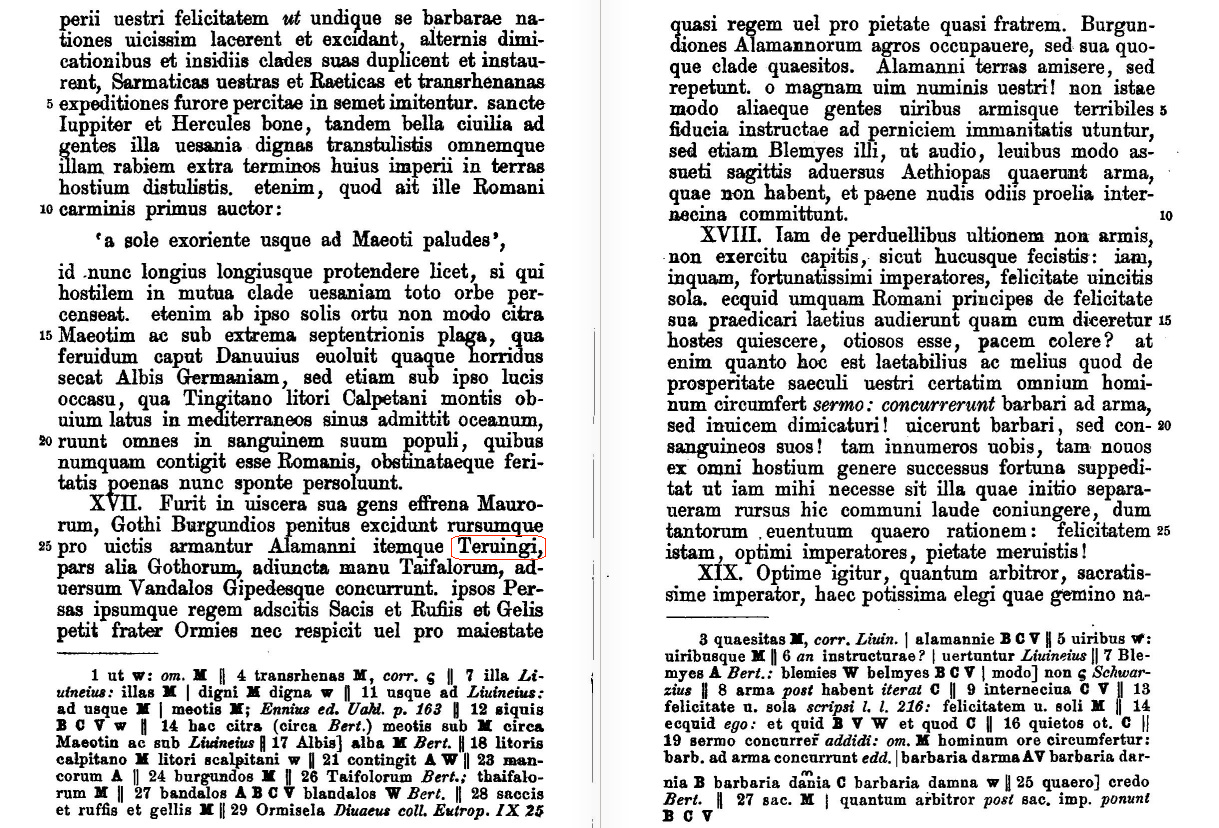
February 25, 2017

Meillet and How the Veneti Discovered America – Part II

Published Post author

So where else does Meillet wander?

Argument 3?

He next proceeds to confess that the Slavic word for “stern”, that is, krma, крма, кормової, кърма, etc. is, in fact, Indo-European (note that this word does not appear in West Slavic languages – the Polish has a borrowing from the Dutch and the Czech and Slovak are too different – it’s not clear whether Meillet was even aware of this).  However, he notes that this is of no relevance since, of course, the back of the boat is of particular “importance” to the person who engages in paddling!  Why the back of the boat of the boat should be more relevant for the paddler than the rower (or, in fact, anyone who happens to be traveling on a boat) is left unclear  by Meillet and that is all that we will say about this.

Argument 4

Meillet then proceeds to argue that the Slavic name for an island indicates that this must be a river island.  He notes that this name is ostrovu (or ostrów) and that this means an island around which water flows.  He notes that the same concept is found in Indo-Iranian languages observing that the Sanksrit word for an island was dvipam meaning “water on both sides” and states that this concept only applies to a river island.  He also points to the dvaepa of the Avesta (but also maybe in Greek as per Meillet’s citation of Homer).

That ostrovu indicates a current flowing around something is unquestionable (same concept with the “str” of a “stream”).

Whether this has any bearing on the location of the Slavic “homeland” is quite another story.

First of all, the Slavic ostrovu does not feature any explicit concept of “two sides” (of whatever) that the Sanksrit version of the  island name seems to have.  Therefore, the Sanksrit parallel is of little use here.  We are not debating Sanskrit but Slavic vocabulary so let’s stick to Slavic words.

Second of all, a current can certainly flow around sea islands as well.   Ocean currents do exist and that is something that, presumably, Meillet was or should have been aware of.

Third, there is a fundamental problem here.  It may be that the “original” Slavic word for an island did have a “river” like connotation.  But the fact that such a name was then extended to sea islands tells us precisely nothing as to when that happened.  In other words, Slavs may well have called sea islands ostrovu already 2,000 BC in which case the whole discussion as to what their homeland remains completely impervious to the linguistic argument that Meillet raises.

One might observe that in German a lake is called a See but a “sea” is also a See.  And while German also has Meer (as does Slavic with its morje – incidentally, think of the north Gallic “Morini”), the English language does not and still calls a sea by the word “sea” (both from Proto-Germanic *saiwaz?) while using the mar concept for a “marsh”.  What precisely are we to conclude from this?  Presumably, that Germanic languages developed far from the seas and oceans?

Fourth, and this is again strange, Meillet forgets to mention some other Slavic names of islands. He notes that other IE languages use various names for the concept of an island (and in most of these cases their origin is, he says, “obscure”).  He mentions the Armenian kghzi, the Latin insula and the Greek νασος/νησί.  And yet, with all this vast knowledge of IE languages, he seems unaware of other Slavic names for an island.  

For example, in addition to ostrów, there is otok in Slovene and Polish (but also attested in Czech and Croat).  The concept of otok as in a place that is “surrounded” [by water] is similar to that of ostrów, except that it does not involve the concept of “flowing” around the island.  So ostrów minus the current.

Then there is the Polish wyspa (earlier wysepwysop) whose age is precisely unclear.

Incidentally, he says that islainsula is of uncertain derivation – may be – curiously, the Slavic Wisła (Vistula) may be broken to get an isla as in:

W-isła

Copyright ©2017 jassa.org All Rights Reserved

February 19, 2017