Category Archives: Poles

Athleta Christi

Published Post author

The tomb of Boleslaw the Great (aka the Brave) was located in the Poznan cathedral.  This much we know from the Greater Poland Chronicle.  The cathedral itself was upgraded in the then popular “Gothic” style by Casimir the Great in the 14th century.  The first (? see below) mention of an inscription on the upgraded tomb dates to 1422 and is found in a document dealing with the feud between the Teutonic Knights and the King of Poland (it is a witness statement on behalf of the Polish King by one George Merkil, a notary of Poznan).  According to the subsequent testimony of Jan Dlugosz (in the “Lives of Bishops of Poland” or Vitae episcoporum Poloniae), it was Casimir who included this inscription regarding the deeds of his predecessor:

[Casimirus] sarcophagos Regum humiles et solo sequatos, petrosa mole super imposita erexit, delitescentesque umbras, ne in perpetuam residerent oblivionem, vindicatas illustravit, et Posnaniensi ecclesiae vasa aurea et argentes dono data reliquit.”  

vita

The first edition of the text – it was previously thought (again see below) – came from 1490 when Stanislaw Streczaka a Benedictine monk from Tyniec mentioned it in his copy of the Gesta Romanorum (the manuscript was in Lviv where it was apparently destroyed in a fire in 1848).

poznaniensises

what is believed to be the actual tomb underneath the Poznan Cathedral

In any event the tomb was moved in the second half of the 18th century and in 1790 was destroyed when a portion of the cathedral tower fell off.  Once the tomb was destroyed (metaphor?) and the Polish state partitioned (over the years 1772-1795), suddenly everyone became interested in what that inscription said.

A number of authors were discussing it (Lubienski, Starowolski, Hartknoch, Zalaszowski, Czacki, Sarnicki, Naruszewicz) before Joachim Lelewel really made a study of it.  Here it is:

“In this grave there rests
a chieftain, a noble dove
You were called Chrobry
may you be eternally blessed
Though from a pagan father,
yet your mother was a believer
Drops of holy water caused
that you became God’s servant
When you hair was cut
it was laid in Rome
From then among conflict
you were Christ’s athlete
You won [many] lands
and made many wars
Distinguished chief
praise to you, stout Boleslaw
Thus the kingdom of Slavs
Goths,* and too of Poles
The Emperor did raise higher
so thou need not be a duke
And [in turn] many gifts you
you gave [him]
You gave to him
[for] riches/wealth you had aplenty
And to give you fame
did Otto give you the crown
For your great deeds
may you find salvation. Amen”

athleta

Athleta Christi showing the (old) Prussians the (not yet royal) finger

(Hic iacet in tumba
princeps generosa columba
Chabri tu es dictus

sis in evum benedictus
Perfido patre
tu es, sed credula matre
Fonte sacro lotus
servus Domini puta totus
Precidens comam
septeno tempore, Romam
Tu possedisti
velut verus adleta Cristi
Vicisti terras
faciens bellas quoque guerras
Inclite dux
tibi laus, strenue Boleslaus
Regni Sclavorum
Gottorum sue Polonorum
Cesar precellens
a te ducalia pellens
Plurima dona sibi
que placiere tibi
Hinc detulisti
quia divicias habuisti
Ob famamque bonam
tibi contulit Otto coronam
Propter luctamen
slt tlbl saLVs Amen)

And in Lelewel’s version (with a Polish translation) (note that the lines are differently ordered here):

lelewelz

At the time of Lelewel’s writing the oldest copy was thought to be one from 1490.  Interestingly, older versions appeared later – most recently one that was discovered by Wojciech Mischke (an art historian) and that has been dated to the beginning of the 15th century.  How Mischke discovered it should be a subject of independent study.  The language appears in the Codex HM 1036, of the Huntington Library in San Marino (California not Italy) but “appears” is a bit of a tongue in cheek joke.  It barely appears.  Or rather, it was erased and overwritten with a poem praising Pius II (who was Pope between 1458-1464).  We can only assume that someone who tried to read the remains of the writing understood enough of what it said so as to bring in a Polish medievalist like Mischke for a consult (another mystery). You can see it here (folio 206):

stranges

What is interesting, however, too was that there is apparently another writing earlier than the Chrobry inscription that is visible underneath.  Here is the back of that page (folio 205) where you can see it peeking through an Epigram of Martial:

strangezt
 Other pictures of the manuscript can be found here.

huntington

* So what about these Goths?  That Goths conquered the Veneti is evident from Getica itself.  A memory of Goths was preserved all over Eastern Europe (much like Vandals in Central Europe).  Numerous examples abound:

  • Gallus Anonymous speaks of the Sarmatians as Getae – probably meaning the Prussians (The Slavic lands… begin with the Sarmatians who are also known as Getae/Goths)
  • Kadlubek speaks of the Prussians as Getae during the events surrounding the Polish pagan rebellion of the 1030s
  • The Greater Poland Chronicle speaks of the Getae as Russians during the same events
  • The Chronicle of the Priest of Dukla discusses the Goths basically as a variant of Slavs
  • Various Frankish Annals (Borna duke of the Guduscani) refer to certain Slavic tribes in the Balkans as Goths
  • Then you have the above inscription, which probably refers to the Prussians, etc

Here is the Bielowski description in Polish:

bielowksi

Copyright ©2016 jassa.org All Rights Reserved


February 8, 2016

Statuta dioecesis Cracoviensis

Published Post author

That names of former gods were invoked in Polish Christian ceremony and that various pre-Christian ceremonies and customs survived the Baptism of Poland, we know from many sources.  Here are the 1408 statutes of the Cracow (& Sandomierz?) diocese.   These statutes contain prohibitions dealing with practices such as sorcery/fortunetelling, invocations of pre-Christian Gods at Christian events (around the Pentacost again) and practices around Christmas (calends).

scriptores

The source for these is a publication by Bolesław Ulanowski in the Archive of the Historical Commission volume 5 (as printed in Scriptores Rerum Polonicarum volume 13). The manuscript is in the collection of the Cracow Cathedral library and may perhaps one day be viewable here.

Part I

Of Fortune-Telling

“Also we prohibit, lest anyone or some damnably [should] presume to tell and assert fortune-telling and divinations; when [to] no one does this [behaviour] appear to be harmful but [rather] beneficial [and if they say that] it is not a sin, those who say that, err in the faith.”

(De sortilegiis.  Item prohibemus, ne aliquis vel aliqua dampnabiliter presumat dicere et asserere sortilegia et divinaciones, quando nulli videntir esse in dampnum sed in profectum, non esse peccatum, quia hoc est dicere in fide errare.)

Part II

Of the Pagan Ritual Hitherto Preserved By Christians

“And, it is not without great contempt for the divine name that certain Christian cults presume to practice idolatry, especially at the time that the Holy Spirit with his gifts [asks].  Therefore, we prohibit pagan songs at the time of the Pentacost, in which the names of idols are invoked and venerated, but [with] all the strength of Christ’s faithful should be pointed out and excluded to diminish idolatry and to strengthen the Catholic faith being conducive to their welfare.”

(De ritu paganico hucusque seruato per christianos.  Item non sine magno contemptu nominis divini aliqui specie christiani cultim ydolatrie presumunt exercere, presertim tempore quo spiritus sanctus cum suis donis est querendus.  Ideo prohibemus, ne tempore Pentecosthen fiant cantus paganisci, in quibus ydola invocatur et venerantur, sed totis viribus populus Christi fidelis inducatur et arceatur ad dimittenda ydolatica et ad amplecantanda fidei katholice congrua et saluti eorum proficua facienda.)

Part III

Of the Carolling* Done By the Commoners

“Also at the instigation of the devil perverse men fell into the custom of walking among people before, during and after Christmas and at whatever other time [per columbacianem], where they would commit many murders, thefts and many other crimes.  We therefore prohibit such things from happening in the future; and you should restrain your parishioners from the above.”

kalends

No fighting and everyone ends up at the manger – that’s the public version

(De columbacione per laicos exercenda etc. Item ex instinctu dyaboli et hominum peruersorum abusu uenit in consuetudinem aput laycos ante, citra et post festum Natiuitatis domini et quocunque alio tempore ambulare per columbacianem, ubi contiugunt multa homicidia, furta et alia plura crimina.  Nos igitur prohibemus, ne de cetero talia fiant; et vos rectores animarum vestros subditos a predictis curetis cohibere.)

* These were the people walking around villages kalendae or calends (going back to the Latin “first of the month).  See also: Welsh Calennig.  These were very much like the English carolers.  Earlier on the same topic we also have Bishop Nanker’s order against similar practices from 1323 entitled De columbacionis solucione.

statuta

More on similar happenings in Croatia here and here more on similar (but later – circa 1420) prohibitions from Greater Poland (the above presumably refer to practices around Cracow, i.e., in Little Poland).

Copyright ©2016 jassa.org All Rights Reserved

January 23, 2016

On Jason & the Argonauts

Published Post author

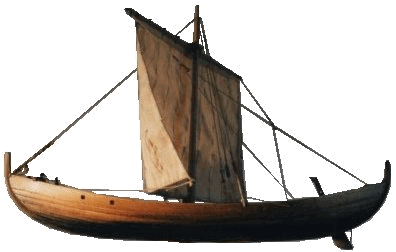
Some of the Suebi sacrifice also to Isis.  I cannot determine the reason and origin of this foreign cult, but her emblem, fashioned in the form of a Liburnian [or small/light] ship, proves that her worship came in from abroad. (Cornelius Tacitus, Germania)

argo

USCGC

Some actually believed Tacitus’ statement verbatim to be the truth.  Isis was worshipped in Rome and, apparently, had a maritime connection.  Thus, in the Kalendarium Rusticum, the 5th of March was in Rome the day of the Isidis navigium.  For example, we have Apuleius in his Metamorphoses Book 11 give this statement by Isis:

“The morrow that from the present night will have its birth is a day that eternal religion hath appointed as a holy festival, at a period when, the tempests of winter having subsided, the waves of the story sea abated, and the surface of the ocean become navigable, my priests dedicate to me a new ship, lade with the first-fruits of spring [!], at the opening of the navigation.”  (see also Lactantius Instit. i. 27).

Jacob Grimm thought that the mysterious goddess Isis was the Germanic goddess Zise/Ziza who was apparently worshipped in the area of Augsburg (i.e., in Swabia) which was allegedly called Zisaris of old.  We say allegedly because the sole reference for that is a 14th century poem by Küchlin for Peter Egen the new mayor of Augsburg.  (Incidentally, the suggestion that Zisa, Cisa was a Germanic name (in the Nordic sense) is itself worthy of a polemic – note too below the reference to the Vindelici):
zisa

Further, the Chronicle of Rudolf of Saint Trond (Gesta Abbatum Trudonensium),relates that in 1133 at Inda (Vinda!? supposedly, Muenster!) a ship was secretly constructed in a forest and then wheeled to Aix and then onto Mastricht and further.  The people engaged in this enterprise were apparently dancing and playing music (to the consternation of the priests).

gesta1

gesta2

The carrying of ships also occurred at Ulm (again in Swabia) and in Tuebingen.  This is attested by the prohibitions against the practice issued by the local authorities in 1530 and 1584, respectively (in each case this was an event that occurred on Shrove Tuesday).  A similar festival is attested at Mannheim on the Rhine and Brussels, Belgium (Ommegank).  Whether these have anything to do with Isis is unclear.

However, another possibility presents itself.

If Isis was really Isaya or Yassa then a ship reference becomes tantalizingly suggestive.  Remember that Johannes Georgius Stredowsky’s  Sacra Moraviae Historia lists a deity by the name of Chasson sive Jassen.  Theres should be little question that this is the same as Yassa, Yessa, Jessa.  But what of the “n” at the end?  Here, we suggest that the Czech Jassen or Polish Jas could be identified with a ship.

Which ship?

jason

Argonaut Council meets

Why, the Argo, of course.  The ship of Jason and the Argonauts.  (We’ve, of course, already made this suggestion when discussing the legends of the name of Poland where Colchis – the location of the Golden Fleece – makes an appearance.  The fact that Colchis included a province called Suania სვანეთი, aka Svaneti makes this suggestion even more delicious – for more on the same, see Menander the Guardsman).

For a similar line of thought (albeit without a Slavic connection) see George W. Cox’s “The Mythology of the Arian Nations”, (vol 2, p 119).

Regarding the Roman ship that was made an offering for Veleda, you can see here.  If Lada was really the prior Veleda then the fact that she (he?) was a protector/guardian of Jassa gives further flavour to this reasoning – see “Alado gardzyna yesse“.

Copyright ©2015 jassa.org

December 27, 2015

Polish Gods Part III

Published Post author

We have previously written extensively about Polish Gods in Part I and Part II of this series (as well as other smaller articles).  We thought Part III may be in order.  This part describes the literature of the 16th century.  At this time the Polish-Lithuanian Commonwealth was at its strongest, Poland repurposed towards the East and, in consequence, stretching between the Baltic and the Black Sea and encompassing various non-Polish (and even non-Slavic) peoples (Lithuanians being only the most obvious ones).  In accordance with its new stature, the country was hungry for great literature or rather literature describing the country’s greatness.  Thus, whereas previously only a few chronicles had been written in Poland, in the 15th century Jan Długosz offered the first major revamp of that genre for Poland and in the next century a whole bunch of similar works came out.

In addition to deriving proud genealogies of the “Sarmatian” nation (that was the understanding back then), the chroniclers felt they had to mention a Polish mythology as well.  Much of their work was derivative of the earlier works we already discussed and, with time, the numbers of Polish Gods began to grow quite disproportionately to what the chroniclers could possibly have known of such deities.  Nevertheless, at the risk of boring the reader with some repetitiveness of description we include all such mentions/works from Poland’s “Golden Century”.  Further, because the Polish-Lithuanian Commonwealth occupied so many lands at the time, the authors felt it appropriate to include among the “Polish” Gods also Lithuanian, Latvian and Russian deities and customs – all Slavs and Balts under one roof.  In order to give a flavor of this we generally did not cut those traditions out and have maintained them here under the rubric “Polish Gods”.  Obviously, today we would view these slightly differently.

Finally, we note that the various topical and popular books published around this time occasionally also mentioned some Polish (and other) deities.  We already discussed one of these here.  We discuss another one below.

Here is a list of the various works containing descriptions of the divine that we present (here in chronological order of their original penning (not necessarily publication)):

  • Chronica Polonorum by Maciej of Miechow (1519)
  • Kronika wszystkiego swiata by Marcin Bielski (1551)
  • De origine et rebus gestis Polonorum libri XXX by Marcin Kromer (1555)
  • Postepek prawa czartowskiego by an anonymous author (1570)
  • Postylla by Jakub Wujek (1573)
  • Goniec cnoty do prawych szlachciców by Maciej Stryjkowski (1574)
  •  O początkach… sławnego narodu litewskiego, żemojdzkiego i ruskiego by Maciej Stryjkowski (manuscript from 1577)
  • Sarmatiae Europeae descriptio by Alessandro Guagnini (1578)
  • Kronika Polska, Litewska, Żmudzka i wszystkiej Rusi by Maciej Stryjkowski (1582)
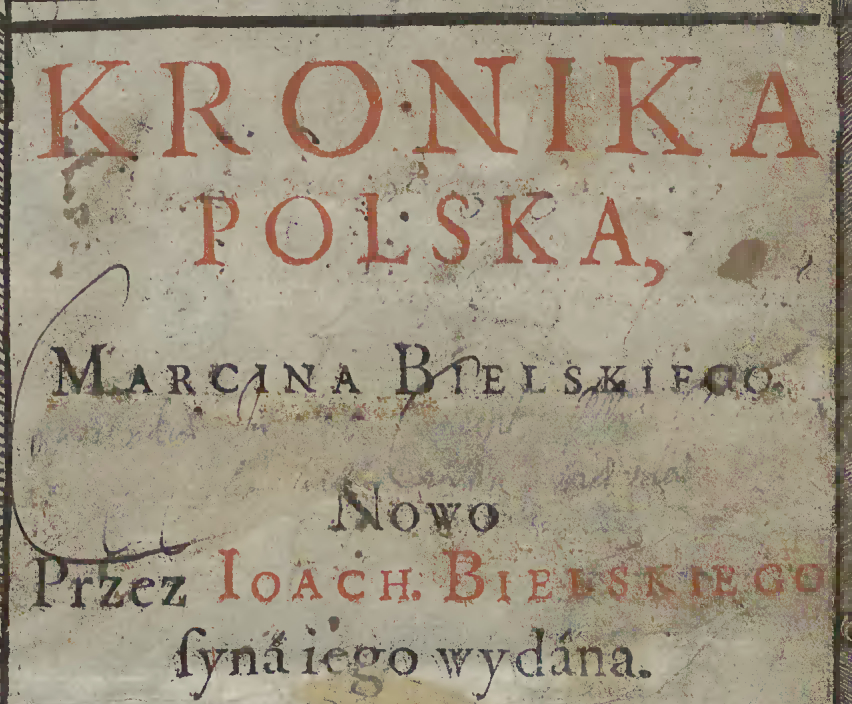
  • Kronika polska Marcina Bielskiego nowo wydana by Joachim Bielski (1597)

To maintain some semblance of chronology but also of narrative we list these works by their author in the following order:

  • Maciej of Miechow
  • Marcin Bielski
  • Marcin Kromer
  • Anonymous Postepek author
  • Maciej Stryjkowski
  • Jakub Wujek
  • Alessandro Guagnini
  • Joachim Bielski

Maciej of Miechow (Miechowita)

(Chronica Polonorum, 1519)

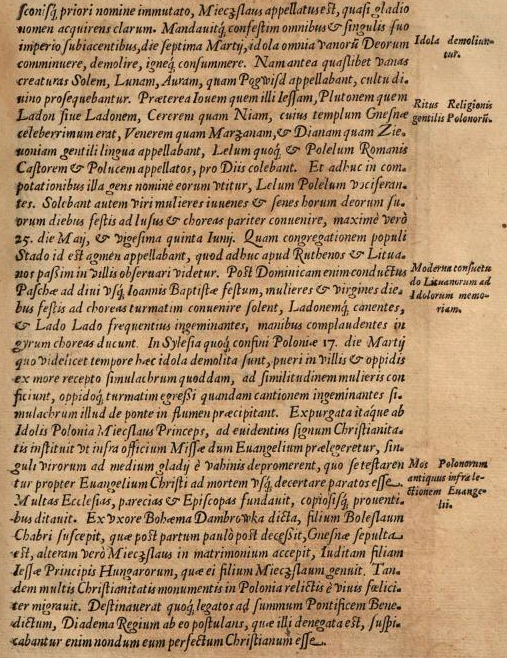
Maciej of Miechow (1457 – 1523) was born in a peasant family but managed to attend a local parish school, to earn a degree and to become a professor and then rector (for a record of eight times) of Jagiellonian University.  He was also a royal physician to Sigismund the Old and many other things.  His “Polish Chronicle” first came out in 1519 but was quickly censored due to unfavourable characterizations of certain members of the reigning Jagiellonian dynasty and after a “clean up” was reprinted in 1521 (pictures are from this latter version).  Maciej of Miechow was a proponent of the “Sarmatian” origin of Poles – rooting the “Sarmatian” era in Poland’s historiography.  This is what he had to say about the various Polish deities (note that although Maciej of Miechow did not shy away from critiquing Jan Długosz, he largely accepted Długosz’s description of Polish Gods throwing in a personal detail as well):

miechow

“Jove they named according to their language Jessa. Mars they called Leda. Pluto was called Nya. Venera they named Dzidzililya. The name for Diana was Dzeviana. Cerera was called Marzana.  They worshipped Pogoda. They venerated the light, gentle breeze that rustled in the ears [of grain] and in leaves and then turning into a whistle; they named it Pogwizd.  They venerated Leda, mother of Castor and Pollux, and the twins born of one egg [the dioscuri], which one can hear till this day listening to those who sing the oldest songs: ‘Lada, Lada, Ileli, Ileli, Poleli‘, clapping and hitting their hands.  They call Leda – and not Mars [note the inconsistency with above] – by the name of Lada (if I dare say so myself, based on the witness given by live reports of the same) and Castor they call Leli whereas Pollux [they call] Poleli.  I myself have, in my youth, witnessed three of such idols lying, partly broken, in the neighborhood of the Holy Trinity Church in Cracow – they have since been taken away.”

miechowitagods

(Iouem uulgari sermone Iessam nuncupabant; Martem apellarunt Ledam; Plutonem uocauerunt Nya; Venerem dixerunt Dzidzililya; Dianam nuncupabant Dzeuiana; Cererem uocarunt Marzana.  Adorabant Pogoda, quod sonat temperies.  Adorabant spiraculum, siue flatum tenuis aurae, per spicas frugum, et folia arborum silibantem, atque cum sibilo transientem. Vocantes numen eius Pogwisd.  Adorabant Ledam matrem Castoris et Pollucis, Geminos que ab uno ouo natos Castorem et Pollucem, quod auditur in hodiernam diem, a cantatibus uetustissima carmina: ‘Lada Lada, Ileli, Ileli, Poleli’ cum plausu et crepitu manuum. Ladam (ut ausim ex uiuae uocis oraculo dicere) Ledam uocantes, non Martem, Castorem Leli, Pollucem Poleli.  Ego in puericia mea uidi tria idola de praedictis in parte contracta, circa ambitum monasterii sanctae Trinitatis iacentia Graccouiae. Iamdudum sublata.)


Marcin Bielski

(Kronika wszystkiego świata, 1551)

Marcin Bielski (1495 – 1575) was (likely a self-taught) soldier, chronicler and poet.  His 1551 “Chronicle of All the World” Bielski with its patriotic depiction of the Poles became an instant hit with further printings in 1554 and 1564.  Although he never left the Roman-Catholic Church, Bielski was sympathetic towards the Protestant Reformation.  In later [only?] printings, he disputed Marcin Kromer’s assertions that Vandals were not the ancestors of Poles.

bielskielder1

Bielski first offers a description of the religions practices of the Slavs in the context of their pre-history:

“And at this time the Slavs continued still to praise the devils’ idols.  The only thing that was always good in this evil with them was that they did not see any hope for salvation in mortal man which others at this time did but only in God they held hope especially the one that governed thunders and rains and to this one they offered their goods.  They understood about fortune and not to have faith in men.  They lived in the fields in roomy tents.  They went to war on foot.  They had longbows to shoot with.  Both wives and husbands were of tall stature.  They did not know pleasures.  All their goods were for consumption only [to eat] as I’ve already written above.  The old Greeks called them Sporos that is spread out because they came into possession of many kingdoms [of others].”

bielski2
Two interesting points here:

  • This is almost verbatim from Procopius’ description of the Slavs, and
  • the word used for the “thunder” god of Procopius is – in the instrumental – spelled “Bodze” suggesting Bodz as a nominative – whether a connection could be drawn to Boda is doubtful but intriguing.

He then goes on to describe the Baptism of Poland:

“[Mi[e]szko] ordered all [the people] – the rich just as the poor that they should be baptized on the seventh day of March throwing into the fire the wooden idols and breaking the stone ones [and tossing them] into the water.  And so from that there derives the custom in Poland and in Silesia that on the seventh day of March they they dress up Marzana as a woman, walk out of the village  and drown her singing: ‘Death writhes about the fence, looking for trouble etc.’  Because before that they venerated Planets, weathers [pogoda], pogwizdz, heli, lada, Dziewana that is Diana or Marzanna and many similar ones.”

bielskielder3

Bielski picks up the Slav narrative of Procopius when describing the ancestors of the Poles (a more specific section after he first dealt with Slavs more generally).  Again much of this is found elsewhere:

bielskiprinting1564

“They venerated one God especially the one that governed thunder because thunder they feared.  And Mars too they took to be Holy and made offerings to him.  And also Pan, the god of the shepherds – and from this they called their superiors ‘pang’ [just as] we do today.  Mars they called Marz and thereafter our [Polish] people Marzana and they drowned it in water having dressed it up as a person – first  in Gniezno and then in villages throughout.”


Marcin Kromer 

(De origine et rebus gestis Polonorum libri XXX, 1555)

Marcin Kromer (1512-1589) was born to a mixed burgher-gentry German-Polish family.  He became secretary to King Sigismund August – the last Jagiellonian monarch of Poland-Lithuania and later the Bishop of Warmia.  He was an author of a number of books – the one most relevant for us here is the chronicle named “On the origin and deeds of the Poles in 30 Books”.  Kromer continued the Sarmatian trend as to the origins of the Poles.  He pointed too towards the people known as the Veneti.  Importantly, he was one of the first Polish writers officially to reject the “Vandalic” theory of Poles’ origin.  (He also rejected the “Illyrian” theory).

cromeri

Here is Kromer on Polish Gods:

“Among the Slavs and other northern nations the old sore of idolatry held sway the Iongest since I understand that due to their being far away and their being fierce it was not easy for good meaning men to reach these peoples and too armed men of faith did not journey so far [North].  The Poles and other Slavic nations thus honored as gods in their own way: Mars, Pluto, Cerera, Wenera, Diana naming them [as follows]: Jessa, Lada or Ladon, Nya, Marzana, Zezylia, Ziewonia. It is for these that the people understood to bless altars, columns, holy groves and priests.  It is to these that they gave offerings and butchered cattle.  In their praise, did the people celebrate annual holidays, meetings, feasts, dances, clap hands, sang and undertook other celebrations.  Even Długosz recalls (some few years after the introduction of Christian faith)  that he himself had experienced these idolatrous rites, saying that it was common for men and women, old and young to gather together for games and dances, exactly during our Pentecostal holidays and that they called these groups ‘stado’ as if these gatherings were flocks or herds.”

kromer1555-1

“For this reason, allegedly, Russia and Lithuania [to this day] preserve such a rite whereby they conduct dances, clap hands and [the words] Lado repeat.  Długosz mentions that there stood in Gniezno a church dedicated to Nya or Pluto.  The Poles had even more gods as, for example, Zywie, which one reads as the ‘virile’ [or ‘living]’ (or ‘air’); Pogoda, Pochwist, whom Maciej of Miechow calls the very air/wind, I explain as bad weather/air;  it is thus that the Mazurians call the strong early winds ‘Pochwistel‘.  There are those [Maciej of Miechow] who place Lel and Polel amongst them [Długosz’s gods], of whom we hear that even to this day on a drunken evening [people] recall and understand that they are Castor and Pollux.  And too Piorun, Striba [i.e., Stribog], Chors, Mokosh were venerated by the Rus as is shown by their annals [presumably Marcin Kromer means here the PVL].”

kromer1555-2

(Sedenim a Slavis, caeterisque Septentrionalis plagae populis diutius, que ab alijs getibus, inveterata illa de multis dijs opinio & superstitio retenta est, cum propter barbariem & seritatem, et equidem existimo, difficilis ad eos externis hominibus esset aditus: nec vero multu homines militiae & bellis dediti, de religione disquirerent. Colebant itaq pro dijs Poloni, & caeterae Slavici nominis gentes, praeciupe Iovem, Martem, Plutonem, Cererem, Venerem, Dianam: quos Iessam, Ladum sive Ladonem, Niam, Marzanam, Zizililiam, Zievanam sive Zevoniam, vocabant.  De hiseadem quae caeteri homines sere sentiebant: his delubra Iucosque dedicabant: jos simulachra et sacerdotes cosecrabant: his libabant, his imolabat: his sestos dies epulis, choreis, plausibus, catibus iusibusque varijs indulgentes, agebant. quem ritum sestorum dieru Dlugossus usque ad suam tempestate, aliquot post susceptam religione Christianam seculis perdurasse memorat.  Solitos em viros & mulieres, senes & iuvenes, ad iusus & choreas pariter convenire ijs diebus, quos nos Pentesosten vocamus: eumque coetum, Stado, quasi gregem vel armentum, appellatu esse.  Nec scio an hoc sit, quod Russi & Lituani, prefertim in pagis, adhuc retinent, dum Ladonem choreas ducentes, & manibus complodentes, ingeminant.  Fuisse vero Gnesnae sanctissimum Niae sive Plutonis templum, idem Dlugossus refert.  Ahaec autem Zivie, quasi tu dicas vitalis (aura nimirum) Pogoda, hoc est, serenu, sive temperies: Pochvist, quam Miechoviensis aura, nos intemperiem interpretamur, (indecque Pochviscela Masovijs adhic coeli intemperies dicitur) Polonis sij fuere.  Sunt qui hic addunt Lelum & Polelum, quos in conuiurijs & compotationibus appelari adhuc audimus, eosque Castorem & Pollucem esse autumant.  Piorunum autem, hoc est, fulme, & Stribum, & Chorsum, & Mocoslum Russi peculiariter colvere, ut proditum est eorum annalibus.  In hoc igitur errore & vana superstitioe hec natio diu perstitit.)

Maciej Błażewski (died about 1628) who translated Kromer’s book from Latin in 1611  (O sprawach, dziejach i wszystkich innych potocznościach koronnych polskich ksiąg XXX), also tries his hand trying to show the etymology of Pochwist/Pogwizd and further supplements the above with a little more information about the Russian version of Ladon (having interviewed Mikołaj Giedziński who had served as a soldier in Moscow (for the tsars)) and Perkunos.  You can find that here.


Anonymous Author

(Postępek prawa czartowskiego, 1570)

This popular book about the takeover of human lands by hordes of various devils came out in 1570 in Brest Litovsk.  The only known copy of the book itself resided in the Czartoryski Museum but we were not able to find a copy of the original printing.  Hence, here we include a copy from the 1892 edition by Artur Bemis.  This is, again, more of a popular morality story and the various “gods” mentioned below (described as “devils”) are clearly not gods at all and some, even if of a “godly” nature are not even Polish (e.g., Orkus).  Nevertheless, we present this curiosity here for the readers’ amusement.

postpke1

“To our Poland too did Lucifer send a second horde or moth [?] of devils to hunt.  And also many sisters [she-devils], and too to Russia, to Lithuania, to Moscovy and everywhere in the North [did he send] the Bachus’ horde, amongst which these are the leading companions:  Farel, Diabelus, Orkiusz, Opses, Loheli, Latawiec, Szatan, Chejdasz, Koffel, Rozwod, Smolka, Harab the Hunter, Ileli, Kozyra, Gaja, Ruszaj, Pozar, Strojnat, Biez, Dymek, Rozboj, Bierka, Wicher, Sczebiot, Odmieniec, Wilkolek [werewolf], Wesad, Dyngus* or Kiczka, Fugas.  ‘Our sisters too will go with you who as saints [gods] will be among the peoples’ [he said], that is: Dziewanna, Marzanna, Wenda, Jedza, Ossorya, Chorzyca, Merkana.”

* while Dyngus (or smigus-dyngus) is not normally considered a God in the Polish pantheon – rather a celebration associated with pre-Christian spring rites, there was a god named Mars Thingsus (Thincsus) as per a Northumberland (!) inscription.

(Do naszej tez Polski poslal druga horde albo cme czartow Lucyper na low, takze wiele siostr, takze i do Rusi, do Litwy, do Moskwy i wszedzie na polnocy wszytke Bachusowe horde, z ktorej sa przedniejszy ci towarzysze: Farel, Diabelus, Orkiusz, Opses, Loheli, Latawiec, Szatan, Chejdasz, Koffel, Rozwod, Smolka, Harab mysliewiec, Ileli, Kozyra, Gaja, Ruszaj, Pozar, Strojnat, Biez, Dymek, Rozboj, Bierka, Wicher, Sczebiot, Odmieniec, Wilkolek, Wesad, Dyngus albo Kiczka, Fugas.  Siostry tez nasze pojda z wami, ktore za jedne swiete beda u ludzi, to jest: Dziewanna, Marzanna, Wenda, Jedza, Ossorya, Chorzyca, Merkana.)

postepke1

And in the next chapter we have the following [Koffel’s name refers to a kufel, i.e., a beer stein):

“Koffel, the devil.  Coming from Bachus’ horde, that devil’s company over which Koffel was captain was great i numbers. He [Koffel] is the one who throws all the drunken revelries and leads all revelers into all kinds of evil, so that each of them, having drank some, would show their true colours, egging each on to be different in the morning and different [after drinking] in the evening.  Drunk, he calls other devils to his side who sing: ‘Hejdaz, Hala, Ilelu, Polelu’.  And should he get into a fight, even if he’s beaten, he screams that the fault was not with him but he’s won anyway.”

postepke2

(Koffel, czart.  Tez jest rota czartowska wielka zhordy Bachusowej, nad ktora rotmistrzem Koffel. Ten sprawuje pijanice wszystki i przywodzi je ku wszemu zlemu, tak aby kazdy swe kotki okazal, podpiwszy sobie, podusczajac, aby byl inszy po ranu, a inszy pod wieczor.  Upiwszy sie, wola drugich czartow do siebie, ktore zowia: ‘Hejdaz, Hala, Ilelu, Polelu’; a jesli sie powadzi, chocia go ubija, rzecze, iz on wygral i niewinien.)


Maciej Stryjkowski

(Goniec cnoty do prawych szlachciców, 1574)

Maciej Stryjkowski (1547- circa 1593) was born in Mazovia.  He was a traveler, a soldier (he served under Guagnini – see below), a protege of the Bishop of Samogitia, a notorious rhymer (his books and chronicles are thickly interspersed with simple rhyming passages) and ultimately a Catholic priest.  He wrote several books (being a priest helped him find the time) mostly having to do with Lithuania where he spent most of his time.  In his books Stryjkowski mentions various Polish, Lithuanian and Ruthenian or Russian gods numerous times.

One of these books is the “Messenger of virtue [sent] to the Righteous Nobles”.  Therein, in the chapter “About Polish kings and the origin od the famous Sarmatian nation” (O krolach polskich i wywodzie slawnego narodu sarmackiego) Stryjkowski includes the following passage:

goniec1

“Christ, you have the blind-born Mieszko
Brought to light, brought Poland to Holy Baptism,
It is you Grom, Ladon, Marzanna,
Pogwizd, Ziewanna gave way to”

goniec2

(Kryste tys Mieszka sleporodzonego
Oswiecil, Polskes przywiodl do krztu swego,
Tobie ustapil Grom, Ladon, Marzanna,
Pogwizd, Ziewanna)


Maciej Stryjkowski

(O początkach, wywodach, dzielnościach, sprawach rycerskich i domowych sławnego narodu litewskiego, żemojdzkiego i ruskiego, przedtym nigdy od żadnego ani kuszone, ani opisane, z natchnienia Bożego a uprzejmie pilnego doświadczenia, 1577)

Although Polish, Stryjkowski became a bit of a Lithuanian patriot and another chronicle is a testament to that feeling.   That book of Stryjkowski’s – one that was not published until the 20th century (Julia Radziszewska’s edition of 1978) – is his mouthful of a story “On the beginnings, origins, deeds, knightly matters and matters of hearth of the famous Lithuanian, Samogitian and Ruthenian nation, till now never obtained from anyone, nor written down, now with God’s inspiration and great experience [set down].”

stryryc1

In this manuscript, we first hear of “Lado” when the Lithuanian duke Gediminas greeted when entering some town (Kaniv?) in Russia by the commoners:

“Where the [commoners greeted him], according to custom, singing ‘a Lado Lado‘”

(Jak byl zwyczaj ‘a Lado Lado’ przyspiewalo)

304-1

Stryjkowski offers a more robust tale of ancient customs and beliefs just a few pages later when describing the establishment of the city of Vilnius by the Lithuanian Grand Duke Gediminas:

“And Gediminas marks with plough this town of his,
Indicating walls and where [to set] the two gates,
He measures squares for marketplaces and merchants,
And sets down the laws [rules] regarding the keeping of the peace and brotherhood.
Then a dark forest did he consecrate to the home/hearth gods
In the place, where today a workshop stands, to Vulcan’s thunders [groms],
For there were many snakes there, which [snakes] they venerated,
And each of them at home they fed with milk
To this end, he set an eternal fire/flame consecrated to these gods
And attached priests, so it [the fire] would always burn.
He too got tithes from all things”

306j

“And so the famous Vilnius did the famous Gediminas build
In this town, where there now stands the Church of Saint Stanislaw
built for that Saint bishop from the castle,
There stood an idol of Pioruns [plural] which [idol] they venerated,
And since his domain included fire, so with fire did they honour him,
And the second one after him, Ziemiennik the Earth god,
The giver of grain, to him they dedicated the dark woods.
Givoitis, the third idol, stood in the shape of a snake
And they believed he was the giver of a healthy [or bountiful] year.
Fire they called Znicz, which burned eternally
And whoever walked past it, had to feed it with wood.
They worshipped trees too as high gods,
And the sun and the moon they burned offerings to.
And when the sky turned cloudy so that the Sun was not to be seen,
Then no end there was to prayers and offerings.
And when the moon did not shine,
They said that the god of light is angry with us.
Snakes, lizards, vipers they took for house gods,
And they gave them all good things
Believing.  They kept these in the house and
offered them milk, honey and bread
And whosoever should cause them [these house gods] harm
So was he condemned to be judged buy the devil [czart].
And too, who should not have them in the house,
there he lost on health and possessions.”

307j

“And in the month of October, when they finished the harvest,
A feast they had, for which they brewed beer,
They sacrificed offerings of all things to their gods,
And for a week with their wives they lived off of these offerings.
And of each dish they put away a piece into every corner of the house,
Walgi, o musu Dziewos Ziemiennik‘ [our God Ziemiennik] they called out.
[compare with: ‘Musu kunigos dzidzis Vicienos’]
And also they did not cut grain [with a sickle] by the boundary [between different fields]
Leaving that [grain] for the Earth gods to eat.
Lelus and Polelus and Ladon they had as gods
And too they had those to saw fear when defending themselves at war.
And ‘Lelu, Lelu, my Lado, Lelu, Lado!
Sang a maidens’ flock [stado] while clapping their hands,
This dance we see even today they preserve,
From May all the way to July they dance with this ‘Lado’,
Lado, Lado‘ singing, on holy evenings
In Rus there are examples of the old faith’s idols,
The bodies of the dead with their most dear possessions they burned,
As I have mentioned above, and they washed them with honey [!].
And since they went from hardship to bliss did these [souls] travel, they played the bagpipes,
And beating the drums, around their burning ashes, did they jump in a dance.
And this [custom] Latvia still preserves in the Courland country,
That when a friend dies, they play for him singing,
(What I have myself seen) with these words: ‘Go already from here, you poor soul [nieboze],
to a [land] where the bad German cannot hurt and enslave you.
Whereas, the Ruthenians [Ukrainians] for the dead made graves,
In forests, in fields, and set stones on them.
Just as today in Kiev, Vitebsk, Kaniv,
In Bulgaria, in Thracia and at Moscow’s head
I saw great mounds of these famous Slavic princes,
and Perun they honored many years ago.
And these gods in Lithuania so they thought
that they are honouring true gods.
In Samogitia and Ruthenia these superstitions
Partly continue, the bows serve the unbelievers,
In Lawaryszki [Lavoriskes], there others worship snakes,
And they burn magics at dinnertime in November.
[this is a reference to Dziady, the days of the dead – which fell around All Saints Day]
But I went on a tangent, counting these idols,
Though it does not hurt to know old ancestors’ customs,
That Gediminas himself with [at] Vilnius at one time sponsored,
And two castles and a town on the [river] Vilnius he built.”

308j

(Zas Gedymin obwodzi radlem miasto swoje,
Znaczac mury i gdzie bram zakladac podwoje,
Día targów i kupiectwa rynki tez rozmierza,
I prawa ustawuje pokoju, przemierza.
Las potym ciemny bogom poswiecil domowym
W tym miejscu, gdzie dzis warsztat, gromom wulkanowym,
Bo wezow wielkosc byla tam, ktore chwalili,
A kazdy w domu swoim mlekiem ich karmili
K’temuż zaś ogień wieczny tym bogom poświęcił
I kapłany przystawił, by się zawżdy niecił.
Dziesięciny od wszystkich rzeczy też fundował.
Tak Wilno slawne slawny Gedymin zgruntowal

W tym miescie, gdzie dzis kosciol Stanislawowi
Zbudowany, swietemu z zamku biskupowi,
Tam stal balwan Piorunow, ktorego chwalili,
A iz mial ogien w mocy, ogniem go tez czcili,
A drugi wedle niego Ziemiennik, bog ziemny,
Zboza dawca, temuz las poswiecili ciemny.
Giwojtys, trzeci balwan, stal na ksztalt wezowy,
Ktory mu przywlaszczali, iz dawal rok zdrowy.
Ogien Znicz nazywali, ktory gorzal zawzdy,
Kto mimo szedl, musial nan drew przykladac kazdy.
Drzewa takze za bogi wysokie chwalili,
A sloncowi z miesiacem ofiary palili.
A gdy sie zachmurylo, iz nie widac slonca,
To juz modlom, ofiarom nie bylo konca.
Mowili iz sie na nas bog gniewa swiatlosci
Takze, gdy miesiac nocny nie dawal jasnosci.
Weze, jaszczorki, zmije za bogi domowe.
Mieli, iz im dawali rzeczy wszystkie zdrowe
Wierzac.  Tych kazdy w domu swym gospodarz chowal
Mleko, miod i pszeniczny im chleb ofiarowal,
A jesli zeby ktory krzywde im wyrzadzil,
Taki zaraz skaran byl, bo go czart osadzil.
Takze, kto by ich w domu nie mial, tam juz wszystki.
Rzeczy schodziły w zdrowiu, na ludziach dobytki.
A miesiąca oktobra, gdy skończyli żniwa,
Święto mieli, na które gotowali piwa,
Ofiary z wszelkich rzeczy bogom swoim bili,
A przez tydzien z zonami z onych ofiar zyli,
Kazdej potrawy w katy wszystki wprzod miotali,
‘Walgi, o musu Dziewos, Ziemiennik’ wolalali.
Takze na polu zboze nie zeli przy miedzy
Zostawiajac to bogom swym ziemnym dla jedzy
Lelusa z Polelusem i Ladona bogi
Tez mieli od wojennej obroncami trwogi.)

lado2
(I ‘Lelu, Lelu, Lado moja, Lelu, Lado!’
Tak spiewaly, z kleskanim reku niewiast stado.
Ten taniec jeszcze i dzis widzim zachowuja,
Od maja az do lipca z tym “Lado” tancuja,
‘Lado, Lado’ spiewajac, swiete tez wieczory
Na Rusi sa balwanow chwaly starej wzory,
Ciala zmarlych z najmilszym ich sprzetem palili,
Jakom wyszej namienil, a miodem ich myli.
A iz z nedze na rozkosz ida, w dudy grali,
A bebny bijac, kolo ich zglisk tancem skakali.
To jeszcze Lotwa w ziemi kurlandzkiej chowaja,
Iz gdy przyjaciel umrze, grajac mu spiewaja,
com sam widzial, w te slowa: ‘Juz idz stad, nieboze,
Gdzie cie krzywdzic, niewolic zly Niemiec nie moze.
Rusacy zas umarlym mogily sypali
W lesiech, w polach, a na nich kamienie stawiali.
Jak dziś koło Kijowa, Witebska, Kaniowa,
W Bułgaryjej, w Tracyjej i gdzie Moskwy głowa
Widziałem kopce wielkie onych książąt sławnych,
Słowieńskich, a Peruna chwalili z lat dawnych.
I te bogi, co Litwa tak on czas szaleli,
A iz bogom prawdziwym cześć czynią, mniemieli.
Tak w Zmodzi i na Rusi tych to zabobonów,
Po części jest, niewiernym służących pokłonów,
W Lawaryszkach tam jeszcze drudzy węże chwalą,
I czary przy obiadach na listopad palą.
Alem od rzeczy odszedl, liczac te balwany,
Jednak wiedziec nie wadzi starych przodkow stany,
Ktore Gedymin z Wilnem zaraz sam fundowal,
A dwa zamki i miasto nad Wilna zbudowal.)


Maciej Stryjkowski

(Kronika Polska, Litewska, Żmudzka i wszystkiej Rusi Która przedtym nigdy światła nie widziała, 1582)

“The Polish, Lithuanian, Samogitian and all Russian chronicle which till now has not seen the light of day” is perhaps Stryjkowski’s most important work.  It is a complication of the earlier works by Jan Długosz, Maciej Miechowita and others.  However, consistent with his Lithuanian and generally Eastern European patriotism Stryjkowski also includes passages clearly derived from Ruthenian or Russian chronicles too (most obviously the descriptions of Ruthenian/Russian Gods from the Primary Chronicle).

stryjk1

Interestingly, while in Vitebsk, Stryjkowski served under Alessandro Guagnini (see below) whom he later sued for allegedly having plagiarized Stryjkowski’s great chronicle in Guagnini’s “Description of European Sarmatia”.  Guagnini’s book was published in 1578.  In 1580 he lost the case brought by Stryjkowski (it went all the way to the Polish King).  Nevertheless, the Guagnini “Description” came out in 1581 again and continued to be published under his name.

Maciej Stryjkowski’s chronicle was finally published in 1582.   It contains passages regarding Polish (and other) divinities in the appropriately named chapter: “On ancient ceremonies or rather insanities of the Ruthenian/Russian, Polish, Samogitian, Lithuanian, Livlandian and Prussian idol worshipping citizens and [on] the varieties of the false gods.”  (O Starodawnych ceremoniach albo raczej szalenstwach ruskich, polskich, zmodzkich, litewskich, liflandskich i pruskich obywatelow balwochwalcow i roznosci bogow falszywych)

This is what Stryjkowski writes – note that we do not include the original publication language here since the readers can easily scan the pictures:

stryj2a

“But our Sarmatians, Poles, Ruthenians, Lithuania, Prussians mimicked these insanities, for these northern lands persisted longer in these errors.  By reason of their fierceness and animal cruelty, it was difficult for the Apostles and their messengers to come there with the teachings of the of the Gospel.  And too also our ancestors, being in those times the bravest nation in knightly [military] matters which took up all of their time, did not discuss [matters of] religion.  Thus, in the beginning Poles, Pomeranians, Mazurians these most important gods did have: Jove whom they called Jessa – this one they venerated as the all powerful and the giver of all goods; Pluto too, a hellish god whom they called Nia, they praised in the evening, asking for an earlier and better place in Hell and for rains or for calming of the weather; to this one there was a Church dedicated in Gniezno as Długosz testifies.  To Cerera the Earth goddess, the inventor of all grains, whom they called Marzana, to her too in Gniezno (as Vincent Kadlubek, Cracow bishop and the first Polish chronicler writes) there was a church built in Gniezno at great cost; where they offered in praise of her all kinds of tithes of grain after the harvest, asking that the next year’s harvest [also] be fruitful.  Venera they called the goddess of love Zizilia, to whom they prayed for fertility and all sorts of bodily pleasures they demanded from her.  Diana the goddess of the hunt in they tongue they called Ziewonia or Dziewanna.  Castor and Pollux too – the Roman deities – they venerated, who they called Lelus and Palelus – what even to this day amongst the Mazurians and Poles during feasts (when they’ve drunk some) we hear in the open when they Lelum po Lelum shout.  They venerated too the mother of Lel and Polel – Leda who, according to Greek faery tales, Jove – unable to get to her otherwise – turning himself into a swan did finally impregnate; [and] so she laid an egg from which Helen (for whom Troy perished) and Castor with molux (sic) – the twins – were born or hatched who afterwards were counted among the Gods.  And men and women, old and young, used to come together in one place for the Holy Days of these Gods of theirs so as to dance – which meeting they called ‘kupala’ especially on the 25th of the month of May and the 25th of June – [a custom] that to these times in Ruthenia/Russia and Lithuania they preserve.  From the Second Sunday [Sunday after Easter] until the Day of Saint John the Baptist women and maidens  come together for dances and holding hands they sing ‘Lado, Lado‘ and ‘My Lado‘, they repeat.  Singing to commemorate Leda or Ladona, the mother of Castor and Pollux, though the simple people do not know from whence this custom arose.  Also these strange lullabies about Saint Peter and holy evenings after the [day of the] birth of the Lord, all this comes from ancient pagan superstitions for I have seen the same myself with my own eyes in Turkey – in the year 1575, on December 20 when in our country the middle of Lent falls. [!?]”

striykovsky

“And the Poles also honored as a God the whistling wind which they called zywie; and also Pogoda, the God of clear, happy days; as Miechovius [Maciej of Miechow – see above] heard from his ancestors.”

“They also worshipped a second wind Pochwist which, as Miechovius writes (though Cromer [Marcin Kromer – see above] explains Pochwist as bad weather), the Mazurians even today call Pochwiscel – thus when such a wind should arise they fell and kneeled.”

“They honored too Ruthenian/Russian Gods, that is, Piorun, Strib, Mokosh, Chors and others whom Vladimir the king of all Rus (son of Svantoslav with a concubine) built many churches in Kiev (for his brothers slain in offering) and placed many idols/statues on the nearby mountains [hills].  And especially an idol for Piorun God of thunders, clouds and lightnings (who they worshipped the most) most exquisite he set up.  The body itself was elaborately made out of wood, his head from Silver, mustache from Gold and in his hand he held a stone in the shape of a striking thunder; and to honor him specially dedicated priests burned an oak fire which was called eternal and were it ever – by reason of the negligence of its guardians [i.e., the priests] – to go out, so would they be punished with a slit throat.  This [custom] the Lithuania, Samogitia and Old Prussians preserved.”

stryjkovskinew

“In this shape an image of this Piorun stood [also] in Great Novogrod.  And it was with great diligence as a God venerated in the place where now stands a Christian monastery called ‘Perunian’.  Later when all the Ruthenians/Russians accepted the Christian faith (in Greek custom) in the days of Vladimir Svantoslavovic [i.e., son of Svantoslav] in the year from the creation of the world (according to Ruthenian/Russian count) 6497 and from [the birth of] Christ 980 – as we have described the same earlier – they threw this idol from a bridge into the River Volkhov, as the Ruthenian/Russian Chronicles and Herebersteinus* following them (Folio 74), in  ‘Rerum Moscoviticarum Commentarii‘, attest.”

*Baron Sigismund von Herberstein, author of the above mentioned “commentaries” (1549)

“And Czechs and Bulgarians, Slavs our brothers honored these [unclear if pagan gods generally or the above gods] Gods but, singularly, they had Merot and Radamas [Radegost?].”

Later Stryjkowski describes (mostly copying Długosz) the “Baptism of Poland” as follows:

stryjkovskinew2

“The duke Mieclaw [Mieszko] ordered to let it be known [by town criers] in all towns and villages that each person, the nobility as also their subject and people of all stations under the threat of] having their throats slit and losing their possessions, on the seventh day of March they should baptize themselves.”
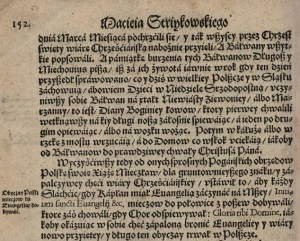
stryjk3

“And so all of them through the Holy Baptism accepted the Christian faith and they broke all the idols.  And, as a remembrance of these idols, Długosz and Miechovius write what was done every year when this day came – [a tradition] that they maintain even today in Great Poland and in Silesia.  For when mid-Lent Sunday comes, children having made an idol in the shape of the woman Ziewona or Marzanna that is Diana, the Goddess of the Hunt (which idol they used to venerate), they place it on a stick and carry it around singing sadly and one and the other [idol] praising or carrying it in a wagon.  Then, in a puddle or into a river from a bridge they throw it and run away to their houses as if from the idols towards the true glory of Lord Christ.”

On Jan Długosz’s decryption of Poland’s baptism, see here.


Jakub Wujek

(Postylla, 1573)

Jakub Wujek (1541-1597) was a Roman-Catholic Jesuit priest and a leading translator of the post-Council of Trent (i.e., “Counterreformational” Bible).  He also wrote  Postylla catholica  which contained many sermons.  In its Part 3: Sermon on the Day of Saint Adalbert our martyr, patron and apostle (Kazanie na dzien Wojciecha swietego, meczennika, patrona i apostola naszego) Wujek makes the following claims about Poland’s pagan past:

wojek1

1575 printing

“Our Poland was once in darkness covered when it venerated, instead of the lawful, live God, all kinds of devilries [such as] Jesses, Ladas, Nyas, Marzannas, Ziewannas, Zyzylas, Zywies, Pogodas, Pochwists, Lelipolelis, Pioruns, Gwiazdas [stars] and snakes.”

wojekz

(Byla kiedys Polska nasza ciemnosciami kiedy miasto prawego zywego Boga lada Dyabelstwa Iesz Lady Nije Marzany Ziewany Zyzylie Zywie Pogody Pochwisty Lelipoleli Pioruny Gwiazdy i Weze chwalila.)


Alessandro Guagnini

(Sarmatiae Europeae descriptio, 1578)

Alessandro Guagnini (1538-1614) was a Veronese soldier and chronicler in the service of the Polish-Lithuanian Commonwealth.  He became a naturalized citizen of the Commonwealth under the name “Gwagnin”.  As already mentioned, he was accused by his former subordinate Maciej Stryjkowski of having plagiarized Stryjkowski’s chronicle.  Be that as it may we include Guagnini’s description here as well.

sarmatiaguagnini1

After mentioning the destruction of the idols on the 7th of March, Guagnini goes on to describe their early worship (you can zoom in for the Latin version):

“Because before they worshipped  all kinds of created [physical] objects as Gods – the Sun, the Moon, the Air which they called Pogwisd.  Especially Jove who they called Jessa, Pluto who they called Lado[n], Cerere who they called Nia and whose church/temple stood in Gniezno, Venera who they called Marzana and Diana who they called Ziwonia, in the pagan tongue.  Also Lel and Polel that is the Roman Castor and Pollux were venerated as Gods.  And when they drink together so do they cry out their names ‘Lelum Polelum.'”

guaagnini2

Guagnini then mentions the games that men and women play between the 25th of May and 25th of June, i.e., stado which is, he says, still observed in Ruthenia/Russia and in Lithuania. He goes on to describe that after Easter till the feast of Saint John the Baptist women and maidens hold hands dancing in circles praising the name of Ladon (‘Lado, Lado‘).  Finally, he notes that in Silesia and on the border with Poland on the 17th of March villagers go around with an idol before throwing the same into a river (i.e., the Marzana rites).  


Joachim Bielski

(Kronika polska Marcina Bielskiego nowo wydana, 1597)

Joachim Bielski (circa 1540 – 1599) was the son of Marcin Bielski, as well as a parliamentarian, poet and the man who updated his father’s chronicle into the “Polish Chronicle of Marcin Bielski – newly issued by his son Joachim Bielski.  In addition to adding Polish histories up to the reign of Sigismund Vasa, Joachim toned down the various pro-Protestant passages in his father’s work.  (Joachim was not raised Catholic by his father but did later convert to Catholicism – whether this was partly caused by the growing Counter-Reformation, the fact that Joachim was working for the new King Sigismund Vasa (who was a staunch Catholic) or by personal beliefs is unknown.

iochanbielski
“The Poles having accepted the Christian faith destroyed the idol images in which they [previously] venerated devils as Gods.  Others they burned everywhere in towns and villages.  All the pagan prayers they and lost [destroyed] via edict or the duke’s command: setting a certain date for this, namely March 7th,  These idols, Miechowita [Maciej of Miechow] writes that he saw three of the same, broken and lying at the Church of the Holy Trinity in Cracow where they lay on the ground for a while.”

ioachim1

“In the reign of this Mieszko in Cracow on the Vistula – where today the convent of Saint Agnes stands – there was a pagan church from which Mieszko ordered all the devils’ idols to be tossed out and to [replace them with] carvings of the passion of the Lord Christ.”

“In my memory too, there was this custom in villages that on the White Sunday [Second Sunday – Sunday after Easter] they drowned an idol after [first] having put human clothes on a hemp or hay bundle.  And the whole village led this idol [away] to a nearby lake or puddle and there, having taken the clothes off, they tossed it into the water singing mournfully: ‘Death writhes about the fence, looking for trouble etc.’ Thereafter, they ran away from this place as fast as they could back home, whosoever should, however, fall so they got an augury that this one should die this year.  They called this idol Marzana as if it were the God Mars.  Just as Ziewanna was Diana; and Dzidzilia was the Goddess Venus; and Jessa was the God Iovis [Jove]; and Nia, the hellish God Pluto – these they venerated in accordance with pagan custom as Gods and they built them churches/temples, consecrated woods, established certain Holy Days, gave offerings and to honour them they gave feasts and dances.”

ioachim2“As Długosz writes, that even in his time about the time of the Green Holidays [Green Week/Pentecost/polish Zielone Świątki, german Pfingsten] people used to congregate in villages – men just as women and to engage in strange dances [in their honour] which they called in the common tongue Stado.  So too writes this Długosz that in Gniezno there stood for a long time a church of the Holy/Saint Nia.  They also had other live Gods that is Lel and Polel which some understand to be Castor and Pollux.  They venerated as a God too Zywot, Pogoda, Niepogoda (which they named Pochwist) and today they still call pochwiscil in Mazovia [note: Mazuria became Mazovia here].  They venerated too Piorun, especially Ruthenia/Russia [did] just as also Strib, Chorz, Mokosh.  And Pomeranians [venerated] Radogost and Swatewit and Prowe.  There too were many other pagan tomfooleries.”

Copyright ©2015 jassa.org All Rights Reserved
November 29, 2015

King Burisleif & His Daughters in Jomsvikinga Saga

Published Post author

One of the more interesting references to the Slavic Wends appears in the early 13th century Icelandic work “The Saga of the Jomsvikings” (Jomsvikinga Saga).  There we find out about the close relations between the Wends and the Viking pirates of Jomsborg.  Jomsborg is – probably – Wolin; also known as Vineta (Wineta) for its Wends.  We shall have more to say about Vineta later.  However, for now let us show what the writers of this saga had to say about the Wendish King Burisleif and his daughters.  They are not the main characters (as the title suggests that honor falls to the Viking pirates) but the fact that the mythical (?) founder of Jomsborg – Palnatoki – chose to establish that fortress on the coast of Wendland means that the Wends come up in the story.

wecomeinpeace

We come in peace

Note that the name Burisleif is unusual.  Most likely, it is a “Scandinavization” of Boleslav but this is not certain.  “Sleif” probably does refer to “Slav” but, as we discussed, “bury” is a Slavic word (as well as the prefix of Burebista – the leader of the uprising against Romans who rebelled in the East at the same time as Ariovistus did in the West) and, indeed, also the name of the Lugii Buri.  On the other hand the names of the daughters of King Burisleif: Astrid, Gunnhild and, possibly, Geira are Norse “Scandinavizations”.  That said, the three daughters of Burisleif are certainly reminiscent of the three daughters of the Czech founder Krok (Libuse, Tetka, Kazi).

The question of whether Burisleif really was a Wendish King remains unresolved.  Some believe he was a Polabian King, others suggest a purely mythical figure, yet others think him to be a composite of the Polish rulers Mieszko and Boleslaw.  It is interesting that one of the Jomsvikings’ leaders – Sigvaldi – comes from Zealand (Seeland or Sjaland) in Denmark which is the most likely candidate for the quasi-mythical province of Selentia the reference to which – as being conquered by Boleslaw the Brave – is found in the Gallus Anonymous Chronicle.

selentia

As regards the storyline, the Wends first appear after Palnatoki, the fearsome marauder, leaves the North Sea and decides to build a new fortress in Wendland.  So let us begin that story (in this we follow the Lee Hollander translation from the Icelandic – the Norse version is from the 1824 Carl Christian Rafn edition).

 Book 12

The Founding of Jomsborg

“Then they all return to their ships and felt to rowing, and got away; nor did they stop till they were back home in Wales. But king Svein and his men continued with the funeral feast, and he was galled with the turn events had taken.”

“The summer after, Alof, Palnatoki’s wife, felt ill and died. And then he was content no longer to stay in Wales, and he set Bjorn the Welchman to rule the land for him.  He himself left with thirty ships and took to harrying in Scotland and Ireland [i.e., to piracy on the sea and robbery on land].  And this course he pursued for three years, acquiring great wealth and fame [or notoriety].  The fourth summer, Palnatoki sailed east to Wendland with forty ships.”

arrivalinwentela

“A king ruled there at that time whose name was Burisleif.  He learned of Palnatoki’s approach and was ill pleased to have him harry there because he was well-nigh always victorious and add more fame then any other man.  So the king sent messengers inviting him to the court and offering him friendship.  And to his invitation he added the offer of a district in is land called Jom, if Palnatoki would rule and settle there and defend the King’s land.”

“Palnatoki accepted this offer and settled there with his all his men.  And soon he had a great and strong fortification made.  A part of it jetted out to see, and in that part that was the harbor, begin off to accommodate 300 warships, so that the ships could be locked within the fortification. With a great skill a gate was designed with the stone arch above it and before it on iron particles which could be locked from inside the harbor.  And on top of the stone arch that was a great stronghold, and within the stronghold were catapults. The whole fort was cold Jomsborg.”

Then Palnatoki established laws for Jomsborg, with the assistance of wise men, to the need that the renown of the men of Jomsborg should spread most widely and their power should wax greatly.  The first of their laws…”

[We hear that Palnatoki lays down the rather spartan laws for the Jomsvikings.  Book 13 then introduces Sigvaldi, the son of Harold, the earl of Zealand (Seeland).  It tells how Sigvaldi (with his brother Thorkel) set out to join the Jomsvikings and, after robbing the lands of Veseti, the ruler of Bornholm, did in fact manage to do so (though half the brothers’ crew was rejected).  In the meantime, Veseti raided Harold and Harold raided Veseti.]

[The Danish King Svein was initially frustrated by the feuding parties but, to avoid an all out war, he eventually interceded at the Iseyrar assembly (Thing on Seeland – but what of the name of this “thing”?; remember ysaya lado ylely ya ya?) in Book 14.  We note that the sons of Veseti were Bui and Sigurd Cape.  Whether Palnatoki, Veseti and Bui are Norse names we leave to the reader to ponder.]

veseti

iseyrar1

iseyar2

[By Book 15, Bui and Sigurd also join the Jomsvikings (with two thirds of their crews) as does Veseti’s grandson Vagn (who was twelve at the time – though by nine he had already killed three men) whose men overcame Sigvaldi’s men in proving their prowess.]

Book 16

Of Palnatoki’s death and Sigvaldi’s Ambition

“This continued for three years, until Vagn was fifteen years old.  Then Palnatki took sick.  He sent messengers to King Burisleif to come to him.  And when the king arrived Palnatki said: ‘I am thinking, Sir King, that this will be my last sickness.’  The king said: ‘In that case it is my advice that you choose some one in your stead to look after matter as you have done and that he be chieftain in the fort and that the company stay here as before.’  Palnatoki said that all in all Sigvaldi was the man best fitted to take command, ‘yet it seems to me that all of them fall somewhat short of what I have been.’  The king said: ‘Often your counsels have benefitted us, and now I shall follow your last one.  Let all laws stand as before in the fort.'”

“Sigvaldi was by no means loath, and in fact mightily pleased, to assume command.”

“Then Palnatoki gave his kinsman Vagn half of his earldom in Wales to govern under the guardianship of Bjorn the Welshman, and commended him to the special care of the company.  And shortly thereafter Palnatoki died, and that was felt by all to be a great loss.”

 “Sigvalid had administered the laws but a short while when breaches in the discipline began to occur.  Women stayed at Jomsborg two or three nights at a time; and men remained away longer from the fort than when Palnatoki lived.  Also there were mailings once in a while and even some killings.”

“King Burisleif had three daughters.  The oldest was called Astrid and she was both exceedingly beautiful and exceedingly wise.  Another was called Gunnhild, and the third was Geira – she who later married King Olaf Tryggvason.  Sigvaldi came to King Burisleif and presented this proposition: he would remain no longer in the fort, unless he was given the king’s daughterAstrid in marriage.”

geirageirageira

“‘It is my intention,’ said the king, ‘to marry her to someone of more princely rank than yours; yet I need you in the fort.  We shall take it all under advisement.'”

“He sought his daughter Astrid and asked her whether it suited her wishes to be married to Sigvaldi.  Astrid replied: ‘To say the truth, it would never be my choice to marry Sigvaldi.  Therefore, if he is to win my hand, he must relieve us of all the tribute this land has been paying the Danish king before he may enter the marriage bed with me.  There is a second condition too: he must lure King Svein here so that you will have him in your power.'”

“Then Burisleif made this clear to Sigvaldi, who was nevertheless bent on marrying Astrid.  The upshot was that he accepted the conditions, and they made a binding agreement about it.  He was to fulfill the conditions before the first days of Yule or the agreement would be null and void.”

Book 17

Sigvaldi Captures King Svein

[The book first tells how Sigvaldi, pretending to be sick, kidnaps King Svein of Denmark and brings him to Jomsborg where, nevertheless, the vikings throw a feast for the king]

“Afterwards, Sigvaldi told King Svein that he had asked, on his behalf for the hand of that daughter of King Burisleif whose name was Gunnhild and who was the most beautiful: ‘and to me he has betrothed her sister, Astrid.  Now I shall journey to him to carry through this business for you.'”

“The king asked him to do so.  Thereupon Sigvaldi set out with one hundred and twenty of his men and had a conference with King Burisleif.  Sigvaldi pointed out that now he had fulfilled the conditions for marrying Astrid.  And the king and he laid their plans together, whereupon Sigvaldi returned to Jomsborg.”

“King Svein asked how his suit was progressing.  Sigvaldi said that it depended altogether on King Svein himself: ‘whether you, Sir King, will remit all of King Burisleif‘s tribute to you – then he will give you the hand of his daughter.  Besides, it would be more fitting to your honor and his if the king whose daughter you marry does not have to pay you tribute.'”

“And so persuasive was Sigvaldi in his representations that the king was willing to accept this condition.  The day for the marriage feast was agreed ohm and both weddings were to be  in the same day.  King Sveinthen proceeded to the feast, followed by all the Jomsvikings, and it was so splendid that no one remembered a more glorious one ever celebrated in Wendland.”

“The first evening, both brides wore their head coverings low over their faces; but the morning after, both brides were gay and had their faces uncovered.  And now King Svein examined their countenances, for he had seen neither one before.  Sigvaldi had said that Gunnhild was the more beautiful; but it did not seem so to the king,a nd he realized that Sigvaldi had not told him the truth.  And now he grasped Sigvaldi’s designs.  However, he made the best of a bad bargain.  And when the feast came to an need the king sailed home with his bride, and had with him thirty ships and a great host of men and many valuable gifts.  Sigvaldi journeyed to Jomsborg with his bride, and the Jomsvikings with him.”

jomsvikinga

Copyright ©2015 jassa.org All Rights Reserved

November 15, 2015

On Words Part III – How You Say or the Polish Letter “Ł”

Published Post author

Recently, a friend of the site has raised an issue with the pronunciation of the word Suevi (or for that matter Suebi).  To the extent the “ue” was not pronounced as a “v”, it seems to have been pronounced as a “u”.  However, it has been claimed that the Slavic letter “Ł” – or rather the sound which the letter is currently understood to represent, i.e., the sound that in English would be written as a “w” – did not originally exist in Slavic languages.

In particular, it has been claimed that:

  1. Eastern and Southern Slavs pronounce their corresponding “Ł” sounds as “L”s.
  2. the aristocratic and sophisticated members of high society – the Polish elites – refused to adopt it up until after World War II (when they also happened to have been heavily thinned out).
  3. instead, what is today pronounced in Poland as a Suav or Swav was – as in most southern and eastern Slavic languages – previously pronounced Slav; and, the “w” sound in its current Polish form developed only “in the last quarter of the 16th century“; in fact, the great Polish writer Jan Kochanowski called the “w” pronunciation pejoratively “wałczenie”

What is the relevance of this?

Put simply, if the Suevi were pronounced Suevi (i.e., with a “u”, a claim we assume as true for purposes of this piece) but if Slavs were pronounced Slavs (i.e., with an “l”) and not Suavs then the notion that the two words were related – except in the more distant sense as set out by Jacob Grimm – would seem overturned.

Let’s take a look at these claims – starting with the easiest ones.

Zugegeben

Claim 1 is not really debatable.  Current pronunciation of the word “Slav” in Eastern and Southern Slavic languages – and pronunciation of the same sound in those languages as far back as we can see – is indeed an “l” pronunciation.  This, however, should surprise no one.  After all the Greeks did write Sclavi – indicating that the Slavs that invaded Byzantium were Eastern Slavs.

In fact, some people in Eastern Poland (e.g., around Białystok) still pronounce the L “dentally”, i.e., have the tongue touch the upper teeth in pronouncing their “Ł”s (although the dental pronunciation is waning and remains – among Polish speaking peoples – primarily among ethnic Poles living in Belarus, Ukraine and Russia (but, apparently and curiously, not in the northern portions of the former USSR, e.g., not in Lithuania)).

Claim 2 is partly true – a large portion of the Polish nobility did pronounce the “Ł” as an “L” and so did the “classically trained” pre-WWII Polish actors.  However, that fact, in and of itself, does not show which is the “more Polish” or “more correct” pronunciation…

What of Claim Number 3?

The other claims, however, are much more problematic.  For example, it struck us as rather curious to pin point the alleged change from an “l” pronunciation to a “w” pronunciation so exactly to the “last quarter of the 16th century”.  Are we really to believe that the vast majority of the peasant population of Poland suddenly got up and changed how they pronounced a particular letter?  Presumably not.  Presumably the process should have been gradual.

But there is no evidence for a gradual process that has been developed.  What we see instead is an “l” pronunciation among the upper classes and people in Eastern Poland and a “w” pronunciation among the lower classes elsewhere in Poland.  (Add to that a potential “w” pronunciation among some of the Wends of Germany and among a portion of Polish nobles).

So what “happened” at the end of the 16th century that people are so focused on?

It turns out nothing that should be of relevance.

In order to formulate a response, however, one first has to go back to the facts…

Where are the Facts?

A good source for the facts is a proponent of the view that the “w” pronunciation was not the original one – Zenon Klemensiewicz.  Klemensiewicz provides a nice summary of the sources of the literature on this topic in his “History of the Polish Language” (Historia języka polskiego).

walcanaei

“[There was change in the articulation of the phoneme ‘ł ‘ a the turn of the 16th and 17th century expressed in the disappearance of the dental pronunciation, which with time led to the pronunciation by a significant portion of Poles of the ‘l’ as a ‘u’.]  The oldest signs of this “wałczenie” was discovered by A. Brückner in”Maciej Rywocki’s Peregrination Books (1584-1587)” (Archive for the Literature and Education in Poland, vol. XII, pp 177-257) and noted the same in the Etymological Dictionary under the entry ‘Narzecza’ [i.e., dialects].  We also find it in the documents of the Cracow Archive from the year 1588.  Kochanowski in Polish Orthography says about the ł “barbarum”, which suggests that he is talking about the ‘wałczone’ ł, which, indeed, would sharply contrast [in pronunciation] with the liquid ‘l’.  At the beginning of the 17th century we also find signs of wałczenie  in Maciek’s Peregrinations from the year 1612, e.g., okoo = okołopszezegnau, poetry.  [The spread of the pronunciation of the letter ‘ł’ as a ‘u’ falls into the New Polish Age [he means 1750-1939]].”

Note: As regards Klemensiewicz’s lead-in or his, last sentence, we can only say that the review of the literature shows them to be clearly unsubstantiated.  His reference to the “articulation of the phoneme ł” is also misleading in that, as we will see, the question in the 15th and 16th centuries was not of phonemes but rather of whether the letter “l” – which represented two phonemes “l” and “ł” – should be split into two different letters and, if so, how should these be written.

Nevertheless, Klemensiewicz’s source summary is helpful and we rely on it.

What are the Facts?

In 1584, a young gentleman – Maciej Rywocki – probably from Mazuria along with three of his friends and a servant set out for a three-year long trip to Italy.  He was no doubt one of many young scions of wealthy families who were sent to educate themselves in the arts and culture of post-Rennaissance Italy.  What those young gentlemen actually planned to achieve in Italy (and on the way there) when their parents’ ears were a distance away, was, of course, quite a different matter.

ksiegi peregrynackie

Rywocki, was unique, however, in three respects.  First, he – unlike some of the other “peregrines” – wrote down his adventures in a manuscript.  Second, the manuscript survived.  Third, the manuscript was deemed interesting enough, for one Jan Czubek, to publish it in print in 1910 under the pompous title “Maciej Rywocki’s Peregrination Books (1584-1587)”.

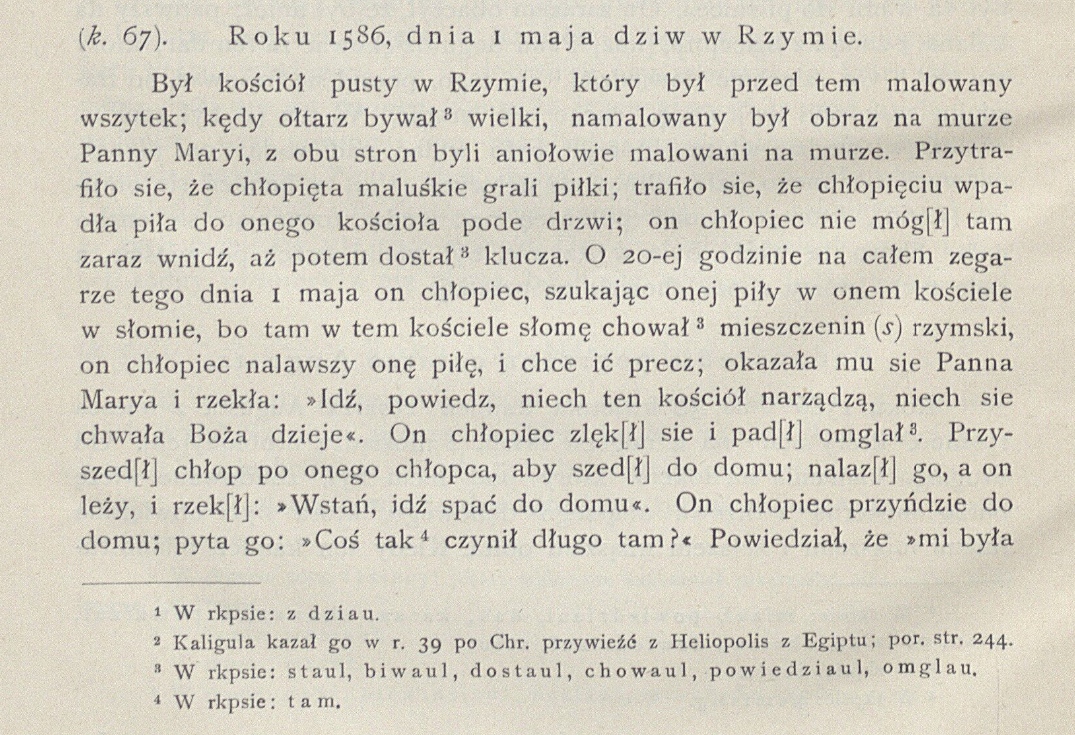
The published work describes how – on sheet 67 of the manuscript – Rywocki and his companions came across a mighty memorial stone placed in honour of Augustus.  Rywocki also describes on the same page below a miracle whereby a boy who lost a ball (which fell into a local church) saw the Virgin Mary appear to him.  In both of these descriptions – of the stone and of the church miracle – Rywocki spells  what in the literary language of the day presumably should have been an “l” as a “ul” instead.  This same “phenomenon” appears in other parts of the manuscript.

omglau

The published work and – perhaps too – the manuscript were examined by the Polish linguist and literary historian Aleksander Brückner.   Brückner published his great Polish etymological dictionary in 1927 and, under the definition of the word “narzecze” (roughly, “dialect”) he stated the following to describe a process that had been referred to before as “wałczenie” – that is the replacement (or rather alleged replacement) of the “l” sound by the “w” sound:

brucknr

“Another aspect [of dialects], wałczenie, the [bi]labial pronunciation of the liquid ł [as opposed to dental], even more widespread [than mazurzenie], newer [why?], in the 16th century among the peasants constantly mocked [by whom Brückner does not say], it [i.e., this aspect of the peasant dialects] does not appear in the literary language (maybe in Mazur Rywocki’s [writing] who wrote in the year 1584 omglau, posłau, kardynau, etc.).”

bruckner2

Thus, Brückner claims that wałczenie was a “linguistic development”  That it was “newer” than mazurzenie.  That it was not reflected in the Polish literary language (by this he means that it was not reflected in the orthography of the day) except, perhaps, for the first time in 1584 in Rywocki’s writing (Brückner calls Rywocki a “Mazur”, i.e., a man from Mazuria).

Several things come to mind.

First, Brückner nowhere (at least not that we know of) shows why either of these dialectic aspects was a “development” from the “proper” Polish or Slavic in the first place.  Absent some other evidence, the only way to make this claim it seems is to assume that the Eastern/Southern Slavic languages were more ancient than the Western ones.  But that, in turn, may presuppose the direction of Slavic migrations – a question that (as our friend points out) we are trying to answer here in the first place.

Second, Brückner does not say that this development “occurred” in 1584 or in the “last quarter of the 16th century”.  He merely notes that the earliest evidence of the process in the literary language was – in his view – the Rywocki manuscript/book.  This is in stark contrast with claims that the “l” became a “w” sound “in the last quarter of the 16th century”.

Third, as to the geographic scope of these phenomena.  Brückner says that wałczenie was an even more widespread aspect of Slavic dialects than mazurzenie.  What does he mean by “widespread”?   Does he mean among the populace in the regions in question (wherever they may have been) or does he mean it more in a geographic sense?

Well, earlier in the same paragraph Brückner states that mazurzenie is itself quite “widespread.”  It is absent in Great Poland and in Kashubia, southern Silesia and also absent from the literary language.  This leaves – for Poland – Little Poland (around Cracow) and Mazovia (around Warsaw) as well as, obviously, Mazuria (i.e., southern portion of East Prussia).  But Brückner states that this process of mazurzenie is not exclusively Polish and that it covered entire Pomerania “even beyond the Elbe (and there it is found already around the year 1000), so also Old Prussia (in the 13th century) and Latvia, and reaches to Great Novogrod.”  If we take Brückner at his word and assume that wałczenie was even more widespread (in the same geographic sense that he just discussed for mazurzenie) than mazurzenie, then given what he wrote we are unsure of how even to limit wałczenie‘s geographic scope.

Fourth,  as to the chronology.  Brückner claims  that mazurzenie was already present around the year 1000 in Polabia…  (Assuming this to be true (he does not say here in which portions of Polabia), we cannot, however, conclude that it moved West to East from there for the simple reason that the state of knowledge at the edges of the Frankish Empire was greater than further East).  Brückner does not tell us here why  wałczenie is supposed to be younger (and how much younger) than mazurzenie.  But even if it were younger, given Brückner’s dates we could assume a time as early as the 11th century…  Certainly the end of the 16th century may simply be a time when the pronunciation started appearing among the upper classes of society as well or at least in the literary language – to the extent Rywocki’s diaries may be seen as that.

But there is more.  Given the lack of significant West-Slavic literary samples from before the 16th century and, even more importantly, given the free-for-all nature of Polish grammar and orthography at the time, there is very little that can be said of how written letters were actually pronounced and whether such pronunciation differed geographically, across socio-economic classes, etc.

All that we can really say here was that wałczenie could have been in place – using Brückner’s own assertions:

  • chronologically – maybe since the 11th century but, realistically, as far back as we are able to look.
  • geographically – unspecified, but covering a “more widespread” geographic area than mazurzenie which covered Little Poland, Mazovia, Mazuria, entire Pomerania as far as the Elbe/Laba (with the possible exception of Kashubia (Kashubian language does have an “ł”), Old Prussia, Latvia and Rus as far as Veliky Novgorod
    • whether and to what extent there was a territorial correspondence between these two aspects of “dialects” is not clear from Brückner’s description.

Put differently, there is no specific reason to believe based on the review of the above that the Polish (or Polabian or north-western Russian) peasantry pronounced the word “Slav” as anything other than “Swav” or “Suav” at any time for which we have sources.

Wałczenie a la Barbarum 

But maybe there are some other reasons to think wałczenie first appeared “in the last quarter of the 16th century”.  Here we come to the Kochanowski assertion.

And, what did Jan Kochanowski say about wałczenie?  Well, we have not found the term in Kochanowski…  (BTW it is not clear (to us) where it comes/originates from).

What Kochanowski did say (as Klemensiewicz correctly notes – see above) was that there was a second pronunciation of the letter L and that it was barbarum.  He did so in a book on Polish orthography called “The New Polish Character and Polish Orthography” issued in 1594 which he co-authored with Lukasz Gornicki (i.e., Łukasz (!) [Ogończyk] Górnicki) and Jan Januszowski.

orthography

There Kochanowski states the following under the heading for the letter “L”:

Polish:

L. L, dwoje: jedno łacińskie, które tak pisać: ladaco, lód, wilk, ktokolwiek. Drugie barbarum, które tak pisać: kłótka, łaskawy, łakomy.”

English:

L. L, two different ones: one is Latin, which should be written as follows: ladaco, lód, wilk, ktokolwiek.  The second barbarum, which should be written as follows: kłótka, łaskawy, łakomy.”

If you look closely you will see what he is talking about – Kochanowski says that the Latin L should be written curling towards the upper right whereas the “barbarum” L should be written with a dash starting at the top of the letter and then heading towards the lower left:

jpg1jpg2

Kochanowski does not say how the “barbarum” L was pronounced, though it is clear that it was pronounced differently from the Latin L.

What is more interesting than what Kochanowski wrote is what his co-author Januszowski wrote.  Januszowski says that he does not like the different ways the same letter is used (i.e., the different pronunciations being associated with one letter).  But he says that (rather than what Kochanowski suggests (i.e., the curling right or the dashing left) which, in Januszowski’s view, may easily result in misspellings because the differences between the Kochanowski suggestions are so negligible), that we should instead leave the Latin l and L as they are and use a second l/L, a “Polish one” with a line through it, i.e., ł or, if capitalized, Ł.

Januszowski also notes that the third author –  Lukasz Gornicki (whose name would be most affected by these changes) – prefers to write – in lieu of the “Polish ł” – a double ll together.

A few points:

  • In none of this is there a suggestion of:
    • how the the letter Ł should actually be pronounced aside from the fact that it is pronounced differently than L;
    • the relative age of the pronunciation of either sound – or even any claim which is the newer one (barbarum simply meant the uncouth, non-Latin pronunciation).
  • Moreover, the fact that:
    • Kochanowski calls the Ł (w?) sound barbarum suggests not just that it was the uncouth, non-Latin pronunciation but that it was the older one, perhaps retained from the past by the peasantry (other than in the East perhaps) – this is because the lower classes, sheltered more from cosmopolitan influence – are more likely to preserve their ancient customs, rites and, yes, pronunciations;
    •  Januszowski calls the Ł a “Polish” letter hints also that the underlying sound itself which the letter was meant to represent may have been local.

Thus, based on this early book on orthography we are inclined to suggest that – notwithstanding Klemensiewicz and Brückner – the “w” pronunciation was at least as ancient as the “l” pronunciation with the difference (at least as far as the eye can see) being more geographic than chronological.  If one were to extrapolate from the above, one could tentatively associate the North and Northwest of Slavdom (Suavodom?) with the “w” and the East, the Southeast and the South with the “l”.

(Of course, the chronology of all of these is likely to be very complicated but we can say “at least for all practical purposes relevant here” – e.g., what the pronunciation may have been 4,000 years ago is anyone’s guess).

Wałczenie a la Parkoszowic

We also note that the question of how to spell some of these sounds was already tackled by our friend  (see here and here) Jakub Parkoszowic in his much earlier (circa 1440) treatise on orthography (this was a first known attempt to standardize Polish orthography):

1mention

“{ll} And so also the ‘l’ sometimes hardens, sometimes weakens, for example, [in] list it is a letter [used] for [the word] ‘leaf’ [but] listh is a part of a leg; lis that is a ‘fox’ [but also] lisz that is a ‘bold person’; despite the fact that all else remains the same, [the ‘l’] is once harder once softer; so [also] at the end [of a word], For example, Staal that is ‘steel’ [and] staal [that] is ‘he stood’.”

Note: Parkoszowic calls:

  • the “Latin L/l” a “soft L/l”; and
  • today’s “Ł/ł” (i.e., pronounced today as “u” a “ue/ua” or “w”) a “hard L/l”.

thus, stal as in ‘steel’ is pronounced as it looks in English (“softly”) but stał is pronounced ‘stau’.  

He continues further in the text:

2mention

“And let also the hard ‘l’ be written without the dash.  For example, lapka, lekce, liszego losze ludzy lothka.  But let the weak ‘l’ be written with a dash at the top.  For example, laasz, lis, loch, lesch, ludze, ląnkawka.”

Finally, he says:

3mention

“And so also with ‘l’.  If we decide to represent the soft ‘l’ by using [after it] a double ii [he means a ‘y’ so that the whole thing is written ‘ly’], in some cases that will be appropriate, in others absolutely not.  Thus, lyschka that is a ‘fox’, lysska is a ‘caterpillar’, lysth is a ‘leaf’.  Whereas, in accordance with what has been said above – each vowel that is written with two letters should be pronounced as a long [vowel], in all the above examples [the vowel] is a short one.  This is the first example of nonsense [in the current orthography].”

Note: Parkoszowic means that if we indicate the soft (Latin) ‘L’ by writing a ‘y’ after the ‘L’ then the impression would be that the vowel that follows the ‘L’ should be a long one (e.g., leeeeeeeeaf) which is wrong at least in some cases.  Thus, in fixing the pronunciation of the ‘L’ we give the subsequent vowel is to be pronounced.

“And also if one adds a double y to an ‘l’ that occurs at the end of a word then hat will result in a confusion of meanings.  For example, staal that is ‘steel’.  If after the ‘l’ one were to write a ‘y’, we would get staaly, which means ‘they stood’.  So where is [what happened to] our ‘steel’?  If we were to write without the ‘y’, then we would have  stal that is ‘he stood’.  That’s the other problem.”

“It would be better to express the difference [in pronunciation], if we were to write the hard ‘l’ without a dash, [but] with a ‘staff’ [instead]; hence, staał łyssy, that is ‘he stood [i.e., became] bald’ [current Polish: stał [się] łysy – ‘he became bald’]; whereas, the soft ‘l’ without adding the ‘y’ [such as] stal that is ‘steel’, listh that is ‘leaf’, luud that is people.”

Note: Thus, Parkoszowic in his treatise (written circa 1440) opted, in resolving the issue of a double pronunciation of the letter ‘L/l” to:

  • keep the “Latin” L/l as an L/l everywhere (no changes there); and
  • to create an additional letter – Ł/ł – to represent the “w/ue/ua” sound (as in Suevi or Suavi).  That additional letter would not have a dash going towards lower left on top but rather have a line or “staff” through it.  A century and a half later, years later in choosing the same “staff” crossing an ‘L’ to represent the “hard L”, Jan Januszowski would agree with Parkoszowic (Kochanowski, as we saw above, preferred the dash).

Conclusion

Based on our review of the sources, it seems the above claim 3 has absolutely no basis in any of the sources we saw or that are cited by its proponents.

rocznk

Consequently, we feel confident once again to reiterate that – at least among Western and Northern Slavs – the “L” was pronounced as a “ue” as far back as anyone can see.  The only exception to that seem to have been portions of the nobility.  We are willing to be convinced otherwise, of course but are not holding our collective breaths.

reve

Stefan Kulbakin making the same point in the Slavic Review

Copyright ©2015 jassa.org All Rights Reserved

October 13, 2015

Wulfstan (& Ohthere) on the Wends (and a little bit on the Esti)

Published Post author

We’ve discussed chapters 11 & 12 of King Alfred’s Orosius which chapters deal with Europe’s geography previously.  What follows those chapters are accounts of:

  • the explorations by Ohthere who sailed along the Norwegian coast all the way to the White  Sea (chapters 13-19);
  • the trip of Wulfstan who travelled from Denmark to the Prussian town of Truso (chapter 20), and
  • the customs of the Esti, by which the writer of Alfred’s book meant the various Baltic tribes (chapters 21-23).

We will get back to Esti (Balts) later (they appear in Tacitus, Jordanes, Cassiodorus and Alfred’s Orosius) as they provide useful clues to the location and identity of the Veneti.  With one exception we will not spend time on Ohthere as his trip was not through Slavic lands.  But we do want to give the full (a shorter version was previously discussed here) account of Wulfstan as he travelled to Truso along the entire Pomeranian coast and so we do that here (we also note the one mention of the Wends in the Ohthere account at the end of chapter 19).  As with the Geography section before, we first give the Old English versions followed by the English.

As before, a reminder on the Old English letters is in order:

  • Þ þ – “thorn” – basically a “th”;
  • Ð ð – “eth” – roughly the same “th”;
  • Æ æ – “ash – representing a middle sound between “a” and “e”;

sweonla

Chapter 19

Ohthere’s Account – Last Section

Old English 

“And of Sciringes heale he cwæð þæt he seglode on fif dagan to þæm porte þe mon hæt æt Hæþum; se stent betuh Winedum, and Seaxum, and Angle, and hyrð in on Dene. Ða he þiderweard seglode fram Sciringes heale, þa wæs him on þæt bæcbord Denamearc, and on þæt steorbord widsæ þry dagas;  and þa, twegen dagas ær he to Hæþum come, him wæs on þæt steorbord Gotland, and Sillende, and iglanda fela.  On þæm landum eardodon Engle, ær hi hider on land coman.  And hym wæs ða twegen dagas on ðæt bæcbord þa igland þe in Denemearce hyrað.”

English

“From Sciringes heal he said that he sailed in five days to the trading-town called Hedeby, which is situated among Wends, Saxons and Angles and belongs to the Danes. When he sailed there from Sciringes heal he had Denmark to port and the open sea to starboard for three days. Then two days before he arrived at Hedeby he had Jutland and Sillende and many islands to starboard. The Angles lived in these districts before they came to this land.  On the port side he had, for two days, those islands which belong to Denmark.”

othetherewulfstani

11th century MS BL Cotton Tiberius B.i

Chapter 20

Wulfstan’s Account

Old English 

“Wulfstan sæde  þæt he gefore of Hæðum, þæt he wære on Truso on syfan dagum & nihtum, þæt þæt scip wæs ealne weg yrnende under segle.  Weonoðland him wæs on steorbord, & on bæcbord him wæs Langaland, & Læland, & Falster, & S[c]oneg; & þas land eall hyrað to Denemearcan.  & þonne Burgenda land wæs us on bæcbord, & þa habbað him sylf cyning. Þonne æfter Burgenda lande wæron us þas land, þa synd hatene ærest Blecingaeg, & Meore, & Eowland, & Gotland on bæcbord; & þas land hyrað to Sweon.  & Weonodland wæs us ealne weg on steorbord oð Wislemuðan.  Seo Wisle is swyðe mycel ea, & hio tolið WitlandWeonodland;  & þæt Witland belimpeð to Estum; & seo Wisle lið ut of Weonodlande, & lið in Estmere; & se Estmere is huru fiftene mila brad.  Þonne cymeð Ilfing eastan in Estmere of ðæm mere ðe Truso standeð in staðe, & cumað ut samod in Estmere, Ilfing eastan of Estlande, & Wisle suðan of Winodlande.  & þonne benimð Wisle Ilfing hire naman, & ligeð of  þæm mere west & norð on sæ; for ðy hit man hæt Wislemuða.  Þæt Estland is swyðe* mycel, & þær bið swyðe manig burh, & on ælcere byrig bið cyningc; & þær bið swyðe mycel hunig, & fiscað; & se cyning & þa ricostan men drincað myran meolc, & þa unspedigan & þa beowan drincað medo.  Þær bið swyðe mycel gewinn betweonan him; & ne bið ðær nænig ealo gebrowen mid E’stum, ac þær bið medo genoh.”

swyðe as in “very, exceedingly or severely” – see, for example, the River Swider.

English

“Wulfstan said that he travelled from Hedeby, arriving in Truso after seven days and nights, the boat running under sail the whole way.  To starboard he had Weonodland, to port Langaland, Laeland, and Falster and Skane [?].  All these lands belong to Denmark.   And then we had Burgenda land [Bornholm?] to port, where the people have their own king. Then after Burgenda land [Bornholm] we had on our port side the lands which are called Blekingey, and Meore, and Eoland [Oeland] and Gotland, and these lands belong to the Swedes.  And we had Weonodland to starboard, the whole of the way to the mouth of the Wisle [Vistula] [i.e.,Wislemuðan].  This Wisle [Vistula] is a very large river and she separates Witland and Weonodland;  Witland belongs to the Este.  The Wisle [Vistula] flows out of Weonodland and into Estmere; and the Estmere is indeed [here?] fifteen miles wide.  The Ilfing flows into Estmere from the lake on the shore of which the town of Truso stands, and they flow together into Estmere, the Ilfing east of [out of the East from?] Estland and the Wisle [Vistula] south of [out of the South from?]** Weonodland.  And there Wisle [Vistula] deprives the Ilfing of its name and lies/flows north-west towards the sea as from then on the [estuary] is known as the Wislemuda [Vistula estuary].  This Estland is very large and has many fortified settlements [burgs], and in each of these there is a king.  And there is a great deal of honey and fishing.  And the king and the most powerful men drink mare’s milk, the poor men and the slaves drink mead. There is very much strife among them.  And there is no ale brewed among the Este but there is plenty of mead.”

** The translations correct this to say that the Ilfing flows west and the Vistula north but the text says the opposite – we provide an alternative form of reading as in “out of”.


shiffern
A Description of the Esti follows thereafter as to which we shall have more to say later.

Copyright ©2015 jassa.org All Rights Reserved

September 28, 2015

Were There Vandals in Poland? – Part VI (Przeworsk)

Published Post author

As we have previously stated on a number of occasions we do not feel that pots & pans are determinative of ethnicity within closely existing geographic areas.  It’s one thing to compare Ming vases and Olmec sculptures and speculate who used/owned those but it’s another thing to try to tell apart a material culture of one northern barbarian tribe of Europe from another.  And, as art collectors grow to be increasingly international even the Ming/Olmec ownership distinction is unlikely to be sustained much longer.  One certainly cannot assume that every driver of a German or Japanese car is German or Japanese (in fact, one could probably assume the opposite).  Even with locally made goods export is certainly possible.

przeworskos

Przeworsk town hall – no signs of graffiti or other vandalism are immediately apparent

Nevertheless, a persistent theme in history has been the attempt to identify the so-called Przeworsk “culture” with one ethnicity.  Specifically, that of the Vandals.  Since the Przeworsk culture covers much of Poland, this would give the hypotheses of Vandal presence in Poland a leg to stand on. Not surprisingly, this has caused much past acrimony between German and Polish archeologists in the past.  Nevertheless, as the turbulence of past strife has, at least temporarily, receded, a “consensus” position has emerged that, indeed, Przeworsk means Vandals.  As we have seen in the past entries on this topic:

  • it is not clear that there was such a group as Vandals before Dacia in the second century; and
  • even if there was such a group, it is likely that it would have lived – or, more accurately, would have passed through – on its way to Dacia, areas of central Germany, rather than Poland.

We further saw that:

  • there is absolutely no evidence whatsoever that the Lugii – who may have lived in parts of Poland – were Vandals; and
  • the Silingae were a tribe that is mentioned only once before the 5th century and that in Germany, not in Silesia – and in its one and only mention from the 2nd century, it is nowhere called Vandal.

Given the lack of virtually any evidence for the existence of a Vandal tribe prior to 171 A.D. in general and the lack of any evidence for their existence in Poland, in particular, it seems perplexing that German or Polish or any historians or archeologists would identify the Vandals as the creators of the Przeworsk culture.  Nevertheless, some do.

As noted, we do not want to get into archaeology here but we do want to address this issue briefly.  To help us do that we will quote an entry from a book – in fact, the only recently published book that deals exclusively with the Vandals by the Australian scholars Andrew Merrills and Richard Miles.

merrills

The authors are academics and, being Australian, likely emotionally uninvested in this “ethnic” German versus Polish debate (or, nowadays, German-Polish versus Polish debate).  The book is, appropriately and unsurprisingly, called “The Vandals”.  Here is what the authors have to say about Przeworsk:

“While few scholars would now claim [but they do!] that the settlement of the Vandals could be mapped precisely onto the extent of the Przeworsk culture – indeed most would argue vigorously against such assumptions – the association between the prehistoric ‘people’ and their supposed material culture remains close in much scholarship… If a relationship can be assumed between the Vandili of Tacitus and Pliny and the Przeworsk material culture, if these peoples were connected to the groups who later appeared on the Danube and the Rhine, and eventually conquered Carthage, then the Vandals quite clearly had an impressive prehistory.”

“Regrettably, such assumptions cannot be sustained, and it is for this reason that the present volume begins its Vandal history where it does [i.e., in the 2nd century].  Both Tacitus and Pliny do refer to groups of Vandili, but neither does so with any geographical precision.”

[actually, as we saw, one could go further and say that neither Tacitus nor Pliny show any inclination to even try to locate the Vandals – the only thing that can be assumed here is that, in their minds, they lived (or, in Tacitus’ case, had lived) somewhere north of the Danube in Magna Germania].

“We can assume that groups go ‘Vandals’ did exist somewhere in the barbarian territories (or at least that Roman authors believed that these ‘Vandals’ existed), but we cannot say precisely where they were.  Consequently, the link to the Przeworsk culture area is far from clear, and the subsequent assumption that the expansion of this region reflected either the migration or the expanding cultural influence of the Vandals and their neighbors cannot be sustained.”

przeworsk

Przeworsk culture extension after the expansion of Wielbark culture into formerly Przeworsk “held” lands

“Without this link, and the crucial assumption that the spread of this culture into the Carpathians represented a genuine migration, there is no link between the Vandili confederacies mentioned by our first-century ethnographic sources, and the ‘Hasdings’ and ‘Vandals’ who appear in historical texts of the later period.  The historians and geographers of the later Roman empire commonly employed archaic names to refer to new groups who came to their attention on the frontier.  Consequently, the fact that the warbands of the third- and fourth-century frontier bore the same name as the tribal confederations mentioned by Tacitus and Pliny several centuries earlier need not be taken as evidence for a direct connection.”

“This observation has some important implications for our understanding of the earliest stages of Vandal history.  The association with the Przeworsk culture worked on the assumption that the Vandals of pre-history were a large and influential group, and itself helped to sustain this impression.”

[i.e., the chicken and the egg problem]

“When we look at conventional archaeological maps which depict north-eastern Europe in the later iron age, the Vandals seem to occupy an impressive chunk of territory beyond the Roman frontier.  This, in turn, helps to foster the illusion that the later movement of the Vandals into the Roman empire and a devastating historical momentum, and provides a satisfying explanation for the group’s eventual conquest of North Africa.  This is not the narrative that appears in the contemporary sources.  The Vandals who first appeared on the Roman frontier in the second and third centuries do not appear to be the representatives of a vast barbarian confederacy, but a rather small and mobile group of soldiers…  They rose to power in North Africa not because of their long and proud heritage, but in spite of a history that was both short and undistinguished.   But their history – and their brief moment in the Mediterranean sun – is all the more fascinating for that.”

swords

This damage done to this heavily vandalized sword of the Przeworsk culture definitively establishes its Vandalic origins (www.archeologia-sandomierz.pl)

So what do other professors say about Vandals?  Next time.

Copyright ©2015 jassa.org All Rights Reserved

August 18, 2015

Were There Vandals in Poland? – Part V (On the Poor Lugii/Legii or Linki)

Published Post author

What About the Lugii!?

The name of the Lugii tribe is very frequently mentioned in connection with the Vandals.  Specifically, the claim is that:

(1) the Lugii lived in Poland, and

(2) that the Lugii were Vandals.

Let’s take a look at these assertions in turn.

(As an editorial side note we observe that the name of the tribe was variously described as:

  • Lugii (Strabo);
  • Legii/Leugii (Tacitus);
  • Luti or Lugi (Ptolemy);
  • Logiones (Zossimus).

linki

We stick to Lugii generally but note that the name is not certain. (Note also in the above excerpt from a 1562 edition of Ptolemy’s Geography the words Lincis – which has been interpreted to refer to the Silingi…)

Were There Lugii in Poland? 

The first source on the location of the Lugii is TacitusGermania itself where he says (in Chapter 43) that beyond the Marcomanni and Quadi are the Marsigni, Gothini, Osi, and Burrii.  He observes that the Gothini (or Cotini) and the Ossi do not speak German by language but rather, in the case of the Gothini the language is Gallic and, in the case of the Ossi, Pannonian.  However, the Marsigni and Burrii “resemble the Suevi” in language and in dress.

He further notes that “all these people inhabit but a small proportion of “champaign” (i.e., flat, i.e., fields, i.e., campaniae) country.”  Rather they settle mostly “forests, and on the sides and summits of mountains.”  Then Tacitus notes, in reference to the same mountains, that “a continued ridge of mountains” divides Suevia and that various more remote tribes live on the other side of those mountains.

To pause here, if the Marsigni etc can be assigned to the back of the Marcomanni and Quadi and if the latter two were in Bohemia (having, in the case of the Marcomanni, driven out the Boii (or Boyki?)) and if the various Marsigni/Burri/Gothini/Ossi peoples lived in the mountains themselves then:

(A) we can put them somewhere in the Carpathians (the unhappy Gothini who are said to have slaved in the mines were perhaps slaving in the Ore Mountains, i.e., Erzgebirge); and

(B) the people beyond the Carpathians would be inhabiting either or both of south-eastern Germany (i.e., the Lausitz/Lusatia) and southern Poland.

With that in mind, we can go back to Tacitus.

He says that, of these (the remoter tribes beyond the [Carpatian] mountains), the Lygians [Lugii] are “the most extensive [tribe], and [that the Lygian tribe] diffuses its name through several communities.”  In other words, various peoples – with their own names – were gathered under the “Lygian” umbrella.  He says that “the most powerful of them” included the “Arii, Helvecones, Manimi, Elysii, and Naharvali.”

He also names the Naharnavali as people in whose country there is “a grove, consecrated to religious rites of great antiquity.” There,”[a] priest presides over them, dressed in woman’s apparel; but the gods worshipped there are said, according to the Roman interpretation, to be Castor and Pollux. Their attributes are the same; their name, Alcis.”

A Digression on Elks

Now, interestingly enough, other than this mention the tradition of worshipping any Dioskouroi is rather weak among the Scandinavians.  It does exist, however, amongst the Poles in the form of “Lel” and “Polel”, or as the saying goes “Leli, Poleli” (to this day, dolls (yes, related to “i-dol”) in Polish are “lalki“).  Those were not recorded by Jan Dlugosz but are mentioned by later chroniclers.  One of the two is also recorded as a God at Łysa Góra:

“In that place there was (then? later?) a church to three idols named LadaBoda and Leli where simple people would come to pray and make offerings on the first of May.”

This, in turn, is strange as Łysa Góra  is also associated with the animal, elk.  That animal is called Jeleń in Polish today but previously was also called leleń – would that be Lel?  Would it also be Alcis?  Who knows.  More on all of this later.  We will only note here that already Julius Caesar thought to remark about the elks of “Germania” right next to his discussion of the “tur“.

Back to the Lugii

Tacitus then goes on to describe the “Arii” before stating the following:

“Beyond the Lygii are the Gothones, who live under a monarchy, somewhat more strict than that of the other German nations, yet not to a degree incompatible with liberty.”

But what does “beyond the Lygii” mean?  Can we get a topographical feature of some sort in there?

Well, Tacitus proceeds to say that “[a]djoining to these [the Gothones] are the Rugii and Lemovii, situated on the sea-coast—all these tribes are distinguished by round shields, short swords, and submission to regal authority.”

This suggests that the Rugii and Lemovii were on the [Baltic?] coast and the Gothones were, perhaps, on the coast or, perhaps, between the Lugii and the coast.   It stands to reason that the Rugii should have been at or near the island of Ruegen and Lemovii somewhere near there.  This would put the Goths around the middle Oder or in the future Mark Brandenburg.

But weren’t the Goths in the former West Prussia – at the mouth of the Vistula?  Possibly, but, as we already discussed here, they were even more likely to have been either West on the Oder or East on the Daugava.

In any event, the location of the Goths anywhere at or close to the Baltic coast would leave a rather large portion of Germany and Poland open to the Lugii (Tacitus does not mention Burgundians as an actual “live” nation).  So after looking at Tacitus we have something like this:

luglugitacitus

The second source on the location of the Lugii appears to be Ptolemy.  He lists several Lugii peoples (we use “Lugi” here following Ptolemy):

  • Lugi Omani (Λοῦγοι οἱ Ὀμανοὶ) – Ptolemy notes that the Suevi Semnones occupy the lands around the Elbe extending to the Suevus River and he also mentions the Buguntae who seem to follow the Suevi “as far as the Vistula”.  He then says that below the Semnones are the Silingae but below the Burguntae (here he adds an “r” – or at least the much later manuscripts do…) are the Lugi Omani.  This would put these Lugi, East of the Silingae.
  • Lugi Diduni (Λοῦγοι οἱ Διδοῦνοι) – Ptolemy places them directly “below” the Lugi Omani and “extending as far as the Asciburgius mountains.”  It is, we think, remarkable, that these people seem to be located in the Asciburgius mountains – for if the “ash” mountains were the Hrubý Jeseník, (i.e., Altvatergebirge), then this name would have been preserved in Slavic in the names of such mountains as:
    • Praděd (German, Altvater)
    • Velký Děd (German, Großer Vaterberg)
    • Malý Děd (German, Kleiner Vaterberg)

Thus these would be the Lugi “of” Ded or Dziad or Old Father – whether the Old Father was Jassa is another question. (Although legends of the Old Man of the Mountain abound in the area – more on that later).  In other words, the Diduni may have nothing to do with the Celtic (?) word “dunum”.

diduni

  • Lugi Buri (Λοῦγοι οἱ Βοῦροι) – above the Batini and next to the Corconti but “below the Asciburgius mountains” Ptolemy places the Lugi Buri who (together with the Corconti?) extend as far as the source of the Vistula River.  (As we already noted “bury” is a color (in Polish) and means gray-brown).

(But what is a “Lug”?  Before we go there, let us finish reviewing some of the sources).

It seems thus that the Burrii of Tacitus are now the Lugi Buri of Ptolemy.  It may be that the Buri were always Lugi and Tacitus did not know that or that they became part of the Lugi later.  In any event, it would seem that whereas the Omani and Diduni are North of the Sudetes (?), the Buri are somewhere around them and close to the sources of the Vistula.

Note also that the names of the  Lugian “sub tribes” of “Arii,” “Helvecones”, “Manimi”, “Elysii”, and “Naharvali” are nowhere to be found (unless we think Manimi is the same as Omani).

If we follow Ptolemy and try to identify various regions and towns of today with the Lugi, the first thing that comes to mind is the land of Lusatia, i.e., the Lausitz (where the Sorbs are).  Towns in Poland can also be included, e.g., Legnica or Glogow.  Either of these may have been the “Lugidunum” a town listed by Ptolemy between:

  • Susudata/Colancorum and Stragona/Limis Lucus (west, east); and
  • Laciburgium/Bunitium and Casurgis/Strevinta/Hegetmatia (north, south).

Nothing really matches that well but we can probably come up with something like this:

luglugi

Obviously this is a different map than that of Tacitus.  All this requires judgment calls and neither Tacitus nor even Ptolemy are very clear.  We could have made the Lugian territory larger as “lugi” type names appear in other Polish places too, (maybe it encompassed Ługów in the Lublin voivodeship?) but we decided against such over extensions.  (For a quasi-full list of place names “Ługi” in Poland see Wikipedia).

We also note that Ptolemy:

  • places the Silingae West of the Lugii, i.e., in a direction opposite where one would have expected a tribe that allegedly gave its name to Silesia to be found;
  • lists the various Lugii tribes but does not list the Silingae amongst them and clearly (or as clearly as any of this can be) separates the Lugii from the other tribes, Silingae included.
  • does not list any of Pliny’s alleged “Vandalic” peoples, i.e., the Goths, the Buguntae (or Burguntae) or the Varini (as Viruni?) among the Lugii;
  • shows us no “other” Vandals (or any Vandals) anywhere.

It has often been stated that the Lugii must have been Vandals because where Ptolemy places the Lugii, Pliny places his “Vandals”.  As can be seen from the above, this makes little sense since:

  • Ptolemy does list some of the tribes that likely were listed by Pliny, but
  • Ptolemy does not list the Lugii among them nor list any of them as among the Lugii.

And the same is true of the Silingae.  Thus, even if Pliny were right about his list of “Vandalic” peoples, these peoples were not the Lugii and neither were the Lugii a constituent part of these “Vandals”.  About the only thing that can be said of these is that some of them may have bordered on one another.

Also, the Si-lingae may just have been Lingae – for an example of this confusion see here.

So Is That It?

Not quite.

The Lugii appear in in Strabo, in Tacitus’ Annals and in Cassius DIo.  However, none of these mentions tells us much about their location.  Nevertheless, it’s worth mentioning them.

Strabo, in his Geography (8,1), says that the Lugii were a “large tribe” and fell under the rule of Marobodus of the Marcomanni:

Here, too, is the Hercynian Forest, and also the tribes of the Suevi, some of which dwell inside the forest, as, for instance, the tribes of the Coldui, in whose territory is Boihaemum, the domain of Marabodus, the place whither he caused to migrate, not only several other peoples, but in particular the Marcomanni, his fellow-tribesmen … on his return he took the rulership and acquired, in addition to the peoples aforementioned, the Lugii (a large tribe), the Zumi, the Butones, the Mugilones, the Sibini, and also the Semnones, a large tribe of the Suevi themselves.  However, while some of the tribes of the Suevi dwell inside the forest, as I was saying, others dwell outside of it, and have a common boundary with the Getae.

[these Getae were the Dacians – not Goths]

From this we can surmise that they, or at least some of them, lived somewhere close to the Marcomanni.  Since the latter are typically thought of as living in Bohemia (having driven out and/or subdued the Boii), the location of the Lugii (maybe only the Lugii Burrii) as set forth above in Ptolemy would be broadly consistent with having them be subject to the Marcomanni.

The Lugii are also mentioned by Tacitus in his Annals (12, 29 & 12: 30) where he notes that during the reign of Claudius an army of Lugii confronted Vannius of the Suevi who were being aided by Iazyges (circa A.D. 40s-50s).  We wrote about this when discussing the Suevi-Sarmatian connection but we bring it up here again, this time focusing on the Lugii:

At this same time, Vannius, whom Drusus Caesar had made king of the Suevi, was driven from his kingdom. In the commencement of his reign he was renowned and popular with his countrymen; but subsequently, with long possession, he became a tyrant, and the enmity of neighbours, joined to intestine strife, was his ruin.  Vibillius, king of the Hermunduri, and Vangio and Sido, sons of a sister of Vannius, led the movement.  Claudius, though often entreated, declined to interpose by arms in the conflict of the barbarians, and simply promised Vannius a safe refuge in the event of his expulsion.  He wrote instructions to Publius Atellius Hister, governor of Pannonia, that he was to have his legions, with some picked auxiliaries from the province itself, encamped on the riverbank, as a support to the conquered and a terror to the conqueror, who might otherwise, in the elation of success, disturb also the peace of our empire.  For an immense host of Ligii, with other tribes, was advancing, attracted by the fame of the opulent realm which Vannius had enriched during thirty years of plunder and of tribute. Vannius’s own native force was infantry, and his cavalry was from the Iazyges of Sarmatia; an army which was no match for his numerous enemy.  Consequently, he determined to maintain himself in fortified positions, and protract the war.

But the Iazyges, who could not endure a siege, dispersed themselves throughout the surrounding country and rendered an engagement inevitable, as the Ligii and Hermunduri had there rushed to the attack.  So Vannius came down out of his fortresses, and though he was defeated in battle, notwithstanding his reverse, he won some credit by having fought with his own hand, and received wounds on his breast. He then fled to the fleet which was awaiting him on the Danube, and was soon followed by his adherents, who received grants of land and were settled in Pannonia. Vangio and Sido divided his kingdom between them; they were admirably loyal to us, and among their subjects, whether the cause was in themselves or in the nature of despotism, much loved, while seeking to acquire power, and yet more hated when they had acquired it.

We will let others decide whether:

  • Vibillius or Vibill could be explained with the Slavic wybyl;
  • Vannio could be explained with the Slavic Ваня (which is, supposedly, just a Russian diminutive of Ivan);

(Who knows!? 🙂 )

The next mention of the Lugii comes from Cassius Dio (67, 5, 12) and, once again, it involves the  Lugii going against the Suevi and the Iazyges (A.D. 98) (this, too, was the topic of the Suevi-Sarmatian post earlier):

In Moesia the Lygians, having become involved in war with some of the Suebi, sent envoys asking Domitian for aid.  And they obtained a force that was strong, not in numbers, but in dignity; for a hundred knights alone were sent to help them. The Suebi, indignant at his giving help, attached to themselves some Iazyges and were making their preparations to cross the Ister with them. Masyus, king of the Semnones, and Ganna, a virgin who was priestess in Germany, having succeeded Veleda, came to Domitian and after being honoured by him returned home.

The last mention of the Lugii comes from the Byzantine Count (?) Zossimus (Book I) in the reign of Probus (the same one we discussed when talking about the Vandals) who reigned in A.D. 276 – A.D. 282:

The emperor terminated several other wars, with scarcely any trouble; and fought some fierce battles, first against the Logionesa German nation, whom he conquered, taking Semno their general, and his son, prisoners. These he pardoned upon submission, but took from them all the captives and plunder they had acquired, and dismissed, on certain terms, not only the common soldiers, but even Semno and his son.“*

* Greek accusative singular – Semuona 

Where this battle took place is uncertain though some people thing that it was on the River Lech  (Lygis river)  – if so, and we do not opine on that, then we would have another connection between the Vindelici of Strabo and a later “L” tribe – this time, the Logiones.  Whether Semno could have something to do with the Piast Siemomysł, we will let you decide. (Obviously, they were not the same person but the root of the word is similar and, similar to to Samo – a Frankish merchant who, however, by some was named a “Caranthinian” – more on that later).

Finally, we should mention the Lugiones Sarmate of the Tabula Peutingeriana, a, likely, 3rd century Roman map.  Here the Lugiones Sarmatae appear just next to the Venedae Sarmatae.  Right away a number of possibilities present themselves as a result of this matching:

  • that the Lugiones and Venedae were both ethnic Sarmatians (regardless of whether they lived in Sarmatia), and/or
  • that the Sarmatia of the Romans began east of the Oder not of the Vistula (because we think the Lugii lived west of the Vistula and they were Sarmatians as seen above), and/or
  • that the Venedae lived west of the Vistula.

bruberis

So, Now… Is THAT it?

Yes, that’s it (there is one more source but we will add it later).  It’s fair to say that there is:

(1)  high probability that the Lugii lived in at least some portion of today’s Poland (West? South-West? Both?), but

(2) no evidence that the Lugii were Vandals.

(If we missed something let us know!)

Now we can look at a few other things.  First, we will ask what is a “lug”.  Then we will cite what Professor Latham wrote in his book on Germania regarding German historians’ approach to the Lugii.

Who Ya Callin’ a Lug!?

No one has as yet provided a convincing (to everyone worth convincing) etymology for the Lugi. And plenty of great minds have struggled with the question.  A good description is found in the Reallexikon der germanischen Altertumskunde by Hoops.  It seems that there were many questions when the Lugier were in volume 3:

wassolldas2

and many questions remain even now despite the fact that the Kunde has grown and the Lugii have, consequently, been bumped to volume 19:

wassolldasnoch

The best that we can see here is the Lugi as “liars” – which, if accurate, one can only hope, was not a self-designation.

Of course, given so much energy spent on the question, we certainly do not want to sound like we’ve solved anything here (and, likely, we haven’t!).  And yet.

A Ług as a Marsh

There is a Slavic word lug/ług/łęg which means a “marshy meadow”.  This is what the Polish dictionary by Linde says:

lugluglug1

Essentially, it says that a lug/lugh has the same origin as “lacus”, “laeg”, “lake” or, for that matter, a German “lager” (as in camp which, too, is related to the Latin campo) – all meaning meadow and a rather wet one at times.

Interestingly, one German form of this is LacheLusche.

In Polish the word is ług and ługowisko means as much as a swamp/Suempf.  Same for łęg.  Thus, a century after Linde, Aleksander Brueckner can state that (A) the word ług a marshy lowland country and (B) that the Lusatia/Lausitz name is a Slavic word for that country; Upper Sorbian: Łužica, Lower Sorbian: Łužyca, Polish: Łużyce, Czech: Lužice.  Here, the “ž” is a natural change from “g”. E.g., Bóg > Božy.

legleg2

Ług as a Grove

The same word, now chiefly preserved in Croatian, may signify a “grove”.  Here is Brueckner again:

lug3

Presumably, groves of trees did grow in marshy meadows and – maybe – these were places of worship:

lug1

The word is parallel (in its first above meaning) to the word “haj/gaj” in most Slavic languages.  Thus:

lug2

Thus, we get an interesting application of the name in Croatia in the form of Turopolskij Lug:

turopolskij

As another digression, if you bear with us, it is interesting to note that the Turopolskij Lug is in the area of the Odransko Polje.  Odransko because the river shown is the Odra (see, e.g., mention of Odagra in the Annals of Fulda under the year 892; see also the town of Adra in Liburnia in Ptolemy’s Geography). This itself raises a number of possibilities:

  • The name is in its form Slavic but the Slavs first got the original from the northern or southern Veneti and then brought it with them when they – the Slavs – went from North to South (when the Croats moved south from White Croatia?) or from South to North (when the Czechs came up into Bohemia/Poland from the Danube area?);
  • The name really is German (Oder) and the Slavs changed it and then moved South with it (or it is Gothic and they moved North with it (after changing it first, of course));
  • The name was Old-Veneti and the Slavs took it over just as they did with the Oder – a rather remarkable Slavic presence in multiple places where there were the earlier Veneti;

Then, of course, there is also an Odra in Russia so that further suggests a rather Suavic etymology.

And this is what the Old Polish Dictionary (Słownik Staropolski) by Krasnowolski & Niedźwiedzki:

Ług – bog/marsh

Ługowaty – marshy

Ługowisko – grove

Anyway, Back to the Lugi

What is interesting here is that – although the word appears to be Indoeuropean – the form with a “u” pronunciation has been preserved only in Slavic (and in Baltic (Lithuanian – liugas) although, apparently, only as “marshland,” not as a “grove”).  That is to say, the only word actually corresponding to the Lugii of Strabo, the Lugi of Ptolemy and, we would argue, closest to Lygii/Ligii of Tacitus, is a Slavic one (the Logiones of Zossimus are a closer call).

Which brings us to a point about Professor Latham.  He excoriates Zeuss for, being quite aware that most Western Slavs were referred to by their Eastern cousins by the name Lachs but never exploring any connection between the Lugii and the Lechites or Lachs.  Without saying as much, Latham attributes bad faith to Zeuss:

But, with all this there is not a single reference from Lygii to Lekh, nor yet any from Lekh to Lygii; so that the very important fact of similarity of name coinciding with identity of area, is not even recognised as a complication worth investigating… The situation of the Lygii of Tacitus is that of the Lekhs of Nestor.  The present Poles are the Lekhs of Nestor under another name. This is admitted by Zeuss. —

[Latham here quotes Zeuss:] ‘The name Lech, originally a general name given by the eastern to the western branch of Slavonians, must most frequently have been applied to those who lived nearest, viz., the Poles.  At length, after ceasing to be a general appellation, it became fixed as their special designation.’

With all this, not a word about Lekh being even like Lyg-ii.

Latham then gives a bit of a nod to Nestor‘s migration theory but concludes that Zeuss, nevertheless, seems to be willfully blind:

But it may be said that the assumption of a migration in the case of the Slavonic Lekhs is legitimate, inasmuch as it is suggested by the very passage of Nestor lately quoted.  Be it so. There would still stand over the very remarkable fact that the very area in which these immigrant Lekhs settled, should be an area occupied by a people with a name almost identical with their own.

What should we say to a writer who argued that Boston in the United States was, very likely, wholly unconnected with Boston in England; that it was an aboriginal American name; that by mere chance, the Bostonlans of Lincolnshire fell in with a place named like their native town; and that by mere chance the aboriginal Bostonians of Massachusetts were displaced by a population bearing the same name as themselves?

But they might have taken their name from that of the earlier Lygii. [Fair point!] Not so. The tradition about the eponymus Lekh is strong evidence in favor of its being native.  What Anglo-Saxon ever called himself a descendant of Brut; or placed Brut at the head of his genealogy?

[this is a reference to Brut of Troy, the eponymous founder and first king of the Britons]

But What About Those Lugii Burii?  

Weren’t they part of the Vandals – After all, some say, signs of their Germanic presence are in Portugal where we know the Vandals went!

The reference in this argument is to the Terras do Bouro.

Well, not just the Vandals went to Spain and Portugal but also the Alans and, importantly, the Suevi.  So what do we have when we look at the Terras de (or do) Bouro?  Something like this map:

Terras do Bouro

One could say that Gouvim in the neighborhood sounds like Gowin but that is hardly conclusive.  And the -iz (-itz, -ic?) ending of Gondoriz may be Slavic but is Gondo-?  Surely not. Sounds Germanic.  And yet it is odd that we also have in the neighborhood: Guilha-mil, Estru-mil or Sera-mil. The classic -mil ending could be Germanic.  But what about the town/district of Chorense?

chorenze1

Chorense is the district just south of Terras de Bouro (in the larger district of Braga… Braga? Praga? Praha? Hmmm…):

TERRAS

The pinkish district is Chorense

Wasn’t there a Charenza on Rugia ? – but maybe that was Germanic too – have we just proven that the Rugian Rani were always just Germanic or have we shown something different?  But isn’t something like that a Romanian word (stomach or something?) so then that would establish an independent Latin connection that may have been the same in Romania, Portugal and on Ruegen/Rugia?  Latin?  Or Venetic?

We leave you with Latham:

latham1

latham2

latham3

chorenze

Copyright ©2015 jassa.org All Rights Reserved
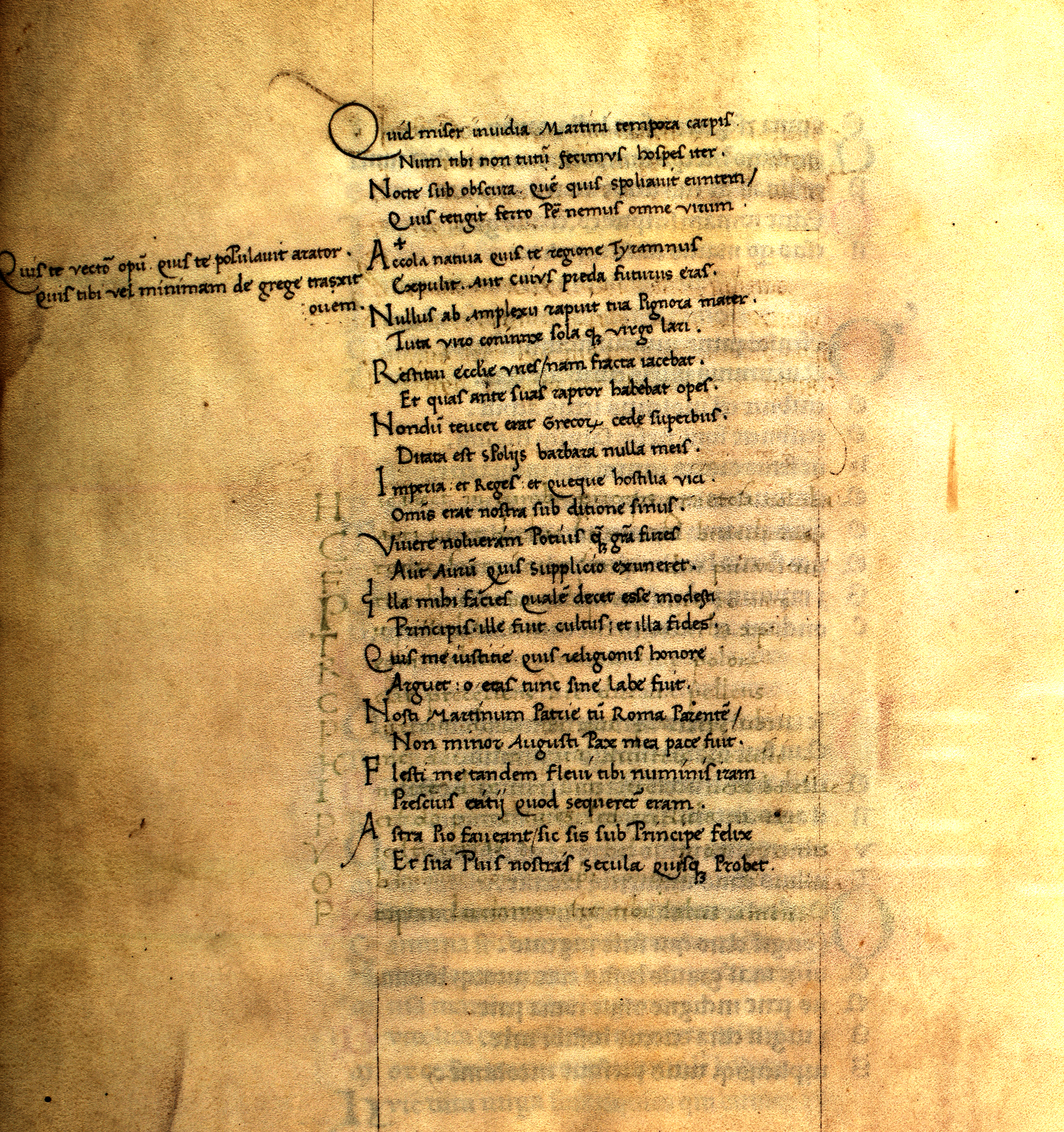
August 18, 2015

Were There Vandals in Poland? – Part IV

Published Post author

We have seen that the first definitive appearance of the Vandals was in Dacia.  Before that we had Vindelici around Lake Venetos, Vindili composed of Burgodiones, Varinnae, Charini and Gutones somewhere in eastern Germany and Silingi somewhere in Mark Brandenburg.  A later, one time report of the “Vandalic” mountains somewhere in Bohemia or thereabouts completes this meager picture.

Do subsequent chroniclers say anything else about the Vandals?  They do, albeit what is said is usually in the context of discussing other peoples.  Nevertheless, we learn some things.

The Later Chronicles

On the Origin of the Vandals

Procopius believes that Vandals, Goths and Gepide were all related and spoke (in his time) Gothic.  He also notes that “from of old” these people dwelt above the Ister River and that they were called Sarmatians and Melanchlaeni.  That is, Procopius does not know any Scandinavian past for any of these people but only knows that they lived somewhere above the Danube.

Both the Gothic odyssey (Jordanes’ Getica) and the Langobardic one (Origo and Paul the Deacon’s History of the Langobards) feature Vandals as the antagonists of the Goths and the (main) antagonists of the Lombards/Langobards.  In each case the Goths and the Winuli (before they became Langobards) come from Scandinavia and after hitting the shores of central Europe engage the Vandals.  If this took place, where did this take place?

In the case of the Goths, this is dependent on where one thinks Gothiscandza existed.  Tacitus only tells us that the Goths were on the Baltic [?] sea beyond the Lygians.  As already noted the Goths’ location is next to the Rugii and the Lemovii – if the Rugii were where the island of Rugia is then it would seem Gothiscandza was somewhere close to Rugia.  Further, if the River Oder is the River Guttalus that might mean that that is where the Goths were.  (If Vistula is Guttalus (and Oder is Vistula?) then the Goths may have been at the Vistula).

This Brandenburg hypothesis of the Vandals location seems supported by a much later mention (by Adam of Bremen) of the Winuli (remaining Langobards – now as Slavs) on the middle Oder.  Whether that was the country of Golaida as related by Paul the Deacon and whether that was where Anthaib and Bainaib were is unclear – however, Paul’s mention of Burgundaib as another place occupied by the Longobards seems to fit the middle Oder too to the extent it related to the Burgundians.

There is another alternative, of course – the Eastern hypothesis.  Ptolemy lists Gythones below the Venedae – presumably  somewhere in Russia or Lithuania.  Up through the beginning of the 20th century, the Lithuanians of Prussia would refer to the inhabitants of Žemaitija/Samogitia as Gude.  In turn, the Samogitian would employ the same name for the Belarussian.  And in the Gutasagan, the 13th century saga of the “Gotlanders”, these Gotlanders (Goths?) are said to leave Gotland and go to “mainland” Europe via the River Daugava/Dzwina which flows in Latvia (and at whose mouth sits Riga).  And, of course, the Vikings followed the northern route when they descended upon Russia via Novgorod.  Consequently, a Gothic continental landing (if there was only one) could likewise have bypassed Poland on the Northeast.

But you say… the Vandals didn’t live that far East!  No problem! Here comes Procopius with the claim that they lived… “about the Maeotic Lake” (i.e., the Sea of Azov).  At what point that was, Procopius does not tell us.

All in all, anything is possible but we are inclined to believe that the Goths “landed” (if in fact they actually took ships as opposed to just walking over through Denmark) somewhere in Mecklenburg-Pomerania.  If so, then the Vandals could have been in Brandenburg.  (Of course, another Gothic group may have gone East too).

And Where They Were Later

(But Before the Rhine Crossing!)

As mentioned previously, Jordanes claims that the Goths used the Hasdingi (presumably sometime in 270-271) to help raid the Empire.  He also says that later (or presumably later) – perhaps in the first half of the 4th century, the Goths under Geberich took on the Vandals under Visimar.  At the time, Jordanes says the Vandals dwelt north of the Danube in Dacia “near the rivers Marisia, Miliare, Gilpil and the Grisia” where the Gepids later lived (he actually says he relies on Dexippus – discussed previously).  (incidentally, this province had been abandoned by the Romans in the 270s).  A great battle was fought on the river Marisia and the Goths supposedly won.

constantinez

The Vandals picked themselves up and, allegedly, asked the Emperor Constantine (First? If so this would be in 306-337.  Second?  Then 337-340) for permission to settle in Pannonia.  Specifically, they then dwelt in both Roman Pannonian provinces (as per Jordanes) quietly for “about sixty years” before heading for Gall.  To get to Pannonia Superior and Pannonia Inferior, the Vandals presumably went through (or south (?) around) the territory of the Iazyges (who sat on the Tisa River).

(The Vandals again fought the Goths later (early 5th century) and one of their (Gothic) kings was named Vandalarius (incidentally, the son of Vinitharius – as per Jordanes)).

A Blast From the Past

An interesting example of medieval (pre-medieval?) intercontinental communications and diplomacy is contained in Procopius’ Vandalic War, chapter XXII.  We are told that the Vandals’ cousins who stayed behind when Godigisclus set the rest of the Vandals on their destructive way to Gall, Spain and then Africa heard of the Vandals’ exploits in Africa and decided to send an embassy to clear some things up.  Apparently, they were worried that the African Vandals would eventually get either their collective behinds kicked out or perhaps would just get bored and then would get the crazy notion of going back to their home country.  In effect, everyone left behind would have to live with the possibility of the return of their long lost “family” from Africa – a concept which, no doubt, put into question various property questions related to the Old Country.

In order to clarify things, the embassy arrived at the court of Gizeric/Geiseric and tried to convince the Vandal king that he should formally give up his people’s rights to the realty back home.  It seems that the king was initially convinced by these curious visitors but, swayed in the last moment by an old geezer with an octogenarian’s penchant for hoarding, the king decided not to give up anything after all.  The envoys departed not having fulfilled their mission.

The episode is most peculiar and, if true, indicates an awareness of geography and political sensibilities (not to mention property relations and law) that one would not have expected of a barbarian people.  It recalls a similar mission of the Heruli to Scandinavia to obtain a new king.  Clearly, ancient communication was not as primitive as we might today imagine.

However, what interests us most is the claim, made by some, that the Vandal embassy came from lands the ancestral lands of the Vandals in Central Europe – perhaps Poland, perhaps Bohemia.  Procopius’ language that :

Now as for those Vandals who remained in their native land, neither remembrance nor any name of them has been preserved to my time.  For since, I suppose, they were a small number, they were either overpowered by the neighbouring barbarians or they were mingled with them not at all unwillingly and their name gave way to that of their conquerors.” 

This fits in nicely with the notion that the Slavs were the new coming barbarians who absorbed the remaining Germanic Vandal population and that is the reason why anyone would, presumably, make such a claim.  However, the idea is baseless for what should be an obvious reason and that is that (A) we do not actually know where the embassy came from and (B), given the Vandals’ path across Europe, it could have come from anywhere:

  • Spain – where the Vandals had just left;
  • Gall – where they had previously been;
  • Pannonia – where they lived for 60 years prior;
  • Dacia – where they lived before that from at least 171 A.D.;

Even if one were to assume that the Vandals had – prior to their first recorded appearance in Dacia – lived somewhere else, that presumably would be the most distant (geographically and chronologically) chapter of their past from the perspective of the African Vandal kingdom.  If those Vandals who were left behind had actually come from Bohemia, Germany or Poland, it is curious why no similar embassies have been recorded from them before.  When the Vandals “moved” to Dacia, were their cousins not concerned that the marauders would return?  When they hopped over to Pannonia, were they not terrified that they would be back?  When they moved to Gall and Spain, were they not anxious that their long-lost cousins would show up on the door step?  Frankly, once Geiseric had moved his people to Africa, it would seem that any remaining worry-wart back home would finally have blown a sigh of relief that the pesky relative would not ever be back – in the ancient world that was as far as one could move without, we suppose, moving to Asia…

But maybe there were embassies before and they were just not written about!  Well, we can’t prove a negative so we will let that one lie.

One also has to remark that – if one believes – in an “earlier” Vandalic past, i.e., prior to their time in Dacia, one has to ask why Poland, Bohemia and Germany would be the places where such an embassy would have come from.  After all, we have seen some evidence that the Vandals may have come from Lake Venetos (if they were the same as the Vindelici) or from Scandinavia.  Why would the embassy not have come from the Vandals’ (alleged) ancient haunts in Scandinavia?  That Scandinavians kept in touch with their departed cousins is shown by the episode of the Herules so that link would make sense here as well (to the extent it makes sense at all).

So where did they come from?  Our guess is Spain, maybe Gall but, perhaps, as far back as Pannonia.  Even Dacia seems too long ago.

Anything Else?

That’s pretty much it for the time before the Vandal time before Rhine Crossing unless, perhaps we include some much later sources such as:

  • Fredegar, who claims Crocus as a Vandal King; or
  • Isidore, who claims that “[t]he River Vindilicus springs from the far frontier of Gaul and people maintain that the Vandals lived by it and got their name from it.”

Sources

Procopius

(History of the Wars, Book III, Vandalic War, chapter II 395-423 A.D.)

There were many Gothic nations in earlier times, just as also at the present, but the greatest and most important of all are the Goths, Vandals, Visigoths, and Gepaedes. In ancient times, however, they were named Sauromatae and Melanchlaeni*; and there were some too who called these nations Getic.  All these, while they are distinguished from one another by their names, as has been said, do not differ in anything else at all. For they all have white bodies and fair hair, and are tall and handsome to look upon, and they use the same laws and practise a common religion. For they are all of the Arian faith, and have one language called Gothic; and, as it seems to me, they all came originally from one tribe, and were distinguished later by the names of those who led each group. This people used to dwell above the Ister River from of old.

* Incidentally, for the Melanchlaeni, see Ptolemy, Pomponius Mela and others.

Procopius

(History of the Wars, Book III, Vandalic War, chapter III)

Now the Vandals dwelling about the Maeotic Lake, since they were pressed by hunger, moved to the country of the Germans, who are now called Franks, and the river Rhine, associating with themselves the Alani, a Gothic people [!]. Then from there, under the leadership of Godigisclus, they moved and settled in Spain, which is the first land of the Roman empire on the side of the ocean. At that time Honorius made an agreement with Godigisclus that they should settle there on condition that it should not be to the detriment of the country.”

Procopius

(History of the Wars, Book III, Vandalic War, chapter XXII)

And the Vandals, recalling an ancient saying, marvelled, understanding clearly thereafter that for a man, at least, no hope could be impossible nor any possession secure. And what this saying was and in what manner it was spoken I shall explain. When the Vandals originally, pressed by hunger, were about to remove from their ancestral abodes, a certain part of them was left behind who were reluctant to go and not desirous of following Godigisclus.  And as time went on it seemed to those who had remained that they were well off as regards abundance of provisions, and Gizeric with his followers gained possession of Libya. And when this was heard by those who had not followed Godigisclus, they rejoiced, since thenceforth the country was altogether sufficient for them to live upon. But fearing lest at some time much later either the very ones who had conquered Libya, or their descendants, should in some way or other be driven out of Libya and return to their ancestral homes (for they never supposed that the Romans would let Libya be held for ever), they sent ambassadors to them. And these men, upon coming before Gizeric, said that they rejoiced with their compatriots who had met with such success, but that they were no longer able to guard the land of which he and his men had thought so little that they had settled in Libya. They prayed therefore that, if they laid no claim to their fatherland, they would bestow it as an unprofitable possession upon themselves, so that their title to the land might be made as secure as possible, and if anyone should come to do it harm, they might by no means disdain to die in behalf of it. Gizeric, accordingly, and all the other Vandals thought that they spoke fairly and justly, and they were in the act of granting everything which the envoys desired of them.

But a certain old man who was esteemed among them and had a great reputation for discretion said that he would by no means permit such a thing. “For in human affairs,” he said, “not one thing stands secure; nay, nothing which now exists is stable for all time for men, while as regards that which does not yet exist, there is nothing which may not come to pass.” When Gizeric heard this, he expressed approval and decided to send the envoys away with nothing accomplished. Now at that time both he himself and the man who had given the advice were judged worthy of ridicule by all the Vandals, as foreseeing the impossible. But when these things which have been told took place, the Vandals learned to take a different view of the nature of human affairs and realized that the saying was that of a wise man.

Now as for those Vandals who remained in their native land, neither remembrance nor any name of them has been preserved to my time.  For since, I suppose, they were a small number, they were either overpowered by the neighbouring barbarians or they were mingled with them not at all unwillingly and their name gave way to that of their conquerors. Indeed, when the Vandals were conquered at that time by Belisarius, no thought occurred to them to go from there to their ancestral homes. For they were not able to convey themselves suddenly from Libya to Europe, especially as they had no ships at hand, but paid the penalty there for all the wrongs they had done the Romans and especially the Zacynthians. For at one time Gizeric, falling suddenly upon the towns in the Peloponnesus, undertook to assault Taenarum. And being repulsed from there and losing many of his followers he retired in complete disorder. And while he was still filled with anger on account of this, he touched at Zacynthus, and having killed many of those he met and enslaved five hundred of the notables, he sailed away soon afterwards. And when he reached the middle of the Adriatic Sea, as it is called, he cut into small pieces the bodies of the five hundred and threw them all about the sea without the least concern. But this happened in earlier times.

Jordanes

Getica

IV “Now from this island of Scandza, as from a hive of races or a womb of nations, the Goths are said to have come forth long ago under their king, Berig by name. As soon as they disembarked from their ships and set foot on the land, they straightway gave their name to the place. And even today it is said to be called Gothiscandza. Soon they moved from here to the abodes of the Ulmerugi, who then dwelt on the shores of Ocean, where they pitched camp, joined battle with them and drove them from their homes. Then they subdued their neighbors, the Vandals, and thus added to their victories.

XIV “Now the first of these heroes, as they themselves relate in their legends, was Gapt, who begat Hulmul. And Hulmul begat Augis; and Augis begat him who was called Amal, from whom the name of the Amali comes. This Amal begat Hisarnis. Hisarnis moreover begat Ostrogotha, and Ostrogotha begat Hunuil, and Hunuil likewise begat Athal. Athal begat Achiulf and Oduulf. Now Achiulf begat Ansila and Ediulf, Vultuulf and Hermanaric. And Vultuulf begat Valaravans and Valaravans begat Vinitharius. Vinitharius moreover begat Vandalarius; Vandalarius begat Thiudimer and Valamir and Vidimer; and Thiudimer begat Theodoric.”

XVI “Now the Gothic race gained great fame in the region where they were then dwelling, that is in the Scythian land on the shore of Pontus, holding undisputed sway over great stretches of country, many arms of the sea and many river courses. By their strong right arm the Vandals were often laid low, the Marcomanni held their footing by paying tribute and the princes of the Quadi were reduced to slavery. Now when the aforesaid Philip–who, with his son Philip, was the only Christian emperor before Constantine–ruled over the Romans, in the second year of his reign Rome completed its one thousandth year. He withheld from the Goths the tribute due them; whereupon they were naturally enraged and instead of friends became his foes. For though they dwelt apart under their own kings, yet they had been allied to the Roman state and received annual gifts.  And what more? Ostrogotha and his men soon crossed the Danube and ravaged Moesia and Thrace.  Philip sent the senator Decius against him.  And since he could do nothing against the Getae, he released his own soldiers from military service and sent them back to private life, as though it had been by their neglect that the Goths had crossed the Danube.  When, as he supposed, he had thus taken vengeance on his soldiers, he returned to Philip. But when the soldiers found themselves expelled from the army after so many hardships, in their anger they had recourse to the protection of Ostrogotha, king of the Goths.  He received them, was aroused by their words and presently led out three hundred thousand armed men, having as allies for this war some of the Taifali* and Astringi and also three thousand of the Carpi, a race of men very ready to make war and frequently hostile to the Romans. But in later times when Diocletian and Maximian were Emperors, the Caesar Galerius Maximianus conquered them and made them tributary to the Roman Empire. Besides these tribes, Ostrogotha had Goths and Peucini from the island of Peuce, which lies in the mouths of the Danube where they empty into the Sea of Pontus. He placed in command Argaithus and Guntheric, the noblest leaders of his race.  They speedily crossed the Danube, devastated Moesia a second time and approached Marcianople, the famed metropolis of that land. Yet after a long siege they departed, upon receiving money from the inhabitants.

* whether the Taifali were also Vandals is not known (same question for the earlier Lacringi).

XXII “For he was the son of Hilderith, who was the son of Ovida, who was the son of Nidada; and by his illustrious deeds he equalled the glory of his race. Soon he sought to enlarge his country’s narrow bounds at the expense of the race of the Vandals and Visimar, their king. This Visimar was of the stock of the Asdingi, which is eminent among them and indicates a most warlike descent, as Dexippus the historian relates. He states furthermore that by reason of the great extent of their country they could scarcely come from Ocean to our frontier in a year’s time. At that time they dwelt in the land where the Gepidae now live, near the rivers Marisia, Miliare, Gilpil and the Grisia, which exceeds in size all previously mentioned. They then had on the east the Goths, on the west the Marcomanni, on the north the Hermunduli and on the south the Hister, which is also called the Danube. At the time when the Vandals were dwelling in this region, war was begun against them by Geberich, king of the Goths, on the shore of the river Marisia which I have mentioned. Here the battle raged for a little while on equal terms. But soon Visimar himself, the king of the Vandals, was overthrown, together with the greater part of his people.  When Geberich, the famous leader of the Goths, had conquered and spoiled the Vandals, he returned to his own place whence he had come. Then the remnant of the Vandals who had escaped, collecting a band of their unwarlike folk, left their ill-fated country and asked the Emperor Constantine for Pannonia. Here they made their home for about sixty years and obeyed the commands of the emperors like subjects. A long time afterward they were summoned thence by Stilicho, Master of the Soldiery, Ex-Consul and Patrician, and took possession of Gaul. Here they plundered their neighbors and had no settled place of abode.

XXVII “Now in the place of Valens, his uncle, the Emperor Gratian established Theodosius the Spaniard in the Eastern Empire. Military discipline was soon restored to a high level, and the Goth, perceiving that the cowardice and sloth of former princes was ended, became afraid. For the Emperor was famed alike for his acuteness and discretion. By stern commands and by generosity and kindness he encouraged a demoralized army to deeds of daring.  But when the soldiers, who had obtained a better leader by the change, gained new confidence, they sought to attack the Goths and drive them from the borders of Thrace. But as the Emperor Theodosius fell so sick at this time that his life was almost despaired of, the Goths were again inspired with courage. Dividing the Gothic army, Fritigern set out to plunder Thessaly, Epirus and Achaia, while Alatheus and Safrac with the rest of the troops made for Pannonia.  Now the Emperor Gratian had at this time retreated from Rome to Gaul because of the invasions of the Vandals.*  When he learned that the Goths were acting with greater boldness because Theodosius was in despair of his life, he quickly gathered an army and came against them. Yet he put no trust in arms, but sought to conquer them by kindness and gifts. So he entered on a truce with them and made peace, giving them provisions.”

* This smacks of confusion – Gratian was Emperor from 375 to 383 whereas the Vandals were crossing the Rhine in 405 or 406.

XXXI “When Athavulf became king, he returned again to Rome, and whatever had escaped the first sack his Goths stripped bare like locusts, not merely despoiling Italy of its private wealth, but even of its public resources. The Emperor Honorius was powerless to resist even when his sister Placidia, the daughter of the Emperor Theodosius by his second wife, was led away captive from the city. But Athavulf was attracted by her nobility, beauty and chaste purity, and so he took her to wife in lawful marriage at Forum Julii, a city of Aemilia. When the barbarians learned of this alliance, they were the more effectually terrified, since the Empire and the Goths now seemed to be made one. Then Athavulf set out for Gaul, leaving Honorius Augustus stripped of his wealth, to be sure, yet pleased at heart because he was now a sort of kinsman of his.  Upon his arrival the neighboring tribes who had long made cruel raids into Gaul, — Franks and Burgundians alike,–were terrified and began to keep within their own borders. Now the Vandals and the Alani, as we have said before, had been dwelling in both Pannonias by permission of the Roman Emperors. Yet fearing they would not be safe even here if the Goths should return, they crossed over into Gaul. But no long time after they had taken possession of Gaul they fled thence and shut themselves up in Spain, for they still remembered from the tales of their forefathers what ruin Geberich, king of the Goths, had long ago brought on their race, and how by his valor he had driven them from their native land. And thus it happened that Gaul lay open to Athavulf when he came. Now when the Goth had established his kingdom in Gaul, he began to grieve for the plight of the Spaniards and planned to save them from the attacks of the Vandals. So Athavulf left at Barcelona his treasures and the men who were unfit for war, and entered the interior of Spain with a few faithful followers. Here he fought frequently with the Vandals and, in the third year after he had subdued Gaul and Spain, fell pierced through the groin by the sword of Euervulf, a man whose short stature he had been wont to mock. After his death Segeric was appointed king, but he too was slain by the treachery of his own men and lost both his kingdom and his life even more quickly than Athavulf.

Origo Gentium Langobardum

I. “There is an island that is called Scadanan, which is interpreted “destruction,” in the regions of the north, where many people dwell. Among these there was a small people that was called the Winniles. And with them was a woman, Gambara by name, and she had two sons. Ybor was the name of one and Agio the name of the other. They, with their mother, Gambara by name, held the sovereignty over the Winniles. Then the leaders of the Vandals, that is, Ambri and Assi, moved with their army, and said to the Winniles: ‘Either pay us tribute or prepare yourselves for battle and fight with us.’ Then answered Ybor and Agio, with their mother Gambara: ‘It is better for us to make ready the battle than to pay tributes to the Wandals.’ Then Ambri and Assi, that is, the leaders of the Wandals, asked Godan that he should give them the victory over the Winniles. Godan answered, saying: ‘Whom I shall first see when at sunrise, to them will I give the victory.’ At that time Gambara with her two sons, that is, Ybor and Agio, who were chiefs over the Winniles, besought Frea, the wife of Godan, to be propitious to the Winniles. Then Frea gave counsel that at sunrise the Winniles should come, and that their women, with their hair let down around the face in the likeness of a beard, should also come with their husbands. Then when it became bright, while the sun was rising, Frea, the wife of Godan, turned around the bed where her husband was lying and put his face towards the east and awakened him. And he, looking at then, saw the Winniles and their women having their hair let down around the face. And he says, ‘Who are these Longbeards?’ And Frea said to Godan, ‘As you have given them a name, give them also the victory.’ And he gave them the victory, so that they should defend themselves according to his counsel and obtain the victory. >From that time the Winniles were called Langobards.

II. “And the Langobards moved thence and came to Golaida [?] and afterwards they occupied the aldionates of Anthaib and Bainaib and also Burgundaib. And it is said that they made for themselves a king, Agilmund by name, the son of Agio, of the race of Gugingus. And after him reigned Laimaichio of the race of Gugingus. And after him reigned Lethuc* and it is said that he reigned about forty years. And after him reigned Aldihoc the son of Lethuc. And after him reigned Godehoc.

* This name just screams Lestek/Leszek from the Polish Chronicles…

Paul the Deacon

History of the Lombards, Book I, chapter VII

The Winnili then, having departed from Scandinavia with their leaders Ibor and Aio, and coming into the region which is called Scoringa, settled there for some years.  At that time Ambri and Assi, leaders of the Vandals, were coercing all the neighboring by war.  Already elated by many victories they sent messengers to the Winnili to tell them that they should either pay tribute to the Wandals or make ready for the struggles of war. Then Ibor and Aio, with the approval of their mother Gambara, determine that it is better to maintain liberty by arms than to stain it by the payment of tribute. They send word to the Wandals by messengers that they will rather fight than be slaves. The Winnili were then all in the flower of their youth, but were very few in number since they had been only the third part* of one island of no great size.

* whether this relates to the Gutasagan‘s division of Gotland into three parts held by each of Graip, Gute and Gunfjaun is anyone’s guess.

Paul the Deacon

History of the Lombards, Book I, chapter VIII

At this point, the men of old tell a silly story that the Vandals coming to Godan (Wotan) besought him for victory over the Winnili and that he answered that he would give the victory to those whom he saw first at sunrise; that then Gambara went to Frea (Freja) wife of Godan and asked for victory for the Winnili, and that Frea gave her counsel that the women of the Winnili should take down their hair and arrange it upon the face like a beard, and that in the early morning they should be present with their husbands and in like manner station themselves to be seen by Godan from the quarter in which he had been wont to look through his window toward the east. And so it was done. And when Godan saw them at sunrise he said: “Who are these long-beards?” And then Frea induced him to give the victory to those to whom he had given the name.  And thus Godan gave the victory to the Winnili. These things are worthy of laughter and are to be held of no account.  For victory is due, not to the power of men, but it is rather furnished from heaven.

Paul the Deacon

History of the Lombards, Book I, chapter X

The Winnili therefore, who are also Langobards, having joined battle with the Vandals, struggle fiercely, since it is for the glory of freedom, and win the victory. And afterwards, having suffered in this same province of Scoringa, great privation from hunger, their minds were filled with dismay.

Copyright ©2015 jassa.org All Rights Reserved

August 16, 2015