Polish History Primer

Published Post author

Anyone slightly interested in the history of the Poles should also know some specific dates and facts. Yes, dates and facts are like mnemonic devices that help us remember what happened and help us develop a narrative. Without those, it is hard to tell a “story” and without a story history is, well, history as everyone listening just falls asleep. So, with that in mind let us throw out some contours. For a general history of the Polish People, see here. In this post, we will concentrate more on the politics and history of the Polish state.


Prehistory

First there came man. Well, maybe not homo sapiens but Neanderthal but nevertheless a type of man. Signs of habitation in Poland are ancient dating to more than ten thousand years BC. If we are to believe current scientific view, three waves of colonists appeared in Europe and in Poland: the “hunter-gatherers”, the “farmers” and then the “steppe” people – whoever they all may have been.


Almost History

In any event, after some time we have first reports of Polish lands coming in from the Greeks (maybe) and the Romans. Generally, speaking Poles seem to be “composed” of several tribes or tribal unions. First, as with all Suavs, we have the Veneti. These are likely to have included the Legii or Lugii or, perhaps, Lupiones (wolves or wilki), who may have been identical with the Velti (the only tribe that shows up in Ptolemy and in the Middle Ages) – depending on who is writing and who are listed in Suevia but do not seem to count among the Suevi. These people may have also run across some of the Sarmatians – maybe Jazyges with whom they bordered in Pannonia , later maybe Alans as well (after all the Veneti are called the Veneti Sarmatae on the Tabula Peutingeriana – whether that is just a geographic description is uncertain).

As regards the Poles, they are also likely to have Suevi as their ancestors, who may have given their name to all the Suavs. The Suevi clearly had dealings with the Noricans and also, perhaps, with Vindelici who, though often termed Celts, were likely Veneti from the around the river Lech and the Bodensee (Lacus Venetus). On occasion the Suevi fought the Lugii. The Suevi also had contacts and friendly ones with the Sarmatians in Pannonia. Perhaps, it was some of the Suevi that in Pannonia formed the new ethnicity of the Vandals. That, however, was outside of Poland. Later, in Saxony, the Suevi also fought Lombards who were a Gothic (Scandinavian) tribe. This may have been mistakenly translated into Lombard lore as a fight with the Vandals.

A third component, often quite under appreciated, are likely to have been the Aestii (Balts), whose languages – particularly the western Old Prussian – and beliefs seem in some ways to mimic the linguistic and cultural aspects of the Suavic heritage. These may also have encountered/included Finnic tribes as there are some strange references to Finni in Polish territories.

Outside of these three groups, the gene pool seems to have been largely untouched for the next 1,000 years of the Poles existence. At the edges there may have been a few other groups involved (such as later German or Scottish or Dutch colonists) as well as Suavs from the East though they were likely more of the same.


The First Polish State

History begins with written records. So what do we have here? Although some tribes appear in (probably) Polish lands listed by the Bavarian Geographer in the 9th century, they appear to be just that – loose tribal affiliations.

Archeology tells us that there was some warfare and “consolidation” in approximately the 920s-950s. As to the source of that consolidation I am not certain. However, there are some hints that the leaders of the Piast dynasty may have derived their origin from the Lutici, that is the Veleti, Ptolemy’s Veltae. Alternatively, and this may go to the name of the state, they may have been refugees from Kiev where the local eastern Polanie tribe had just been conquered by the Varangian Rus.

Then come the following:

962

This is the first time an indisputably Polish leader appears on the scene when Mieszko fights a battle against the Veleti while commanding the Licicaviki and the company of the Saxon margrave WIchman. Mieszko’s brother dies in the engagement. The Licicaviki refers either to people of Leszek/Leszko (Mieszko’s grandfather) or is a misspelling of the Lutici – another name for the  Veleti. In the latter case this engagement could be seem as an intra-Lutici squabble.

966

Mieszko marries Dobrawa of Czechia about 965 and converts to Christianity.

972

Battle of Cedynia: While the Holy Roman Emperor Otto I is in Italy, the German raiders of margrave Hodo attack and are repelled by Mieszko’s [Miseco] and his brother’s Czcibor’s [Cidebur] forces. Most of the Saxons are slain. Among those who survive are Hodo and Siegried von Walbeck, the father of the future bishop and chronicler, Thietmar.

979

In 979, the Emperor Otto II invades Suav lands including Poland but is pushed back.

981

in 981, the Kievan Rus warriors attack eastern Polish territories taking Przemyśl, Czerwień and other strongholds later called the “Red Ruthenian” lands.  Czerwień, incidentally, refers to a plant but also the color red and is likely the root of the original name for the Visigoths – Tervingi.

1002-1018

Three wars of Mieszko’s son Bolesuav the Brave against the Empire. At the end a Polish border posts are planted in the Souava river (the German Saale and the river of the Suavs). Similarly, Bolesuav invades Czechia and holds Prague and invades and takes Kiev.

1025

After the death of Emperor Henry II, Bolesuav crowns himself the first king of Poland, then promptly expires. HIs son Mieszko II crowns himself second king of Poland on Christmas Day the same year.

1025-1034

The reign of Bolesuav’s son Mieszko II “Lambert” is plagued by new wars against the Empire, the Czechs and new invasions by the Kievan Rus. The Czech assaults destroy Gniezno, the Polish capital and lay much of the lands in waste. In retaliation for an earlier Polish adventure, they also proceed to castrate Mieszko II. A pagan rebellion against the new feudal order as well as Christianity follows Mieszko’s death and further contributes to the overall chaos.


The Second Polish State

A this point the country is basically in ruins, a result of wars with every single neighboring power.

1039-1041

Mieszko II’s son Casimir the Monk returns to Poland with the aid of soldiers provided by Emperor Henry III and reclaims the throne. He, however, will not crown himself a king and remains a duke. The country is more or less restored to Mieszko I’s territories with the exception of Silesia which remains contested between the Poles and the Czechs.

1076

Casimir’s son Bolesuav II the Generous, taking advantage of the Investiture Controversy and split between the Pope and Emperor Henry III, crowns himself the third king of Poland on Christmas Day, 1076. Throughout his rule he also invades Bohemia alongside Kievan Rus warriors of Vladimir II Monomach and intervenes several times in Hungary. Bolesuav manages to take Red Ruthenia again but with all the southern flank focus both Gdansk Pomerania and Western Pomerania make themselves independent.

Bolesuav also executes Bishop Stanisuav on charges of treason, thereby giving the Poles’ their first native Catholic Saint. Unappreciative of this achievement, some of the local lords drive Bolesuav out of the country. He flees to Hungary where, however, he is poisoned in 1079. His younger, weaker brother Wladysuav becomes duke of Poland.

1079-1138

Wladysuav is, by design, a weak ruler. Much power in the country belongs to the palatine Sieciech. Against him rebel two of Wladysuav’s sons, the older but illegitimate Zbigniew and the younger Bolesuav III. They defeat their father’s and Sieciech’s armies. Wladysuav dies in 1102 without specifying succession.

Naturally, Zbigniew and Bolesuav start fighting with the latter winning and tossing Zbigniew out of the country. Bolesuav then became Bolesuav III (but did not crown himself king) and initiated reconquest attempts at the Pomeranias. As anyone who has been sidelined in Poland does, Zbigniew ran for help to the Empire with the result that the Emperor marched against the Poles unsuccessfully besieging Glogow in 1109 before being defeated at the Hounds’ Field. With that settled, Bolesuav blinded his older brother for good measure.

After some penance he headed back north retaking Pomerania – first Gdansk and then Szczecin – and even taking the island of Ruegen (oh, and before he did that he also ravaged Prussia to protect his flank). Bolesuav died in 1138. Given his past conflict with his brother, he did not want to see the same fighting happen among his sons. So, he devised a way to keep everyone happy by dividing the country into little dukedoms with the nominal overlordship of the oldest son Wladysuav. This arrangement did not last soon fighting began.


Country Divided

1138-1320

As a result of the division of Poland, the country became split up for almost two centuries. Wladysuav got chased out of the country (hence his nickname, the “Exile”) and tried to return (naturally) on the backs of Teutonic troops. Not much came out of all this other than stalemate. Although the country suffered further splits with each passing generation, this period is, perhaps, the most interesting in Polish history as various petty dukes vied for domination in an increasingly more and more complicated political landscape. That said, there were three important events that occurred in this era.

First, the continued incursions of the pagan Baltic Prussians into Mazovia resulted in rather unsuccessful retaliatory campaigns by the Mazovian duke Konrad. Frustrated with his inability to keep out the marauding Prussians and unable to call upon the Polish state (seeing as that was not around), in 1226 Konrad had the not too terribly bright idea of inviting the Teutonic Knights (recently expelled from Hungary for showing too much “initiative”) to Mazovia. Apparently, he did not do his due diligence on this shady group or, like a woman in love, thought “I can change these guys.” In any event, these gentlemen interpreted “keeping out the Prussians” as an invitation to exterminate all of them. While at it, they and their likeminded brethren from the Livonian Brotherhood of the Sword, helped themselves to Livonia, portions of the territories of Novgorod, portions of Lithuania and, ultimately, Gdansk Pomerania. It kind of made sense since that is, after all, how the Frankish realm was constructed too from whose bosom they ultimately graced the southern Baltic littoral. In 1308, when called in to protect Gdansk from the invading Brandenburg army, in order to make themselves better appreciated, they drove out their fellow Germans and then proceeded to slaughter the inhabitants of the city. Wherever they went they tended to replace the local populations with German (or Germanized) colonists from the West and, in southern Prussia, with Poles from Mazovia (hence the southern portion of “East” Prussia came to be known as Masuria). Ultimately, with nothing left to conquer, they also stole the Prussian name and appropriated it for their own usage.

Second, in 1241, that is just about fifteen years after the Teutonic Knights showed up in Poland, so did the Mongols. Though the Mongols were apparently content with having captured Kiev and having destroyed the Kievan Rus state, they noticed that some of the Cumans had fled from them to Hungary. What does Poland have to do with that? Well, the Mongols thought that they need a diversion (so to speak). As part of their divertive activities they raided and burned down Sandomierz, Cracow (having famously interrupted the playing of the daily bugle – the hejnal – via an arrow shot to the throat of the official town bugler) and then joyously headed for Silesia.

Although the Poles and Czechs were still undecided as to whom Silesia ought to belong to, they both agreed that it should not be the Mongols. The Poles had even gathered the newly established Teutonic Knights to their cause. All to little avail, at the battle of Legnica the forces of the Piast dukes, Henry the Pious, Mieszko the Fat, Sulisuav of Cracow aided by the twice-expelled from Bohemia, Czech prince Bolesuav the Lisper, were thoroughly defeated. Thus, did the Mongols demonstrate that neither piety, gluttony, mirth nor speech impediments are helpful to the art of leading men in warfare. Interestingly, the one duke that managed to get away, notwithstanding his girth, was Mieszko the Fat. Apparently, his quick-minded recognition of the dire situation was enough to compensate him for the otherwise halting effect of his overwhelming mass. The Mongols, having been diverted quite enough, promptly left Poland and headed to Hungary. The ravaging effects of their brief stay were, however, such that the remaining Silesian Piast dukes were forced to repopulate vast swaths of their lands with colonists who, at that time, happened to be available in droves in, of course, Germany.

Third, while not engaging the Prussians (and also Baltic Jatvings and Lithuanians) or Mongols, the Piast dukes spent most of their time plotting against each other. They all seemed to agree on the basic concept of reuniting the country but, for some reason, could not decide as to who was best suited for the task. With each passing generation, more Piast dukes were born and their parents’ lands were subject to further and further subdivision. One of the dukes, Przemysl II actually managed to unite the province of Greater Poland (around Poznan) and the lands of Gdansk Pomerania and, in 1295, to crown himself the fourth king of Poland. (Technically, two Czech monarchs also claimed the title in the meantime but the Poles, naturally, do not count those gentlemen, them being f’rners and all). However, he got into a lot of kerfuffles with the Brandenburgian participants in the Drang Nach Osten and was taken out, likely by them, just a year later. He did, however, pave the path for his eventual ally, Wladysuav the Short to also unite Greater Poland with Lesser Poland (though having lost Gdansk Pomerania to the Teutonic Order as described above) and upon that event (with Silesia still contested with the Czechs and Mazovia an independent, though allied, province to crown himself the fifth King of Poland in 1320.


The Third Polish State

The third Piast state was the state of Wladysuav and Casimir (the Great). It lasted until 1370 and was the last Piast to encompass most of the country. Silesian Piasts continued for some time longer. Obviously the female lines might have continued but historians did not pay attention to them as much. Thereafter, the country would have a decent Hungarian monarch whose daughter would then marry Iogaila of Lithuania to start the Jagiellonian dynasty.

Copyright ©2020 jassa.org All Rights Reserved

April 26, 2020

Lados or Łados in Polish Wedding Songs from the Lublin Country

Published Post author

What about Łado?

Here are some examples from Oskar Kolberg’s ethnographic treatise. These come from only a single volume about the Lublin country (vol 16). I have not translated these as that is another undertaking to do properly but you can plug many readily into Google translate. The numbers refer to the count of songs in that volume.


[Oskar Kolberg says:] “The author of “Games for Kids” (Klementyna Hoffman Tańska) provided a description of in the year 1826 of a wedding in Lublin country in a letter written from Rybczewice (between Żółkiewka and Piaski, in the Krasnystaw “region”), which we include here , leaving out only what does not have a direct connection to the wedding. This description was repeated in part by Ł. Gołębiowski and K. W. Wójcicki. Written in a dramatic fashion, maybe a bit exaggerated, but as to its contents accurate even in the faithful copy of the exclamation: Łado, which we had assumed to be the author’s rhetorical fiction until we were not convinced ourselves about the truthfulness of the matter while writing down the details of weddings from those parts written down below.”

48

Pośrzód sioła
kużnia stała;
a w tej kużni

(the entire wedding part with a great cry:)

Łado, Łado!*

* Łado, Łado, a divinity of order, or perhaps a goddess of love and the marital connection among the pagan Suavs.

(best man with the bridesmaid:)

[note, drużba and druchna – best man / bridesmaid are either cognates of drugi / druga – the “second” or, perhaps, cognates with droga – path/road]

Biją młoty
w pierścień złoty,
z młodym Jasieńkiem
ku ślubowi.

(everyone one more time:)

Łado, Łado!


(they [the wedding party] surround the farm and knock on the closed gates or doors. The mother of the bride from inside the house:)

57

 Skądeście dwór najechali,
cisowe wrota złamali,
zielone podwórko zdeptali?

(This question is answered by the wedding party with a loud:)

Łado, Łado!

(bridesmaids i Marysia [the bride] in front of the house:)

Nie frasujcie się matuniu,
jutro rano przyjedziemy,
waszą szkodę naprawiemy.

Łado, Łado!

(groomsmen and bridesmaids:)

Niechże kto wyskoczy
wódki nam utoczy.

(It can be heard that the mother closes the doors tighter. Groomsmen and bridesmaids:)

Oj zamkneni nam, zamkneni,
niechcą nas puścić do sieni:

Łado, Łado.

(Marysia with tenderness:)

Otwórz mateńko, otwórz
to twoja córeńka.


87

(when the wedding party travels through the village:)

  1. Cy mgła ey woda, pod wieś podbiégła,
    o Łado Łado Łado Łado!
    o Łado, Łado, Łado, Łado.
  2. Ni mgła ni woda pod wieś podbiegła,
    o Łado, Łado, Łado, Łado.
  3. Jasiowe bojary,
    pod wieś podjechali,
    o Łado, Łado, Łado, Łado.


88

  1.  Nie uginaj się – kalinowy moście,
    o Łado, Łado, Łado, Łado!
  2. Bo bez cię jedzie – pysznieńkie wesele,
    o Łado, Łado, Łado, Łado!
  3. Pyszne wesele – pyszny drużbeńka,
    o Łado, Łado, Łado, Łado!
  4. Rano, nie rano – kurowie pieją,
    o Łado, Łado, Łado, Łado!
  5. A jeszcze raniej – swaszeńka wstąje,
    o Łado, Łado, Łado, Łado!
  6. Szyła, wyszywała – chorążemu koszulę,
     o Łado, Łado, Łado, Łado!


167

(on the way to the church:)

  1. Pośrataj Boże goście nasze
    Łado, Łado!
    pośrataj że ich Panie Jezusie,
    Łado, Łado !
  2.  Tatusio wyszedł i pośratał,
     Łado, Łado !
    i pośratawszy rzywnie zapłakał,

    Łado, Łado!

  3.  Jedż z Bogiem curuś, niech cię Bóg śrata (uszczęśliwi),
    Łado, Łado!
    niech cię Bóg śrata, dolą dobrą da,
    Łado, Łado!

(in this manner the family and the mother and give their blessings).


204

(on the way to the church:)

Pośrataj Boże, te goście nasze,
Łado, Łado.
Pośratała ich, matuleńka ich,
Łado, Łado !


206

  1.  Hej Łado, Łado, hej Łado, Łado!
     do kościoła jedziemy,
     hej do kościoła, hej do bożego,
     do stanu małżeńskiego.
  2. Hej Łado, Łado! hej Łado, Łado!
    do ślubu jedziemy.
    Wié-ć to pan Jezus, Matka najświętsza

     cy my jego weżmiemy.


229

(the next day, that is on Monday, the wedding party travels forth to different houses. They dance everywhere. First, the leader of the party and then everyone in a circle; the singing is according to note 1 [see book for that])

Hej Łado, Łado! hej Łado, Łado!
do starosty idziemy,
na jego ranne wstanie,
na pyszneńkie śniadanie.


231

 Hej Łado, Łado, hej Łado, Łado!
podziękujemy staroście
za jego ranne wstanie,
za pyszneńkie śniadanie.


234

(They sing (notes 183, 166):)

 Hej Łado, Łado, hej Łado, Łado!
podziękujmy starościni
za jej raneńkie wstanie
za pyszneńkie śniadanie.

(They dine on cabbage, peas, grains/kasha and the remaining meat. After dinner they drink though this might also take place at the local manor which they come to after visiting the bride’s farm.)


235

(Arriving here they sing (note 166):

 Hej Łado, Łado, hej Łado, Łado !
do pani-młodej idziemy
na jej ranne wstanie
na pyszneńkie śniadanie.


237

  1.  Hej Łado, Łado! hej Łado, Łado!
    gontami dwór pobity
    srybłem, złotem nakryty.
  2. Hej Łado, Łado! hej Łado, Łado!
    około dwora ziele
    u jejmości wesele.
  3.  Hej Łado, Łado! hej Łado, Łado!
    wyszła do nas klucznica:
    pełna piwa piwnica.
  4. Hej Łado, Łado! hej Łado, Łado!
    my tu ztąd niepójdziemy
    aż piwa wypijemy.


255

Ej Łado, Łado- ej Łado, Łado
bez te lubelskie pola, –
połamały się – pokruszyły się
pod korowalem koła.


257
 Ej Łado, Łado– zjad(ł) pies sadło,

a suka skwarki– zamiast kucharki.


272

(After giving the wreath to the wedding party leader and the groom and bride they sing:)

  1. W Krakowie nam wianecek wito,
    lelum, ładum,
    w Sandomierzu chusteńkę szyto,
    lelom, ładom.
  2. Wyśli do niego Sandomierzanie,
    lelum, ładum,
    oj co wieziecie, panowie Turczanie?
    lelom, ładom.
  3. Oj wieziemy my wielgie dary,
    lelum, ładum,
    oj wianecek to ruciany,
    lelom, ładom.
  4. Od kogoż to, do kogoż to?
    lelum, ładum,
    Od Pana Jezusa do pana Jendrusia,
    lelom, ładom.
  5. Gadaj dziewosłąb za mem wiankiem śmiele,
    lelum, ładum,
    żeby nie było wymówiska wiele,
    lelom, ładom.
  6. A oddajcież go, a jak najpręcéj,
    lelum, ładum,
    żeby nie było żalu więcéj,
    lelom, ładom.


273

  1. Oj we Lwowie nam wianecek wito,
    lelum, ładom,
    a w Krakowie chusteczkę syto,
    lelum, ładom.
  2. W Sandomierzu go dowijano,
    lelum, ładom,
    do Turczyny się z nim pytano,
    lelum, ładom.
  3. A wyśli do niego Sandomierzanie,
    lelum, ładom,
    Co to wieziecie, panowie Turczanie?
    lelum, ładom.
  4. Oj wieziemy my wielgie dary,
    lelum, ładom,
    a wielgie dary, wianecek ruciany,
    lelum, ładom.
  5. Oj od kogoż to, do kogoż to?
    lelum, ładom,
    a od Matki Najświętszéj do Pana Jezusa,
    lelum, ładom,
    a od Pana Jezusa do pana Jantosia,
    lelum, ładom.
  6. Gadaj dziewosłąbie za mem wiankiem śmiele,
    lelum, ładom,
    żeby nie było wymówiska wiele,
    lelum, ładom.
  7. Oj a dajcież go jak najpręcéj, lelum, ładom,
    lelum, ładom,
    zeby nie było zalu więcéj,
    lelum, ładom.
  8.  Oj a dajciez go jak najmiléj,
    lelum, ładom,
    będzie Bogu miło i mojéj rodzinie,

    lelum, ładom.

  9. Oj a dajciez go przy tem rzędzie,
    lelum, ładom,
    ojcu, matuli zalu mniéj będzie,
    lelum, ładom.


274

(In Zawieprzyce, on Sunday morning the wedding party answers when they give the staff to the wedding party [female] leader:)

Oj idzie do nas Bóg prawdziwy wielom Łado !
Oj Bóg prawdziwy, sędzia sprawiedliwy, wielom Łado.

(At that time the groom arrives with his party which, however, is let into the house only after some “resistance”)


277

(The brides’s braid was physically undone while the bride sat behind a table and either her brother (or other close relative) would undo the braid (singing note 167)).

 Rozplitaj bracie a nie targaj, lelum ładum,
wypleciesz sobie bity talar, lelum ładum.

(and the groom, sitting nearby, pays (the brother) for the braid:)

Rozplitaj bracie rodzony,
wypleciesz sobie talar czerwony, lelum ładum.


[note: Rozpleciny or warkocz were also an ancient version of a bachelorette party with the wedding party eventually (though without the groom) arriving and the bride’s braid being undone. In the above version, the groom was for some reason also there.]  


279

(Zawieprzyce)

  1.  Oj śratajze nas, moja matulu,
    wielom Łado! –
     Niech cię Bóg śrataje, co dolą rozdaje,
    wielom Łado! 


285

(Note 271)

  1.  Pomalu swatkowie pomalu
     a z téj wysokiej góreńki,
    niech ja się napatrzę
    zielonéj dąbroweńki.
  2.  A moja Marysiu
    jużeś się napatrzyła,
    oj jakeś od matule
    do kościoła chodziła.
  3. O Łado, Łado! mój perłowy wianeńku,
    o Łado, Łado! leżysz mi w pół-skrzyneńku.
  4. O Łado, Łado! jak cię tatulo ruszy,
    o Łado, Łado! perełeńki okruszy.
  5. O Łado, Łado! oj w koło karczmy ziele
     o Łado, Łado ! idzie tutaj wesele.


299

(Note 185)

  1. Łado, Łado!
    mój perełkowy wianku,
    położę ja cię
    we skrzyni na półskrzynku.
  2. Łado, Łado!
    a chto mi ten wianeńko rusy
    żadnéj perełki
    z wianeńka nie okrusy.


343

(Note 341)

  1. Czemu Marysiu nie płaczesz, o Łado!
    pono ty żalu nimajesz, o Łado!
  2. Poszlij braciszka po świczki, o Łado!
    po młodziusieńkie druchniczki, o Łado!
  3. Niechże wony ci śpiewają, o Łado!
    niechże ci żalu dodają, o Łado!
  4. O biały ptaszku, zeżula, o Łado!
    już cię ominie na kalineńce kowanie.
  5. Młodziusieńka Marysieńko, o Łado!
    już cię ominie z twoją mateńką gadanie.
  6. I te prześliczne taneczki, o Łado!
    i te ruciane wianeczki, o Łado!


359

(The matchmakers break pots with ash after the wedding in a tavern and eventually sing eating meat in small bowls which they cover with lids:)

A mój miły zajączeńku Łado, Łado,
Wczorajś latał po polowi Łado, Łado.
Dzisiaj stojisz na stołowi, Łado, Łado.


376

(For a wedding (note 166):)

  1. Oj Łado, Łado!
    do koła dwora ziele,
    a we dworze (v.ujejmości) wesele.
  2.  Oj Łado, Łado!
    gontami dwór pobity
    śrybłem, złotem nakryty.


Copyright ©2020 jassa.org All Rights Reserved

April 26, 2020

Jaryło

Published Post author

Although information about Jaryło, under that name, comes from rather late sources – 18th and 19th centuries – the feasts of the East Suav Jarilo (Polish Jaryło though that specific name is not attested in Poland – rather we have Jasza or Jesza or Jasień) are easily recognizable in earlier recorded festivities. Perhaps the best Western source on the topic is Felix Haase and his Volksglaube und Brauchtum der Ostslawen. I’ve already previewed here – when discussing Svarozic – a passage from a Jaryło story told by Old Believers that Haase put in that book. Now let’s include more of Haase’s musings on the subject and the rest of the story. Also included are the cites of Haase’s to the Russian authors who actually collected the stories of these customs and beliefs.


Haase’s Jarilo Interpretation


“…Originally, there stood Jarilo in Kupalos place. While he is first mentioned first in the year 1763 in the instruction (poucene) of Saint Tichon Zadonskyi. He had suppressed the old celebration which he labeled idolatrous and devilish and declared it illegal. There had once been an old statue that people had called Jarilo and he [Tichon] had heard from old people that one had called this celebration igrisce (Polish igrzyska) [and] it began on Wednesday or Friday after the Green Holidays and ended on a Sunday. The name is probably derived from jar meaning spring or jaryi meaning bright, strong, tempestuous, young. And also the grains were called jarovyi or jare [compare this with the Polish jarzyny meaning “greens” as in “vegetables”]. In the Cernigov department one speaks of a Jariloviga. In Kostroma there is a Jarilovo pole (Jarilo’s field); in the department Orenburg, a Jarilo annual market [Jahrmarkt or jarmark with a double meaning]. In certain regions of Russia, there were two holidays involving Jarilo, at the end of April and on the last day of the year. Young people played the role of Jarilo. There is the Ivasko Jarilo, the Moscow marksman, known from a 1605 document and Ivasko Jarilo who lived in Astrakhan (mentioned in 1672).”

“In Voronez one celebrated the games of Jarilo till 1673 [lasting] from the last day before the Great Fast/Lent, before Peter’s Fast till the Monday of the Fast [?]. A man was adorned with flowers, ribbons and little bells, and on his head there was a flower decorated hat. His face was painted red and white and in his hand he held bells. Using the name Jarilo he went majestically through the city, followed by youth who laughed at him but also kept him fed with sweets. The feast ended with fistfights, drunkenness and frequently with killings.”

“In Kostroma, where the celebrations were held till 1771, an old man would toss a doll – featuring male genitals – into a grave. Drunk wailing women would accompany him and then the doll was buried. In governorate Tver the celebrations took place on the first day of the Apostles’ Feast on the River Lazur until the year 1805. The youth danced a blanza – a round dance in pairs of eight). In the governorate Penza and Simbirsk, they buried the gorjuna during the Green Holidays; and in Murom on the first Saturday after the Green Holidays. A straw doll was carried out of the village with singing and finally thrown into a river. The custom degenerated into a game: in such children’s games an old woman called Kostroma was declared dead and then suddenly she jumped up and frightened the children. In the governorates Ryazan and Tambov this celebration is called: the burying of the prince.  This is portrayed by a young boy who is wrapped in a towel and his sickness is wept over. When the prince has ‘died’ he is laid down in a cornfield and people sing their lamentations. In central Russia the holiday was celebrated with the first or last sheaf collected. In Vladimir on the Kljazma, in Suzdal, Penza, Simbirsk it was celebrated on the Green Holidays or on the eve of the Green Holidays as the funeral of Kostroma or Kostrobowka; in Murom it was celebrated on the first Sunday after the Green Holidays; at Nizniy Novogorod and Vjatka on Saint Peter’s Day [June 29 which in the Gregorian calendar of today is July 12]; in the governorates Novgorod and Kazan, prayers we held during the Green Holidays on collecting rye or summer cereals and there were dances to honor Jarilo. The fields and the livestock were sprinkled with holy water. In Nizniy Novogorod and Tver there it was common to hold a bridal show on this day and young people were permitted to kiss and hug.”

“From the fact that the holidays were celebrations on different days and in different ways, one can deduct that the meaning of the holiday had changed. In the governorates Penza and Simbirsk a girl was chosen to play the part of Kostroma. The other girls bowed before her, placed her on a plank, tossed her singing into a river and washed her. Then all jumped into the water and bathed. Then one went back to the village and concluded the day with games and dances. In the region of Murom the Kostroma was portrayed using a straw puppet; people danced around her, threw her in water and lamented her death.”

“The Jarilo week held a special potency for love spells. The following spell was especially used: ‘I,   God’s servant, stand up and go into the clean sea. There come towards me fire, polynja? [these days this means something like a watery polana, that is a clearing, amongst ice (as opposed to trees)] and a stormy wind. I bow down before them deeply and say: hail [Haase uses Heisa] fire and polynja.'”

“Since this spell was used precisely during the Jarilo week, we can infer from this that Jarilo was a God of Love. Yet this that this was a love spell can only be shown by connecting this data with other information. From the Old Believers we learn that: ‘the Jar goes by during the nights that are called chmelevyja.’ In certain areas Jarilo is called Ur Chmel’ and the chmelevicy nights are treated by village youth as the merriest. The Jar goes through the nights wearing a white silk fabric with gold and silver patterns, on His head a wreath with red poppies, in His hand ripe ears of corn of all different kinds of grains; where the God Jar steps on the chmel‘, there grains grow high unseeded. He touches with the golden ear a young man in his sleep and ignites his blood; Jar chmel’ touches the sleeping girl with the red flowers and sleep escapes her, resting becomes difficult and she dreams of her beloved.”

“Thus, here we have the proof that Jarilo stood for Eros. Other customs also remind us of this. As already mentioned, there was the custom of putting a puppet in a grave, a man with his member which was often portrayed as a giant phallus. The accompanying women sang during this procession ‘obscene’ songs. Allegedly, during these celebrations ‘male seed’ was released into a bucket [of water?] which was then drunk. And when we have already heard the complaints of the Christian preachers about the shameless practices that were connected with the festivities, these may refer precisely to the Jarilo celebrations. Jarilo is here without a doubt portrayed as a God of love and fertility.  But that is still not the original [function of his]. Jarilo is not originally simply the God who gives people love and fertility, he is the Sun God who celebrates his wedding with Mother Earth, embraces her with love and through this embrace creates fertility for the Earth, even produces man therefrom. We have proof of this here from an old tradition of the Old Believers by whom the old customs have been preserved more purely since they did not concern themselves with the prohibitions that came from church and government places, and since they retained the old customs and ideas consciously in opposition [to the established religious and state order].

A legend of the Old Believers tells of how Jarilo loved the wet Mother Earth:

“Mother Earth lay in cold and darkness. And the always young, always happy Jar of the light spoke so: ‘let us look at the wet Mother Earth, [to see] whether she is pretty, whether appeals to us.’ And the flaming look of the light Jar in one moment cut through the unending layers of darkness which lay over the sleeping Earth. And there where Jarilo’s glance filled the darkness, there the red Sun began to shine. And the hot waves of Jarilo’s light poured out by means of the Sun. The wet Mother Earth awoke from sleep and in her youthful beauty she stretched herself out like a bride on the marriage bed. Eagerly she drank the golden rays of the invigorating light and from this light there spilled out hot life and the bliss of craving into her limbs. And the Sun rays conveyed the sweet words of the God of Love, of the ever young God Jarilo: ‘Oh you wet Mother Earth! Love me, the God of light, as my beloved I shall decorate you with blue seas, with yellow sand, with green grass, with red and blue flowers. By my you shall give birth to an unending number of dear children.'”

“And Mother Earth liked the speech of the God Jarilo, she loved the happy God and thanks to his hot kisses she became pretty and decorated herself with grasses and flowers, with dark woods and blue seas, with light blue rivers and silver lakes. She drank the hot kisses and from her bosom there flew birds, from the caves there there ran out forest and field animals, and in the streams and seas there swam fish, in the air there whirred about the little flies and mosquitoes… and lived, all loved, all sang praise hymns to the father Jarilo and to the wet Mother Earth.”

“And once again there sounded from the light Sun the love words of Jarilo’s: ‘oh, hey you wet Mother Earth! I have adorned you with beauty, you have given birth to many dear children. love me some more and you will give birth to your love children. Mother Earth liked these words. Eagerly did she drink the life-giving rays and she gave birth to Man… and as he rose from the Earth’s bosom, the God Jarilo hit him on the head with his golden leash, his lightning. And from this blow, there arose reason inside of Man… And the God Jarilo greeted his dear Earthborn son with heavenly thunder, with rays of lightning; and these thunder rumbles shook all living things on the Earth… little birds fled into the heavens and wild animals hid in the holes, only Man raised his head towards the sky and answered the speech of the thunder God with eternal words. And as they heard this word and saw their king and ruler, so bowed before him all the trees, all flowers, all grasses, all animals, all birds, all of living creation and they became his servants.”

“And Mother Earth exulted in luck and happiness. She felt that Jarilo’s lover was no mere fortune and that there was no limit to it. But after short time, the Sun began to lower itself, the long days became shorter, the cold winds were blowing, the singers, the little birds fell silent, the wild animals howled and there shuttered from the cold the kong and the ruler of the entire living and inanimate Creation… And the countenance of Mother Earth changed and from grief and worry she washed her face with bitter tears… and so cried Mother Earth: ‘o wind, o wind, why do you blow so ice cold on me? You, eye of Jarilo, you light Sun, why do you not warm me and shine on me as before? Does the God Jarilo not love me anymore? Shall I lose my beauty? Shall my babes go into the ground? Shall I again lie in darkness and cold? Why have I then gotten to know the light? Why have I experienced life and love? Why have I gotten to know the bright rays, the hot kisses of the God Jarilo?’ Jarilo was silent. ‘I do not cry for me,’ complained Mother Earth shuddering from the cold, ‘my heart mourns my dear children.’ Then spoke Jarilo: ‘Cry not, mourn not, wet Mother Earth, I left you not for long. Had I not left you then you would have burned down under my kisses. To protect you and our children, I lessen the warmth and light for a while. The leaves will fall from the trees. The flowers and grasses will wilt. You will dress yourself in a snow garment. You will sleep till my return… And when the time comes, I will send you a messenger, the happy spring and right after spring, I will come myself.'”

“But Mother Erath cried further. ‘Don’t you feel sorry for me Jarilo? Do not the cries of your children reach you? Have mercy at least on your love child, who answered your thunder speech with eternal words. It is naked and weak, it will shortly perish if you take away heat and light from us.’ And the God Jarilo struck a stone with lightning, his flaming blitz hit the trees. And he said to Mother Earth: ‘Now I have brought fire to the stones and the trees. I myself am in this fire. With his mind will Man figure out how to take light and fire from wood and stones. This fire is my gift for my love son. For the entire living Creation will this gift be a fright and terror. Only for him alone will be of service.’ And so the God Jarilo left the Earth. Terrible winds blew, dark clouds covered Jarilo’s eye, the red Sun [and] white snow felt and enveloped Mother Earth like a pall. All froze, all fell asleep, only Man slept [but] did not slumber. He had the great gift of Father Jarilo and with it light and warmth.”

“Here Jarilo is clearly referred to as a Sun God, who brings love and fertility by means of his domain over fire, which causes nature to grow and bloom and gives magical powers to plants which [in turn] benefit people. For this reason is the fern to be explained as the mysterious fire plant, which only flowers on the day of Kupalo; out of this we have explanations for the fire worship associated with Kupalo-Jarilo, for the jumping through fire, for the wheel as symbol of the Sun wheel. The water in the sea and the lake and the streams owes its existence only to Jarilo; it is a element given to the moist Mother Earth that increases fertility. The constantly repeated expression ‘moist Mother Earth’ indicates a natural connection of the Earth with water so as to preserve fertility. We find the above description the idea of the dying of the Sun and of Nature. And so are explained the customs of burying of the originally majestic, possessing the full strength of youth, Jarilo, of that fertility God and love God, [customs] that morphed into obscene pleasures and mocking games, when people had forgotten the original meaning of the festivities. Now it becomes clear why the man who stood in for Jarilo in Voronez was all made up in white and red. Red is the color of the glowing Sun and of the fire. When girls playing the role of Jarilo were bathed or buried by the river, it may still have been the memory of Mother Earth as Jarilo’s beloved.”

Lathander may be the gaming world’s version of Yarilo – at least in concept

Interestingly, Man is the son of Yarilo but can be analogized here also to the fruit of the land, the bounty, the harvest, that is to say, the birth/rebirth has a human but also agricultural aspect. This is further described below when the same cognates/concepts appear in connection with agriculture and growth – ultimately, “wealth” we ought to remember is what is associated with Plutus, the wealth of the soil and the son of Iasion and Demeter. As discussed below, it seems that Iasion/Jasień/Jasion/Jason (?) and Yarilo are the same Deities.


Some Cites for Jarilo


Note that the earliest mention of Iarilo appears to be from 1765 when the Russian Orthodox Church forbade the Iarilo holiday in Voronezh. In Kostroma (see above discussion by Haase) a straw effigy with an enormous phallus was being burned as late as 1771. Since actual mentions of Jarilo are somewhat difficult to find in primary sources here are some cites to secondary sources given by Haase:

  • Golubinsky, Yevgeny Yevsigneyevich (or Evgenij E. Golubinskij, Голубинский Е.) История Русской Церкви or Golubinskij, E. Istorija russkoi cerkvi I 1. 2 1902 II 1 1900; I 2; 2. 855
  • Sobolevsky, A. (or Sobolevskij): Velikorusskija narodnyja pesni 7 Bde 1985-1902; 267, 269
  • Zabylin, M. Russkij narod, ego obycai, obrjady, predanija, sueverija i poezija 1880; 83
  • Zabelin, I Istorija russkoi zizni s drevneiscich vremen 1879
  • Trudy 24, 1 (1883) Nr.10, 292
  • Zapiski: Zapiski russkogo geograf. obsc Etnografija I (1871) ff.; II 85, 87/88

Other cites relating to Jarilo:

  • MelnikovThe Complete Collection of Works (or Collected Works) Polnoe sobranie sochinenii (Полное собраніе сочиненій) by Pavel Ivanovich Melnikov (alias Andrey Pechersky, Russian: Па́вел Ива́нович Ме́льников (Андре́й Пече́рский); hence Melnikov-Pechersky) volume 4, pages 202-203.
  • Anickov, Evgenij Vasilevic, Vesennaja obrjadovaja pesnja na Zapade i u slavjan.
  • Shpilevskiy, Pavel Mikhailovich (Павал Шпілеўскі or Павел Михайлович Шпилевский or Paweł Szpilewski (1827-1861) was a Belarussian ethnographer who wrote a study of Belarussian folklore – Belarussian Folk Traditions (Белорусские народные предания). The first two volumes were written under a pseudonym – Pavel Drevlyanskiy (П. Древлянский). The first volume saw print in 1846 as part of the Supplements to the Journal of the Ministry of Education (Прибавления к Журналу Министерства народного просвещения). 
  • PogodinMythologische Spuren in russischen Dorfnamen.
  • Kulisic, Petrovic & Pantelic, Srpski Mitoloski Recnik; 156-157.
  • Ivanov, V. V. & Toporov, V. N. Issledovanija v oblasti slavjanskih drevnostej, 1974; 215.

Other Related East Suavic Sources


Although Jarilo/Iarilo only appears in the above cited sources, similar names pop up in various other places.

  • In the Laurentian Codex, we have a mention in the Chronicle of Novgorod, under the year 1216 of a commander by the name of Yarun/Jarun/Iarun (compare with Peron/Perun; compare this pairing too with Jason/Paron or Iasion/Pareantus): “And Yarun had shut himself up in the town with a hundred men and beat them off. And Mstislav [Mstislavich the Daring] went and took Zubchev and they were on the Vozuga; and thither came Volodimir Rurikovitch with men of Smolensk. They were coming along the Volga, making war, and said to him: “Knyaz, go to Torzhok.” Mstislav and Volodimir said: “But Mstislav and Volodimir said: “Let us go to Pereyaslavl; we have a third friend.” And there was no news where Yaroslav was, whether at Torzhok or in Tver. And Yaroslav’s guards attacked Yarun behind Tver, and God helped Yarun and they killed many, others they captured, and others escaped to Tver.” [from the Mitchell/Forbes translation]. Jarun is also a neighborhood of Zagreb in Croatia as well as the ancient Greek name of the Iranian island of Hormuz (yes, from the Straight of Hormuz).

Note that though the above name as used in the Chronicle may not have overtly religious connotations, such connotations can be inferred from other sources described here. Indeed, Oskar Kolberg, in his ethnographic description of Chełm area (in eastern Poland, east of Lublin – it seems in Ukrainian villages) says that  “the oldest devil is called Jarynec and he lives on a tall mountain and from their he issues orders to his subordinates, the lesser devils who dwell in the hills and bogs.”Jarynec” is a diminutive form of Jarun/Yarun.

  • In the Chudov codex (16th century) we have the Saint Gregory’s Sermon, where it is said that the ancient pagans worshipped a Yadrey: “…and other pray to the God of the Household, to the Goddess Vela, to Yadrey…” [the below is from Mansikka’s Die Religion der Ostslawen]  

Incidentally, the “d” is not problematic here. Note that there are many similar words in Suavic languages that have approximately the same meaning and are cognates with the yar and yas forms:

  • jędrny (firm, youthful)
  • jądro (kernel)
  • Jędrzej (form of Andrew)

Incidentally, the nasal “ę is clearly cognate with the “en” form and hence jędrny is also cognate with jendry which is clearly cognate with Indra.

Likewise the consonants that follow the y sound are aplenty, again though, with similar meanings. Compare, for example, the above “a” and “e” with the “u” sound in: jurzyć się (to be lustful) or  jurność (virility). Check out Aleksandr Nikolaevich Afanasyev’s Поэтические воззрения славян на природу [typically, though awkwardly translated as “The Poetic Outlook on Nature by the Slavs”].


Musings on “Jar” the Green


What else can we say here? Well, apparently, Jarilovo appears four times as a village and there is also a Jarilovic near Great Novgorod. In the Laurentian Codex we hear of a Jarun (compare this form with Perun). 

We note that Shpilevsky portrays Jarilo as a man on a white horse or as a woman wearing a white cloak. Apparently, if he was a man, he would appear naked. His head was covered by a wreath of spring flowers and in his hands were cereal ears/spikes. Jarilo was shown as young, with light eyes and curly, blonde hair. Wherever he walked by the harvest would be good. Whoever he glances at, that person falls in love (though not necessarily with Jarilo!). In many folk songs, people would ask him for a hot summer and a great harvest. Haase weaves this into his theory as shown above.

The Belarussian description is interesting in that the Jarilo songs would be sang by groups of walking women, one of whom was sitting astride a horse that was tied to a pole. Obviously, the a horse tied to a pole cannot get far so how could these women be walking anywhere? A solution would present itself if the horse were walking around the pole, perhaps simulating the revolving Sun. The women apparently sang the following song:

Jarilo wandered / The world whole / Birthed rye in the field /
Sired people’s children / And wherever he took a step / There came rye aplenty /
And wherever he’s on the seeds / There a rye ear blossoms

We have this summary from Jerzy Strzelczyk‘s dictionary-like list entitled “Myths, Legends and Beliefs of Ancient Suavs” (Mity, podania i wierzenia dawnych Słowian):

And Max Vasmer says the following regarding the Suavic word jar:

Obviously the word is the same as the English year or German Jahr and refers to vegetation. As shown in the Vasmer dictionary above, jar also means a “canyon” but not just any canyon; instead, referring to a vegetation covered canyon that had been carved out by a stream.

A jar

In Polish the various yar/jar cognates also include jary – meaning “rushing” or “swift” as in “a rushing river” and jarki – meaning “fast moving”; (compare this with the English verb “to jerk”). Apparently, jarowanie may refer to preparing seeds or prepping a horse for a race.

Along the same line of reasoning, it is important to note also that there was a Thracian Divinity, that these days is commonly referred to as the Thracian Horseman. He was known simply as “hero”. Now, the Thracian language expert Dimiter Detschew speculated (in Die thrakischen Sprachreste, Vienna, 1957) that the Thracian for hero was *ierus or *iarus... (of course you have to be careful some of the stuff in CIL that he cites to support that proposition may actually say IFRU not IERU). This nicely ties into words such as horse or Horsa (Hengist and Horsa) or, for that matter, hero and Chors. For more on the Horseman see here and here.

If you want to get an even bigger kick out of this, note too that the related Dacian Riders were apparently derived from the Thracian Rider. Now, these Dacian horsemen are sometimes shown with a Goddess holding a fish. There is a stone sculpture of such a figure at Ślęża Mountain (see here).

There also a ridiculous number of agricultural connections. For example, you have the Polish (and other Suavic) jarzyny for “vegetables.” A young wheat is in some places called jarkisz and the hordium grain, jarzec.

Finally, an interesting piece of trivia is that in Hebrew the word for “green” is ya-rokh (יָרֹוק) which   (interestingly too, “white” is pronounced, lah-vahn). That rok means “year” in Polish/Czech (Ukrainian, rik and in Russian… god) seems a rather interesting coincidence (?). Of course, we could go further. Take the name Jerusalem – Yerushalayim. Though this is far from clear (and is claimed to be a later development), the ending -ayim indicates the dual form in Hebrew. Since the city has two hills some have suggested that the name may refers to those two hills (rather than a local god Shalem). If so the city name could mean something like “Green Hills”… (For that matter, the Greek ἱερός (hieros) means “holy”).


More Than a Sun Deity or Pure Lunacy?


As already mentioned hereya-ra-ti (jarać) refers to “burning.”  We are a step away from the “Burning Bush”… BTW This is the same concept as the Russian yarkiy (яркий) meaning “flamboyant” or “bright.”

That Jarilo had solar connections Haase proved in sufficient detail above. The lunar connections of the deity are interesting as well, however. Let’s turn to that.

An interesting connection may be drawn from Egypt and the Levant. The Egyptian Moon was referred to as Yah which name later also came to signify a Moon Deity. Of course, we all know that Ra was the Egyptian Deity of the Sun. So, put together, what we already alluded to before, we mention again because the Y-r form of Jarilo or Yarilo practically invites drawing this connection.

Focusing on Moon Gods, with similar names to Jarilo we have the Moon Deity Yarikh in Canaan (mentioned in the Ebla texts before 2000 BC and another – Yarhibol – at Palmyra.

And then there are these Hittite texts (Johan de Roos translation/edition).

Of course, Osiris too was as much or perhaps more a Moon Deity as a Sun Divinity. The person who noted this earliest in modern times was James Frazer when he wrote the following:

“There are far more plausible grounds for identifying Osiris with the moon than with the sun:

1. He was said to have lived or reigned twenty-eight years; Plutarch, Isis et Osiris, cc. 13, 42. This might be taken as a mythical expression for a lunar month.

2. His body was rent into fourteen pieces (ib. cc. 18, 42). This might be interpreted of the moon on the wane, losing a piece of itself on each of the fourteen days which make up the second half of a lunation. It is expressly mentioned that Typhon found the body of Osiris at the full moon (ib. 8); thus the dismemberment of the god would begin with the waning of the moon.

3. In a hymn supposed to be addressed by Isis to Osiris, it is said that Thoth

“Placeth thy soul in the bark Ma-at,
In that name which is thine, of God Moon.”

And again,

“Thou who comest to us as a child each month,
We do not cease to contemplate thee,
Thine emanation heightens the brilliancy
Of the stars of Orion in the firmament,” etc.

Records of the Past, i. 121 sq.; Brugsch, Religion und Mythologie der alten Aegypter, p. 629 sq. Here then Osiris is identified with the moon in set terms. If in the same hymn he is said to “illuminate us like Ra” (the sun), this, as we have already seen, is no reason for identifying him with the sun, but quite the contrary.

4. At the new moon of the month Phanemoth, being the beginning of spring, the Egyptians celebrated what they called “the entry of Osiris into the moon.” Plutarch, Is. et Os. 43.

5. The bull Apis, which was regarded as an image of the soul of Osiris (Is. et Os. cc. 20, 29), was born of a cow which was believed to have been impregnated by the moon (ib. 43).

6. Once a year, at the full moon, pigs were sacrificed simultaneously to the moon and Osiris. Herodotus, ii. 47; Plutarch, Is. et Os. 8. The relation of the pig to Osiris will be examined later on.

Without attempting to explain in detail why a god of vegetation, as I take Osiris to have been, should have been brought into such close connection with the moon, I may refer to the intimate relation which is vulgarly believed to subsist between the growth of vegetation and the phases of the moon .See e.g. Pliny, Nat. Hist. ii. 221, xvi. 190, xvii. 108, 215, xviii. 200, 228, 308, 314; Plutarch, Quaest. Conviv. iii. 10, 3; Aulus Gellius, xx. 8, 7; Macrobius, Saturn. vii. 16, 29 sq. Many examples are furnished by the ancient writers on agriculture, e.g. Cato, 37, 4; Varro, i. 37; Geoponica, i. 6.” 

Importantly, as seen above, Frazer saw Osiris not as the Sun and not just closer to being a lunar Deity but as the God of Vegetation. He goes on:

“In the course of our inquiry, it has, I trust, been made clear that there is another natural phenomenon to which the conception of death and resurrection is as applicable as to sunset and sunrise, and which, as a matter of fact has been conceived and represented in folk custom. This phenomenon is the annual growth and decay of vegetation. A strong reason for interpreting the death of Osiris as the decay of vegetation rather than as the sunset is to be found in the general (though not unanimous) voice of antiquity, which classed together the worship and myths of Osiris, Adonis, Attis, Dionysus, and Demeter, as religions of essentially the same type…” 

Now the connection of Jaryło to vegetation is obvious from the above and is further discussed below. In the meantime it remains to show the connection to the Moon.

Here we can be helped by one of the best webpages on Polish pre-Christian beliefs (unfortunately, thus far, only in Polish), appropriately named Polish Gods: Bogowie Polscy.* According to an essay on this page by Kazimierz Perkowski:

“The most direct and popular (other than biblical) in the pool of connotations that appears around the name Jaś are those connotations, we stress that come from rituals, connected with brightness and with a person that is widely respected and, we can say, luminescent. For Jaś as well as Jasień are the names given to the bright moon, the maker of storms and rain, a flying persona of a brave warrior, a wanderer, unmarried, a suitor, a groom as well as of a Polish folk name of a devil and a partner of the Goddess Marzanna, which we will write about more extensively in subsequent parts of this piece. Finally, we note that the name Jaś is not any diminutive [of John] but rather a folk name in and of itself. If that were not enough, in one of the traditional Christmas carols from the region of Greater Poland, the name Jaś appears in place of… Jesus and the other way around…”

*note: the site bogowiepolscy.net has been subsumed into something called Weneda which seems an inferior project; many of the essays and posts have been removed. 

It may also be relevant to note here that, aside from Dionysos or Osiris, another deity that may have something to do with the Thracian/Phrygian Sabazios (Ancient Greek: Σαβάζιος) whose name may be pronounced Savázios (Sovi?) or Sabadios (Boda?) who is also referred to as the Thracian Rider and who was also associated with Father Liber and with Dionysos. Not to mention that the Sabazios hand possesses obvious phallic connotations. Sabazios may also have given the name to sobótki, the fires lit by the Suavs in their celebrations of the arrival of summer. Of course Sabazios also has lunar connections (compare the sabattu or sabpattu which has been dated to 2,000 BC and means full day, that is full moon day; note too the similarities between pattu “day” with pater or father).


Jaś – the Master of the Moon’s Power


“In Coats of Arms, legends and old myths” [Herby, Legendy i dawne mity], one of the most important publication dealing with the topic of Polish mythology, its authors, the professors Marek Cetwiński and Marek Derwich observe that the primary Gods of the Western Suavs were most likely Gods with lunar connections. The most telling example here remains the Rugian Svantevit, which according to the sources, was a God on a white horse who constantly travelled at night (like the Moon) fighting the enemies of the Rugians. Attention can be drawn too to the most important attribute of Svantevit, the horn of plenty filled with mead, an object with an obvious lunar symbolism. And among many Polish family legends a main motif features the battle of a hero – aided by the light of the moon – with an enemy possessing chthonic attributes. At the same time, as noted by professor Aleksander Gieysztor, the persons of Svantevit, Jarovit, and Jarilo appear as thunder Gods, the hypostases of the God Piorun. So are all of these research positions presented here inconsistent and the thunder and lunar characteristics mutually exclusive? Absolutely not. The Moon as much as thunder deities were connected after all with rain and the sky water [Wodan] – and these ensured (or took away) fertility and prosperity. We could also point out the East Slavic report about a lunar (as per a common hypothesis) deity Chors, called in some notes “the thunder angel” as well as, most importantly for this essay, Polish folk beliefs. These last ones treat the lunar and thunder ideas interchangeably. Our Jaś appears connected with the Moon:

“Ponad lasejkiem czarna chmurejka,
ponad to chmurejko jasny miesiączejko.
Nie jest to miesiączek, Jasio wojowniczek,
wywojował sobie sto złotych jabłuszek.”

[A carol from the Lublin region, Słownik stereotypów i symboli ludowych, vol. I, part 3, 2012, p. 111]

“Jasna nieba, jasna słońca, jasień miesiąc
i jasne gwiazdy, i święta Trójca, i Matka Boża,
stań do pomocy, jak we dnie, tak i w nocy.”

[a charm asking help from a rose, Słownik stereotypów i symboli ludowych, vol. I, part 1, 1996, p. 171]

„A u miesiąca dwa rogi,
a u Jasieńka dwa braci”

[Słownik stereotypów i symboli ludowych, vol. I, part 1, 1996, p. 162]

“Jedzie Jasieńko do dziewki,
Jako miesiączek do Zorzy […]
Herny (pyszny) Jasieńku kozacze,
Gdzie się mi bierzesz przeciw nocy?”

[Wisła, vol. VII, part 4, 1893, p. 691]

“We see here a solid connection between the folk-preserved persona of Jaś and the Moon. I would warn, however, against assuming the first is the literal personification of a heavenly body. For the Moon [księżyc], frequently called miesiąc or miesiączek [today meaning a “month”], in old Polish folk beliefs was filled with a number of male and female characters. He is a kind of a transporter or a steed allowing travel to and from the netherworld. The Polsh name for the Earth’s natural satellite – księżyc – is curious. This name, as noted by professor Mikołaj Rudnicki, could have originally been connected with a Lechitic [West Suavic] lunar Deity, only later coming to mean the actual Moon. We should add that the Polish association of the Moon [with a male prince] are rather unique in the European context. Hans Biedermann in his “Symbols Lexicon” notes that the Moon is typically associated with female characteristics, just as “the names of the Moon in European languages are female, the exceptions being the German der Mond and the Polish Księżyc.” It is possible that the rural Jaś, described in tens of Polish songs as “serving the lord”, could have been that księżyc – the son of książę [the former is either a diminutive of the latter or the “son” of the latter – much as SvarozicSvarog]. Another element connecting the image of Jaś with the Moon is the attribute of the golden crown… “

“Jedzie Jasiek z Torunia,
Złota na nim koruna;
Konie z góry stąpają,
Srebrem, złotem brząkają.”

[Wisła, vol. III, part 4, 1889, p. 750]

“Miesiącowi złota korona,
A mnie szczęście i fortona;
Miesiącowi cześć i chwała,
A mnie zdrowie!”

[Wisła, vol. XIV , part 4, 1900, p. 468]

“We will now move on to the mentioned interchangeability of the thunder and lunar portfolio. In Polish myths the Moon battles, similar to a thunder deity, with chthonic beings, and even uses for this purpose the typical weapon of a thunder god – the stone. In a number of variations of this tale, there is an attack that takes place during a full moon and it is against a villain, perhaps a thief in the fields, but most often a water spirit or drowned person (a memory of a chthonic deity) or against smaller female water divinities…”

“…In the syncretic folk traditionalism, the bright and warm season, originally connected with a  thunder deity who opens and closes vegetation, begins in the spring on Saint George’s day [April 23] and ends in the fall on Saint Martin’s day [November 11] (in the Catholic tradition) or Saint George’s day (in Orthodoxy). On Saint Martin’s day, the original manifestation day of the thunder deity – we find preserved to this day an important element of lunar symbolism: the famous Saint Martin croissants. Baked to this day in Greater Poland, they represent, it is believed a memory of a vicarious offering in place of the earlier ox sacrifice. The context is completed by a whole series of Polish riddles wherein the roar of an ox – an animal associated with the Moon (for example the folk bald ox) as well as the animal of the thunder divinity – is identified as a far off sound of thunder…”

“…If Jaś the suitor was perceived as the cause of a storm, was he also, in light of the above, connected to the Moon? Such beliefs have been preserved particularly in Eastern Poland, where in songs and tales, the Moon remains associated with the young groom, a single man. He marries or seduces the bride – the Sun, or rather the “solar sister” – the Zorza/Jutrzenka, the morning Venus (in old Polish tales Lela/Dziedzilela). This motif is visible in a number of wedding songs:

“Jedzie Jasieńko do dziewki,
Jako miesiączek do Zorzy”

[Wisła, vol. VII, part 4, 1893, p. 691]

„A gdzie słoneczko wschodzi,
Młody Jasieńko chodzi…”

[Lud, year 9, 1903, p. 226]

…In the above part of this essay, we took a look at a number of supernatural attributes in the folk image of Jaś. He turns out to be the ritualistic causer of the storm and bringer of rain, as well as the eternal wanderer and sky warrior. Simultaneously,  Jaś like the Moon “runs against the night” and illuminates its darkness. Finally, Jaś is a suitor seducing Jutrzenka-Zorza…”

[the authors cite another interesting tale:]

“Jasio chodzi po drobnej leszczynie,
Orzechy szczypie, w kieszonkę sypie
Nadobnej Marysi, swojej dziewczynie.”

[Polish folk song]”

This obviously suggests a connection between Jaś and Marzanna, potentially the frozen Earth. Also note the nuts are again a motif connected with Jarilo/Iarilo in Rybakov’s listing of songs mentioned below. Some of the above is not necessarily entirely convincing but the essay does contain a number of interesting suggstisons/clues.

The author, of course, notes the similarity of Polish Jaś with the East Suavic Jarilo/Iarilo (particularly, in the attribute of the horn – cornucopia) so let’s bring this back to Iarilo.


Back To Jaryło/Jarilo/Iarilo


The first step is to recognize that Jarilo, as indicated by the above, is either the same Deity or a closely related Deity to the pagan Gods found among other Suavic tribes and Balts.

Take for example, this Ukrainian book, written much like Strzelczyk’s listings, includes entries for:

  •  Jarilo,
  • Jarowit, that is Gerovit and
  • Jasion/Jasień

Further, Jasza/Jaszer is the form promoted among others by Boris Rybakov who provides these creations:

So there sits, sits Yasha under a nut bush (there is that bush again):

Сиди-сиди, Яша, под ореховым кустом,
Грызи–грызи, Яша, орешки каленые, миломю дареные.
Чок–чок, пяточок, вставай Яша, дурачок,
Где твоя невеста, в чем он
а одета?
Как ее зовут? И откуда привезут?

In another version we have Yasha sitting on a golden chair: (this version from Perkowski is a little different than Rybakov’s above):

Сидит наш Яша
На золотом стуле,
Ладу, ладу, ладоньки,
На золотом стуле.
Щелкат наш Яшенька
Калены орешки…
Калены-калены,
Девушкам дарены…
Бабам посулены…

Roughly speaking the geographic attestation, therefore, is as follows:

  • Western Lechitic tribes (Veleti) – Gerovit (pronounce Yerovit or, if you will, Yarovit)
  • Eastern Lechitic tribes (Poles) – Jasień or Jasion (ash) or Jasza/Jesza (pronounce Yasien or Iasion orYasha/Yesha)
  • Belorussians – Jarilo (pronounce Yarilo)
  • Ilmen Suavs/North-Eastern Russians – Jasza or Jaszer (pronounce Yasha or Yasher)

Of course, one group of northern Suavs is not clearly reflected in the above list: the Ukrainians. And here we have another hint regarding the nature of this Divinity. Among the Kievan Polans, that is Ukrainians, the most obvious candidate for the portfolio of the Sun God and Moon God and, therefore, maybe also Vegetation God, is, it seems, Dadzbog Chors (though, it is also possible that Chors is the son of Jasień – certainly the Osiris-Horus similarities is of interest).


The God of Vegetation and Fertility, Life, Light and Motion


So Haase is not wrong that Jarilo was a Sun God. In fact, Haase was right that Jarilo is, in fact, more than that – in that he is also a God of Love (or at least lust!) and, therefore, vegetation. But beyond that Jarilo is a Lunar Deity. This is the hypothesis of the “one rider” – perhaps akin to the Latvian Ūsiņš. Most generally, perhaps, Yarilo is a God of Life, Virility and, ultimately, Motion.

It is, of course, possible to view this slightly differently. For example, looking to Lithuanian mythology, we can ask whether there were in fact two Deities: the Sky Twins or Ašvieniai. Perhaps their names were Yas and Yar? If you want to spin this out further, a connection can be drawn to the Vandalic Assi and Ambri though this is obviously a major leap.

And another thought, were these “twins” always both men or, to bring this back to “Mother Earth/Father Jarilo/Iarilo” or “Sun/Moon”, was one of the twins perhaps a woman?

Interestingly, also Mars (though seemingly not Ares) had an agricultural beginning before becoming a god of war. If so, the suggestion that Gerovit may have been the same as Mars may actually have been more accurate than the writer of the Life of Otto of Bamberg may have suspected.

To view some other posts on Jaryło you can take a look here as well as here and here.

Copyright ©2020 jassa.org All Rights Reserved
April 26, 2020

Tamgas From the Steppe & From Other Places

Published Post author

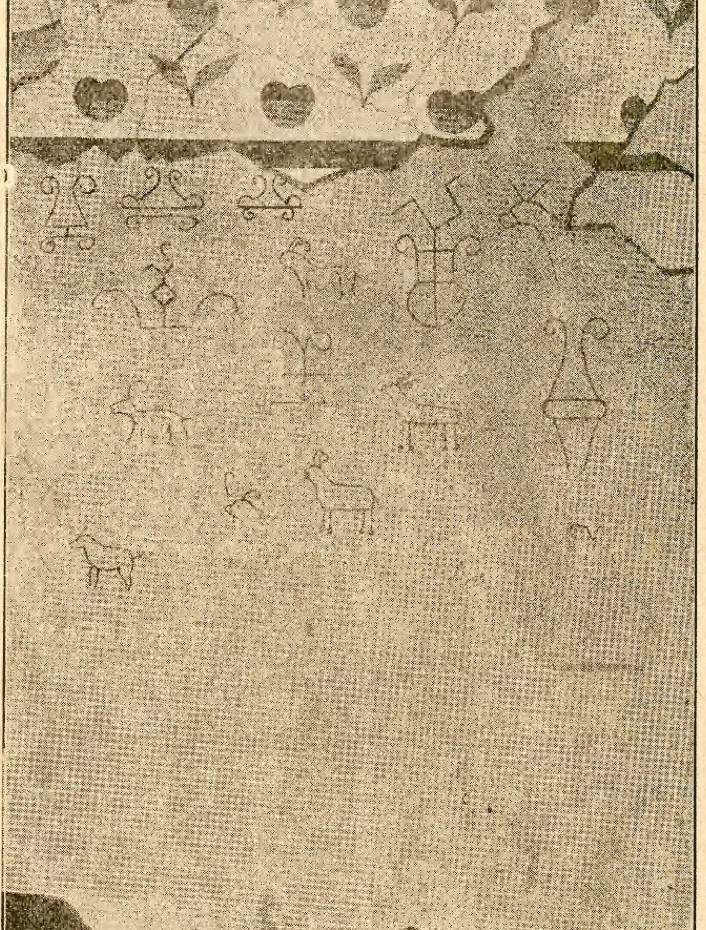
An interesting aspect of Central European culture consists of the various “tamga” signs that are found on, as shown previously here, on spears. These have been interpreted as “runes” and, variously, as either Sarmatian or, for those who see Goths everywhere, as Gothic.

But such signs do not appear solely on spears. I decided to put together as complete a list of them as possible given the academic literature on the subject. We are not going, for the most part, to regurgitate the runes associated with the spear finds but rather concentrate on where else such symbols have been found. With that in mind, let’s start.


Here are some tamgas from Alfred Götze‘s article (II. Mitteilungen – Ostgotische Helme und symbolische Zeichen) in the first issue of Mannus the Zeitschrift für Vorgeschichte (page 122).

This is what Götze says about these.

  • on the left we have a buckle from the region of Kerch (Eastern Crimea)
  • in the middle we have markings from the “rune spears” from Müncheberg and Kovel (this is the same as the spear of Soshychne or Sushichno or Suszyczno)
  • then on the right we have “South Russian” markings

Then we have this Bosporan “gravestone” that Götze places in his article as Table XIX.

Some of these were then reproduced by Gustaf Kossinna in his pompously titled Die Deutsche Vorgeschichte – Eine Hervorragend Nationale Wissenschaft (German Prehistory: A Pre-Eminently National Discipline). It was dedicated “To the German people, as a building block in the reconstruction of the externally as well as internally disintegrated fatherland.” (Kossina who was a Pole by descent was the turn of the century’s greatest case of the Clayton Bigsby Syndrome – his attempts at explaining his patently Suavic last name are truly painful to read but recommended for anyone interested in identity issues). In any event, these copies from Mannus are found on pages 193 and as Table XXXVII before page 194.


These come from Tadeusz Sulimirski‘s 1964 article “Sarmatians in the Polish Past” (in the “Polish Review”).

And this is a similar table, previously posted on this site, that Sulimirski included in his 1970 book “The Sarmatians”.

In the “Sarmatians in the Polish Past” article Sulimirski also compares these to the symbols that frequent the Polish heraldic tradition.

“The Sarmatians” also featured a similar table.You will recognize some of these from the spears pictures put up on this site. But how about the others?


Another interesting article that reveals some of these is Włodzimierz Antoniewicz’s Żelazne oszczepy inkrustowane z Kamienicy, w pow. jarosławskim. In addition to some spear pics he also includes these.

This is from Zazdrist/За́здрість (Polish Zazdrość) in Western Ukraine. You can also see it in Sulimirski’s table above.

This is a lion from ancient Olbia on the Black Sea.

These Antoniewicz labels markings from a Kerch catacomb.

And here are some symbols he puts together.


This compilation, in turn, comes from Vitalie Bârcă‘s article “A Few Notes on the Tamgas From the Golden Plaque in the Sarmatian Grave at Dunaharaszti (Hungary).” The specific table here is a compilation of tables (2-4) from a 2012 article by Sergey Yatsenko and Halina Dobrzańska “Germanic Parade Speers of the 2nd-3rd century A.D. with Sarmatian Markings” (Парадные германские копья II-III вв. н.э. с сарматскими знаками). The assumption that these are Germanic or Gothic is rather dubious. If they have Sarmatian signs then they should be labeled as Sarmatian, end of story.He also shows these from Sergey Yatsenko‘s 2001 book “Tamga sings of Iranian-speaking peoples of antiquity and the Middle Ages” (Знаки-тамги ираноязычных народов древности и раннего средне-вековья) at the end of which the author features perhaps the most comprehensive set of illustrations of tamga signs from Mongolia to Europe.

For more of the same you can take a look at these symbols from a 2017 book “Sarmatians. History and Archaeology of a Forgotten People” by Eszter Istvánovits and Valéria Kulcsár (in Monographien des Römisch-Germanischen Zentralmuseums – Band 123). This is the most comprehensive book on the Sarmatians since Sulimirski’s.


It behooves also to notice the publications by the Ukrainian researcher Karol Bołsunowski regarding the so-called Drohiczyn lead signs from Drohiczyn, Poland. These were first published over a number of years at the end of the 19th century, then collected in the anthropological journal Światowit and then published as a self-standing booklet in 1903 in Znaki symboliczne na ołowiu (plomby): ich znaczenie i klasyfikacja. Here is just a small sample from that publication.


Bring this back to Central Europe, the so-called mushroom stone sculpture at Sobótka in Silesia near mount Ślęża features some tamgas at its base.


Finally, there is this. This hammer comes from Cisek near Kędzierzyn-Koźle and is attributed to the “pre-Lusatian” culture. The detail on the left resembles the etchings on the spears from Jankowo, Podlodów or Münchenberg-Dahmsdorf and the detail on the right resembles the etchings from various spears. This is what we have been calling the “2” sign as, for example we’ve shown here.

Here you can see the right side symbol better (compare this as well as the “Sun” symbol with the Gotland Sand church stone picture below).

This sign is similar to the horses heads that frequent the tops of peasant houses from Germany to Lithuania. In Poland these go by the name śparogi or śwarogi (note that a reconstructed *spar has a meaning that is related to svar in, apparently, Sogdian – that is meaning “to glitter, to shine, to bloom”) and are particular frequent on houses in the Kuyavia and Podlasie regions. The following is from Jan Sas Zubrzycki’s “The Polish Carpenter” (Cieśla Polski).

Here is a similar motif from Lithuania – perhaps the Lithuanian Horse Twins: the Ašvieniai.And here is the same motif from the Oseberg tapestry (which, BTW, as with the rest of the Oseberg finds features a swastika). Here the heads are looking inwards.

And some others from the Viking era both closed and open.

Then this Polish version.

This sign is also similar to components of the omega letter. See below for more on that notion.

And here is a version from the Vernand treasure:

And another of some type of an animal that is not a horse (dragon or duck with similar beaks to the Polish version above):

Here are some brooches with the same animal motif of the Jutland style:

Another example are these feathers, snakes, dragons, horses or just ornaments found in the crowns of Osiris and Isis. Horus on the left has a different crown, though, like Osiris with a phallic-like element – compare that with Isis’ egg-like element:

Interestingly, that sign looks like omega when “facing” a similar symmetrical reflection of itself. Sometimes we see both of these versions facing (or rotated) away from each other. At other times facing away from each other while rotated about the base of one of the symbols. Here is an image that makes the connection rather explicit. This is from Ołbin in Wrocław (also, interestingly, it’s part of a depiction of, among others, Jaxa of Köpenick):

Here is another interesting piece of art from Rybakov:

An even more interesting Rybakov picture is this which shows dragons or snakes or horses facing different ways, very similar to the above variations of the “2” and clearly connected with celestial bodies (see below for an example from Gotland):

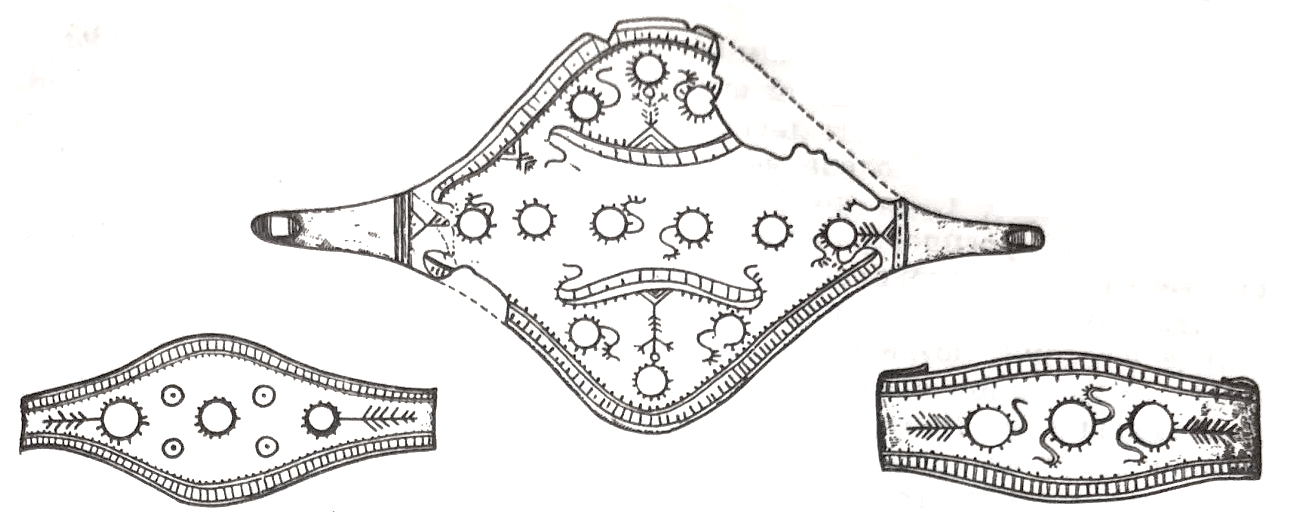
And take a look at these belts from Caerwent, Wales (the first was already discussed here in the context of rosettes):


Finally, something from Gotland (see this website for more):

Or take a look at this cauldron from Sulimirski’s “The Sarmatians” (in a Moscow museum).


Finally, take a look at these bracelets found in a barrow at Ivanye an dated to the 2nd millenium BC. Ivanye is in the Rivne oblast first noted by Sveshnikov in 1968. It is not clear whether this is identical with Ivanychi but, if so, then this is less than 100 miles from Soshychne where the Kovel spear – dated to a much later time (one and a half to two thousand years later) – was found. The same sign – if I can call it that – is present on that spear.

Copyright ©2020 jassa.org All Rights Reserved

March 3, 2020

Let Us Discuss Dags, Jas, Dans & Dags Again

Published Post author

Here are some basic concepts that we should think about.

Suavic “Yes” = Dag

What is the etymology of the Polish “tak” and the Russian “da” or really any Suavic word meaning “yes”? Let’s take a look.

Brueckner

Vasmer

Neither Brueckner (Polish) nor Vasmer (Russian) really say but… there are hints.

The most obvious hint is that the Polish “t” corresponds to the Russian “d”. Another hint is that the Polish has a “k” at the end but the Russian has nothing. If the Polish is a softening of the original then the original, would have been “dag”. The Russian dropped the “g”. The Polish, on the other hand, turned the d > t and the g > k.

Vasmer mentions a theory of Trautmann’s which seems to connect the Suavic “da” to the IE word for “give.” This, however, approximates the meaning of Dažbog/Dadzbog as well as, importantly, of Dagon. Dagon (Hebrew דָּגוֹן, Akkadian Dagān) is described as the Syrian/Canaantite god of seed, vegetation, and crops. The theory connecting Dagon with fish is, well, more fishy.

Interestingly, “da Bóg” or “Bóg da” may be understood as expressions of affirmation. Dažbog/ Dadzbog was, as we know, identified with the Sun.

But we are getting ahead of ourselves. Before we get to the Sun and its days, let’s take a look at the affirmative concepts in Teutonic & Baltic languages.


Teutonic/Baltic “Yes” = Ja 

In turn, in Germanic, “yes” is obviously a form of the affirming adverb. However, the English version traces itself to “gea” as proposed by the Online Etymological Dictionary:

Old English gisegese “so be it!,” probably from geage “so” (see yea) + si “be it!,” from Proto-Germanic *sijai-, from PIE *si-, optative stem of root *es- “to be.” Originally stronger than simple yea. Used in Shakespeare mainly as an answer to negative questions. As a noun from 1712. Yes-man is first recorded 1912, American English.

This “to be” connection also suggests, though admittedly weakly, an Æsir connection.

What about “yeah”?

Old English gea (West Saxon), ge (Anglian) “so, yes,” from Proto-Germanic *ja-*jai-, a word of affirmation (source also of German, Danish, Norwegian, Swedish ja), from PIE *yam-, from pronominal stem *i- (see yon). As a noun, “affirmation, affirmative vote,” from early 13c.

This, curiously, corresponds to Deities such as the Egyptian Moon God Ya and the Canaanite Yarikh and, of course, Jarilo.

Here the Teutonic languages are joined by the Baltic in that we have the Lithuanian jo (yaw) (though also taip (tuyp)), the Latvian and Old Prussian


Leaving, affirmations aside, let’s ask now about the words for “day”.

Suavic/Baltic “Day” = Dan

In Suavic, “day” is “dzień” (Polish) or “den‘” (Russian) or “dan” (Slovene, Croatian, Serbian). The “dan” suspiciously looks like “don” meaning simply “don” or “lord”. Dunaj, while being the Suavic word for the Danube is also the word for streams more generally and, as we know, the Suavs worshipped rivers.

Here the Suavic is joined by Baltic languages. Thus, the Baltic cognates include Lithuanian dienà (day)Latvian dìena (day)Old Prussian dēinā (day) (accusative singular, deinan).


Teutonic “Day” Dag

In order to look at the Teutonic words for “day” we have to come full circle and revert back to the word dag with which we started the discussion above (showing that it refers in Suavic to the “yes” concept).

For example, the German word for day is simply “tag”. Let’s turn to English and the Online Etymology Dictionary which says this for “day”:

Old English dæg “period during which the sun is above the horizon,” also “lifetime, definite time of existence,” from Proto-Germanic *dages- “day” (source also of Old Saxon, Middle Dutch, Dutch dag, Old Frisian di, dei, Old High German tag, German Tag, Old Norse dagr, Gothic dags), according to Watkins, from PIE root *agh- “a day.”  He adds that the Germanic initial d- is “of obscure origin.” But Boutkan says it is from PIE root *dhegh- “to burn” (see fever). Not considered to be related to Latin dies (which is from PIE root *dyeu- “to shine”).

And so we are back with the concepts of Dagon, Dažbog/Dadzbog & so forth.

It would thus seem that:

  • Suavic language took an IE word/concept and interpreted it as “yes”: dag tak or da
  • Germanic languages turned the same IE word/concept into “day”: dag day

Of course, these topics are quite difficult and am quite sure that professional linguists have entirely convincing explanations for the above which do not invoke any divine names or concepts.

Finally, here are some more ruminations on the topic.

Copyright ©2020 jassa.org All Rights Reserved

March 2, 2020

Further Tamga and the Like Spear/Lance Finds

Published Post author

We’ve discussed spears with runes & signs here and more specifically here:

as well as here. Here are some other “tamga” spears. Tamgas are associated most typically with the Sarmatians. Yet, as we will see these spears are not found where the Jazyges resided and Ukraine, the are ruled by Sarmatians and later the Goths also does not generally yield tamga spear finds. Perhaps they could be associated with the Veneti Sarmatae. Some of these are from a 2012 article by Yatsenko & Dobrzanska. Others from Gustaf Kossina’s ever giving Die deutsche Vorgeschichte: Ein hervorragende nationale Wissenschaft or other Mannus-related publications such as Martin Jahn’s Die Bewaffnung der Germanen in der alteren Eisenzeit etwa von 700 v. Chr. bis 200 n. Chr. I also give citations in the text to various Polish articles announcing these finds (or analyzing them in depth). For more on this stuff is currently Bartosz Kontny if you can read Polish, of course.


Jankowo, Poland

This in the area of Mogilno is also the site of the discovery of the Jankowo “head” (for that discovery as well as its “viking” interpretation, you can see, for example, Der Kopf von Adolfinenhof Kreis Mogilno, eine Wikingische Holzplastik?)


Żurawiczki (Kamienica), Poland 

There are actually two finds here. The first is this:

And the second this:

The other side of this spear apparently was too worn out to provide anything of interest though we know it contains dots and a few concentric circles.

This was described in Włodzimierz Antoniewicz’s Żelazne oszczepy inkrustowane z Kamienicy, w pow. jarosławskim, „Przeglad Archeologiczny”, t. 1, s. 99–111 (1919) as well as other articles including in Andrzej Kokowski’s Problemy badania dziejów kultury przeworskiej in Kultura Przeworska, Lublin vol 1.


Zadowice, Poland

We can also see a similar “tree” symbol on an encrusted sword from Lachmirowice and Egge as discussed in Tadeusz Horbacz’s and Marek Olędzki’s Inkrustowane Miecze Rzymskie z Barbaricum i Obszarow Przylimesowych Imperium Romanum: Wybrane Zagadnienia in Acta Universatis LodziensisFolia Archaeologica, vol 17 (1992).


Grunówko, Poland

Another location where spears have been found is Grunówko. There are two specimen from Grunówko (near Wschowa by Leszno) though the silver encrustings apparently had melted in the ritual flames. The original publication here was Kurhan w Grunówku pod Lesznem by Romuald Erzepki from the Zapiski Archeologiczne Poznańskie, volume IV (1888). Here is the first:

And here is the other:


Września, Poland


Podlodów, Poland

The cover of Andrzej Kokowski’s Lubelszczyzna w młodszym okresie przedrzymskim i w okresie rzymskim features the following spear:

In order to identify it you can read Jan Gurba’s and Zygmunt Ślusarski’s 1966 article Bogato wyposażony grób z III wieku z Podlodowa w pow. tomaszowsko-lubelskim, „Przeglad Archeologiczny”, t. 17. This was discovered in the village of Podlodów by a local farmer – Jan Kukis in 1959.

You will soon discover that the spear actually looks like this:

Or rather like this:


Stryczowice by Ostrowiec, Poland

For more of this and others check out Andrzej Nadolski’s Kilka uwag o inkrustowanych grotach oszczepów z późnego okresu rzymskiego, Slavia Antiqua, t. 2 (1950) or Z problematyki badań nad wczesnośredniowiecznym uzbrojeniem polskim from “Z Otchłani Wieków: pismo poświęcone pradziejom Polski, Tom 21, Numer 5 (1952). More recently, see Jacek Andrzejowski’s Groty włóczni ze znakami symbolicznymi ze Stryczowic in „ZOW”, t. 61, nr 1–2.


Gać, Poland

For more on this you can check out an article by Anna Lasota, Cmentarzysko z okresu rzymskiego w Gaci w swietle nowych badan or Marcin Biborski’s Zdobiona broń z cmentarzyska ciałopalnego z okresu wpływów rzymskich z Gaci k. Przeworska in Materiały Archeologiczne, t. XXIII (1986).


Bodzanowo, Poland

The Bodzanowo of this spear lies about midway between Inowrocław and Włocławek.


Kopaniewo, Poland

This is from Jahn’s book where he says it comes from Koppenow, now Kopaniewo in Lębork County, Pomerania, Poland. Apparently, another example of this is from Neugut (near Sławno?).


Silesia, Poland 

On this one you cannot see any taigas but you can see the “moon” symbols.

The specific location of this find is uncertain. More on the topic in Rudolf Jamka’s Ozdoby oręża i narzędzi z podokresu późno-lateńskiego i okresu rzymskiego, odkrytych na Śląsku, “Polska Akademia Umiejętności – Prace Prehistoryczne”, nr 3. Quite a similar example comes from Hoppenrade, east Germany – see below for that.

Rogów Opolski, Poland

Here you have the same spear shown in two different ways.

Once again see the Rudolf Jamka article for more on these which also refers to articles by Raschke (from whom comes the version of the picture on the left) and Kurtz (same for the right side version). The tamga signs seem quite few and barely visible.


Sobótka, Łęczyca, central Poland

These pictures come from G Rycel’s’ article Cmentarzysko kultury przeworskiej w Sobótce (st. 1), woj. konińskie, Prace i Materiały Muzeum Archeologicznego i Etnograficznego w Łodzi. Seria Archeologiczna, nr 24 (1981). This Sobótka is between Warsaw and Poznan.

Here the “lunar” as well as “solar” (in the top picture) symbols are clearly visible.


Nadkole, Mazovia, Poland

Here is an interesting example of lunar and triangular (?) symbols from Mazovia.

For more information you can check out Jacek Andrzejowski’s “Nadkole 2. A Cemetery of the Przeworsk Culture in Eastern Poland.”


There are a few similar spears from outside of Poland. Such as this.

Medow, Mecklenburg-Vorpommern, east Germany
(Medowe or Miodowe)


Zihl, Switzerland

This Swiss example comes from Jahn’s book.


Недобоївці/Nedoboyivtsi/Nedoboivtsi, western Ukraine


Valle, Norway


Mos, Stenkyrka, Gotland, Sweden

This is an example from Sweden from an article “Runes and Romans in the North” by Lisbeth Imer (also her drawing).

With this exception, the Scandinavian versions of these spears or lances do not appear to be adorned by any of tamgas that are present on all the other spears shown here. Nevertheless, since some of them are quite cool and famous we show some below.


Hoppenrade, eastern Germany

This too comes from Jahn’s book.


Vimose, Funen, Denmark

This technically is not a spear but a sword scabbard but the left marking on this appears to be a tamga-like designation.


Ok so let’s map these tamga finds.

The makes clear that these tamga signs were not “Scandinavian” or “Nordic” in any common sense of the word. They are not found in central or west Germany or in France. On spears they appear primarily in Poland with a few examples also in the immediate surroundings. But the curious thing is that, outside of spear or lanceheads, they are found even earlier in the past – primarily in the Bosporan Kingdom but also in other places, including, again, in Poland. That is a topic for another time. In the meantime let’s look at some other spear finds that do not have tamga markings but do feature embroidery and runic symbols.


Of course there were many spears featuring various “patterns” that did not contain any tamga signs or runes or other characters such as these. In Poland you have examples such as these.

Prusiek, Poland
near Sanok

This comes from articles by Renata Madyda-Legutko, Judyta Rodzińska-Nowak and Joanna Zagórska-Telega. There apparently is also another Prusiek spear.


Or take a look at this.

Gródki, Poland
near Dzialdowo, Nidzica
(Grodtken near Soldau, Neidenburg)

For other decorated but not with tamga signs spears, check out the spear from Niemirow or Stara Rudowka.


And then there are quite a number of runic spears, mostly in Scandinavia or England such as these. They contain runes or other markings but not tamgas.

Wurmlingen, western Germany

The Wurmlingen speer certainly contains runes and other etchings but they do not appear to be similar to any known tamga signs. It is also much more recent, being dated apparently to the seventh century.


Vimose, Funen, Denmark

Back to Vimose again.


Øvre Stabu, Norway 

Copyright ©2020 jassa.org All Rights Reserved

March 1, 2020

The Suavic Names of the Gospel of Cividale

Published Post author

Gospel of Cividale (Italian: Evangelario di Cividale, Slovene: čedadski evangelijčedajski evangelij or štivanski evangelij, Croatian: čedadski evanđelistar), at first named the Codex of Aquileia (Latin: codex aquileiensis, codex foroiulensis, Slovene: Oglejski kodeks), is a medieval Latin transcript of the Gospel of Mark, written on parchment. It is named after Cividale del Friuli, a town in Friuli-Venezia Giulia (Northern Italy) where it is kept. It contains about 1500 Suavic and German names of pilgrims to the monastery of San Giovanni di Duino (Štivan, today part of the Duino Aurisina municipality), written in the second half of the 9th and the first half of the 10th century. The monastery was a property of the Patriarchate of Aquileia. The Gospel contains the first known Croatian autographs in a Latin text. A part of the manuscript resides in Cividale de Friuli, and another in Prague. The particular evengeliary comes from the 6th century but the belief was that it was much older. As a result, it was a religious tourist attraction for the monastery where it had been kept. Thus, many of the visitors to the monastery “signed” (or, really, had signed for them) their names in the codex’ margins. This includes Suavs such as Trpimir of Croatia, the Pannonian duke Pribina, Kocel also of Pannonia, Rostislav and Svatopluk of Moravia, Braslav of Croatia and Boris-Michael of Bulgaria – as per Alexander Schenker’s The Dawn of Slavic – though you can confirm the same below.

The edition use is the Evangelienhandschift von Cividale by Conrad Ludwig Bethmann (part V of the 1877 Neues Archiv der Gesellschaft für Ältere Deutsche Geschichtskunde zur Beförderung einer Gesammtausgabe der Quellenschriften Deutscher Geschichten des Mittelalters, volume 2)

Folio 1

finan. cucpald. sunilda. uualto. utpald. garaca. itta. arno.
regelenda.
neofrit. malamila. iusinig gete.
domine miserere famulu tuo foskero diacono.
fesselo. ceseri. marcorus.
antelf.
hos richmond pbr. ernoste pbr. pabo. richeri. ingelscalh
. . titiel . . memorato sie quomodo dimis
odela bega livera puelle. cuno rislinda unegardis ….
et duxit

Folio  1′

iringer rachini ….
gaitepret gifardi flodeberte
habraham uxor eius uuil …. beda sclauo filius eorum
. . . thesia pbr.

Folio 2

cotafrit. erissuint. roteperte. felix diac. iustus pbr
amantinus et bona uxor eius.
felicitas pelerina
nepocor gresic ihon
de tei’ra brasclauo. zelesena. uxor eius hesla. stregemil
filius eorum
motico.
trebenec. dracig. craniohi. millena zelebor. andreas.
uualti hertri pina.
nos i mer gelanus luta . . isa audeberte petrus pbr
henglerioch odelrich arfret.
reginbert otihi . . . gauselinus andreas grimalde martinus
pbr theddad cleri
foscari subd gaugiosus.
engilinda pergildruda [8th or 9th century]
rotecause perterote perga [8th or 9th century]
witirich [9th century]
hadamar kero susanna hunulf cuncpric huduinus pbr
uiceriaut uuolslez grimpert uuolfker.
engelberte adolanna alpote enguelric
audebertus dia maseliosubd [8th century]
uuilliric uuilliric ingildruda.
elinhart rodpret geonilt
kermunt odilint item oclilint adalker palthilt odilint einhart [9th century]

Folio 2′

chotmer
huluolt
erpald [added in the 9th century]
carmanastrepald frederun alboin freuriz [added in the 9th century]
audebertus.
cozil. uuozet. margareta
zelislaua. sebetuh. humislan. d. trebebor. bribibor. trudopulc. amarih.
. . ricpult. teutkart. odlard.
hodelric. ildepret. hunilt. iltelint. richer. alprit. adelpret
artepret inselpret diepruc hicheu conterat.

Folio 3

gagtari
irmingart
teotpert
cotahardus pbr machelm
uuerinolfus ab ellanpertus.
teudericus. albisinda. garardus
adoarde. rodiberte.
uualtelm liutrat gauspert uuipert subdiac.
boselisa. sobemuscla sclauuenca.
ulfihir quoteld

Folio 3′

lodohicus imp: ingelberga regina.
uuardema . . .
hisinard. emeltruda.
hic sunt nomina de bolgaria. inprimis rex illorum Georg
et frater eius dox et alius frater eius gabriel | michahel
et uxor eius maria et filius eius rasäte. et alius gabriel.
et tercius filius simeon. et quartus filius iacob. et filia
eius dei ancella praxi. et alia filia eius anna.
[a hand from the 9th century wrote on the other side: De bolgaria etc]
zergobula f . . ias
odt . . . imus dei servus.
paulo
anastasius diac.

Folio 4

upolt. hoolt. irmisen. uualto filius upold.
frambertus. roco.
albini. mino atala
karsuint
ernust
egono elmeric
teuterihc starcolf atala etela emelrih uuicpald erideo
adaluualr stararahilt ingilart phisila piofa.
pritcot . . . a per e inpere [8th century]
candon . . kerolt folcer elene . . . merd . . . . .
uuilelm. strem.
De bolgaria qui primus venit in isto monasterio. nomen
eius sondoke et uxor eius anna. et pater eius iohannes.
et mater eius maria. et filius . . mihael. et alius filius
eius uuelecneo. et filia eius bogomilla. et alia kalia.
et tercia mar . . . . . elena et quinta maria. et alia
uxor eius sogesclaua. et alius homo bonus. petrus . .
. . . . et georius
[the same hand which wrote ‘hic sunt’ etc. on the prior side]
petrus et uxor eius sofia
iohamies Imperator et uxor eius . . . . da . . . . . . . .
[much has been cut off here]

Folio 4′

mota. eginulfus. ueti. ualto. ermigeri. madoloc. romalde.
adelprete. rodald regimprete adolo.

khaco . sebedrago centeska
porosit. alpiker rihilt
petrus diac. petrus laicus
gisleberte diac.
luiching pbr.

paldmunt. lontpert. lepuns . . ngilsuon . alpker . erchanhart.
lantsuind snelsuind. uualtrih. ruodpold. liuphilt.
sindman. lutheri.

szuentiepulc. szuentezizna predezlaus.

Folio 5

einard.
miramusele zitemer straneca maola u . .
lobonilaica miserere . . . .
cunipret. adelint iacob rumolt reginolt
fredebertus giselbertus.
forti et filio eius bertaldo
orso diac. et orso subd

ratepote rotepertus uarteman m . . . eimo rotecari ernoste
inehich . . angelarius. adelbertus. iohannes. eimo.

Folio 5′

eban . . . . . prebrassclava pressoboda mutacus
felice launia
agathe domnitia iorsia
sedemir
magnus ciprianus suberancius gaginart
perinsuin. isac. stamer. penebod. semidraga.
raginardo. adalrih p cristina zempho chuningund.

heimo pbr. eripert pbr.
iltint. rotlind. rosind.
rengheri preteld helias pretsunt gisuldruta ernosed
giselperte.

. . . . . . itesen . otila . . .
uuerno.

uualto pernger cutpert iltipert iacob engilram gisilbrit
perinart

richeri itiburga et richeri.
egilpert . . itonna . . molcicu
reginarde regichis
orsus pbr
angelgari perteri f [8th century]
ratuuic sebedra hostiarius
domno tripimiro
ulsychari cotild uolbolt

Item noticia commemoratio . . . . . . . . memoria dimisit
et ead  . . . . . . . . liberam . . . . suum non per . .
. . per manu stabili pbro in ecclesia . . . . sancti viti
in presentia trialdu . . . . . tus duciolo . . . . . in auro
de fabricato. donis . . . . . R petro pbr
[Langobard writing]

Memento domine famulorum famularum . . . . . . uuitgauo
cö adalpert reginuart austregaus immo. paltilh.
bribina terpimer. petrus. maria dragoiud sabes pizeden
. . . nisl. benedictus. straha. petro. bedoslau. mihahel.
siliz. coten. kanei. drisimer. engildeo. amulpirc. irnpurc.
kissilperga. ernipurc. sedobra . . . . . . . dragoroc.
moeta. couar . . . . arcumis . . . saba. cafrat. iob.
estimer. radasta. ado. eginolt. uuihheri. irminolh. ratpir
hantuni

heita. hunfr . . ella . . paldunc. heito aber . . . hitta
gerpurc de . . . uualtunc petrus . . . gerhart tenzil.
uualtram meginpert enginhart engin . . heripreht ermanhah
. . labrih.

motimira.
rodlorih
adaluni ezzol eliseus
hardradus.

Folio 6

bascilius luciana to . . .
ranpret. rotpric. otolft. [added in the 9th century]

leo diaconos miseriatur tibi deus et perducat te ad honorem
sacerdotalem amen.

serenus pbr
rengari. lub . . . stargai. gupa . . erhpold.
adelgiscls. relifredus diac.
huoto obiit
gotman. mlada. olamir. engisa. olamir. tnibesu . .

radozlau et ego indignus liuprih pbr. estemir. zizemir.
pensezi. moiselaica. ioliannes filius ip . . .

ato. ragenart cadrac.
cundpertus pbr
uincamera et filius eins lihamere.
liupricus p
brasclauo et uxor eius uuentescella

nepokor purcart. purchart heimpertus. nidhartus.
herchanhartus.

yrminsuind. helmker. anzo. heririb. salaho . . . . . .

Folio 6′

. . . . audeberte.
igo unaxegunt adelpret

adeluinus menedraga. trebelio. gomer. merisclafa. souuinnao.
rastisclao. pudaram. citamuscle gonimer. rasmene.
nitrabor. kasno. uuitamusclo. musclonna. negot. lala.
stranamer trebenna

petrus martinus audrisi.
gontrame mecneos emelda

kiummar. kepuni. folrat. sigimar. aato. deotrat. selpker.
imma. hiltigat. erchanhilt. faua. deotrat. zatto. benedicta. adalgilt. aefa

noe. rodi regnolf.
gitta
irminart
ercnil
stamer. audebertus. audalde.
ato adallinda lantbreht. deotere. irfinge

VIII. idus aprilis hoteihza hobiit. IIII. kal. iunias zidepor
hobiit netunsica hobiit. idus iun. histunsis hobiit.

domine miserere famulo tuo ratepoto et famule tue
emeldrut

crepuco uxor et trebe . . . . filius eius trebego . . . .
coseri. siguuich
tesina. slotiuenza
ratpirin.

doblisclaug godesclagua zelesclauua lich . . abraam teuderic
uualderaht. gonteraht soguigai ermescuent semia
presclauonte presclauonte ezamus qulo dabramusclo
romald gon . . .

tonasclauua
uuarimfred. altichari pbr
ludino soguasclaua
hodelart crimilt uuitgou
nesden. antonius. uuitmar. lutomer.
uitalis presb. pantaleo leolina dominicia margarita leo
kerpurc uualtrat.
srlben. sebeteh. primusl
ratari. adelarde. guiso. enderath.

felix pbr. billo. bernardus. sonderade. anna. ratperga.
sinderade

anto. rotcausus.
colotec . . . dego dehi . . . . bla camere oge capontemere [from the 8th century?]

Folio 7
[Here begins Matthew]

tuto. elismot.
zillizio . . enstabeda. nazamyr. brazena

capra. timocenda. ratpot. engelberte orsus. ag . . no.
cunigunda cop . . musclus. tordasclaue

Folio 7′

petrus clericus.
sicmar pbr. iltiricus pbr
sazona diac. casir pbr.

egilpert maco uualto keroch luza isinard cristina eilenrat
gauspert geroch teuterihc teutekher pepo teutoc isinardus
teutekher erhenrart

burhard spita eltifred balduin cristian

altuad. adual celernolt ot adlololt cosuolt odililt adolot.
te . . . gard. uuililm elepurga. dulun. megenelm. uuilipurg
regipurg. marto. olfrit. petro cartolf tetocin.
teutcarda.

Folio 8

heroc estolf rifont uualtrat ingloan gero frater esfilo elisuuint.
martinus pbr.

iohannes diac. donperte. tasa. dommelperte. deusdedi.
foscari sub. petro. guiselperto. rateperte. pergolfe.
liuperte.

gundalbreht . . . . ruodilt hincfrid pato kergoh hernuin erambalde toto
illtri. illtifrit

Folio 8′

peringer. amalbertus. not. uodelbertus. lantpertus. hildirat

iusirhc cofes. stioa. ilteric. siherad. zisola. engelbert, rotepert. trusing. keila.

sinteperto laiquo. frodeberga.
cultruda. liuttefredus. keroc. ingildeo. amelperga. popila. efrunus. kenet ellibertus. aaron. ricpolt. etisa. adelardus. machelt. rotecheri.

Folio 9

helidnui perehfraht. adalbreht. uodelbreht. lantpert. gapert.
anselmus. teudebal . . .

lantperga. digna.

irmiburg loutecard nortprect teutprect ermeng rambolf trosar uuitigau umfrede lantald

gausperte mumald grosman ualtrade pertine fritila lantald. sigini cosprect eginard rigilend egito pbr sigifrede gospret suanelda ricprict

ingeldeo stradosclauua habraham ingeldeo. engelscalquo filio eius ingeldeo engelperen dobrablaste. riheri. trudumund ingledeo. ilpegunt stradasclau.

iohanni aderouinus.

Folio 9′

cherad. orsus pbr. engelporg. recnard. elmegari.

lantaldt abraham. gauspertus et pater eins oberini et mater eius latu.

sigiurid p
engilsuuint gausperte

Folio 10

ricsuent. reginperte. rotfrit. ratichis. rafolt. erquomot. riccard. [9th or 10th century]

petrus pbr.
panco
domine miserere famulo tuo ingulani.

alnolfo. ota. teiiderico. albescenda. girarde. teuderic filiiis eius. erdielde uxor eius. ota. eluualde. sicpalde et filia eius et mater eius engelsenda . . . . oluualde. elengere. regeno. spen . . . lesclaua.

Folio 10′

regneri pbr. alprect. ilpung frater eius. ammo. uualilm. malelm. ernost. ingelsind. teutterih.

Folio 11

domenico. epo. audeberto. andrea. [9th century] gontperto pbr.

luitfrede. tamacano. kotedruc. erconfret. ita. anna uxor erconfret.

Folio 11′

madolind

aspertus. purgman. engilpero. gundbreht. cistei pbr. gotehilt. engilger

salamunt. isanhilt.

Folio 12

munialde. prectini. richald. rotheri

domno karolo imperatore. domno liuttuardo epo

rantecheri. et uxor eius gaiperga et rantheceri filius eius et paco filius eius. ildeberte.

salomon diac.

Folio 12′

domine miserere famulo tuo secundo diac.

Folio 13

cano. dragamer. genenta. nazisir. cano. ponete. seuemuscle. semina hobiit. nedauid. ceco cete.

Folio 13′

uuaniguo clo. rodone. ingelgarde adelberte cotaperte egildrude liutiscenda.

Folio 14

ioliannes pbr. benedictus clericus. reinarte pbr. ato. teupolt. adelperga. antric. reginolt. albini. soniilt. oluult cerult sounabrut.

arigait. siderda. felix.

oimuscle dabraua. dequodesca. misticlau. gohifred. cerna. quocili. priuuinna. gostidrago. semmemuscle. paridra. zidana. pilende. seuella seuella. millas. soidrago. randeco ceresulla sinata. soltin. premil. luban.

Folio 15

albericus. rihpald.

Folio 18

reginprete. quunigunda. odelardus pbr. teu …. tach.

Folio 20′

romult. frederich. heriprat. kadoloc. ce . . . .

Folio 21

olfrant …

Folio 21′

arabriccho

Folio 22′

euco. teuteric. sicharde. messorgo. lobane uxore eius.

engisuind. ualhardus. adalrih. contelmus. gondulft. kepardus. hermenerus. ualdman . . . cundffo persinnt.

iohannes uxor eins bedoslauua.

rotepert sygifrede igilpurge.

Folio 23

num … cozpertus diaconus ildigarius. cralo. ualo. uulcote. milo. uuitego. sighebult. eghelman. isinnere. iltimot. fredebod. adebrat.

presila. petrus filius domno tripemero.

otuuin suitschir.

Folio 26

uitalis clericus. leo clericus

Folio 29′

lubaset.

domine miserere famulo tuo olperto pbo

Folio 30

domine miserere famulo tuo orso diacono: domine miserere servo tuo iohanni clerico

leo.

Folio 32

ianelperga

ianelperga aledruda roteperga todelperga

Folio 38′

semna. uisegneo diac. cruben. uuilan. sedobra.

umberte ricpolte.

Folio 39

. . . uuilkari . zal . . . tridenna . . .

Folio 42

liutpaldus. quunigund

santpulc. isaac. uuiperte. fastpurch. astrapald bulicm . . . bochmir. conder alberihc uolfoch regensuuint.

Folio 42′

domine miserere servo tuo gaudioso diacono domine miserere servo tuo martino pbro

Folio 47

gostichai. sebusca.

Folio 49

presela. uuisseoi pbr.

Folio 51′

. . . . ran . . . ro

Folio 55

clomenicus petirus . iolianne . denna . romana . lannase . maria . marino . iohanne . etmanno et iohanne.

Folio 65

dannamir

Folio 71

erniprete elmite ellena . erceneta . ioltella . teuperte margate prunuare . gisinperga . odolperte asperte

Folio 79

stenedrago.

Folio 79′

* cheroc pero et alio pero pychil ratipir hirlumul ingelpir pirigint uertila urto leo pbr.

Folio 80′

. . . . . castemyr gherolt . iustin . teurat . teutpult.

Folio 94′

quonimant . teutperga . filii eorum fredebert kerat engelmot.

Folio 95

prisnata.

Folio 98′

 olodrag olomer pigimer cotes sitigoi mirogoi

vuerinolfus . sigifrid . diotpald . sigihart . adam . kerurid . arurid . zeizmunt . ionpert . engilrih . uuolfhart . ellinpert . ellinpert . kotapert . riginpata . engildrud . reginlind . liutuna . vualtpert . zeizmunt . adalrih . zeizpold . vuanpert . perahkart . liuphilt . kotapurc . adalruod . ratolt . keruualah . hiltimeri . pirihtilo . adalurid . vuillipurc . iohannes . perahkoz . hero . anthelm.

emeld . fredruna . adilinda . piligid . adelsinda . perold . soanegilda . teuderada.

teuto . euerarde . gonterammus . teuderic . teuderic . emild . agatha . toda . ualtechari .

[hereafter the entire Gospelof Mark is cut out; after folio 99 there follows the Gospel of Lucas]

Folio 99

stagai . ebo.

Folio 102′

zidizlau pbr . rihpert pbr . altrib pbr . paldmunt pbr . rodun pbr . zabau . liutisti . munemer . ratolf . altfrid . liutolt . sepino . sirnamus . mirona . dobrodei . priuuigor . zla . nazzeg.

brannimero comiti . mariosa cometissa.

elymburt . frederut . cherni.

Folio 106′

emmina . enchelsint . uuinburga . suaue . arbona . katila . leuderade . ualtila . ualtila . engelmot . arpana.

Folio 107

elymburga . alia elymburga . hequo . erchengeri . ricpret . odelbert . suapric . frouult . otepret . holtepret . rampret . ermouuit . karnenad . liutecheri . hengilburga . uualtila . emmina.

Folio 118′

domine miserere famulo tuogiselperto sub [ilu]* in bonum amen GVISELPERTO SUB ROTecauso gonteperga.

[*very unclear; maybe only an abbreviation for ‘deacon’]

[All written by one hand in the 9th century. On the next page the writing by the same hand and with same ink continues]

Folio 119

domine miserere famulo tuo guiselperto sub rotecauso gonteperga bertalde

domine miserere famulo tuo giselperto sub . domine miserere famulo tuo guiselperto sub. GISELPERTO SUB.

Folios 129′ & 130

deuto . guiselarde . ghero . ledi . xpiano . predeclao . adelric . liupari . altepret . tunisclaua . miltrut . ubisclaua . ermizenda . guernunt . ramilt . uilet . adelfret . ratolfe.

Folio 136

uuilermus . liccause ergefrede.

Folio 145

sedesclao . preuui . . . . . merulla . elemperte . elengeri . pertilt . ederam . liupilt.

Folio 151

isaac diac.

casinus teuderada . innila . suuy . iacob . berengarius.

Folios 162′ & 163

petri pbri . luponi . dominici . felicis . petri . uitaliani pbri . teudmari pontificis uenantii adoni pauli liuperti felicis audberti

[all written by one hand continuously 9th century with one ink on the upper and lower edge of Folios 162′ and 163]

Folio 167

ulfecheri . godesclaua . ratulfe . oltecheri. onnia . sclauica. encheldeo . et alius encheldeo . albegunda . stradesclaua . percot . riccoth . adelpret . liutichis pbr . teutilt . subimer.

Folios 178′ & 179

otelm iltrut extilis tetmot   artuin epis

[9th century, or perhaps 10th]

Folio 181′

stano pbr.

audalde diacones misereatur ei omnipotens deus amen deo gratias semper amen.

Folio 187

deusdedit

Folio 196

miserere domine deus omnipotens famulo tuo martino diacono et conserva cum semper in tua mia amen deo gratias amen; giselpert; gisabertalde teutepalde lobo adelperga liuperga arigaite aurosarateperga sonteperga audredaratecause gisa sinteperte adelberga beralde

[written by one hand continuously without separating words, 9th century]

Folio 196′

rambertus . hecquo . ata . rumolt pbr . gheresit . elimbur . alia elimbur . hesotf.

Folio 203

domine miserere famulo tuo olperto pbro. domine miserere famulo tuo iohanne diacono . ambo fratres. domine miserere famulo tuo audolfo clerico.

Folio 213′

prenenon . milei . pomego . dobrosisne . isaika . trehenta . deoste . sesite . trebenna . stram . semigir musclasete . sal . luca.

Folio 214

turdamere . zababerado neme ral . domamir . ciagrota . exumila . p mer . draineste sidesci nesir.

[8th or 9th century]

Folio 215

. . . . . . . . adoloc . rimfrit . erminad . adoloc . iste adoloc . ista nomina scribere rogavit.

[added in the 9th century]

Folio 219

irminrat.

Folio 221′

domine miserere famulo tuo iohanni clerico . domine miserere famulo tuo feli clerico.

Folio 236′ & 237

ratgoi et uxor eins reginsunda . patricus . bribislau . martinus . todoro kameraz . georgius . pacemira.

Folio 238

sebedrac

Folio 245

domine miserere famulo tuo baldoni subdiacono.

Folio 250′

irmilihit.

Folio 268′

degodelka . dallimere . bellica . fllius eius . minidrago . iohannes . cerelulla . filia eius . thesconna.

Folio 270′

nenadei . glauoz.

[The following folios are lost]

Copyright ©2020 jassa.org All Rights Reserved

February 26, 2020

Iarila

Published Post author

Here are some interesting Celtic (!?) divine names.

If the highlighted text is Celtic then we cannot be sure what is Suavic anymore, of course. Are we to believe that the Jarilo festivities were really just celebrations made up by some practical joker steeped in Celtic mysteries? That hardly seems likely with the more likely answer being either that Suavs occupied parts of Europe and were mistaken as Celts or that the Jarilo cult was an ancient IE cult that both some Suavs and some Celts maintained independently.

Here are is the earlier article on the Iassas of the Suevo-veneti.

Copyright ©2020 jassa.org All Rights Reserved

February 26, 2020

On Svarog’s or Svarozic’s Trail

Published Post author

We have not done articles about Svarog as you do not see this deity in the Polish Pantheon. If by swar we mean “raging” then perhaps he can be connected with Wodan and, hence, Jasion. In this case, he would be the God of the Sky. This would be somewhat consistent with the Svarga or Svarga Loka of Hindu mythology.

But there are signs that point to another role for Svarog – that of a chthonic deity. Both of these suggest a smith deity. Such a smith could be a smith among the stars or, alternatively, could be a smith deep down in the Earth. In other words, the stars can represent a forge via their “heavenly fire” but so can a volcano. In fact, Vulcan may also be relevant here as he is the Roman equivalent of the Greek Hephaestus.

To better address this question, we ought to look at the available sources, first noting that while Svarog does not appear appear among the Western Suavs, Svarozic does among the Polabians in:


PVL
Hypatian Codex/Chlebnikov Codex

The most well-known source mentioning Svarog are two manuscripts of the PVL – the Primary Chronicle. But the mention is present in only two (out of about eight) manuscripts of the PVL – the Hypatian Codex (beginning of the 15th century) which is one of the two main PVL manuscripts (along with the Laurentian Codex) and the lesser-known Chlebnikov Codex (15th or 16th century). In these two codices, under the year 1114 the scribe wrote an interpolation not present in other manuscripts. The following is the text of that interpolation as given by Mansikka (in German) (while that author is overly critical, much like Brueckner, his source compilation is quite thorough and about the only such compilation in Western literature):

“At the beginning Mestrom of the family of Ham began to rule, then Jeremiah and after him Feosta, who was also called Svarog (in the original Sovarog, Zvarog) by the Egyptians. At the time of this Feosta’s rule in Egypt, there fell tongs from heaven and he began to forge weapons for before that time people fought with rods and stones. This same Feosta proclaimed a law that women could marry only one man* and should fast and order that those who commit adultery should be executed. For this reason he was called God Svarog. For before that women lived licentiously with those men whom they liked and were like cattle in their fornication When a child was born that the woman liked, she would say [to her then man] “This is your child”; and he held a party and recognized it [the child as his own]. But Feosta abolished this law and commanded that one man could only marry one woman and one woman could only marry one man; and whoever should break this law, he had to be thrown into the fiery oven. For this reason he became called Svarog and was honored by the Egyptians. And thereafter there reigned his Son, who was called the “Sun”; he was also called Dadzbog… The ruler Sun, who was the son of Svarog and was also called Dadzbog, was a strong man; when he came to hear from someone that a rich and powerful Egyptian woman with whom one intended to cavort, he searched for her so as to capture her, for he did not want to abolish his father Svarog’s law. And he took with him several of his men, calculating the time when the night adultery was to begin, surprised her and he did not find her with her husband but rather lying with another whom she loved. And he grabbed her and toortured her and had her driven about [showcased for shame] as a rebuke, And he had the adulterer be beaten. And a clean life began to be led in all of the Egyptian land he began to be praised.”

Here is Mansikka’s Russian text:


Chronicle of John Malalas
Slavic Edition

The source of this, it turns out, is the Chronicle of John Malalas or, more specifically, since the original of that chronicle does not contain any references to Svarog or Dadzbog, the Slavic manuscript of that chronicle from the 15th-16th century. This was published over time in various publications (mostly; and with some later supplements by others) by Vasilii Mikhailovich Istrin under the overall title Khronika Ioanna Malaly v slavyanskom pervade. The relevant manuscript (Ark) is the 15th century Arkhjivskiy khronograf from TSGADA (Central State Archive of Early Acts), collection of GAMID (Saint Petersburg Main Archive of the Ministry of Foreign Affairs) 279/658. There is also an earlier – 13th century – Vilnius version (Vil) of the same (Vilenskiy khronograf) which is BAN Litovskoy SSR 109 – the BAN is the Library of the Academy of Sciences of the Lithuanian Soviet Socialist Republic; not sure what the current designation is.

This is the same manuscript that also contains the Lithuanian Baltic story of Sovius or Sovii that we discussed here (note too the similarity between Sovarog and Sovius). In fact, according to Mansikka, the same person added the Slavic and Lithuanian glosses about Baltic practices to the edition. In fact, another Mansikka claim is that both the Slavic and the Lithuanian glosses were known to the writers of the Hypatian and Chlebnikov Codices as evidenced not only by the Slavic mentions of Svarog and Dadzbog but also by the mention – this is not part of PVL but rather part of the Galician–Volhynian Chronicle (GVC) that is found in the same codices – under the year 1252 that Mindaugas’ baptism was a deception and that he would continue to make offerings to his pagan Gods:

“…first of all to Nunadiev, Teliavel and Diverikuz, the god of hares and to Meidein.”
(some translate these as Nunadievis, Teliavelis, Diviriks and Medeina)

Later there is also a discussion of the burning of the dead. Also the entry for the year 1258 records the names of the Gods Andajus and Divirikuz/Diviriks. Of these GVC mentions, Teliavel/Teliavelis and Andaeva/Andajus also appear in the Ark manuscript of the Slavic version of the Malalas Chronicle. Further, the main point of the same story of Sovii/Sovius is to discuss the establishment of the rite of cremation. For all these reasons, Mansikka believed that the writers of the Hypatian and Chlebnikov Codices simply inserted the Lithuanian and Slavic mythological references from the Ark manuscript into their codices – the Slavic into the PVL and the Baltic into the GVC. He also noted that the Lithuanian interpolation made its way into the Malalas Chronicle in the year 1262 and so believed, not unreasonably, that that also was the time of the Slavic interpolation. Because of the reference that says “in our Lithuania” in the Vil manuscript’s Lithuanian glosses both Istrin and Mansikka believed that the Slavic glosses of Malalas Chronicle were also made in Lithuania. Again, both of these time/place deductions are based on the reasonable assumption that the same person added both the Lithuanian and the Slavic interpolations. Istrin further believed that they may have been made originally in another manuscript (though around 1262 and in Lithuania still) and only then were introduced into the Slavic Malalas of the Ark manuscript (and the Vil manuscript?). Either from such original works or from these Malalas Chronicle’s manuscripts they made their way into the PVL and the GVC. So, at least, says Mansikka. However, others who prior to his examination looked at the glosses thought the origin may have been earlier. If you believe that the same person added the Lithuanian and Slavic glosses then an earlier date seems unlikely given, a fact pointed out some time back by Łowmiański, the fact that Lithuanian was not particularly relevant to the Kievan Rus prior to the Mongol invasions (though, perhaps, Novgorod might have been interested in the Baltics more). In any event this does not matter that much to the nature of the text.

So what does the Slavic transaction of Malalas say? The following comes from Mansikka who got it from Istrin’s publication of Book II of Malalas. Note that the English translation of the Malalas Chronicle which was made by Elizabeth Jeffreys, Michael Jeffreys and Roger Scott actually has this text appear in Book I and Book II (see the actual text below). In any event, here is the Mansikka text translation. The insertions are in italics. If a word was changed, the word is in italics while the original Malalas version is also given in brackets. To the extent there are differences between the Mansikka text and the Malalas translation given below, those stem from the text Mansikka used versus those used by the Malalas translators. So, with that in mind, let’s take a look at the text:

“After Feosta’s death, who they also call Svarog, there ruled over the Egyptians his son the Sun [Helios], who they call DadzbogThe Sun [Helios] being the ruler, son of Svarog’s [Hephaistos’], who is also Dadzbogwas a strong man… He did not want to break his father Svarog‘s [Hephaistos’] law… As Homer the poet said of him, that Dadzbog [Helios] accused Aphrodite of adultery with Ares… [He used the name Aphodite for the desire for fornication condemned by the emperor] Sun [Helios]… After the death of Dadzbog [Helios], son of Svarog [Hephaistos], Sosis ruled over the Egyptians…”

And the Russian text as given by Mansikka (which he got from Istrin):


Sermon of a Certain Christlover and Zealot for the Correct Faith
Слово некоего христолюбца и ревнителя по правой вере

Another potential Svarog source is a sermon the so-called “Christlover” found in manuscripts from the 14th-15th century. It seems to have originally been found by Aničkov. The Sermon conns a number of mentions of East Slavic paganism (to which we can later come back) but the mention that is relevant in this context is the following:

“…and they prayed to the fire, calling it Svarozits [or Svarozich]…”

However, in this case, the name is not Svarog but, as among the Polabian Suavs, “Svarozich.”

Here is the text (again from Mansikka):


Saint Gregory’s Sermon Composed on the Mountain About How the First Pagans Bowed to Idols and Gave Them Offerings, Which They Continue To Do
Слово св. Григория, изобретено в толцех, о томь, како первое погани суще языци кланялися идолом и требы им клали, то и ныне творят

Another mention which probably comes from the above Sermon of the Christlover is a mention in Saint Gregory’s Sermon. Specifically the Chudov codex (16th century) contains the following:

“…and  to the fire, Svarozic, they prayed…”

Here is the text (again from Mansikka):


Sermon of Our Father Saint John Chrysostom (the “Golden-Mouthed”), the Archbishop of the City of Constantinople About How the First Pagans Believed in Idols and Gave Them Offerings and Named Their Names, Which They Continue To Do in Christianity and They Do Not Know What Christianity Is
Слово св. отца нашего Иоанна Златоуста, архиепископа Костянтина града, о томь, како первое погании вѣровали въ идолы и требы имъ клали и имена имъ нарекали, яже и нынѣ мнози тако творять и въ крестьяньстве суще, а не вѣдають, что есть крестьяньство

This slovo is known from the 14th or 15th century Novgorodian manuscript:

“…and others believed in Svarozic…”

Here is the text (once again from Mansikka):


The Original Chronicle of John Malalas

Finally, here is the English translation of the original of the relevant portions of the Chronicle of John Malalas which was made by Elizabeth Jeffreys, Michael Jeffreys and Roger Scott.

Book 1
Chapter 15

“So when Hermes came to Egypt, Mestrem of the family of Ham then reigned over the Egyptians. On his death, the Egyptians made Hermes emperor and he reigned over the Egyptians for 39 years arrogantly. After him Hephaistos reigned over the Egyptians for 1680 days, that is for four years and 38 days. For the Egyptians then did not know ho two measure years but they called the cycle of the year “years”. They called Hephaistos a god, for he was also a fighting man with mystic knowledge. He fell with his horse when he had gone into battle and was left with a limp from his wound. Hephaistos issued a law that Egyptian women were to be monogamous and to live chastely, while those who were caught in adultery were to be punished. The Egyptians were grateful to him since thus was the first law on chastity which they received. Hephaistos through a mystic prayer received tongs from the air for the manufacture of implements from iron. Thus he became dominant in wars. They deified him, since he had legislated for chastity and he had procured food for men by the manufacture of implements and in war had given them power and safety; for before his day men had fought with clubs and stones.”

Book 2
Chapter 1

“After the death of Hephaistos, his son Helios reigned over the Egyptians for 4477 days, that is for 12 years and 97 days; for neither the Egyptians in those times nor any other people knew how to calculate the number.  Some calculated the cycles of the moon as years, others calculated the cycles of the days as years; for counting by the twelve months was devised after this from the time when it was customary for men to be taxpayers to emperors.”

Chapter 2

“Helios, the son of Hephaistos was very generous. He was informed by someone that an Egyptian woman, one of those who enjoyed wealth and rank amongst them, had fallen in love with someone and was committing adultery with him. When Helios heard this, he wanted to catch her, because of his father Hephaistos’ law, so that it should not be broken. He took soldiers from his army, having discovered that her adultery took place at night. He burst in on her when her husband was not there and found her sleeping with another man, her lover. Immediately he took her away and paraded her throughout the land of Egypt after torturing her. Chastity became widespread in the land of Egypt. He put that adulterer to death, and was thanked. The poet Homer tells this story poetically; Helios, he says condemned Aphrodite for having intercourse at night with Ares. He used the name Aphodite for the desire for fornication condemned by the emperor Helios. The truth, as it has been written above, was written by the most learned chronicler Palaiphatos.”

Chapter 3

“After the death of the emperor Helios, son of Hephaistos, Sosis* reigned over the Egyptians; after his reign, Osiris reigned; after Osiris, Horus; and after Horus, Thoulis, who captured all the land as far as the Ocean with a large force…”

[*note: later referred to as Sostris.]

For the mention of Suavs in the Chronicle of John Malalas see here.


Etymologies

What of the name Svarozic or Svarog? Svarozic can mean many things in Suavic. The -zic suffix can be an indication of:

  • A son or a descendant of Svarog (or Sovarog)
  • A “thing” coming from Svarog (or Sovarog)
  • A young Svarog (or Sovarog)
  • A little Svarog (or Sovarog)
  • A diminutive of Svarog (or Sovarog)
  • A thing that swarorzy (or svarycsa from svariti se; in which case swarzy would be a shorter version of the same)

With the exception of the last suggestion, all of the above are derived from Svarog.

What about Svarog? Here we have several possibilities: as well:

  • svar (old Indian) or svarga-s (Sanskrit) (“shine, sky, Sun)
  • *spar (Sogdian) (“to glitter, shine, bloom”)
  • hvar (Avestani) (“sky light, Sun”)
  • Sovarog > Sovi (Baltic)
  • swar (Polish) (“heat” or “quarrel”)
  • Zwerg, schwarz (Nordic)
  • stworek (Suavic) (“little creature”)

The Romanian words Sfarogu or svarogu (meaning “dry” or “glowing”) are probably derived from Suavic.

There is also sfora which means “host”. The following Polish and nearby towns and rivers come to mind though whether their etymology has anything to do with Svarozic is debatable:

  • Swaraszczyzna/Swarawszczyzna
  • Swarawa/Sworawa
  • Swareml/Swaromje
  • Swarliny
  • Swarocino
  • Swarowszczyzna
  • Swarożyn/Swaroschin/Swarisewo/Swarozino/Swarzissewo/Swarzystów
  • Swarreitkehmen
  • Swarren
  • Swarszowice/Swarzischowycze
  • Swarte
  • Swarteze
  • Swartówka
  • Swarycewicze/Swarycewiczy
  • Swaryczew
  • Swaryczów
  • Swaryn
  • Swaryn stream
  • Swarzeń
  • Swarzewo/Swarzow
  • Swarzewska Kępa (Swôrzewskô Kãpa)
  • Swarzędz
  • Swarzędzkie
  • Swarzów
  • Schwerin (Polabian)

Some of these may relate to the German schwartz, others clearly have something to do with the Polish “heat” or perhaps with “quarrels.” The best candidate for a Svarogian etymology would have been Swarożyn since the Polish “g” becomes a “ż”. But, the above show that that town had many other names previously: Swaroschin/Swarisewo/Swarozino/Swarzissewo/Swarzystów – most of which are unlikely to have had any “g”‘s in their earlier forms.

An interesting question is why Svarog nor Svarozic appear in the so-called PVL pantheon. My strong suspicion is that the same Deity is there. Specifically, the above distinction between Dadzbog and Svarog seems weak. Rather, it seems that Svarog, the Sky Deity may have been the single deity Dadzbog Chors – the PVL explicitly names this as a single Deity. Now, why was Dadzbog Chors listed after Perun? I think because Perun (previously meaning just “fork” which then became associated with lightning) was “elevated” by the Varangians who, in their own country, similarly saw the ascent of Thor. This Scandinavian invention mirrors Taranis of the Celts. But on the continent the Suevi, for example, clearly did not know Thor. Rather they worshipped Wodan.

Copyright ©2020 jassa.org All Rights Reserved

February 1, 2020

Łada Placenames in Central & Eastern Europe

Published Post author

Just as the name Jasień is present in many town and river designations in Poland and vicinity so is Łada. Dlugosz spoke of a village named Łada and we’ve identified such a village already but there are more such place and water names. The following comes from various sources supplemented by the “Geographic Dictionary of the Polish Kingdom and Other Suavic Countries” (Słownik geograficzny Królestwa Polskiego i innych krajów słowiańskich).

Here is a list of some of those in and around Poland.

Villages

Łada – a village in the Lublin voivodeship. The river Łada runs through it. First mentioned in 1245 during the invasion of Ruthenian dukes of the “Lachic land” when Duke Wasilko raided the Łada and Dzwola areas. In the 14th century it was a royal village (that is it belonged to the crown). In 1377 it somehow came into the possession of Dmitri of Goraj (the royal treasurer) and then his nephews. The Lublin voivode  Mikołaj Firlej bought the village in 1508. In 1517 it was sold to Wiktoryn Sienieński who then donated it to the Gorka family. At the end of the 16th century it was bought by Jan Zamojski. The village suffered during the Napoleonic wars. It was partly repopulated by Uniates. In WWII most of Łada burnt down during a German air raid.

Łady – a village in the Mazovian voivodeship.

Ładawy – a village in the Łódź Voivodeship.

Ładowska-Wola – a village in the Mazovian voivodeship.

Ładzice – a village in Radomsko County, Łódź Voivodeship.

Ladzin (Ładzin) – a village in the Subcarpathian Voivodeship.

Ładzyń – a village in the Mazovian Voivodeship.

Ladorudz – a village in the Greater Poland Voivodeship.

Ładomierz – a former village near Wielun.

Lada – a village in Slovakia

Ladomirowa – a village in Slovakia.

Ladce – a village in Slovakia.

Ladygos (Ładogole) – a village near Vinius.

Ładyżyn – a village in Lithuania near Lazdijai.

Ładowszczyzna – formerly a private village near the town of Lida, Belarus.

Ladeniki (Ładzienniki) – a village in Belarus.

Ładonicha – a place in Дзісна region in Belarus.

Ladorozh (Ładoroże) – a village in Belarus on the Ukrainian border.

Malye Lyady (Lady) – ancient town and goods near Smilavichy in Belarus (part of former Červień or Chervyen (Чэрвень) fka Igumen (Ігумен) district.

Ladasna (Ladosno, Ładosno) – village in Belarus.

Ladyzhin – a town in Belarus.

Ładyżycze – a town in Belarus on the Braginka (Brahinka) river; today in the Chernobyl exclusion zone.

Lyady (Łady) – a village on the Belarussian – Russian border, east of Orsha (incidentally just West of the Russian Yasenets).

Lyadovichi (Ladowicze) – a village near Kobryn in Belarus.

Ladantsi (Ладанці, Ładańce) – Ukrainian village near Lviv.

Ladychyn (Лади́чинŁadyczyn) – a village in Ukraine near Ternopil.

Ladyzhyn (Ладижин, Ładyżyn) – a town in Ukraine.

Ladyzhynka – a town in Ukraine.

Liadova/Lyadova – Ukrainian village on the border with Moldova on the river Liadova (presumably meaning “icy”).

Ladendorf – A village in Austria.

For a Liedena in Spain – rather curious next to Yesa – see here.

Rivers

Biala Łada  (White Łada) – starts northwards around the town of Chrzanów, heads south past the village Łada towards, then through Bilgoraj and merges with the Czarna Łada at Sol or so to form Łada.

Czarna Łada (Black Łada)- starts at Dabrowa/Gorecko Koscielne, then heads west towards Bilgoraj where it merges with the Biala Łada to form Łada.

Łada – the combined Łada has a short run west into the River Tanew.

Ladosnianka (Ładośnianka) – river near Lepel/Niemirava/Ladosno in Belarus.

Ladantsi (Ладанці, Ładańce) – Ukrainian stream near the village of Ladantsi. Flows into the Marushka river.

Liadova/Lyadova – river in Ukraine. Flows through village Liadova/Lyadova.

What about Germany? Well, there is the river:

Leda – the river Leda is in NW Germany and, of course, has an “e” not an “a” but its old name was shown with an “a” as in: fluuium Ladeflumen Lathe, Lathamuthon. The below etymology of Greule’s is rather improbable.

Other

Ladowa Niwa – a hill near Łukawiec (ЛукавецьLukavets’), Subcarpathian Voivodeship. Łukawiec itself was founded already in the 16th century.


Here is a map of the above.

Of course these are only some such names and there are many others such as several place names Łady near the Belarussian Dzisna (Дзісна), Ładycza, Ladzyny, Ladźwienie, Ladce, Ladniki, Ladna, Ladki, Ladendorf, Ladenberg, Ladeskul, Ladce & others. You could also look elsewhere such as at Ladenburg (remember Imple o Lada from the Rhine province).

Copyright ©2020 jassa.org All Rights Reserved

February 1, 2020