Pomerania, now mostly in Poland was an independent Slavic entity throughout most of the middle ages. It was yet another area that held out against Christianity and its “German” God for quite awhile. In fact, of the Slavic areas only Arkona held out longer (and, as we pointed out, when it fell, it did so with the Pomeranian dukes being part of the Danish-led invasion force).

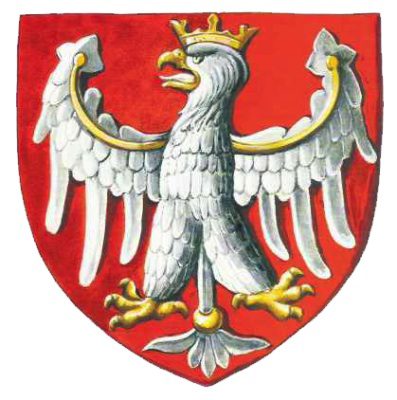
Pomerania was ruled by the Slavic Griffin House
Pomerania is a land that geographically starts around the town of Szczecin (the earlier Stettin) and continues east to the Bay of Gdansk. In the early 12th century, to the West of it was the land of the Liutizi/Wilzi aka the Veleti (sometimes controlled by the Pomeranians, sometimes independent). To the East the pagan Baltic Prussians. To the south the Polish dukedom (dukedom because no Polish duke since Boleslaw III was strong enough to put on a crown at the time). In fact, Pomerania was one of the first additions to the nascent Polish state having been added by Mieszko I sometime in the 960s. However, it became independent sometime after the death of Boleslaw I in 1025. Subsequent Polish rulers Mieszko II, Casimir I, Boleslaw II and Wladyslaw I could not reclaim Pomerania and it was not until Boleslaw III Wrymouth that the effort to reclaim Pomerania was renewed.
Between 1119-1122 a series of battles were fought between Boleslaw III and the Pomeranian duke Warcislaw I (of the Griffin dynasty, who, apparently had already been baptized whilst captive of the Saxons earlier in life). The first such battle took place in 1119 at Naklo. All of them resulted in great devastation of Pomeranian towns, altogether nasty bloodshed and, ultimately, Boleslaw’s victory and forced resettlement of thousands of Pomeranians into Poland.

Warcislaw at Naklo – only surviving footage
At the end Warcislaw became the Polish duke’s tributary.
Along with political control there came Christianization. Although Pomerania had its own bishopric established at Kolobrzeg/Kolberg already in the year 1000 under the first Boleslaw, the German bishop and his assistants were driven out rather quickly and the country “lapsed” into old ways. After Boleslaw’s victory, the Polish duke sent Bernard the Spaniard as a missionary to the Pomeranians. Bernard was a man of his belief it seems and went around Pomeranian towns in shabby garments affecting an altogether unimpressive presence. He was quickly dispatched out of Pomerania by a people that have been thereafter described as wealthy and materialistic (whether this was true or just became legend is unclear).
To better appeal to the Pomeranians, Boleslaw next sent Otto of Bamberg as his missionary. Otto was bound to convert by whatever peaceful means necessary and, purposefully appearing richly dressed and well to do, did not shy from buying support for the new religion. He had the support of Boleslaw and Warcislaw with the latter assigning an entourage of allegedly 500 warriors to protect the bishop in his mission. The first apostolic mission which is described in this post took place in 1124. It culminated with the conversions of the towns of Szczecin and Wolin (the latter was by then the smaller of the two). Thereafter, Otto returned to Bamberg.
Due to the resistance of the local priests and the high tribute imposed on Pomerania by Boleslaw III, by 1127 the country was falling back to the faith of its ancestors necessitating a second trip by Otto in 1128. We will cite passages relating to that mission in the next blog.
In any event, the Christianization of Pomerania was successful and by 1168 the Pomeranian dukes, as we wrote previously, Kazimir and Boguslaw (the sons of Warcislaw) were taking part in the Danish siege of Arkona.
Otto himself has since been known as the “Apostle of Pomerania” and with that distinction there came a plethora of “Lives” of Otto being written right after his death in 1139. The following are the relevant ones:
- a Life of Otto by Ebbo (written about 1151)
- a dialogue regarding Otto written by one Herbordus (written about 1158)
- a Life of Otto by a monk from the Pruefling monastery written after 1158)
Less relevant works include A short Life of Otto based on Ebo’s version, an anonymous Life of Otto and another Life of Otto written by Andreas, Abbot of Michelsberg.
The below versions come from the compilation of Charles Robinson. He based that compilation on Ebbo’s Books II and III. The first book describes Otto’s youth and the monastery at Bamberg and so has been ignored by Robinson. Book II describes the first (1124) mission to Pomerania and excerpts from it are presented here. Book III, which will be the subject of another blogpost describes Otto’s second (1128) tour of Pomerania. Robinson also includes pieces by Herbordus which, even if duplicative of Ebbo, add some more information. Because Herbordus describes a lot of the native religious rituals we have relied on him more heavily here. Occasionally, Latham throws in a footnote about something appearing solely within the Pruefling monk account.
With that in mind, we proceed to the description of the adventures of Otto in the wacky lands of Pomerania supplementing it, where helpful, with observations on Otto’s route of travel.
Herbordus II. I.
[Of Pomerania]
“For Pommo in the Slavonic language is equivalent to near, or around, and Moriz is equivalent to sea. Hence the word Pomerizania denotes that which is situated near or round about the sea. This country, if we have regard to its situation both in the swamps and in the parts overflowed by the sea, and in the low-lying ground, can be described as triangular, inasmuch as on three sides three lines which join together at their extremities make three angles, one of which is more obtuse than the others; the line forming this angle stretches to Leuticia and towards Saxony and bends back again towards the north and the sea.”

Pomeranians were not yellow but they did like gold
“Accordingly Pomerania on its sea front is contiguous to Dacia and the small but populous island of Rugia, and above it on the north is Flavia (Livonia) and Prussia and Ruscia. In front, that is in the direction of the dry land, it faces at one point the adjacent territories of Hungary and Moravia. It has then Polonia as its neighbour for a long space as far as the confines of Leuticia and Saxony. The Pomeranian people being skilled fighters both by land and sea and being used to live by loot and spoils, and owing to their natural fierceness having never been conquered, were far removed from Christian faith and refinement. Their country is extremely fertile and furnishes an abundance of fish and of wild beasts and of all kinds of grains and spelt. No country abounds more in honey, and none is richer in pasture and grass. Its inhabitants neither possess nor desire wine, but their honeyed drinks and carefully prepared beer surpass even the wines of Falernum. Of these we shall speak later on, but we have now to explain, what is a matter of surprise to many, why these men who are so far removed from Eastern France and from the Church of Bamberg and in fact from almost the entire world, were unable to obtain from the nearer kingdoms or Churches baptism, or any preacher other than the Bishop of Bamberg. This fruit was granted to him by God for the increase of his happiness.”
Herbordus II. II
[Enter Boleslaw III of Poland]
“At the time when the Bishop of Bamberg was ruling the Church of that place, Bolezlaus [Boleslaw III], a vigorous and prudent man distinguished by his ancient and noble ancestry, was administering the dukedom of Polonia. By conducting himself with diligence and foresight he succeeded in recovering with a strong arm the territories on the borders of his own country, which in the time of his predecessors had been invaded and ravaged by enemies, together with the camps and towns which had been forcibly detached from his rule.”
Ebbo I
[Enter Bernardo of Espana, i.e., of Epic Fails]
“…there was a bishop named Bernhard, endued with marvelous sanctity and knowledge, who was a Spaniard by race, but had been chosen and consecrated as a bishop at Rome…”
“…When then he heard that Pomerania was still addicted to the errors of heathenism, being armed with holy zeal, he turned aside from his purpose in order to preach the Gospel there. His desire was that he might either unite its people by faith to the Catholic Church, or that he might obtain the glory of martyrdom and lay down his life on behalf of Christ. For he despised this present, life and was wont to treat his body with the utmost severity, being content with a little dry food, and drinking nothing but water.”
“He went accordingly to the Duke of Polonia and was received by him with honour as a servant of God. When he had explained to him the object of his journey the Duke said that he rejoiced to behold his ardent zeal, but the ferocity of this nation was so great that it would kill him rather than submit to the yoke of the faith. The bishop replied- with a firm voice that he had come for this purpose and that, if need should arise, he was prepared to receive unhesitatingly sentence of death for the love of Christ. The Duke, overjoyed at his response, gave him an interpreter and a guide as he desired, and prayed that God would give him success.”
“Though a bishop he was careful to retain both humility and poverty, for he knew that the kingdom of the Devil was destroyed by the humility, and not by the power of Christ, and that whoso shares his poverty with Christ has sufficient riches, and he entered the city of Julin [Wolin] dressed in a despicable garment and with bare feet, and there strove with diligence to scatter the seeds of the catholic faith. The citizens, who despised him on account of his bodily appearance, for they knew not how to judge save by outward appearance, asked who he was or by whom he had been sent. He declared that he was the servant of the true God, the Maker of heaven and earth, and had been sent by Him in order that he might lead them from the error of idolatry into the way of truth.”

Bernard gave his all. But the Pomeranians just would no listen.
“They, however, replied with indignation, ” How can we believe that you are the messenger of the supreme God? Whereas He is full of glory and endowed with all wealth, you are despicable and are so poor that you cannot even provide shoes for your feet. We will not receive you nor listen to you. For the supreme God would never send to us so abject a messenger, but, if He really desired our conversion, He would visit us by sending a fit person who would worthily represent His power. If then you have any regard for your life, return as quickly as possible to the place from which you came and cease to do despite to the supreme God by pretending that you have been sent by Him, for it is only to relieve your poverty that you have come hither.” Bernhard, who became bolder and more steadfast as danger drew near, said, ” If you do not believe my words, believe my works. Set fire to some house that has collapsed through old age and is not of use to anyone, and throw me into the midst : if, when the house has been consumed by the flames, I shall come out from the fire uninjured, then know that I have been sent by Him to whose rule fire and every created thing is subject, and whom all the elements serve.” The priests and elders of the people, when they heard this, conferred together and said, “
“This is a foolish and desperate person who, constrained by excessive poverty, seeks death and goes of his own accord to meet it. We are beset by his villainy, which seeks to exact vengeance because he has been rejected by us, and to involve us in his own destruction. For if one house is set on fire, the destruction of the whole city must follow. We ought therefore to take care and not to listen to one who is of unsound mind; nor is it wise for us to kill a barefooted stranger. For our brothers, the Prussians, some years ago l killed one named Adalbert, who preached like this man, and as a result oppression and misfortune overtook them and all that they possessed was destroyed. If then we desire to consider our own interest, we shall do this man no injury but expel him from our territory and, having placed him on board a ship, make him cross the sea to some other land.””
“Meanwhile Bernhard, the servant of God, inflamed with the desire of martyrdom, seized an axe and attempted to cut down an immense column which was dedicated to Julius Caesar [!], from whom the city of Julin took its name. The pagans would not permit this, and rushing upon him with great anger struck him in cruel fashion and left him half dead. When they had departed a monk named Peter came running to Bernhard and gave him his hand, whereupon Bernhard arose, and, after regaining his strength, began again to declare the word of salvation to the people. But the priests drew him with insolence from amongst the people and placed him with his monk and interpreter on his own boat, saying, “If you have so great a desire to preach, preach to the fishes of the sea and the fowls of the air, and beware that you presume not to cross the boundary of our land, for there is not a single person who will receive you.””

Pomeranian Elite Guards escorting Bernard out of Wolin. Even in defeat, he is still praying for the Pomeranians’ souls (and his own ass).
“Bernhard in accordance with the gospel command shook off the dust of his feet against them and returned to the Duke of Polonia, and told him with tears what had befallen him. The Duke said to him, ” Did I not tell you before that the Pomeranians would by no means accept the faith; You should not therefore make trial of their snarling folly, for they are profane and unworthy of the word of salvation.” The bishop replied, “They are animals and are altogether ignorant of spiritual gifts, and so they judge a man only by his outward appearance. Me they rejected on the ground of my poverty, but if some influential preacher, whose honour and wealth .they would respect, were to go to them, I expect that they would of their own accord submit to the yoke of Christ.””
[Editorial Intermission
The stage was thus set for Otto; he would travel from Bamberg to Prague from where he would be escorted to the Polish capital of Gniezno and then sent off to Pomerania by Boleslaw III; crossing into Pomerania at the Notec/Netze at Ujscie/Uzda he would travel to Stargard where he would be met by Wortislaw who would give him his warriors and then depart; Otto then continued to Pyrzyce/Pyritz/Pyrissa/Piriscus, and then took a detour to Kamien/Gamin/ Kamin where he was again met by Warcisclaw (and, earlier, Warcislaw’s wife), arrived at Julin/Wolin, was kicked out and went to Szczecin/Stettin; here he was successful and then, after at side trip detour to Gartz and Lubin he was back in force at Julin/Wolin]

Otto’s path from Bamberg
Herbordus XIV
[Arrival at Pyrzyce]
“As they at length drew near to the Duke’s [Wartislaw’s] camp called Pyrissa at the eleventh hour of the day, they saw from a distance that 4,000 men had come together there from every province : for that day was a festival of the pagans, and its celebration by this wild people with sport, debauchery and loud outcry astonished them. They did not think it therefore advantageous or wise as unexpected guests to approach that night a crowd of people excited by drink and sport, but remaining where they were passed a sleepless night, as they did not dare to have a fire in their camp, nor did they venture even to speak one to another. In the morning the bishop sent to the camp Paulicius and the messengers of the Duke Boleslav. These saluted the chief men in the name of the Dukes and announced that the bishop had been sent by the Dukes to declare to them the Christian faith and religion. With their authority they commanded and endeavoured to persuade the people to listen reverently and respectfully, and they further stated that the bishop was a man of rank and wealth in his own country and possessed resources sufficient to supply his needs in a foreign land, and that he sought nothing and needed nothing, but had come in order to promote their salvation and not for the sake of gain. They bade them to remember their pledged word and to be mindful of the divine vengeance and of the recent destruction that had come upon the land, lest they should a second time arouse the divine wrath. They pointed out that the whole world lived under Christian laws and that they could not by themselves withstand the whole world.”

Otto came in peace
“The people delayed long and made various excuses, and asked to be allowed time for consideration, saying that they ought not to undertake so important an affair suddenly or without consideration. Paulicius and his fellow-messengers perceived that this was spoken designedly and they said, ” It is no time for lengthy consideration, what you are about to do, do quickly. Behold he is at hand. Last night the bishop would have come amongst you had he not heard that you were engaged in games and sport. On this account he delayed to come and pitched his tents on the plain, but it will be to your advantage not to distress him by a further contemptuous delay, lest the Dukes should consider that they themselves have thereby received an injury.”
“”Is he,” they said “so near?” to which the messengers replied, ” It is so.” ” Everything,” they said, “tends to hasten the end of our conference. Let us do then willingly and quickly what we are about to do, as our present circumstances demand, for the most high God appears to be surrounding and drawing us towards Him by His own power. We cannot refuse, let us therefore follow Him who would draw us towards life, lest by resisting His goodness we sink into death. Our gods, it appears, are not gods ; against Him we can avail nothing. It is therefore better that we should leave behind those who will not follow us and that with entire loyalty we should draw near to the true God who has never failed those who have hoped in Him.” After they had carefully re-examined and approved this proposal, which was at once so good and advantageous, they first of all held a secret gathering among themselves, and when, by unrestricted discussion with the messengers and Paulicius, they had gained further confidence, they went forth with them to the people, who had not dispersed according to custom or gone into the country, but, in accordance with God’s will, remained where they were, and who now assembled as for a festival. These they addressed with honeyed words and with alluring kindness. Why say more? It is marvellous to relate how quickly and readily that concourse of people, after hearing what was said, arrived at the same decision.”
Herbordus XVIII
[Otto’s Sermon at at Pyrzyce]
“But ye who have hitherto been pagans and not Christians, have not the sacrament of marriage, because ye have not been faithful to one woman. But those of you who have desired it have had more than one wife, a thing which henceforth will be for you unlawful; but one man ought to have one woman, and one woman one man. What is more than this is of the evil one. If any of you have had more than one wife before your baptism let him now choose the wife which pleases him best and let him send away the others and keep this one only, according to the Christian custom. I hear also that ye women are accustomed to kill your female infants.”

The Pomeranians were really taken by Otto’s charisma
“Words cannot express how great an abomination such conduct is. Consider whether the brute animals act thus towards their young. Let not this parricidal crime exist henceforth amongst you, for it cannot be forgiven without the most profound repentance. Nourish carefully your offspring whether male or female, for it is God’s will to create both the male and the female.”
Ebbo V
[Otto establishes a “Spiritual Plantation” at Kamien Pomorski]
“On the nativity of St. John the Baptist he arrived at a large town called Gamin [Kamien] where the Duke lived. He remained here for a long time, that is for fourteen weeks, or more, and built churches with branches of trees, to supply the needs of the new spiritual plantation. Otto himself baptized the little children, whilst his fellow-workers baptized the men and the women who drew near to Christ in multitudes. In the course of the instruction that was given at this place the women were asked whether they had killed their infants for in accordance with the cruel pagan custom, they had been wont to kill their girls and to save their boys and for this crime special penitence was enjoined. The men and women were washed separately in the sacred font, curtains being hung round the baptisteries, which were placed so far away from each other that no occasion for any kind of scandal could arise.”
Herbordus XIX
[Warcislaw’s Wife Comes Out]
“After that the Church in Pyrissa had been strengthened and instructed, we bade farewell with many tears and with much affection to this simple people, and with the ambassadors as our guides, we arrived at the town of Camina. There was here a duchess, who was the legitimate wife of the Duke, who, though living amongst pagans, was not unmindful of the Christian religion. She rejoiced greatly at the news of our arrival and, together with her whole household, received us eagerly, as she did not doubt that this would be equally agreeable to her husband and would promote both her and his salvation.”

Otto was happy to reclaim Warcislaw’s wife (for the Church)
“For during our stay at Pyrissa she had carefully learned by means of secret spies all that had taken place there, and she rejoiced with great exultation that this people had been enlightened. She herself too began to fan the spark of her own faith that had hitherto smouldered, as it were, beneath dead ashes, by declaring it first of all modestly to the members of her own family and then to her confidential friends.”
Ebbo VI
[Kamien’s Unbeliever is Struck Down Like a Kamien]
“…There was not wanting a miracle to confirm the truth of Otto’s preaching and this must here be related in due sequence. For there was in the same town of Gamin a certain woman of rank and wealth, who, being seduced by the persuasion of the Evil One, had despised the teaching of the most holy apostle and had put aside and refused to follow his instructions. To mention one of the instances in which she showed her contempt and disobedience; whilst all were engaged in keeping the Lord’s Day, she herself went out into the fields to reap and, although the members of her family disapproved and objected, she remained unabashed, and went on with the work which she had begun. But the good Lord, who has deigned to promise to his preachers, He that hears you, hears Me, and he that despises you, despises Me,” l became by means of a manifest miracle, which was worked for the correction of the rest, the avenger and the punisher of this contempt.”

Eternal penance is the price of contempt
“For whilst she was intent upon her evil work and was upbraiding and threatening the members of her family for neglecting to help her, she suddenly fell back, and, expiring more quickly than can be described, struck with great horror those who were standing near. She was forthwith placed in a coffin by the members of her family, who lamented and bewailed her, and was carried all round the town, the funeral being conducted with loud outcries. Whilst this manifest judgment of God caused fear to all, they were more and more strengthened in the Christian belief and religion.”
Herbordus XXI
[Warcislaw Arrives at Kamien]
“While these things were being done at Camina and we and the people of the city, together with their most noble and Christian matron, were the possessors of spiritual joy, the arrival of the Duke of the country, Wortizlaus, with his attendants added not a little to our pleasure.

Duke Warcislaw of House Griffin (rendering is an approximation)
Without a moment’s delay he rushed with filial confidence to embrace the bishop, and said, ” Hail, holy father, be not angry because after my first brief greeting I have been so long without seeing you, for affairs of state which could not be avoided were the cause of my delay. But I am here now ready to obey and serve you in whatever way you desire, for we and all that we have are yours : use us as you will.” When he had said this he turned to the clergy and the other important men in our retinue and said,” With your permission, father, I will salute also these your fellow workers.” He then took and held their hands in turn and blessed them and kissed them affectionately, calling them his most dear sons and daughters; and he blessed God, the giver of all good things, that he had been thought worthy to receive in his house such agreeable guests. And because after this we had to go by boat from one town to another, he commanded his servants to lead our horses and beasts of burden to suitable pastures ; nor were they restored to us until everything had been accomplished and we were about to leave the country. When we received them back they were so changed in appearance that their owners could hardly recognize their own beasts, so fat had they become. The soldiers who had come with the Duke were forthwith instructed and baptized. Many, including the Duke himself, had been formerly Christians, but through association with unbelievers had abandoned their Christianity. By confession and penitence these were reunited to the Church, after promising that they would henceforth abjure all things inconsistent with the Christian name, and follow that which was conformable thereto.”
Herbordus XXII
[“This Deal is Getting Worse All the Time”]
“Moreover the Duke said, “I know that to have more than one wife, or to have concubines, is inconsistent with Christian holiness; ” and having forthwith touched the relics of the saints, as is the custom when Christians take an oath, in the presence of the people and the bishop he publicly renounced the twenty-four concubines which, in accordance with heathen custom, he had taken in addition to his lawful wife.”

Duke Warcislaw had earlier been a Christian but he had lapsed since – twenty four times
“Many of the others who had presumptuously committed the same offence, when they saw what the Duke had done, renounced polygamy and promised that they would follow the Duke’s example and cleave to one wife.”
Herbordus XXIII
[Kamien’s Unbeliever is Struck Down – Herbordus’ Version]
“When all these arrangements had been duly made, and the people were coming together to the church day by day not only from the town but also from the country, and were keeping the Lord’s Day and other festivals, a certain widow who lived in the country not far from the city of Camina, who was rich and noble, had shown her contempt for the Christian religion and declared that she would worship the gods of her country and would not fall in with the new delusion and abandon the ancient tradition of her ancestors. She had a large family and was a lady of great influence, who ruled her house with vigour, and, a circumstance which was very significant in that country, she had been accustomed during the lifetime of her husband to have thirty horses with riders for the use of her escort. The strength and power of nobles and great men is usually estimated in accordance with the supply or number of their horses. “He is strong, powerful and rich,” people say, “for he has such or such a number of horses,” and when they hear the number of the horses they understand the number of soldiers that are available, for in that district no soldier is accustomed to have more than one horse. Moreover the horses of this country are large and strong and each individual soldier fights without a shield-bearer and carries his own pack and shield, performing his military tasks with great agility and energy. Only chiefs and important men have one or, at the most, two attendants.”
“It came to pass on a certain Lord’s Day in harvest time when the people from all parts were hastening to the church, that this matron neither came herself nor permitted her servants to come, but behaved in an unruly way; ” Go,” she said to her servants, ” reap my fields, for this will bring you more advantage than devoting yourselves to a new and unknown god whom this Otto, the Bishop of Bamberg, brings from his own country. What have we to do with him? Do not you see how much good and how great wealth our gods have given us? It is by their bounty that we have an abundance of wealth and honour; to abandon, therefore, their worship will bring us no small harm. Go then and reap our crops. In order that ye may be less afraid my carriage has been made ready and I will go into the fields with you and take part in reaping the crops.””

Don’t Mess with Otto or His Deity
“And when she had gone out into the fields she said, ” Do as you see me do.” She then turned back her sleeves, fastened up her robe and seized a reaping-hook in her right hand. She held some stalks in her left hand and appeared to be cutting them. But, marvellous to relate, as she was in the act of doing this and was leaning forward to reap, she became like a marble effigy and could neither lift herself up nor cast away the sickle or the stalks of corn from her hand, but stood there in silence like an image, saying nothing but gazing at those who kept gazing upon her. But when her servants saw this they were greatly afraid, and they stood round her watching and waiting until she should recover. They begged her also to abandon her foolhardiness, telling her that the God of the Christians was mighty. She, however, made no response, and when they laid their hands upon her and tried to raise her up by force and to take away her sickle and stalks they were quite unable to do so. But she stood like an immovable mass fixed to the earth. And when this unhappy woman had caused astonishment and stupor to the spectators by the condition into which she had fallen, and her attendants were overcome with grief and distress and were proposing to leave her and depart, she suddenly collapsed and breathed forth her guilty soul into hell fire. As they lifted her into the carriage they said, ” What kind of sheaf is this that we carry back from the field on the Lord’s Day?” This occurrence was widely reported and spread abroad, for the attendants forthwith rushed to the church and asked for baptism, and, overcome with astonishment, related what had happened. The faith of those who believed was strengthened by the miracle, whilst the unbelievers and those who had before blasphemed learned to believe as a result of the punishment that had befallen the woman. They began, moreover, carefully to observe the Lord’s Day and the other festivals, and to show greater reverence not only for the bishop and his companions, but for all that they taught.”
Ebbo VII
[Otto’s First Visit at Wolin/Julin]
“…For the inhabitants of the town, intoxicated with the chalice of God’s anger, when they heard of the arrival of the servants of God, at the dawn of the following day, armed themselves with clubs and stones and rushing upon them endeavoured to drive them from the town. They said that it was in vain that they had made their way into the resting-place provided by the Duke, expecting to find security there, inasmuch as those who were subverters of the country and of its ancient laws were declared by the ordinance of their gods to be outside the stipulation relating to the granting of peace. As a result of the intervention and the order of the Duke they with difficulty escaped with their lives, after receiving many injuries. They then spread their tents in front of the town and remained there for seven days, whilst the messengers of the two Dukes Bolezlaus and Wortizlaus kept inquiring day by day on their behalf whether the people of Julin had considered the question of making their submission to the Christian faith. They were, however, led astray by the evil counsel of their priests, and refused altogether to receive the herald of wholesome teaching, but drove him ignominiously away from their territory and forced him to go to Stettin.”
Herbordus XXIV
[Otto’s First Visit at Wolin/Julin – Herbordus’ Version]
“When nearly fifty days had been spent in this place (Camina), ambassadors were provided by the Duke, and two citizens from the place to act as guides, viz. Domizlaus and his sons who were men of reputation; and we travelled by boat to Julin through lakes and lagoons made by the sea. This city is large and strongly built, but its inhabitants were cruel and barbarous, and when they had come near to the city our guides stopped and began to be frightened and to murmur amongst themselves. When the bishop perceived it he said, “What is it that ye are saying one to another?” They said, “Father, we are afraid for you and your companions, for this people is fierce and unrestrained…”

Wolin Fortress loomed ahead as Otto’s party cautiously approached, their bosom filled with Faith
[and their fears prove correct]
“…There was at first a disturbance, which gradually became a tumult, as the people ran hither and thither looking at us again and again and telling the news concerning us to the others. At last the people, seized with a senseless rage, raised a great uproar and, armed with axes, swords and other weapons, burst into the Duke’s court, without showing any regard for it, and threatened us with instant death unless we fled from the court and the city with the utmost speed. Now there was in the court a very strong building made with beams and large , planks which the people called “stupa” or “pyrale,” into which had been carried from the boat the boxes of books, the pack-saddles, the bishop’s robes, the money and other valuables. Thither, in consequence of the furious attack made by the people, the bishop and his clergy had fled. But the people shouted and cried out and endeavoured to compel them to come forth. When they delayed it seemed for a moment as though the people would abandon their fury, but their madness blazed forth all the more and, making a rush, they attacked the “stupa” and overthrew it, dragging down and demolishing first the roof and then the beams.”

The Pomeranians were breaking in
“Whilst some were terrified and others cried for fear, the bishop, who hoped that he was called to receive the crown of martyrdom, stood undaunted with joyous spirit and cheerful countenance, eagerly desiring that he might be counted worthy to receive a blow or a wound in the name of Jesus. Paulicius and the ambassadors, when they saw that all the people were seized with madness and that to delay there any longer would make matters worse, leapt forth into the midst of the crowd and, raising a great cry, as though they were themselves mad, they stretched out their hands and demanded that silence should be made.”
“When the people had become somewhat quieter, they went on to say, ” What is this?” and directing attention to themselves, they continued, “Allow us who are here in the Duke’s court to depart in peace. Why are ye enraged against us ? Which of you have we injured?” They replied, ” We have come to kill the bishop who is a deceiver, and the other Christians who are with him and who speak evil of our gods. But if ye desire to save them, see, we grant a free passage, lead them quickly out of our city.””
Herbordus XXV
[Wolin Looks to Szczecin for Spiritual Guidance]
“We remained there on the other side of the marsh which surrounded the town for fifteen days, waiting to see if the people would come to a better state of mind. Meanwhile our companions went to and fro between us and them, and their head men came to us and excused themselves by laying the blame for the tumult upon the stupid and worthless section of the people. The bishop then conversed with them concerning the Christian faith and endeavoured indirectly to exhort and persuade them. He made mention also of the name and power of the Duke of Polonia and suggested that the insult offered to us would tend to his injury and that some evil might befall them in consequence, unless perchance their conversion should intervene.”

We’ll have the religion they’re having
“They said that they would take advice, and having gone back to their own people, they discussed these matters over and over again and at length arrived at a unanimous decision, namely that in regard to this proposal they would do whatever the inhabitants of Szczecin/Stettin did, for they said that this city was the oldest and most renowned in Pomerania and was the mother of cities and that it would not be right for them to permit the observance of a new religion unless this observance had first been confirmed by its authority.”
Herbordus XXVI
[Inauspicious Arrival at Szczecin]
“…We drew near to the city in the twilight and leaving our boats entered the court provided by the Duke. In the morning Paulicius and the headmen, who acted as ambassadors, declared that they had been sent by the Dukes with the bishop and explained that the object of their journey was to preach the gospel. At the same time they advised, promised and threatened. The people answered, “What have we to do with you? We will not abandon the laws of our fathers, and are content with the religion that we possess. Amongst the Christians there are thieves and robbers, and those who (for their crimes) have been deprived of feet and eyes; all sorts of crimes and penalties are found amongst them and one Christian curses another Christian. Let such a religion be far from us!””
Herbordus XXX
[Otto’s Sermon at Szczecin – Talks About Breaking Stuff]
“…All these things constitute a strong indictment against you, but my representatives and your own, who are honourable and prudent men, have intervened on your behalf, and more especially the bishop himself who is staying with you and who is your evangelist and apostle. I have judged it right therefore to accede to their advice and petition, and have decided to lighten your burden of servitude and tribute so that ye may with greater readiness take upon you the yoke of Christ. The whole land of the Pomeranian peoples is to pay as a public tribute to the Duke of Polonia, whoever he may be, only 300 silver marks year by year. If war assail him they are to assist him in the following manner. Every nine heads of households shall equip for the war the tenth with arms and money and shall meanwhile carefully provide for his household. If ye keep this agreement and conform to the Christian religion, ye shall obtain peace from my outstretched hand, and the joy of eternal life, and on all occasions ye shall receive as friends and allies the protection and support of the people of Polonia.””
“An assembly was thereupon held at which these statements were read out in the presence of the people and the chiefs, who eagerly took the oaths, rejoicing more than if as at Nacla [Naklo was the site of a battle where the Pomeranians had been defeated by Boleslaw III of Poland] they had been subdued by arms, and they submitted themselves to gospel teaching.”

Otto seized the pulpit and spoke of sin and repentance
“The bishop then seized the occasion and ascended a pulpit and said, ” It has now become my duty to speak to you. Rejoice in the Lord always, again I say rejoice: let your moderation, your faith, and your conversion be known unto all : let it be known to the whole world. For the whole world has been distressed on account of your unbelief. For, my beloved brethren, the whole world as far as this corner of your land recognizes the light of truth, and yet you desire to remain in darkness. Let it be your shame and regret that you have not hitherto recognized your Creator. As therefore you have been late in turning to Him, you should run with the greater eagerness and hasten to overtake those who have preceded you in the faith, and your desire should be that those who have mourned over your blindness should be able to rejoice over your illumination in Christ.”
“And first of all, being armed with the sign of the Cross, you must immediately renounce those who have deceived you, your gods who are deaf and dumb, your graven images and the unclean spirits that are in them: you must destroy the temples and break in pieces the images, so that when His enemies have been cast out by you, your Lord God, who is the living and true God, may condescend to dwell in your midst. For, unless you cast away all other gods, He cannot look upon you with favour. For He refuses and disdains any alliance with other gods and His temple has nothing in common with idols. But I know that you do not yet fully believe, I know that you fear the demons that inhabit your temples and graven images, and that therefore you will not dare to destroy them. Will you, however, permit me and my brother priests and clergy to attack the images and the temples with their pointed roofs and if you see that we are protected by the sign of the holy cross and remain uninjured, then, protected by the same victorious symbol, you may join with us in destroying the doors and walls with axes and hatchets and in overthrowing and burning them.””
Herbordus XXXI
[Otto Starts Breaking Stuff]
“When they had heard and agreed to this suggestion, the bishop and the priests celebrated mass, and having received the communion, armed themselves with axes and hoes and proceeded to attack the temples, and after having cut clown and demolished everything they climbed the roofs and tore them down. Meanwhile, the inhabitants stood watching to see what their unhappy gods would do, and whether, or not, they would defend their own houses.”

Otto and his goons smashing Pomeranian idols
“But when they saw that no evil befel the destroyers, they said, ” If these gods, whose temples and sacred places are being torn down, possessed any divine power, they would surely defend themselves, but if they are unable to defend or help themselves, how can they defend or help us ? ” Saying this they made an attack and overthrew and destroyed everything, and they divided amongst themselves the wooden materials and carried them to their own houses to be used for cooking their bread and food. And as it was held to be right that he who seized most should have most, all the four temples which had pointed roofs (contince) were broken down and demolished with marvellous rapidity. In case any reader fail to understand the meaning or origin of the word contince it should be known that most words in the Slavonic language are connected with Latin ; we suppose therefore that the word contince was in ancient time derived from continere (to hold together).”
Herbordus XXXII
[Otto Takes on Triglav]
“Now there were in the town of Stettin four temples, of which the principal one was built with marvellous care and skill. It had sculptures within and without and from the walls projected images of men, birds and beasts, the appearance of which was so natural that they might have been thought to be living and breathing ; another thing especially remarkable was that owing to the care that had been taken by the painters over their work the colours of the images outside could not be dimmed or washed off either by snow or rain. Into this temple the people brought, in accordance with the ancient custom of their ancestors, the stores and arms of their enemies which they captured, and whatever spoils they took by land or by sea, as they were directed to do by the law relating to the giving of a tenth. They had placed here gold and silver bowls with which their nobles and great men were accustomed to predict events and to feast and drink, and which on festival days might be brought out as from a sanctuary. They had also preserved there for the honour and adornment of their gods horns of wild bulls covered with gold and interspersed with gems, some for use as drinking cups and others as musical instruments; swords also and knives and much valuable furniture which was rare and beautiful in appearance. All these things they decided should be given to the bishop and the priests when the temple had been destroyed. But he said, “Be it far from me that we should be enriched by you, for we have at home things like these and even better ; do you rather, who are the owners of them, distribute them for your own use and with the blessing of God.” And after sprinkling them all with water that had been blessed he made over them the sign of the holy cross and commanded that they should divide them among themselves.”

Triglav statue in Wolin (technically he was worshipped in Szczecin)
“Now there was a three-headed [Vita Priif. gives the number as two] image/idol which had its three heads on one body and was called Triglav. This with its three small heads adhering to part of the body was the only thing that he took; he carried it away with him as a trophy and afterwards sent it to Rome as a proof of the conversion of this people, so that the Apostolic Lord and the whole Church might see what results he had attained amongst this race by pulling up and planting, by building and destroying.”
“There were three other temples which were held in lower estimation and were less ornamented. Only seats and tables had been built round on the inside as the people were accustomed to hold councils and meetings there, for on certain days and hours they used to come to these temples either to drink or to play, or to transact serious business. There was also there a large and shady oak tree with a delightful fountain underneath, which the simple-minded people regarded as rendered sacred by the presence of a certain god, and treated with great veneration. After the destruction of the temples the people begged the bishop not to cut it down as he wished to do. They promised moreover that they would never again venerate in the name of religion either that tree or place, and said that it was only for the sake of its shade and its other attractions, which were not in themselves unlawful, that they desired to save it and they did not desire to be saved by it. When the bishop had received this promise he said, ” I agree concerning this tree, but there is a living creature from which you obtain oracles which must be taken away, as it is not lawful for Christians to practise augury or soothsaying.””
Herbordus XXXIII
[It’s Horses Again]
“Now the people possessed a horse of great size which was plump, dark-coloured and very spirited. It did no work throughout the year and was regarded as being so holy that no one was worthy to ride it. It had also as its attentive guardian one of the four priests who were attached to the temples. Whenever the people contemplated setting out on any expedition by land to attack their enemies, or in order to secure booty, they were accustomed to forecast the result in this way. Nine spears were placed on the ground separated from one another by the space of a cubit. When then the horse had been made ready and was bridled, the priest, who was in charge of it, led the horse three times backwards and forwards across the spears that were lying on the ground. If the horse crossed without knocking its feet or disturbing the spears, they regarded this as an omen of success and proceeded on their expedition without anxiety, but if the result were otherwise they remained inactive. ”

Horse augury in progress
[For the horse auguries at Arkona see here]
“Although some of the people vehemently objected, nevertheless, by the help of God, the bishop at length completely did away with all auguries of this kind and with the calculations that were made with dry wood, by which they sought for auguries in view of a naval battle or a predatory expedition, and as he feared that the horse, which was used for this evil purpose, should be a snare or cause of stumbling to these simple people, he ordered that it should be sold and sent to another country, and said that it was better fitted to be a chaiiot horse than to furnish predictions. When, as a result of the bishop’s teaching, they had cast away all their superstitions and follies, he admonished them that they should regard all Christians as their brothers, and should not sell or kill them or take spoil from them, but should behave towards all of them in a fraternal and neighbourly manner and should expect the same conduct from them in return. And inasmuch as it was monstrously cruel to kill female infants he urged the women to agree that this should not occur again. For up to that time, if any woman had given birth to many daughters, the people were accustomed to kill some of them in order that they might provide the more easily for the rest. Moreover they did not consider this to be murder.”
Herbordus XXXIV
[The Purge is Complete]
“When then the city had been purged of its monstrous wickedness and filth and the practice of polygamy had been abandoned, those who had secretly accepted the faith before the people generally had given their consent, assisted and joined in the work of evangelization ; instruction was given in the streets and open places, the gospel trumpet was sounded, crosses were erected, the crucifix was adored, the name of Christ was upon every tongue and occupied the attention of all, and everyone either learnt, or taught, the Christian faith. In this city, which was of such great size and contained nine hundred fathers of families besides little children and women and a large number of other persons, there was no one found who, after the people had given their consent to the faith, tried to draw back from the truth of the Gospel, with the exception of the priest who had been in charge of the horse to which we have referred. After he had wearied the bishop by his great insolence and had sowed tales above the good seed, he was on a certain day earnestly entreated by the people (to desist) and was at the same time vanquished in argument by the bishop.”

The Triglav horse priest was vanquished in an argument and then died of an unexplained “swelling of the belly”
“Continuing, however, in his obstinate refusal to accept the truth, he was by divine vengeance afflicted with a swelling of his belly and after much pain and outcry he died. This event produced great fear throughout the whole city and all the people praised Christ and declared that God was the mighty upholder of His own law.”
Herbordus XXXV/XXXVI
[Civilization Arrives]
“When the shrines and images had been destroyed and the priest had been punished by God, the victorious Cross was erected, and baptisteries were built,”

Otto’s assistants baptising ecstatic Pomeranians
“and fenced round with screens and everything was arranged in a religious and fitting manner.”
Ebbo X
[Miracles Arrive]
“We must not omit to mention how, through the witness borne by a miracle, the Lord deigned to render famous His faithful labourer who toiled manfully on His behalf even as He had declared by the mouth of the prophet: ” Whoso glorifieth Me, him will I glorify.”
“Two women, who were still entangled in the errors of heathenism, were seriously jll, so much so that they were deprived of all use of their limbs and appeared to be about to die. Otto went to them and declared to them the way of salvation, as they were able to receive it, and, venturing to rely upon the mercy of Christ, he promised them that if they would believe and be baptized, they should receive healing not only of the soul, but of the body, and should become completely well. Having made this promise the servant of God forthwith prayed and placed his hands on their heads, and fortified them with the sign of the cross and words of benediction, whereupon their pains were immediately put to flight and they were restored to their former health.”

The two women did recover thanks to Otto’s prayers, albeit not without certain sideeffects
“Being set free then by the prayers of the holy bishop from a double death, that is a death of body and soul, they were regenerated by the water of salvation with great joy. They were, moreover, the cause of the salvation and conversion of many.”
Ebbo XI
[Wolin Take Two]
“The people of Julin, who had before driven away from them the herald of truth, when they heard that the inhabitants of Stettin had received the faith, began, in accordance with God’s good pleasure, to feel remorse, and despatched messengers of rank to recall the man of God. When Otto saw them, he was moved with holy zeal and said, ” Why have you come to me whom you hated and drove away from you ? ” They, however, made humble apology and begged for pardon, saying, ” Honoured father, we did not dare to infringe the ancient law of our fathers and ancestors without having obtained the approval of the leaders whom we revere in Szczecin/Stettin, which is our chief city. But now that your God has, through your instrumentality, subjected our leaders to Himself, all our resistance is at an end, and we are ready to submit to your counsels and to receive the teaching of salvation.”

In contrast to his first visit, Otto was mobbed by joyful crowds the second time around in Wolin
When he heard this the bishop knelt and gave thanks to God, and, setting out with the messengers, he was received by the inhabitants of Julin with due reverence and opened to those who were in error the way of truth, and, purifying them by the sacrament of baptism, he united to God His adopted people. The number of those baptized at this time was reckoned at twenty-two thousand, one hundred and fifty-six men. All these who, on account of their ignorance of their Creator and their worship of material things, might be compared to the foolish beasts of burden and were made like unto them, did the holy father lead into the true path and teach to offer a rational service to the living God. Every man who is without the knowledge of his Creator is a mere animal.”
Ebbo XII
[What to Do, What Not to Do]
“…In the year of our Lord eleven hundred and twenty-four, that is in the second ” indiction,” when Calixtus the second occupied the papal chair at Rome, Otto by the grace of God, eighth bishop of the Church of Bamberg, inflamed by the fire of divine love and strengthened by the apostolic authority already mentioned, approached part of the territory belonging to the Pomeranian pagans and certain towns of Leuticia [lands of the Liutizi/Wilzi West of the Odra], in order that he might recall them from the error of idolatry and might lead them into the way of truth and to a knowledge of Christ the Son of God. And when, by the help of the Lord, these had been converted and baptized, he built and consecrated churches, and taught the people to observe the ordinances of the holy fathers.”
“Thus he taught them to abstain on Fridays from flesh and milk, after the manner of Christians; and on the Lord’s Day to abandon all secular work and come to church in order to hear the divine Office; and to offer assiduous and earnest prayers. He taught them also to keep the Saints’ Days and their vigils with all diligence, as had been explained to them, and to observe carefully the holy season of Lent by fasting, watching, alms-giving and prayers, and to bring their infants to be baptized on the Passover sabbath and at Pentecost, accompanied by their godparents and with candles and the hood, which is called the ” white robe.” He taught them too that when the infants had been dressed in the robes of innocence they were to bring them to church day by day till the eighth day and to see that they were present at the celebration of the divine Office. He strictly forbade also the murder of daughters, which was a very common crime amongst them, and taught them that they should not bring their own sons and daughters to be baptized, but should seek godparents for them, and that the children should trust and love their godparents even as their natural parents.”
“He forbade also anyone to have as his wife the child of his own mother, or any relation as far as the sixth and even seventh generation, and ordered that each man should be content with one wife, and that the Christian dead should not be buried with the heathen in the woods or the fields, but in cemeteries, as is the custom of all Christians; that they should not place sticks on their tombs, and should abandon all pagan customs and depraved practices; that they should not build idol temples, nor visit witches [phitonissas/pythonissas] or act as soothsayers, and that they should not eat anything unclean…,

Certain traditional foods were on their way out
“…nor that which had died of itself, or had been suffocated, or offered as a sacrifice to idols, nor should they eat the blood of animals. They should not participate with pagans, nor take food or drink with them or in their vessels, nor should they revert to pagan customs in all these matters. He enjoined upon them that while they were in health they should come to the priests of the Church and confess their sins, and when they were sick they should call the presbyters to them and after having been purified by confession should receive the Body of the Lord. He instructed them also that they should display penitence in respect of perjury, adultery, homicide, and other crimes in accordance with the canonical ordinances, and should obediently observe all the rules of the Christian faith ; and lastly that women after childbirth should come to church and receive the customary blessing of the priest.”
Ebbo XIII
[On the Treacherous Widow, the Tree of Triglav and the Cunning of Otto and his Man Hermann]
“The idol priests alone refused to accept the right way and laid many snares for the Lord’s servant, whom they sought to destroy secretly. But when multitudes hastened day by day to accept the faith, the sacrilegious and profane priests found no means to approach him, but, being confused and awestruck by his appearance, after the example of the magicians Zaroes and Arfaxat, who fled from Christ’s apostles Matthew, Simeon and Judas, they left that district and retired to a distance.”

The idol priests lay many snares for Otto
“And because they were not able to raise an open persecution against God’s servant, they tried to injure him by slanders and horrible blasphemies ; and wherever they went they stirred up envy and hatred against him, ‘and heaped upon him infamies and reproaches. As a recompense for this, however, the worthy bishop obtained from the Lord the greater grace, for as it is written, “The blessing of the Lord is upon the head of the just,” so God bestowed upon him an eternal inheritance in heaven, and he found favour in the sight of all men.”
“When the temples and the idol images had been destroyed by Otto, the sacrilegious priests carried away by stealth outside the province the golden image of Triglav which was chiefly worshipped by the people, and committed it to the care of a certain widow who lived in a small country house where it was not likely to be looked for. The widow for a stipulated reward took charge of this profane image and shut it up as a man shuts the pupil of his eye. For this purpose the trunk of a great tree was hollowed out, and the image of Triglav, after being covered with a cloak, was placed inside so that no opportunity of seeing, not to say rinding it, was afforded to anyone. Only a small hole was left in the trunk where a sacrificial offering might be inserted, nor did anyone enter the house except for the purpose of offering an idolatrous sacrifice.”

Otto planning to discover location of Triglav idol (Hermann, in the back, stands ready for any Einsatz)
“The famous apostle of Pomerania, on hearing this, considered many plans for getting to the place, for he feared, as eventually proved to be the case, that after his departure this image might bring harm to the people who were ignorant and not yet confirmed in the faith. But, being endowed with great sagacity, he wisely reflected that if he were to announce that he was going thither publicly, the priests would hear of his coming and would again remove the image of Triglav secretly to some more remote place. Accordingly he wisely determined to send secretly to the widow’s house one of his companions named Hermann, who was acquainted with the speech of the barbarians and was a man of understanding and intelligence. He directed him to assume the native dress, and to pretend that he was going to sacrifice to Triglav. Hermann then bought a native cap and cloak and, after encountering many dangers in the course of his difficult journey, he came at length to the house of the widow and declared that, as the result of an appeal to his god Triglav, he had been delivered from a tempestuous sea and desired to offer a fitting sacrifice as a token of gratitude for his safety.

The widow put Hermann through many humiliating tests before revealing the location of the Triglav tree
He said also that he had been led thither in a marvellous manner and by unknown ways. The widow replied, “If you have been sent by the god, behold the sanctuary in which our god is detained, shut up in a hollow tree. Himself indeed you cannot see or touch, but prostrate yourself in front of the tree and note from a distance the small opening into which you may put the sacrifice that you have vowed. When you have placed it there, shut the door reverently and go out, and if you desire to preserve your life be careful to tell no one what I have said.” He entered eagerly into this sanctuary and threw into the hole a piece of silver in order that the sound of the falling metal might suggest that he had offered a sacrifice.

Hermann ascending the Triglav tree
But he quickly drew back what he had thrown, and so far from showing honour to Triglav he displayed his contempt for it by spitting. He then examined it more closely to see if there was any means by which he could accomplish the business for which he had been sent, and he noticed that the image of Triglav had been pressed into the trunk so carefully and firmly that it could not possibly be pulled out or moved. At this he was greatly distressed and doubted as to what he could do, and he said to himself, ” Alas that I have traversed so much sea to no purpose. What shall I say to my lord, or who will believe that I have been here if I return empty?” Looking round he noticed that the seat of Triglav was fixed to a wall close by: it was of great antiquity and was of very little use. He leapt with joy and, pulling from the wall this inauspicious gift, he made off. He started early in the night and with all haste rejoined his master and his companions, to whom he narrated all that he had done, and showed the seat of Triglav in order to confirm the truth of his statements.”
“The apostle of Pomerania, after taking counsel with his companions, decided that he and they ought to refrain from further search for the idol for fear lest it should appear that he was prompted to do this not by his zeal for justice but by his desire to secure the gold. When then the chiefs and elders had been brought together he exacted of them an oath that they would entirely abandon the worship of Triglav and, after breaking up his image, would use all the gold for the redemption of captives.”
[this is obviously different from the Herbordus version above where the Triglav icon travels with Otto to Rome]
Ebbo XIV
[Meanwhile at Bamberg]
“But while “the strong man armed ” who had hitherto possessed Pomerania as his house was overcome by Christ, who was stronger and who distributed the spoils, and while his arms were shattered by the good bishop, he could not endure his forcible exclusion from his own dwelling-places, but as a roaring lion he sought to do, even if it were but a little, harm to God’s servant. And as he could find nothing else that he could do because he was prevented by the Lord, he destroyed the greater part of Bamberg…”
Herbordus XXXVI
[Wolin Take Two Herbordus Version]
“…And as their words flashed forth little by little, the whole city was inflamed, even as a reed burns in the fire, and the people soon began to show disgust and horror at their abominations and to renounce their idols and the errors in which they had been held. The bishop, moreover, remembering the agreement in accordance with which he had retired from them, contemplated proceeding with haste to visit them after the conversion of Stettin. He was, however, asked to visit first of all two small towns, namely, Gradicia and Lubinum, which belonged to the town of Stettin and were situated on its border.”
Herbordus XLII
[After Return to Bamberg, Apostasy Happens in Pomerania and Otto is Needed Once More]
“…Whilst the good bishop laboured and sweated amidst his divine labours in these parts, the ancient Enemy languished with poisonous envy as he grieved over the loss of so many souls which had accrued to him in Pomerania, and strove to sow tares over the good seed. The two towns of Julin and Stettin apostatized at the instigation of the great Enemy, and abandoned the worship of the true God, and by observing again their idolatrous customs gave themselves over to destruction. How this came about and how, through God’s grace, the harm done was marvellously repaired by the second apostleship of Otto, the third book will, by the Lord’s permission, explain.”

Copyright ©2015 jassa.org All Rights Reserved