Tikkun Olam Judith Style

Published Post author

That slavery continued in Central Europe even after the introduction of Christianity we know from many sources including the Life of Otto of Bamberg which discusses the Pomeranian – Polish wars. Since, for example, the Pomeranians were at the time still pagan, they could be enslaved when taken captive. But slavery did not seem to be limited to pagans. Interestingly, the very first Polish Chronicle, the Gallus Anonymous Chronicle also features an explicit reference captives being Christian. Thus in Book II, chapter 1 we have the description of the birth of Bolesuav III (from Knoll/Schaer translation which you can get online via Google Books):

“The boy Bolesuav was born on the feast of Saint Stephen the king’s; but his mother subsequently fell ill and on the night of our Lord’s birth she passed away, She was a woman who had always performed acts of charity towards the poor and those in captivity, especially preceding the day of her death,* and she had redeemed many Christians with her resources from the servitude of the Jews…”

* note: you have to wonder whether this was a ‘tongue in cheek’ comment.

Bolesuav the Wrymouth was born (probably with a cleft palate or lip) on August 20, 1086. Bolesuav’s mother was Judith of Bohemia –  herself a daughter of Duke Vratisuav II of Bohemia and his second wife Adelaide, daughter of King Andrew I of Hungary; she died on Christmas 1086 whether as a result of complications from childbirth is unclear. Incidentally, if the above is factually correct, it is also the first mention of Jews in Poland (albeit the chronicle was written years after the birth of Bolesuav), though it is likely that such presence existed before this time.

Copyright ©2019 jassa.org All Rights Reserved

April 12, 2019

Yearly Yearning For Yarn

Published Post author

An interesting question is why is the spindle and distaff (kądziel) associated with the Sun? In fact, why is the treatment of the flax seed associated with the Sun? The prayers for healthy flax growth are known from various summer solstice (and not only) rituals throughout Europe.

Aside from the obvious agricultural connection with the Sun needing to shine upon the growing linseed (hence linen), the act of making textiles first involved the production of yarn.

Now close your eyes a bit and look at the Sun (or any light) and it should become obvious that Sun rays looks very much like  lines of yarn.

Nowy Targ – courtesy of a local ethno museum

Of course, the word “yarn” also has an interesting etymology which may have something to do with “year”.

Copyright ©2019 jassa.org All Rights Reserved

April 8, 2019

Bishop Bar Hebraeus on the Suavs

Published Post author

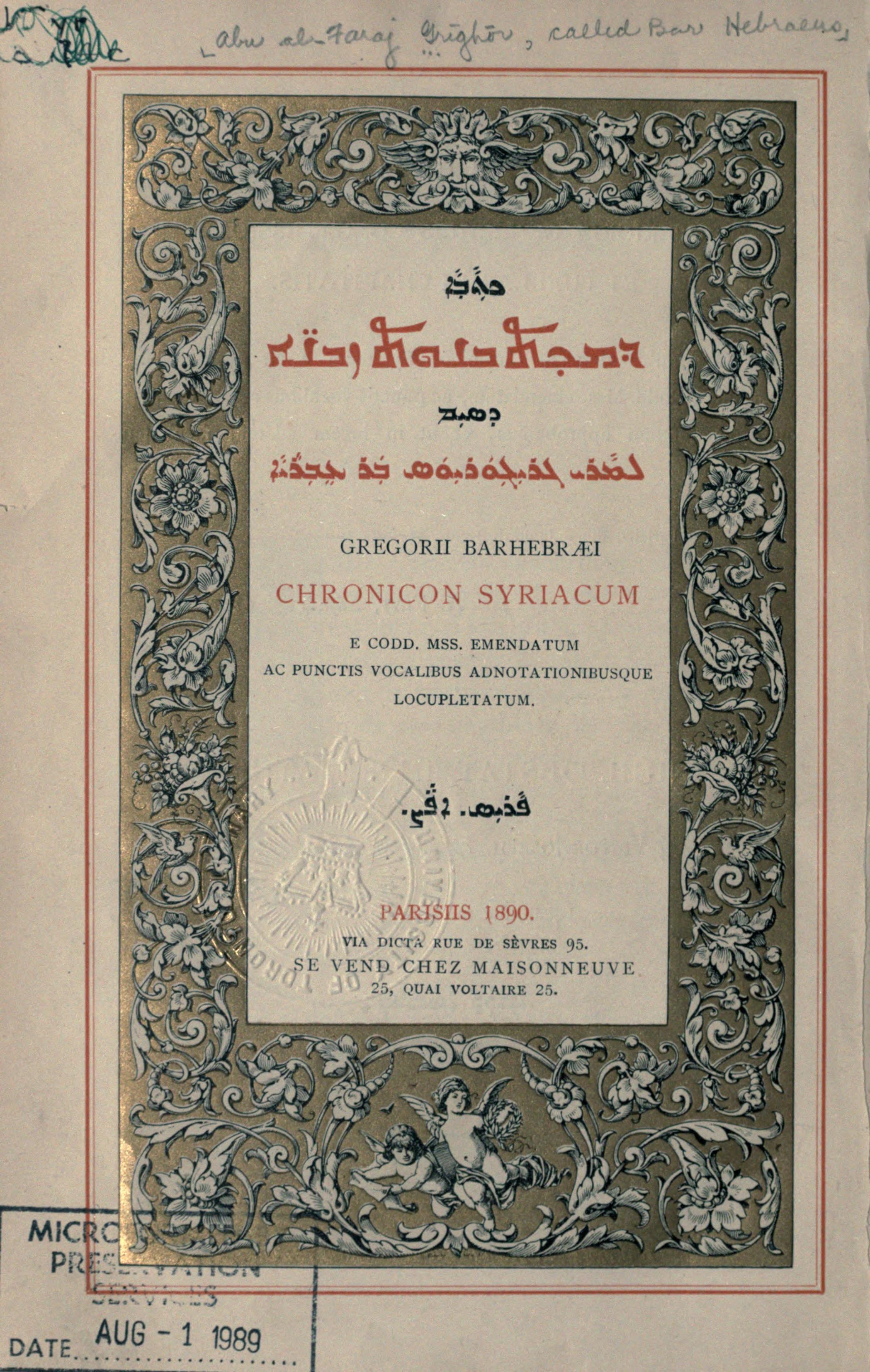
Bishop Bar Hebraeus Gregorios Bar Ebraya (1226 – 1286) was a Syrian scholar and an author of a world chronicle divided into eleven dynasties for which he used earlier Greek, Syriac and Arabic historians. His chronicle starts at the very beginning and, continued by his brother, goes all the way to 1296. There are a number of mentions of the Suavs in the chronicle. The main edition is that of Paul Bedjan (1898) which was translated (1932) into English by Ernest Alfred Thompson Wallis Budge. The whole chronicle is accessible here. A more manageable version of Budge’s is posted by Robert Bedrosian here. Finally, here is another version of the same Budge translation. I left the annoying CAPS mentions of names as they were in the Wallis version.

The Chronography of Gregory Abû’l Faraj, the son of Aaron aka Bar Hebraeus
Bar Hebraeus’ Chronography

The First Series of generations, which beginneth with the Patriarchs

“…And in the one hundred and fortieth year of PALAGH the earth was divided a second time, between the sons of NOAH. And to the sons of SHEM came the inheritance from the middle of the inhabited world to the limit thereof on the east, [including] PALESTINE, ARABIA, and PHOENICIA, and the country of SYRIA, and all the country between the Two Rivers (MESOPOTAMIA), and HYRCANIA, and ‘ATHOR (ASSYRIA), and the country of SEN’AR (SHINAR), and BABIL, and KARDO, and all PERSIA, and NORTHERN INDIA and BACTRIANA. And to the sons of HAM [came the inheritance], the whole of the south, from east to west, INDIA (Central, Outer, and Southern), KUSH, SHEBHA, EGYPT, LYBIA, THEBAIS, AFRICA, and towards the north CILICIA, PAMPHYLIA, PISIDIA, MYSIA, PHRYGIA, LUKYA (LYCIA), LYDIA, and of the Islands [of the MEDITERRANEAN] CYPRUS, CHIOS, SICILY, and twenty others. And to the sons of JAPHET [came the inheritance], the whole of the north from east to west, the country of the ‘ALANAYE (GERMANS, RB: Alans?), the TURKS, MEDIA, ARMENIA, CAPPADOCIA, GALATIA, ASIA, MYSIA, TARKI (THRACE?), ‘ILADHA (HELLAS), the land of the GREEKS (IONIANS), the RHOMAYE (BYZANTINES), the SARMATIANS, the ‘ASKLABHE (SCLAVS), the BULGARS, the GALLAYE (GAULS?), the SPANIARDS as far as GADIRA…

Here beginneth the Eighth Series, which passeth from the Kings of the pagan Greeks to the Kings of the Rhomaye

[This “series” starts with the Ptolemies and goes through all the Roman and Byzantine Emperors]

Justinianus

…And in the thirty-first year of JUSTINIANUS a severe earthquake took place, and the two walls of CONSTANTINOPLE, both the inner and the outer, were breached. And the city of RIGIN was so completely swallowed up by the earth that the site thereof could not be identified. And also the purple pillar which [stood] before the palace, and had a statue of the Emperor upon the top of it, was first cast up into the air, and then it turned upside down, and became embedded in the ground into which it sunk to a depth of eight feet. The earth swayed and rocked about like a tree before the wind for ten days. And after these things the armies of the HUNS and the ‘ASKLABE (SLAVS) came and encamped about the royal city, and they broke down the outer walls, and plundered and burnt all the colonnades; and they seized everything which they found and departed. And they came again, a second and a third time, and then the RHOMAYE gained the mastery and destroyed them in the war [which followed]. The few of them who escaped never again appeared in the place…

Justinus

…And [KESRU] laid down a law that a king should not go forth to war except against a king. For the RHOMAYE had sent [a message] to him, saying. ‘We are [only] the servants of a king, and it would be a disgrace to us to go in like thieves and set fire [to places]; how very much more it is [a disgrace] to thee [to do this] who art a king?’ After these things, the RHOMAYE relying on their victory unsaddled their horses and they went away to feed. And behold, suddenly, certain SLAVS, that is to say scouts, came and said, ‘Behold the PERSIANS and KESRU are coming’. Now the RHOMAYE had set no sentries at all on guard, and wholly unexpectedly the army of the PERSIANS came upon them. And trembling fell upon the RHOMAYE. And they began to flee on foot, and the PERSIANS who pursued them cut them down (?), and they collected the weapons, and bridles and armour which the RHOMAYE cast away [when they] fled…

Here beginneth the Ninth Series, which [beginneth with] the kings of the RHOMAYE and endeth with the kings of the YAWNAYE (Greeks)

Tiberius

…At this time when the army of the RHOMAYE was marching to PERSIA with MAURICIUS CAESAR, the barbarian peoples of ‘ABHARIS (ABARES) and ‘ASKLABHONE (SCYTHIA) and LONGOBARDY, who were subject to the KHAKAN, laid waste the countries of the RHOMAYE…

Mauricius 

…And in the fourth year of his reign there broke forth and went out from the EAST a hateful people from ‘ABARIS whose hair was plaited, and from the WEST also came the SLAVS and the LONGOBARDS. And they came under the subjugation of the KHAKAN, king of the KAZARAYE, and they captured two cities from the RHOMAYE and many of [their] fortresses. And if it had not been for the great ditch which the king had made outside ADRIANOPLE, they would have set their faces towards CONSTANTINOPLE. Then the RHOMAYE killed the people of ‘ANTIO…, and they fell upon ‘ASKLABHUNYA and captured it and looted it. When the ‘ASKLABHONE heard this they made a great war (i.e. raid) in the country of the RHOMAYE and came back.

At this time there went forth from Inner SCYTHIA three brothers with thirty thousand SCYTHIANS. And they came a journey of two months in the time of winter, for the discovery of water, that is to say [water ] from the fords of MOUNT AMON; and they arrived at the river TANIS (DONA?), which goeth out from the lake of MIANTIS and mingleth in the SEA OF PONTOS. And when they arrived at the frontier of the RHOMAYE, one of them whose name was BULGARIS took ten ships and crossed the river TANIS and pitched his camp between the rivers TANIS and DUNBIR (DON and DNIEPER?), which also mingles (i.e. flows into) the SEA OF PONTOS. And he sent to MAURICIUS [asking] him to give him land to dwell in, and [said that] he would become an ally of the RHOMAYE. And MAURICIUS gave him Upper and Lower MYSIA, and they dwelt there, and they became a guard (i.e. a buffer garrison) for the RHOMAYE. Now, though they were SCYTHIANS the RHOMAYE call them ‘BULGARIANS‘. Then these two other brothers came to the country of ‘AL AN, which is BAR SALIA, that is to say to the towns of the CASPIAN, which the BULGARIANS and the PANGURIANS call the ‘Gate of the Turks’; they were once Christians and are now called ‘KAZARAYE’ after the name of the eldest brother…

…And in the eighth year of MAURICIUS the PERSIANS rebelled against HORMIZD, their king, and they seized him by treachery and blinded his eyes, and he died. And ten months later those who had killed him because of the multitude of his evil deeds, inclined towards his son KESRU; and they made him their king [and he reigned] thirty-eight years. Now BAHRAM, the captain of the Persian host, did not favor KESRU, and he and many people rebelled against him vigorously. Then KESRU took refuge with the RHOMAYE, and he sent a message secretly to MAURICIUS saying that he was ready to go to him if it pleased him to grant him permission. When MAURICIUS heard this he rejoiced. And he wrote [to him saying] that he would help him in everything. And KESRU rose up promptly and came to EDESSA. And IWANNIS (JOANNES), a native of RUSAFAYA, received him into his house, and honoured him greatly. And he wrote to MAURICIUS, [saying], ‘Like a slave he should be to him’, but MAURICIUS replied that he should honour him as a father honoureth his son. And MAURICIUS sent to JOANNES, the captain of the host of the TARKAYE, with twenty thousand soldiers, and ANASTASIUS who took with him ‘ARMANAYO (ARMENIANS) and BULGARIANS– twenty thousand. And he sent forty talents of gold for his expenses. And when KESRU received these he marched to his own country. And HORMIZAN the PERSIAN came to him with ten thousand men. Now, when the rebels heard [this] they made ready to fight, and they were defeated and turned their backs in flight, and the captains who were among them were captured and killed, and the rest returned to KESRU. Then KESRU gave many gifts to the RHOMAYE, and he sent great gifts to MAURICIUS and precious stones, and he gave back DARA and RAS’AYN to the RHOMAYE. And KESRU asked MAURICIUS and he gave him MARIA, his daughter, to wife. And bishops went down with her, and the daughter of THEODOSIUS also made a splendid feast, and the Patriarch bound on the wedding crown. And KESRU built three great temples to the God-bearer, to the Apostles, and to SERGIUS the martyr, and the Patriarch of ANTIOCH consecrated them. And Christianity spread throughout PERSIA…

Phocas

…And there was a severe winter, and the EUPHRATES was frozen over. And after two years the PERSIANS crossed the EUPHRATES, and seized MABBOGH, and KENNESHRIN, and BEROEA and ANTIOCH. And it is said that when KESRU was master of EDESSA he took as a captive the wife of JOANNES of RUSAFA, whom he had honoured with such great honour when he received him into his house, and he took her down to PERSIA, and put her to death by tortures. The reason of this was that one day when he was resting in the house of JOANNES he said unto her, ‘It is the custom among the PERSIANS that when the king condescends to go into the house of one of his governors, for the mistress of that house to come forth and to pay him honour, and to mix wine for him, even if it be only one cup[ful]’. Now though JOANNES was ashamed and was unwilling to act contrary to the wish of his wife, he inclined towards the matter (i.e. he thought that she might do what the king wanted done). But she did not wish to do so, and she replied, ‘In truth we are bound to pay honour to our chief, for he is a great king. But with us SYRIANS it is not the custom for the women to go out to men when they are drinking together. Therefore let not him (the king) blame me because I was too bashful to go out [to pay homage to him]. Then the Calumniator (i.e. the Devil) inflamed the wrath of KESRU, and he said to JOANNES, ‘That she did not go forth hath brought contempt upon thee, and what she hath said hath done so also’. This was his opinion; and because of this act he was driven away from his high position, and for this reason he kept his anger against her…

Here beginneth the Tenth Series, which passeth on from the GREEK (IONIAN) kings to the ARAB kings

Then JUSTINIANUS waxing proud, transgressed [his] oaths, and he broke the peace before it was fulfilled, and he sent and made captives the ARABS who were in CYPRUS. Because of this MAHAMMAD, the Amir of the island of KARDU, went to CAPPADOCIA, and the RHOMAYE and the ‘ASKLABE (SLAVS) attacked him in battle, and the RHOMAYE were defeated near CESARAEA. And the ‘ASKLABE (SLAVS) made friends with the ARABS, and about seven thousand of them went out with them to SYRIA. And they settled them in ANTIOCH and in KUROS, and gave them women and provisions (rations?)…

,,,In the year one thousand and ten of the GREEKS (A.D. 699), the captain of the host of CILICIA, whose name was ‘APSIMAROS, who is called ‘TIBERIUS’, came and swept away LEONTIUS from the kingdom, and reigned in his stead, but he did not kill LEONTIUS. This TIBERIUS subjugated again the SLAVS who had rebelled against the RHOMAYE. And he went out to the country of SAMOSATA and slew five thousand ARABS, and he took captives and looted and came back. Then ‘ABD AL-MALIK appointed two captains of the host, viz. MAHAMMAD over BETH NAHRIN, and ASSYRIA, and ARMENIA, and ADHORBIJAN, and his servant HAJAJ over all PERSIA and ARABIA. And when HAJAJ plundered the chiefs of the ARABS mercilessly, MAHAMMAD sent and brought MU’ED, the chief of the Thaglabite ARABS who were Christians, and urged him to become a Muslim. And when he refused to do so he cast him into a miry pit. And then he brought him out again, and flattered him, and when he would not be persuaded by any means whatsoever, he killed MU’ED. And he also collected the chiefs of the ARMENIANS and shut them up in one of the churches of ARMENIA, and then he set the church on fire and burnt them all. And he slew ANASTUS, the son of ANDREA, governor of EDESSA…

…And in the year twelve hundred and seven of the GREEKS (A.D. 896), LEO, king of the RHOMAYE., fell sick of a disease of the bowels and died, and his son ALEXANDER reigned after him one year. And because he had turned aside his heart from the fear of God, and had given himself over to sorcerers and magicians, he was smitten by the rod of righteousness and died. And after him his brother CONSTANTlNUS reigned four years. And at the beginning of his kingdom SIMIAN, the chief of the BULGARIANS and SCLAVS, came against CONSTANTINOPLE, and he destroyed many villages. And he afflicted the city also, and he made against it a great ditch [which reached] from BELAKERNE to the gate which is called ‘Golden’. And the king of the RHOMAYE sent [a dispatch] to him, saying, ‘Since we are all Christians, and the children of one baptism, why do such dissentions as these exist between us?’ And as SIMION refused to be propitiated (or, reconciled), king CONSTANTINUS collected the Arab prisoners who were in CONSTANTINOPLE, and he promised them that if they would help the RHOMAYE to victory [over] the BULGARIANS he would set them free. And having sworn to the king oaths [that they would do so], weapons of war were given to them. And the RHOMAYE went forth with the ARABS with one purpose, and they defeated the SCLAVS, and killed many of them, and the rest fled. The king (CONSTANTINUS), however, went back on his promise, and he took away from the ARABS their weapons, and threw iron fetters on them again, and scattered them throughout his provinces, for he was afraid lest they should set up a chief for themselves. The history of the blessed MAR MICHAEL, which dealeth with the war of the RHOMAYE with the ARABS, [testifieth] to this, and he introduceth it in the Arabic manuscripts [which describe] the war with the SCLAVS, and it is correct. For during the war with the ARABS the RHOMAYE would never have believed it [safe] to release the Arab prisoners from their bonds, and to put weapons of war into their hands…

…[A.D. 944] After MUTHAKI, MUSTAKFI, the son of MUKTAFI, [ruled] one year and four months. And during the year in which he reigned, various peoples, the ‘ALANAYE, and the ‘ASLABHAYE (SCLAVS), and the LAGZAYE, went forth and came to ‘ADHORBIJAN, and they captured the city, the name of which was BARDA’AH, and they killed therein about twenty thousand men and departed. And again the nobles conceived treachery concerning king MUSTAKFI. And one day when he was sitting on his throne the nobles went in according to custom, and they kissed the ground, and they kissed his hand and stood up. And when their number was complete, one of them, he who had come in last, kissed the ground, and drew nigh to the king. And the king, thinking that he had come near him in order to kiss his hand, stretched out his hand to him. And the noble took it and dragged him towards himself, and pulled him from his throne on to his face. And all the nobles gathered together about him, and they made him to go forth from the palace on foot, and they took him along and shut him up in the mansion of MU’IZZ AD-DAWLAH, the captain of the host. And they brought FADHIL, the son of MUK’TADER, and made him king, and named him MUTI’…

…And in the year thirteen hundred and forty-one of the GREEKS (A.D. 1030)…  when ROMANUS the king heard that the RHOMAYE were broken at ALEPPO, he collected a mighty army, more than one hundred thousand men, and came to ANTIOCH; and from there he set out to come to ALEPPO. And since two nobles of the ‘ASKLABE (SCLAVS) and the army that was with them were [marching] a little in advance of the army of the RHOMAYE, they encountered about one hundred MA’DAYE horsemen and a thousand foot soldiers, and the SCLAVS were broken, and turned their faces [in flight]. And they made a report to the RHOMAYE, saying, ‘Behold, innumerable soldiers, EGYPTIANS and MA’DAYE, are coming’. And fear fell upon the RHOMAYE, and with the greatest difficulty ROMANUS the king and his troops, one by one, each on his horse, fled to ANTIOCH without fighting and without [striking] a blow. And the ARABS overtook them, and they captured from the RHOMAYE seventy camels with their loads of zuze and dinars, and vessels of gold and silver, and bales of rich stuffs, and such a large number of mules that a Tarka mule was sold in ALEPPO for two dinars. It is said that ROMANUS himself was not able to save one tent or a cup from which he could drink water…

…And in the year which was the year thirteen hundred and fifty-five of the GREEKS (A.D. 1044)… a great army of SCLAVS, that is to say RUSSIANS, came against the royal city by sea and by land. And God helped the RHOMAYE, and they set fire to their ships and burned them on the sea, and the greater number of them were burned and sunk. And similarly they made prisoners of many of those who had come by land, and they cut off their right hands; and the RHOMAYE obtained a great victory. And at the time when there were many aliens, ARMENIANS, and ARABS, and JEWS, in the royal city, a great tumult broke out against CONSTANTlNE the king. And the peoples gathered together at the gate of the palace and cried out, ‘This CONSTANTINE hath killed two of our kings’, and they were seeking for an excuse (or, reason) for looting the palace and the mansions of the nobles. Then king CONSTANTINE gathered together the nobles, and he brought out THEODORA and ZAI (ZOAI) arrayed in gorgeous royal apparel. And when the agitators saw them they became quiet. And the king having inquired into the cause of the tumult, he was told that the aliens had made the tumult so that they might loot the city. Then the king commanded that there should not remain in it anyone who had entered it during the last thirty years, and that the man who stayed should have his eyes gouged out. Then there went out about one hundred thousand souls…

…And at this time TUSHI, the eldest son of CHINGIZ KHAN, died. And he left seven grown-up sons who were: TAMSHAL, HARDU, BATU, SIBARAN, TANGUTH, BARAKAH, and BARKAJAR. And from among these the Khan selected BATU, and to him he handed over the northern countries of the SLAVS, and the GERMANS, and the RUSSIANS, and the BULGARIANS. And his seat was on the great river which is called ‘ITIL (i.e. the VOLGA). And BATU, whilst going on the northern road from the country of the IBERIANS to the countries of the BULGARIANS and SCYTHIANS, destroyed their populations by the edge of the sword, and blotted out their kingdoms. And because the command of the Khan had gone forth in this wise: ‘[The troops] shall cut off the right ear of every BULGARIAN and RUSSIAN who is killed, when they counted the ears, two hundred and seventy thousand ears were found with the TATARS…”

Copyright ©2019 jassa.org All Rights Reserved
April 8, 2019

Other Known Origos

Published Post author

Here are the opening pages of the Origo Gentis Longobardorum. I’ve previously posted the full  manuscript version (Madrid) here but there are two others that are of interest to anyone curious about Suavs or, naturally Lombards. I’ve included the front pages from Modena and those others. The names are:

  • Cava de’ Tirreni
  • Modena
  • Madrid

The names of the Vandal dukes – Ambri and Assi are outlined in red in each of the three.

The Pertz reference is to the MGH edition. Pertz seems to think the Cava de’ Tirreni MS is the newest though it seems it may be the oldest instead. In fact, looking at the MGH edition in comparison to the actual manuscript pages, you can immediately spot where Pertz made some mistakes, deviations from his text either not being noted or being shown as different than they really are (for example, for the Cava de’ Tirreni manuscript Lethingys shown as Lethingis).

These are all conveniently accessible via the University of Köln website that provides links to various medieval legal texts – the Bibliotheca Legum.

Cava de’ Tirreni
Biblioteca della Badia di Cava, 4
(early 9th century, though Pertz says 11th)
Pertz 1b)

This manuscript also features a cool Völkertaffel upfront that is not part of the Origo.

Then there is a picture of Godan (getting up from his bed to find the “long beards”), Frea, Gambara and her sons Ybor and Agio as well as the Winnili on the right side of the picture. The author seems to have provided other pictures in the manuscript though high artistry this is not).

What is interesting is that Godan is written Goban with a “b”.

This is the first page. It is not exactly great quality. Curiously, the immediately following page is not present in the manuscript – at least not in the electronic version though it seems also not in the codex. Quite separate from that, the Bibliotheca Legum description seems incorrect as indicates that the Origo in this codex runs from 5r to 70v which, given how short that work is, can’t be right (though I did not delve into what is on those pages – some Langobardic legal text).

In any event, the next page jumps to Zucho and Wacho and their adventures.

Modena
Biblioteca Capitolare 0.I.2
(9th century, though Pertz says 10th)
Pertz, 2)

Madrid
Biblioteca Nacional 413
(11th century, though Pertz says 10th)
Pertz 1a)

Copyright ©2019 jassa.org All Rights Reserved

April 6, 2019

Jaszer

Published Post author

The river Omulew starts in Masuria at the lake of the same way and then winds its way all the way to the Narew at Ostrołęka, Poland. In 1911 someone found an ornamental mace which found itself into the collection of a certain Russian gentleman. He left Poland after World War I along with the withdrawing Russian administration but before he did a Polish archeology enthusiast managed to examine this mace. Here it is.

Note the striking similarity to Rybakov’s Jaszers.

Finally, and this is a topic for another time, we can ask why “pagan” in Russian is called a yazichnik (язычник) and paganism yazichestvo (Язы́чество). Similar words exist in other Suavic countries – Язи́чництво in Ukrainian, for example. These words may refer to “tongues”, to “nations” or to the Iazyges. They may provide hints as to the formation of the Suavs out of the Suevi, Veneti and, perhaps via Pannonia, the Sarmatian Iazyges. Or they may just hint at common roots. Whether this implicates the Balts as well is another matter since, where they lived, various lizards were worshipped as house Deities. A question may also be asked whether the slaying of the Krakow dragon by Krak and his crew is a reflection of some Norse (an earlier version of Hrólfr Kraki?) or even earlier Vandal (Crocus?) confrontation with the local dragon cult – a cult that may reach back to the Norse’ own Aesir and the Greeks’ or Mycenaeans Iasion and Jason who seem to have the same roots as Sky Gods with an agricultural connotation. The Dacian dragons (note that, curiously, may Slavic hydronims appear in Romania, a place where the Slavic presence has, by most accounts, been relatively brief) also come to mind of course.

Here is the Slovenian or Venetic dragon at Ljubljana. Copyright ©2019 jassa.org

March 31, 2019

Symbols

Published Post author

Rosettes, starlike-squares, “swastikas” and “Stars of David” were all very popular, possibly religious, patterns of embroidery found in all of Europe at the dusk of antiquity. Some of these in in Central Europe can be seen here. Others from northwestern Europe here. They appear in spears (here) as well as money (here). They have been variously attributed (and various times and places) to Sarmatians, Suavs, Germanics or Huns.

And here is another example of a hexapetal star or hexagram, similar to the symbol later referred to as the Star of David and found  in 1911 in Jakuszowice, Poland in a grave attributed to a culture “having contacts with the Huns” – whatever that may mean.

It is “guesstidated” to the early 5th century.

Now in a Krakow Museum

Because of issues with local Russian authorities no academic studies of these grave goods were done till after World War One with the first mention by Józef Andrzej Franciszek Żurowski in the Archeological News (Wiadomości Archeologiczne). Note that the triangles do not intersect, as in a Star/Shield of David, but rather one triangle overlays the other which also allowed the maker to include a small circle on the inside.

In the same treasure pile were also found ornaments of a quasi-hexapetal rosette design.

Copyright ©2019 jassa.org

March 31, 2019

Velchanos

Published Post author

Velchanos, has been called by Arthur Cook a Cretan god of nature and the nether world. Gérard Capdeville thinks Velchanos was a Cretan/Minoan “youthful deity, “master of fire” and “companion” of the Great Goddess. He connects Velchanos with the Etruscan Velchans. It is from the Etruscans that the Romans may have gotten their Vulcanus, that is Vulcan – which is also a version of the Greek Hephaistos who, of course, is much later identified by the notes to Malalas’ Chronicle manuscript with the Suavic Svarog. The Etruscan Velchans (aka Sethians) gets to own an axe as well as have a forge and be a “fire” deity. The Pillar of the Boatmen has both Esus an Vulcanus on it but it is Esus who is chopping down tree branches with what appears to be an axe.

So what’s the point of all of this?

Well, it is just possible that the God of Rebirth later split into that Spring Deity (obviously connected with fire) as well as into a more explicitly “Fire” God aka the “Smith” (much like the Thunder God seems to have been given “birth” from an aspect of the Sky God – on that, see here) who retained his role as a teacher of humanity via transformations into figures such as Prometheus.

But let’s put that aside,

What is interesting is the Polish name of Easter – Wielkanoc. Literally, it means “Great Night”. The explanation is seemingly trivial in that, of course, it is the night before Easter Sunday which is the day of Jesus’ resurrection.

Is it possible that the Suavs got the name of Wielkanoc from the earlier celebrations of the rebirth of the Minoan Deity, “master of fire” and consort of the Earth itself? This, of course, brings up stories of Gisanke and Demeter or, in the Greek world of Iasion and Demeter.

Perhaps, even more provocatively, we can ask what is the etymology of the Minoan name?

Copyright ©2019 jassa.org

March 29, 2019

Kupole

Published Post author

Incidentally, while on the topic of Saint John’s Eve we can finally resolve the “mystery” of the etymological origin of Kupala. Why, in Ruthenia, is there an “Ivan Kupala” while in Western Suav countries there is Saint John’s Eve festivities? Well, Ivan is simply John so that takes care of itself. But what Kupala? The answer, as is often the case, is in Frazer. Though he did not know he was solving a mystery, in fact he did just that when he described a custom practiced in Prussia whereby “the farmers used to send out their servants, especially their maids, to gather Saint John’s wort on Midsummer’s Day (Saint John’s Day).”

The bundle gathered was called the, note this, Kupole. Of course, this is completely understandable by any Suavic speaker. The servants were sent ku pole that is “to the fields” and that is precisely what the mysterious Kupala means. The various folks who were heading out “into the fields” for Saint John’s Day festivities were heading out for a Kupala. Note that Kolberg observes the dances around fires took place at an ugór that is an unused field. Thus, Kupala has nothing to do with “taking a bath” (that is kąpiel) or with water but rather is simply a shortening of the exact description of the activity in which these folks engaged in – heading towards the fields (so as to dance around fires).

Copyright ©2019 jassa.org

March 25, 2019

Johannisfeuer and the Like

Published Post author

An interesting Suavic, though more generally, European, custom involves jumping over fires typically done on June 23rd.

Oskar Kolberg in “Lud” his ethnographic super treatise on Polish folk customs mentions this custom several times.

For example, he cites to a description of this custom from the town of Bilcz near Sandomierz brought to Kolberg’s attention by Jan Kanty Gregorowicz via his “Village Pictures” (Obrazki Wiejskie) volume 4 (in Kolberg’s Lud volume 1 – dealing with the region of Sandomierskie that is the region about Sandomierz) . Therein, we hear of two teams of village women who spent the entire day preparing for the sobótka (that is the “Sabbath”) on the night of the 23rd. Then, sat the evening approached, they headed out into the fields where they tried to set up a fire, interestingly, with leaves of Artemisia (bylica). They started dancing around their fires while holding hands with their respective “teammates”. Then a lot of the villagers showed up including the landowner and the local officials. The women would make garlands for one another, different types of which were given out to different participants (with specific reasons for why each got that particular wreath, some being more desirable than others). Some of the young men that in the meantime had gathered began to jump over fires. More dances followed as well as more jumping by the young gents. Then, inevitably, the women and men were paired up – interestingly, through songs, that is their names were matched up in the songs by the singing groups somehow. More dancing followed. Then some drinking until daybreak. Interestingly, the name that keeps coming up is the Green (think rebirth of nature) or White (think the Sun) John. The entire enterprise has an erotic as well as solar connotation, of course, not the least given the dancing around the fire which probably symbolized the Reborn Sun. 

Kolberg (Lud, volume 10) reports the same for part of the Great Duchy of Poznan, specifically near Pleszew, Konin and in the forest parts of Kujavia.

Similar Saint John’s Eve festivities took place all over Poland. In Kolberg’s description of the customs of Mazovia (Lud, volume 24) the theme of fires and garlands or wreaths comes up again.

Here we have young men setting fires on the shores of the Vistula and young women placing the wreaths on the water with little fires on them and sending them down river.

Once again bylica is involved (see here and here); in this case, the bylica is tossed onto the straw roofs of those dwellings home to single women – where the Artemisia gets stuck on the straw, the occupant will get married that year.

As an aside another interesting custom mentioned here has to do with the fern flower (kwiat paproci or in Lithuanian, paparčio žiedas) which, apparently blooms on the Eve of Saint John’s Eve.

What is interesting is that these Polish customs also appear in other parts of Europe. James George Frazer‘s “The Golden Bough” once again points the way. Interestingly, he cites similar dances coming from the area known as the Lechrain (around the River Lech) – here it was pairs who would jump over the fire. Given that the area was formerly inhabited by the Vindelici and given the “Lechitic” origin of the Poles according to their myths, this is particularly interesting. Here is that description that caught Frazer’s attention tom “Aus dem Lechrain” by Karl von Leoprechting.

Another author cited by Frazer is Wilhelm Mannhardt. Curiously, Mannhardt was well aware not just of Leoprechting’s work but also of Kolberg’s description of the Bielcz custom when he wrote his Der Baumkultus der Germanen und ihrer Nachbarstämme (“The Tree Worship Among the Germans and Their Neighboring Tribes”). If you are interested in “tree worship” among the Suavs you can look up gaj (meaning tree grove) or gaik (meaning a small tree grove or a small, decorated tree) or maik (play on “May”) which may also have an etymological connection to Gaia.

Also, curiously, Mannhardt points out that the same custom was already observed by Byzantines in the 12th century citing Theodore Balsamon and as his explanation for how this “northern European” custom made its way to the Eastern Empire specifically suggests that it may have been the Suavs “or other” peoples who brought it there! (More likely this goes to the cult of Iasion and Demeter – aka Gisanke and Demeter? – in which Zeus also got involved )

What did Balsamon write? This canon lawyer was a writer of a number of works including commentaries on the Ecumenical Council of 692 (also known as the Council in Trullo or the  Quinisext Council) whose Canon 65 read as follows:

The fires which are lighted on the new moons by some before their shops and houses, upon which (according to a certain ancient custom) they are wont foolishly and crazily to leap, we order henceforth to cease. Therefore, whosoever shall do such a thing, if he be a cleric, let him be deposed; but if he be a layman, let him be cut off. For it is written in the Fourth Book of the Kings ‘And Manasses built an altar to the whole host of heaven, in the two courts of the Lord, and made his sons to pass through the fire, he used lots and augurs and divinations by birds and made ventriloquists [or pythons ] and multiplied diviners, that he might do evil before the Lord and provoke him to anger.'”

Balsamon (who, by the way, elsewhere also wrote on specifically Suavic customs) was commenting on this custom some half a millennium later and yet was able to provide a lot of details suggesting that the custom continued in his time (translation is Robert Browning’s):

On the evening of June 23 men and women gathered on the seashore and in certain houses and dressed a first-born girl in bridal garments. After drinking together and leaping and dancing and shooting in Bacchic fashion, they put sea water in a narrow-mouthed bronze vessel, together with objects belonging to each of them; and as if the girl had obtained from Satan the power to foretell the future, they called out questions about this or that good or undesirable thing.  And the girl picked out objects at random from those that had been put in the vessel and displayed them. The foolish owners took them and were told what was to happen to them, be it lucky or unlucky. On the next day they went with the girl to the seashore with drums dancing, and took great quantities of sea water and sprinkled their houses with it. Not only were these rites celebrated by the cleverer – – but throughout the night they lit fires of dry grass and jumped over them, seeking omens of good or bad fortune and other matters by daemonic methods. And the ways by which they went in and out, and the rooms in which the magic rites were celebrated, and the surrounding ground, they decorated with gold-embroidered cloths and silk tissues. And they crowned them with leaves of trees to honour and welcome, so it seems, that Satan whom they had made their familiar.”

Here is an interesting description of similar festivals in Bretagne (former Venetic territory) from volume 10 of Frazer’s “The Golden Bough” (third edition).

For another version of the same festival, this time in Bohemia (Jan of Holešov) see here.

Copyright ©2019 jassa.org All Rights Reserved

March 18, 2019

Where Are We Now

Published Post author

The crap that archeologists and historians write (with taxpayer money) is sometimes astounding. With regard to Polish territories, some of the conclusions drawn are based on nothing more, what appears to be, wishful thinking. Here are some thoughts that ought to be uncontroversial:

  • It is not correct to simply write Lugii as the spellings differ: Lougii, Legii and perhaps Longiones and Lupiones
  • There is no proof whatsoever who these people were genetically (that is ethnically) or, certainly, linguistically
  • There is no proof whatsoever that the Lugii were Celtic linguistically
  • There is zero proof of there being a Lugian “union” or polity or “Kultuverband“; this is simply something that was pulled out of someone’s ass (probably because there are different Lugii tribes though no one in ancient times suggested that they formed any kind of union – cultural or political “union” any more than any of the other “peoples” who lived in those areas formed a union)
  • Pliny does not identify a people named Vandals – he speaks of Vindili or Vindilici
  • Tacitus mentions Vandals as an old name of some peoples but does not say which peoples in his Germania would be Vandals
  • About the only thing that suggests the existence of Vandals in Poland is the legend of Queen Wanda… except that her alleged suicidal or sacrificial drowning also suggests a connection to water which, if anything, conjures up a Baltic – not Norse connection
  • There is nothing to proves that Vandals had anything whatsoever to do with Lugii
  • There is nothing that proves the existence of “live” Vandals anywhere before they first appear somewhere in Romania where they live for quite a few years
  • There is no reason whatsoever to believe that any Vandal embassy (known from Procopius) to the African Vandalic kingdom came from any Suavic country (as opposed to Spain, France or Romania)
  • the many finds of the “Przeworsk” culture may well be “Sarmatian” in origin rather than “Germanic”
  • There is no reason to believe that the vast majority of the barbarians identified as Vandals, Goths or Gepids spoke a “Gothic” language – given the number of people conquered by the Goths (if true) and the purported speed of that conquest it would be astounding if Gothic were a language other than of the Gothic elites (which does, however, raise the question whether there was some other lingua franca in the Gothic polity)
  • One of the oldest peoples mentioned as present in Central and Eastern Europe are the Veneti
    • they are present north of Greece as mentioned by Herodotus
    • they are present in the area of Venice as mentioned by a number of ancient authors
    • they are present in Pliny in connection with the Vistula
    • they are present in Tacitus “where Suevia ends” though where that is, Tacitus does not say
    • they are present in Ptolemy as a great people and seemingly separate from tribes later identified as Baltic
    • they may be present in Strabo if Vindilici can be identified with them
  • The Veneti are unequivocally identified with Suavs by Jordanes
  • The name Windr has been used to describe Suavs by the Norse and their offshoot, the Franks
  • The name Venaaja is still used to describe Suavs by Finnic peoples
  • A late medieval Saxon source describes the Wends of Windau as Wends and as different from their surrounding Baltic neighbors
  • There is no evidence whatsoever what language was spoken by the Suevi of Ariovistus but:
    • of the very few names that we have, at least one appears a thousand years later in Poland (Nasua)
    • the –mir endings of some of the leaders are reminiscent of East Germanic names (for example Gothic), as opposed to the West Germanic suffixes such as -mer or -mar.
    • the name Suevi can easily be explained with Suoi (Polish swoi), that is “our own” (though to be fair, perhaps also linked with Suomi)
    • the name Suevi or, for that matter, Słowianie can be derived from the hydronym Soława (that is the Saale) which, incidentally, appears close to where the ancient authors located the river Suevus
    • Baltic connection appears possible
  • the peoples of Schwabia, even in later times, apparently used the name –suav as a prefix or suffix – something that the Suavs do to this day obviously
  • It appears that, whatever the situation was in continental Europe before the rise of the Roman Empire, the area suffered from invasions from the North – those would have been Norse tribes who were described as “Germanic” but, earlier, the same Scandinavia may have produced Northern invasions of peoples later called Gallic

Note too that I have no problem with someone demonstrating that Teutonic (that is Norse) Vandals lived for years and created the Przeworsk culture – after all people move all the time – but this has to be based on facts not idle speculation about similarities among jugs or pots.

Moreover, it is silly to suggest that a land take over by an invading group will result in total extermination or assimilation of the existing groups present there before the arrival of the newcomers (though women have a higher chance of survival obviously). This did not even happen with the Romans right away and the Romans had a real administration and ruled their conquered lands for hundreds of years.

Copyright ©2019 jassa.org All Rights Reserved

March 13, 2019