We have a relatively thorough discussion of eastern Slavic Gods from Nestor. We also have commentaries on the western Slavic religious practices from Adam of Bremen, Thietmar, Helmold and Saxo Grammaticus. However, the central areas of Slavdom, Poland and Bohemia have often been thought of relatively empty areas as regards Slavic religious practices.

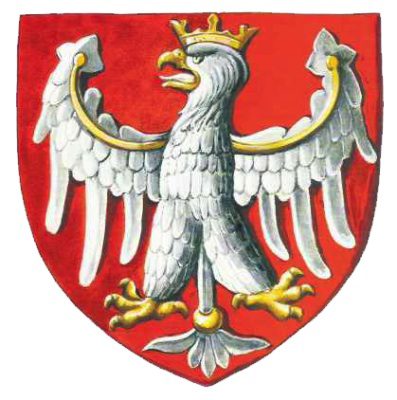
Palania – the scrivener must have missed the Polonia memo
There are usually a variety of reasons given for this situation. Some have speculated that the Slavs in those countries, not having come into contact early enough with either Romans or Germans existed in a kind of primitive society which simply found no room for detailed pantheons, involved myths or highly developed heroes. Others have noted that the early influence and penetration of the Christian Church brooked no dissent with any local, primitive practices quickly and thoroughly stamped out. For example, the first contemporaneous mention of Poland was in 965 or thereabouts but already in 966 the “Baptism of Poland” took place whereby the first historical ruler, Mieszko I, converted the country to Christianity. Whatever simple beliefs the populace possessed were thus thought to have been dealt with within a year or so of the country appearing on the world stage.

Giant Christ arrives in Poland, offering the country a Big Hug (a welcome committee is seen on the lower right approaching with some trepidation)
This, however, is far too clean a picture. While it is true that Poland’s conversion to Christianity was almost instantaneous, as a matter of edicts and laws passed (and helped by the likely contemporaneous violence inflicted), we have to remember that the early Piast state was a rather flimsy creation and, ager the spectacular expansion of MIeszko and his son Boleslaw I, it quickly came under assault by all the powers of the day.

Giant John Paul II accepts the Big Hug on behalf of Poland – a love fest for over a thousand years!
As a result most of the state structures collapsed and indeed there was even a so-called “pagan reaction” in the early 11th century whereby Christian clerics were killed or driven off and the whole country plunged into the chaos of civil war and foreign invasions. While subsequent Piast dukes managed to put most of the country back together, the disastrous 1138 division of Poland at the hands of Boleslaw III resulted in a new break up of the country that nearly led to its final demise. It was not until the reigns of Wladyslaw the Elbowhigh and Casimir III that the kingdom was saved and strengthened, albeit in a rump state having lost Silesia and Pomerania for the next 600 plus years.

Meanwhile in New York City, things were not going so well
It was only in that rump, barely recognizable state that emerged in the 13th and 14th century that the groundwork was laid for a more enduring project via the establishment of a much strengthened central authority. It was that central authority that contained now a rebuilt ecclesiastical component and it was that component that for the first time could and, therefore, begun to take its Christianizing mission seriously. Bishops and priests looked around to see what was then going on in their country and what was going on they did not like. Thanks to their new laws, statutes and heart-felt sermons we were able, for the first time to get a picture of the pre-Christian spiritual life in Polish central Europe.
Unsurprisingly, the new stability and wealth also brought forth the works of the nation’s first “professional” chroniclers who gave us a broader more historiographic and sometimes more secular view of the country’s pre-Christian roots. Although virtually all of such sources are dated to the 14th or 15th century the practices they describe are ones that were alive while the authors wrote – of course, we cannot tell whether such practices were also present at the birth of the Polish state some 400 years earlier or whether they were merely a remnant or a new form thereof.
Annales of Jan Długosz
(1450-1480)
Let us begin with the court chronicler Jan Dlugosz and his Annales seu cronicae incliti Regni Poloniae (Annals or Chronicles of the Famous Polish Kingdom). Then we will work our way backwards as far as we can. This is what he says (from the Codex Regius version of the Annales (of Stanislaw Augustus Poniatowski) circa 1495-1515 – we will spare you the text version of the latin – you can read it for yourself from the manuscript below):

Let us quote Dlugosz:
“This too is known about the Poles that from the beginning of their people they were idolaters and believed and honored gods and goddesses, namely Jupiter, Mars, Venus [Greek Aphrodite], Pluto, Diana [Greek Artemis] and Ceres [Greek Demeter], having fallen into the errors of other nations and tribes. Jupiter they called in their language Jessa, believing that from him, as the highest of the Gods, they receive all the earthly blessings and all occurrences the unfortunate ones but so also the serendipitous. To him, therefore, more than to the other Gods did they give the greatest praise and the most frequent offerings. Mars they called Lada. The imagination of poets made him a leader and a war god. The prayed to him for victory over their enemies and for courage for themselves, honoring him with the wildest rites. Venus they called Dzydzilelya and thought her to be the goddess of marriage, so that they asked her to bless them with children and to give them a richness of sons and daughters. Pluto they called Niya, believing him to be the god of the underworld and the guardian and caretaker of souls, when they leave the body. To him they prayed that they should be let after death into better dwellings in the underworld. To such souls/to this god they built in the city of Gniezno the most important temple and pilgrims journeyed there from everywhere. Wheres Diana, which was thought according to the pagan beliefs to be both a woman and too a virgin, was venerated by matron mothers and virgins alike placing wreaths on her statutes. Farmers and those who led an agricultural life honored Ceres, and they raced to offer to her grain seeds. For a god they also took the “weather [Pogoda]” and called the same Pogoda likewise, that is the giver of good air. There was also the god of life called Sywie. And because the state of the Lechites happened to arise in a country with many a wood and forest and such country was believed by the ancients to have been inhabited by Diana and that Diana was their [i.e., the ancient dwellers’ of Poland] mistress, whereas Ceres was seen as a mother and a goddess of plentiful harvests which the country needed, therefore these two goddesses: Diana which in their tongue was called Dziewanna and Ceres called Marzanna were especially venerated and worshipped”

He goes on to say:
“Thus it was that for these Gods and Goddesses the Poles built temples and statues, ordained priests, dedicated sacred groves in appropriate and beautiful places so as to honor these [Gods and Goddesses] and bow before them. There men and women came together together with children and gave sacrifices and burned domestic flocks and cattle and other animals, and on occasion people prisoners from battle. They also had a superstitious rite of making offerings to placate their native Gods and, on certain days and times of year they had great festivals, for which people of both sexes were called to towns from villages. These festivals they celebrated with debauched singing and dancing, sometimes clapping, lewd twisting and other debauchery in songs, games and salacious deeds; while at the same time they called on to the above-mentioned Gods/Goddesses in accordance with their custom. Rites such as those and some of their relics, even though Poles, as is known, have almost five hundred years ago accepted Christianity, they continue to practice to this day, every year during the Green Holidays [Green Week/Pentecost/polish Zielone Świątki, german Pfingsten], recalling pagan idolatery with a festivity called in their language Stado [i.e., Herd], because great multitudes of people come together for it, who then divided into herds or groups of crazed participants and sybarites, happily celebrate these holidays with partying and leisure” [the text then continues regarding the circumstances of the baptism of Poland – for that see here]
[The Green Holidays were the main feast of spring in early May (see here for information on the Bald Mountain festivities) with Christianity replacing them with the Pentecost (i.e., in the Christian version the descent of the Holy Spirit among the Apostles and other early Christians).]
Here is another example from the 1450 manuscript:

About the author: Joannes Dlugossius, i.e. & aka, Longinus (1415-1480) is considered the father of Polish historiography. Długosz’ father was given an estate as a result of his accomplishments at the Battle of Grunwald. Długosz was educated at Krakow University (then called an academy) and, thereafter, served as a secretary and confidante to the Cracow archbishop Zbigniew Olesnicki. Afterwards he worked in the service of the King of Poland, Casimir IV Jagiellonczyk the, including as the educator of his children and an ambassador (including, among others, to Rome, Bohemia, Hungary). Before the end of his life he was to become the archbishop of Lviv, alas he was meant for greener pastures.
For another mention by Długosz of Polish paganism, see his description of the Baptism of Poland in here.
Jan Długosz’s
Insignia seu clenodia regis et regni Poloniae
(1464-1480)
However, regarding Lada, Długosz expressed a slightly different view a few years earlier in a heraldry book he wrote (Insignia seu clenodia regis et regni Poloniae) sometime in the years 1464-1480. Here he says as follows:
“Lada, que ex domo Accipitrum deriuationem sumpsit, deferens babatum cruce signatum et in uno cornu sagittam, in altero retortam, in campo rubeo. Lada a nominee dee Polonice, que in Mazouia in loco et in villa Lada celebatur, vocabulum sumpsit exinde.“
“[following the description of the tamga sign] Lada is a name of a Polish goddess which was venerated in Mazovia in the place and village Lada.”
This is from the Arma Baronum Regni Polonae Erazm Kamień version, Poznań circa 1575 (previously in the Zamoyski Estate (fidei commissum) Library) (here it is Dei not Dee, that is God not Goddess):

Note also the “up” and “down” signs, later replaced with an up arrow and down arrow (?). Curiously, in elder Futhark this was the “j” rune (*jēran meaning “year” and also “harvest” and which in English is pronounced Y and the shape of which presumably reflects the ascent and descent of the Sun?).
And this is from the earlier Kórnik manuscript (which has Dee):

Note on The Life of Saint Adalbert (Voytech) in a Manuscript on the Lives of the Saints
(circa 1450)
“Idola polonorum fuerunt ista Alado agyessze.“
“The gods/idols of the Poles were the following: Alado, agyessze.”
About the author: That is all there is. This is literally just a gloss, i.e., a note, written on the manuscript of The Life of Saint Adalbert. We know nothing else except that this comes from a Latin manuscript relating to Lives of the Saints (weighing in at 357 pages) at the Petersburg Library and was brought to the world’s attention by Rafal Lubicz.
Postilla Husitae anonymi (aka Postilla Husitae Polonici)
(pre 1450)
“Et sic Poloni, adhuc circa Penthecostes Alado gardzyna yesse colentes ydola in eorum kalenda et proch dolor istis ydolis exhibetur maior honor tune temporis a malis christianis quam de deo quia puelle que per totum annum non veniant ad ecclessiam adorare deum, illo tempore solent venire ad colenda ydola.“
“Poles even now about the time of the Pentacost honor gods/idols Alado gardzyna yesse… and unfortunately bad Christians honor these gods more than they honor God, because girls/women, who all year do not go to church to honor God, then came to honor these gods/idols.”
About the author: We only know, as per the title, that this was written by a, likely Polish, Hussite priest who, likely, will remain anonymous. This comes from Aleksander Brueckner in Prace Filologiczne, Volume 4, p. 572, and is ultimately from the Petersburg Library manuscripts. This particular manuscript (Lat. I.Q. 146) was stolen by the Russians likely after the November Uprising around 1833. It was later returned to Poland at the signing of the Treaty of Riga of 1921 concluding the Soviet-Polish War between the Second Polish Republic and the Soviet Union. Unfortunately, it was burned down by the Germans after the Warsaw Uprising in 1944.
Tractatus about Polish Orthography
by Jacob (Jakub) Parkoszowic
(circa 1440)
“Nya, quod fuit idolorum“
“Every time there was a soft ‘n’ to be written, it was always written with the help of a double ‘y’ before the appropriate vowel… This writing method was, however, inadequate to differentiate [from other situations], because between ‘Nya‘ which was the name of a [god/goddess/]idol and ‘nia’, a syllable found in the word ‘gniazdo’ [nest], there was no difference in writing.”
This is from the 1830 Samuel Bandtkie edition in Latin:

[for more on the topic see here]
About the author: Jacobus Parcossi, Parkosch de Żorawicze, Parkossius was a priest and a four time rector, i.e., Chancellor of (and a one time student at) Krakow University (his four terms of one year each were nonconsecutive, separated by a year under Jan of Dobro, who played the role of Benjamin Harrison in this rectoral sandwich). His main achievement was the creation of a tractatus (no known title) on Polish orthography, specifically, spelling out rules on the application of Latin letters to Polish phones (as in phonetics, actual phone service was not yet present in Poland). The tractatus survives at Jagiellonian Library in a manuscript from 1460-1470 scribed by one Warzykowski.
Sermones per circulum anni Cunradi
(1423)
“Sed proh dolor, nostri senes, vetule et puelle non disponunt se ad oracionem, ut sint digne acecipere spiritum sanctum, sed proh dolor hys tribus diebus qui servandi sunt in contemplacione, conveniunt vetule et mulieres et puelle non ad templum, non orare, sed ad coreas, non nominare deum, sed dyabolum scilicet ysaya lado ylely ya ya. Quibus dicit Christus: solempnitates vestras odivit anuma mea. Tales cum dyabolo venerunt, cum eodem [sic] reddeant et nisi peniteant, transient cum yassa lado ad eternam dampnacionem.“
“Unfortunately, our old men, old women and girls do not spend much effort on prayers so as to be worthy to take on the Holy Ghost but unfortunately during those three days of the Pentacost that ought to be spent on introspection, there come the old women and the girls not to church, not to prayers, but to dance, not to call God, but the devil, specifically ysaya lado ylely ya ya … those if they do not do penance, will walk with yassa lado to eternal damnation.”
About the author: This quotation is from the Czestochowa manuscript of the Sermons of Conrad (probably Waldhausen?) for the liturgical year. The year this dates to is 1423 although, if Waldhausen, is the author of the underlying original (and he would not have been writing about Poland being concerned with Czech and German matters), then the original (without the above notes) would have been written about during the life of the same, i.e., 1320- 1369. We are not, however, interested in the original but in this version. Source: Manuscriptum Czenstochoviense, Expliciunt sermones per manus Johannis de Michoczyn (Johannis/Johannes de Michoczyn (Jan z Michocina) was the copier? Conrad Waldhauser, the author?) located by Rafal Lubicz.
Statutes From the Collection of Nicholas of Pyzdry
aka Statuta provincialia breviter
(no later than 1414)
“Item prohibeatis plausus et cantalenas in quibus invocantur nomina ydolorum lado yleli yassa Nya que consueverunt fieri tempore festi penthecosten, cum revera Christi fidelis tunc debent deum invocare denocte ut ad instar apostolorum valeant accipere spiritum sanctum, quem non ex actibus demoniorum merebuntur accipere sed ex fideli catholice fructuose.“
“Forbid clapping and singing too in which the names of the gods Lado, Yleli, Yassa, Nya are invoked and which usually takes place during the Pentacost…”
The manuscript where these were first discovered (and labeled statuta provincialia breviter) is in the Ossolineum library. That manuscript houses the Lviv (Lwów) provincial statutes (1415-1417). The below is from an edition of the manuscript by Wladyslaw Abraham from the year 1920:

However, later it seems another manuscript (from Czerwińsk), now in the Polish National Library in Warsaw came to light of Poznań provincial statutes and now these statutes are referred to (because of a reference at their beginning) as statutes “from the collection of Nicholas of Pyzdry” (Mikołaj Peyser that is z Pyzdr aka Peyser from Sługocinek). That manuscript was published by Jakub Sawicki in 1957. They are dated prior to the year 1414 (and the Lviv (Lwów) statutes are basically a copy of the earlier Poznań statutes). These Peyser statutes are stuck between the statutes of Mikołaj Trąba from 1420 (themselves casting anathemas on those practicing sortilegys) and the latter statutes’ table of contents.

If you compare the above texts, you will notice that the Ossolineum text has tija in lieu of Nya – as Krzysztof Bracha pointed out and as Kolankiewicz suspected, an error.
About the authors: It appears that these statutes were enacted during a Poznań provincial synod (i.e., meeting of the clergy) perhaps at Wieluń/Kalisz (within the Poznań province). That synod, in turn, was a result of the Council of Constance (during which, among other exciting things, John Hus was put to the stake). The synod was attended Primate of Poland Mikołaj Trąba and the Poznań Bishop Andrzej Łaskarz. Mikołaj Peyser may have been present and may have been a co-author/editor. The statutes seem to have been important enough to be adopted by the Lviv (Lwów) province as noted above. In fact, Łaskarz enacted a longer Poznań version of the statutes at a later (1420) Poznań synod. Those appear to be based largely on the Wieluń/Kalisz statutes (though do not mention the above Divine Names found only in the “provincial” statutes).
Pentacostal Postilla Sermons
no. 2, no. 4 & no. 7
by Lucas from Great Kozmin
(circa 1405-1412)

[From Sermo Secundus]:
“Hoc deberent advertere hodie in choreis vel in aliis spectaculis nefanda loquentes et in cordibus immunda meditantes, clamantes et nominantes idolorum nomina: ‘Lada*, Yasse‘ et attendere an possit referro ad Deum Patrem? Certe non [.(?)] venit ad summum bonum nisi quod bonum. Non enim festa Liberi, id est Bachi, quales proh dolor celebrant ex remanentiis rituum exsecrabilium paganorum, quales fuerunt praedecessores nostri, pervenire possunt ad aures Dei nisi ad ulciscendum, sicut ascenderat clamor Sodomorm et Gomorrhorum. Nam in hoc festo Liberi fiebant turpes / denudationes et alia turpia, quae deixit Apostolus etiam non nominari gratia Domini Dei, tamem talia iam auctis praedicatoribus cessant et in multis locis cessaverunt…
“To this day they sing and dance and name their Gods “Lada*, Yassa” and others – surely not references to the Holy Father so can anything good come of this? Certainly this not does not lead to the highest good [?]. For we should not allow our ears to freely hear these holidays, that have remained [derived] from the festivities of the accursed pagans who were our ancestors except perhaps to show the ancient cries of Sodom and Gomorrah. For during those holidays there took place obscene nudities and other abominations that it is not becoming to even name [in the presence of/ because of] God the Father. These events though are disappearing or have already disappeared thanks to the increase in the number of preachers [deployed]…”
* Following the Corpus Christi manuscript. Ossolineum has “Lado”.
“[nominantes nominorum ydolorum alado yasa … Non est aliud nomen sub celo in quo oporteat non salvos fieri.] Non enim salvatur in hoc nomine [Jassa, Quia, Niya] Lado, Yassa, Nia* sed in nomine Ihesus Christus …”
“…[They name the names of idols alado yasa… There is no other name under heaven in which we may be saved.] One does not receive salvation through the names of [Jassa, Quia, Niya] Lado, Yassa or Nia* but rather through the name of Jesus Christ…”
* The first and second bracketed language may be an addition in the Kielce manuscript. The other brackets are an alternative listing in another manuscript (Cracow?) .
“…Non Lada, non Yassa, non Nia, que sunt nomina alias ydolorum in Polonia hic cultorum, ut quedam cronice testantur ipsorum Polonorum.“
“…Not Lada, Yassa or Nia, that incidentally are the names of the gods worshipped here in Poland as will attest certain chronicles of the Poles.”
[There is also this potential fragment of Sermo Secundus which appears to be found only in the Kielce manuscript?]
“…ut mos erat polanie, scilicet hijs diebus sanctis nominaciones vtinam non invocaciones, scilicet Leda yassa et quia [nya], que recolo me legisse tempore adolescencie fuisse idola…”
“… as is the custom with the Poles, that on holy days they name – wuld that they did not invoke them – Leda, yassa and quia, which I recall having read in my youth were idols…”
[from Sermo Quartus (in Kielce manuscript only?)]:
“…eos dicentes lada, yassa, nya, que in quadam Cronica recolo tempore adolescencie mee me legisse fuisse [fuere] ydola in Polonia, unde et iste ritus usque ad tempora nostra pervenit, nam chorea exercebantur puellule [puelle] cum gladiis ac si ymmolande demonibus et non Deo disponebantur et masculi cum fustibus et gladiis armabantur et invicem adinvicem findebantur, more illa quo legitur fecisse sacerdotes baal…”
“…Those that are called Lada, Yassa, Nya, I recall that in youth I read in a certain chronicle that there were in Poland Gods and from those days to our times such rites come that, young women [in his time] dance with swords, as if in offering to the pagan Gods [Baal], and not to [the] God, as well as [dances of] young men with swords and sticks, which they then hit about…”
[from Sermo Septimus (in Kielce manuscript only?)]:
“…Vnde illi, qui faciebant, vtinam iam non facerentur conventicula et talibus diebus, que lingua Polonorum dicuntur stada, in quibus omnes pariter de vna villa congregati pugnabant contra alios et tunc plures interficiebantur et tales faciebant contra spiritum sanctum, qui vnit et, ipsi dividunt. Na, certe habitare fratres in vnum, in bonum et iocundum dixit Ps. [132.1-3] et post subiungit de vnccione, de ascensione, de ascendante dicens: ‘sicut vnguentum [optimum] in capite, quod descendit in barbam Aaron’ et que vnccio, quo est vnguentum sic in vnitas descendas nisi illa, de qua Johannes in Canonica dicit [1 John 2.27]: ‘ ‘vnccio docebit vos’ in eodem loco, id est in cenaculo, quia datur sepius cenantibus spiritualiter, scilicet dum auditur verbum dei…”
[English translation to come]
About the author: Lucas from Great Kozmin (or Nicolaus Lucas de Jaroslaw olin de Cosmin if you are looking for a mouthful) lived between (approximately) 1370-1412. He started his studies at Prague University in 1395 and got his B.A. there. He then lived in Sandomierz where he was the head of a collegiate church school in 1400. Thereafter, he studied at Cracow University (the later Jagiellonian University) where he got his masters degree in 1403 and, thereafter, began to teach the liberal arts at the same university. He later studied theology at Cracow and got another B.A. in 1410. His master was Nicholas (Mikolaj) from Pyzdry In 1411 he was chosen to be the Rector, i.e., Chancellor of Cracow University. He is know to have defended Jan Hus (who, as noted above, was put to fire in 1415). Lucas is last mentioned alive at the end of June 1412 but for the school year 1413-1414 he is listed as deceased (whether that is related to the information provided in the immediately preceding sentence is not currently known).
The above quotations come from one of his Pentacostal sermons are part of his Postylla, a series of sermons dedicated to Bishop Wojciech Jastrzebiec. The Postylla survive in several manuscripts: the Ossolineum Library (above shown version); the Collegiate Church at Kielce [this includes the portion referring to sword dances]; Jagiellonian Library (without the beginning parts); in parts, perhaps (uncertain), in the Polish National Library (from the Bieszow Library); and outside of Poland in Prague’s Capitula Library; and in Cambridge at Corpus Christi College.
The relevance of Lucas is at least threshold. First, his is the earliest (known) source that lists Polish Gods by name. In fact, he refers to them three times and each time uses the same spelling lending some additional credibility to his account (or at least to his orthographic prowess).
Second, he refers to earlier Polish chronicles as referencing such Gods, thereby, potentially, taking us to times before the 15th century. In fact, elsewhere, he says (as per Kielce manuscript):
“In quadam Cronica recolo tempore adolescencie mee legisse fuisse ydola in Polonia, unde et iste ritus usque ad tempora nostra pervenit, nam chorea exercebantur puellule cum gladiis ac si ymmolande demonibus et non Deo disponebantur et masculi cum fustibus et gladiis armabenatur et invicem findebantur…” (see above for translation).
Third, and less relevantly, for all his bluster and dismissiveness, the 19th century historian Alexander Brueckner who ridiculed the idea of the above being trustworthy sources for the names of Polish Gods (tracing Dlugosz and all earlier sources solely to the above mentioned Statuta provincialia breviter which he considered unreliable), was apparently unaware of the mentions in the above sermons. (This may be because he derived his knowledge of the topic from various, then popular, compilations that were put together by others).
(Of course, if one reads Brueckner, an unavoidable conclusion might be that, upon seeing this, he would just claim that the Statuta Breviter are derived from Lucas from Kozmin who just made it all up. In other words, Brueckner never showed that the source was actually a single document but rather he just took the earliest one, assumed that it was the source of all the latter (none of these latter ones cites the Statuta Breviter so, again, it is just his supposition that all originated with the Statuta) and then proceeded to discredit it).
Finally, a lot of time in the literature has been spent on the mythical “Quia” whose name was supposed to have been placed between the Lado/a and the Yassa in the second occurrence of this list and which, it was speculated, may have been the “Kiy”or “Kij” of Kiyev or, perhaps, some legendary smith figure (koval = smith; what a koval does is “kuy” or hits, i.e., hits the iron) a la Hephaestos. We just do not see any such name in the above – let us know if you disagree.
For the full text of the sermon see here.
Earlier Sources
Although no earlier Polish sources are known (yet), there are some earlier Czech sources which mention Czech/Slavic gods/goddesses. For example, the previously discussed (in the context of the Zlowene gloss) Mater Verborum (from 1240 though the notes/glosses may have been added at a different time – Patera & Baum‘s book/article provides interesting criticism for some unbelievers with “Lada” listed as a falsified gloss (along with other gods), presumably, by Vaclav Hanka, though they are not explicit on this) proves useful here as well by mentioning, some have thought, Lada but as Venus (rather than, as with Dlugosz, Mars). Further, the same identifies Yassa with Isis suggesting that either that is true or that Hanka was aware of what Tacitus’ Germania says about “some of the Suevi.” (For that see here). More mysteries.

(On the other hand, a much much later source (or compilation really), Sacra Moraviae Historia (the Life of Cyril and Methodous) by Jan Jiri (Joannes Georgius) Ignac Stredovsky (1710) equates Ladon with Mars following Dlugosz’ interpretatia romana. On p 53 of the same you will also find other divine references, amongst them, a reference apparently to Yassa, the highest of the Gods here too but in Moravia known as Chasson sive Jassen. We do not discuss these gods here as they properly belong in the Czech section which is to come).
Copyright ©2014 jassa.org, All Rights Reserved