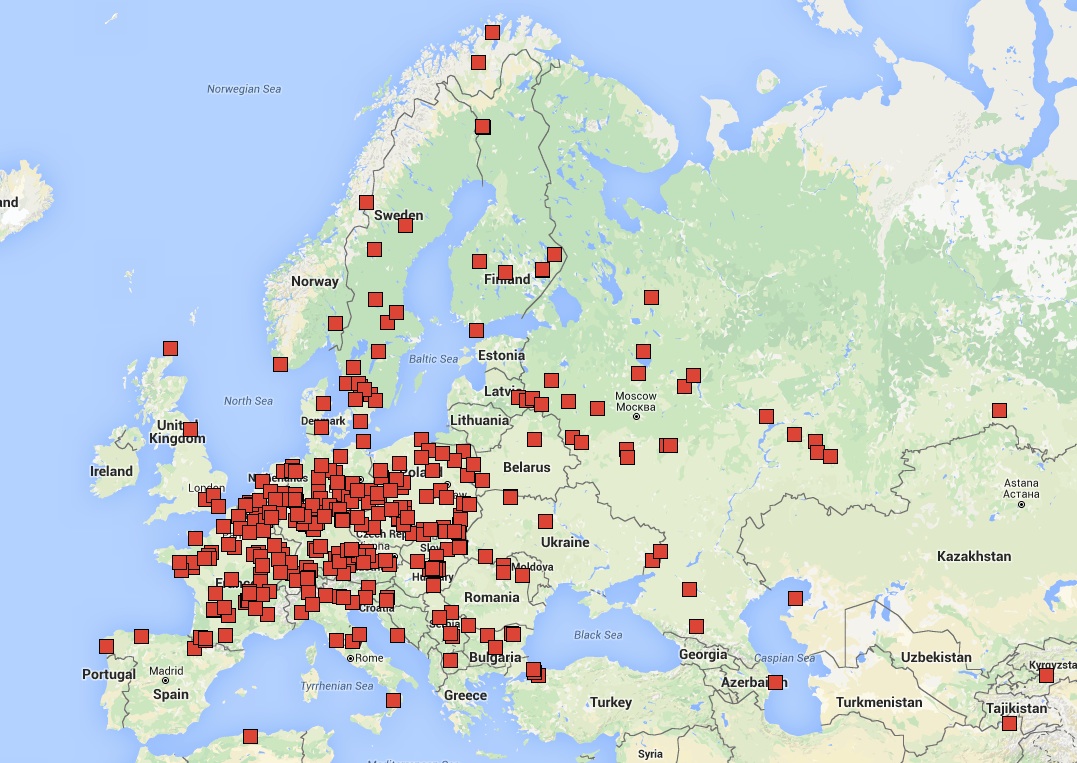
That the tale of Lech, Czech and Rus may have its origins in (or at least may share similarity with) the tale of the Polanians of Kiev, i.e., Kyi, Shchek and Khoryv (putting aside their sister Lybid) should be unsurprising. However, that the latter should have something to do with tales of Indian princes (Kvar (town of Kvars), Meghtes (town/place of Meghti) and Hor (town of Horyan)) ought to raise an eyebrow or two. In particular, it has been claimed a number of times that there are similarities between the tale of the founders of Kiev and the legend given by the Armenian writer Zenob Glak. For example, there is in that story the district of Palunik which makes some people think of the Eastern Polans.

Lake Van – does it have anything to do with the Veneti?
Who was Zenob Glak?
To answer this question and to see what he wrote we consulted the book “The Heritage of Armenian Literature, volume 2.” In it Glak is said to be (probably) a Syrian clergyman of the fourth century who was appointed the first bishop of the Mamikonian feudal house and abbot of the Surp Karapet monastery in Taron (a province in then Armenia – the monastery itself was in Innaknian, today’s Mush in Turkey). The work that he produced goes by the name Patmutiun Tarono, i.e., the “History of Taron.” It was supposed to be a history of the Christianization of Armenia. It claims to have been written by Glak in the fourth century but then expanded on by one Hovhan Mamikonian in the seventh century (the latter being the 35th bishop after Glak). We say “it claims” because some authors (including the authors of the above volume on Armenian literature) suggest that the book was actually written in the seventh century (or later) and that Glak was only alleged to be the author of the main portion of it because of the desire by the real writer (presumably Hohvan but maybe another Mamikonian) to make the work sound “ancient.” Whatever the reality, the book is interesting for containing descriptions of the struggle of the Armenians who were caught between the Byzantines (earlier the Romans) and the Persians and, consequently, subject to repeated subjugation attempts and wars. The book is also interesting because it contains the tale of Saint Gregory’s war against the pagan priests of {northern?) Armenia and, in particular, his struggle to destroy the temples dedicated to Gisane* and Demetr – who are said to be of Indian origin. They are said to have conspired against their king in India and then to have fled the king’s wrath to Armenia. There they were given refuge by King Vagharshak who allowed them to settle in Taron where they established the town of Vishap. Their followers deified them and called the idols by their names. Thereafter, their three children who were called Kvar, Meghtes and Hor built three cities where Gisane and Demetr are worshipped. Here is that tale (the authors, in general, follow the Levon Avdoyan translation in “Pseudo-Yovhannes Mamikonean”).
Why Does the History of Taron Matter for Slavs?
Maybe it does not. Who knows. But, maybe it does.
As noted above the main reason this book should be of interest to us, however, is its connection (or, at least, the alleged connection) between the story of Kvar, Meghtes and Hor and the later story of Kyi, Shchek and Khoryv. In the former story Palunik is supposed to have been a reference/connection/basis – call it what you will – to the land of the Polane (Eastern) in the Primary Chronicle.
But there is another reason why this story is of interest. Note the names of Gisane and Demetr. This name Gisane is “assumed to be derived from the Armenian word gis, meaning a tress of hair that the priests used to wear.” That much from the authors of “The Heritage…” And, indeed, Gisane is said to have long hair. The other Indian prince mentioned in the story is Demetr. You might say, so what? The interesting thing is that Gisane may instead (or may also) be connected to the Polish Yassa or Jason or Czech Chason. The g > j change is rather easy. But there is something else. While we have talked of Essus and of Þjazi/Thjazi, another ancient deity (or semi-deity) – this time of Greek literature – was Jasion/Iasius. And Jasion lusted after Demetr. In fact, it was on account of his desire for Demetr that Zeus – in some versions – killed Jasion. We will get back to that later. What’s really interesting is that Jan Dlugosz, in addition to Jesza mentions (among other Gods) also Marzanna. Marzanna who was later – in Christian times – associated with death seems to have been, as per Dlugosz, instead a Goddess of life or fertility. In this role she would have fit well with Jesze not as the Polish Jove but as the Polish version of Eostre – Jaster or Jarovit. Now Marzanna was, as this Goddess of fertility, claimed by Dlugosz to have been the Polish Ceres. And Ceres is just another (Roman) name for (the Greek) Demeter – who was the goddess of harvest, grains and fertility. Notice too the names such as Ashtishat (site of a later Council in Ashtishat – of importance to the Armenian Church) – a name that might deserve addition to our earlier chart.

Ashtishat
Who knows if there is a connection. Dlugosz did not specifically tie Jesze to Marzanna (but rather to Jove). And it is entirely possible that Gisenke and Demetr were remembered under these names in the fourth or seventh century precisely by reason of the Greek myths, i.e., that somehow the Greek (or rather Samothracian) myth made its way into Armenian lore. The connection to the brothers of the Primary Chronicle also seems tenuous. In any event although this story does not explicitly mention Slavs (as some other Armenian sources do), we nevertheless thought it of interest for the reasons stated above – and we’ll let you decide. (At this rate we are showcasing about one Armenian source a year).
We note too other connections to the area such as:
- the story of Jason and the story of some of the origins of the naming of Poland, or
- the northern Georgian tribe of the Svaneti (Georgian not Armenian but close enough for these purposes)
Finally, the story requires some unwinding. It is the story of war against the northern pagan priests by Saint Gregory the Illuminator (circa 257 – circa 331) and the Armenian princes. After a description of that war, however, the author – presumably Zenob Glak who accompanied Saint Gregory on this war – provides a background story (in red) about how exactly it happened that there were pagan temples in the north of Armenia in the first place. It is that story that is relevant both to our discussion of Lech, Czech and Rus as well as to the discussion of Yassa/Chasson/Jasion. There is a suggestion that the Old Gods were worshipped in all of Armenia (or at least all of Taron) previously for forty years. Literally, that would put the arrival of Gisane and Demetr in Taron sometime in the second half of the 3rd century (their worship starts with their children, the three brothers Kvar, Meghtes and Hor) – but the story, something tells us, may well be much older than that.
Here we go:

The Response of Bishop Zenob the Syrian to the Letter of the Syrians and the History Concerning the Region of Innaknian and the War Which Occurred with the Pagan Priest, Ardzan
“Some of the princes advised the holy Grigor [Gregory the Illuminator – the patron saint and the first official head of the Armenian Apostolic Church] that there remained in the district (gavar) of Taron two temples to pagan gods, where the people still were sacrificing to the demons. Now he proposed to go so that he should destroy these heather temples of idols as well. And he came to the land of Palunik into the avan of Gisane in the village of Kvars [village in the region of Mush, the province of Baghesh/Bitlis], where some of the pagan priests were. And when they [the pagan priests] learned from the prince of Hashtyank that on the next day the Armenians would destroy the idols of the great gods Gisane and Demetr*, they went to the places of the idols at night and stored the temples’ treasuries in underground rooms and the priests at Kvars advised the pagan priests in Ashtishat (Acesilene): ‘Gather every man who is a warrior and hasten to reach us tomorrow for the great Gisane will go into battle against the apostatizing princes.’ Likewise, they spurred on the men of Kvars to lie in ambush in the enclosures of the vineyards and placed others in the forest to lie in ambush. And the chief priest, who was named Ardzan, and his son, Demetr**, took the troops who were from the precinct of the temples, numbering four hundred men, and ascended the mountain which was opposite Kvars: they remained until other troops should come from all directions to their aid.”
* According to Hr. Acharian, Demetr was a prince who fled to Armenia from India and is dated by Acharian to 149-127 B.C. (incredibly exact and what is the source for this!?)
** This one apparently was named after the divinity.

Gregory the Illuminator
“Meanwhile, the Armenian* troops rose on the next day and passed along the foothills of the mountain of Meghti, by which route invading armies usually passed.”
* By “Armenian” the author means Saint Gregory’s army, i.e., not the opposing “pagans.”
“Now the holy Grigor took the princes of Artzrunik, of Andzevatsik [province of Vaspukaran], and of the Angegh tun [Latin Ngalawa, a region in the province of Aghdznik near Diarbakir, Turkey] and a few troops, some three hundred in number, and in the third hour ascended that same hill where Ardzan was hidden; and they (i.e., Grigor et alia) were confidentially proceeding and were totally without suspicion. And when the Armenians were near the end of the ascent, Ardzan and Demetr came forward, caused the horns of war to be sounded, and boldly attacked the Armenians. And when the princes heard this, they were greatly aroused, for when their steeds heard the sounds of the horns, they began to neigh and seek out the battle.”
“Now the prince of House of Angegh shouted” ‘Prince of Siunik, advance and look; perhaps these are the troops of the prince of the North.'”
“He [prince of Siunik] then went and was not able to ascertain who they were. He returned and said: ‘Take Grigor to somewhere safe, together with his companions; the enemy might perhaps seize them and we would be shamed before the king. And you send some men after our troops that they return here, for their ranks are numerous and many gleaming standards appear in their midst.'”
“Then the prince of Angegh tun gave the holy Grigor into the hands of the prince of Moks and said: ‘Hasten into the fortress of Voghkan until you learn what will be.’ And he himself sent three men to inform the troops.”
“Now the prince of Moks took Grigorios and turned toward the downward slope of the mountain, for he wanted to descend to Kvars.”
“Now the local men began to seize the passes of the route. When the holy Grigor saw that there was great danger in that place, he took down the relics* and placed them near a spring, on that side of the valley opposite the giugh; and he marked the spot. And the Lord hid the place and no one was able to see the location until the holy Grigor had returned to it.”
* presumably the Christian relics that Gregory was carrying with him.
“Now the men of the village were pursuing us [this is the first time that the narrator (Glak? Hovhan Mamikonian?) switches to the first person in this passage; it seems that Glak was with Saint Gregory – away from the fighting] and we were fleeing, each mounted upon a horse, to the fortress of Voghkan, and since we had come ahead of them we entered the fortress, since the men of the fortress had come out in opposition to those pursuing us and had admitted us inside. Now the men of the village arrived on the other side of the city of Kvars and the villagers informed them about us; when they heard this they crossed to this side and began to besiege the fortress. Now, since we had become anxious, we sent someone at night to the prince of Angegh tun and informed him by letter of the state of affairs. He then entrusted four thousand select men, armed with swords, to the prince of Apahunik and on the morrow they crossed the river and, laying siege to the city, after three days they destroyed it and leveled its ramparts to the ground. And they brought the men of the city to Meghti.”
“Then the princes, when they had heard all of this, ascended the hill and saw that Ardzan [prince of the North (?) – the enemy] scarcely had four hundred men; the brave princes immediately attacked and forced Ardzan into flight. Now, when the other Armenian forces heard the sound of the clamor, they instantly reached the summit of the hill.”
“Then Ardzan advanced and began to insult the Armenian princes and said: ‘Advance, O you who are irreligious and who have forsaken your nation’s* gods; and you who are enemies of the glorious Gisane. Do you not know that the great Gisane has today come out into battle against you and he will deliver you into our hands and strike you with blindness and with death?'”
* The writer does not seem to dispute here Ardzan’s claim that the Armenians’ old(er) gods were the Gods worshipped at Kvars, i.e, Gisane and Demetr – at least for forty years (see below) before this expedition.
“Now the prince of Artzrunik, having passed into the middle ground between the forces, replied: ‘O you who rant against us! If you are making war on account of your gods, you are acting falsely; if for this land, then you are completely irrational, for this man is the prince of House of Angegh, and that, of Siunik, and these others are from among the noble men, whom you yourself recognize.'”
“Now Demetr, Ardzan’s son said: ‘Listen to me, princes of Armenia! It is now forty years that we have served these great gods and we know their power, for they themselves will wage war against the enemies of their own servants. Now, we cannot oppose you in battle, for this is the house of the king of the Armenians and you are his princes. But let this be known to you: Although we are not able to conquer you, nevertheless it is better to die for our gods than to see their temples corrupted by you. On this account we have become tired of our lives and have come to look with pleasure upon death. But you who are prince of House of Angegh, advance, that you and I fight in single combat.'”
“Then Ardzan [why not Demetr?] and the prince of Angegh tun passed into the middle of the armies and began to circle around each other. And Ardzan pressed forward and struck the prince above his thigh and drew near to hurl him down. Now the prince, turning against him, said: ‘Know this, Ardzan, that they will call this place Ardzan, for you will become fixed like a monument in this place.’ And he lifted his arm up and made his sword descend against Ardzan’s right shoulder and cut open his throat together with his left shoulder and leg. And he fell and rolled on the ground. And they amassed a monument above him, and he is buried in that location, so that even now they call the mountain Ardzan.”
“And when this had been accomplished in this manner, suddenly the troops of the priests from the city of Vishap and men from Prakh and the men of Meghti and all men from the region in general arrived there. And others had come from Astghaun with them; all together, as they themselves afterwards said, there were five thousand four hundred and fifty men. And when they reached the summit of the mountain, a clamor was raised among both armies. And after the ranks of the priests had united with each other, they attacked the Armenian troops and put them to flight down the slopes of the mountain toward the region of the village. Now the men of that village who were waiting in ambush rose against our troops; they thus had caught the Armenian forces on both sides and they started to massacre them. Then the prince of Angegh tun made a breach in the ranks of the pagan priests, passed from behind, and took note of the hill, for there were enemy infantrymen there, on the descending slope of that hill, who were inflicting great damage on the horses by hurling stones. Now Demetr, when he saw that the prince of Angegh tun had ascended the hill, left the other troops and made for him. Likewise the other troops of cavalry also began to arrive there. And when they had ascended the hill, the two sides again joined battle against each other. And our princes remained there with their own troops, for all had not gathered, since four thousand were as yet guarding the prisoners in Meghti; three thousand were yet passing by way of Basen and Hark, while still others were scattered throughout that plain plundering the land.”
“And while they were battling each other and longed to mix together in battle, night overtook them. And they dismounted in that place and there made camp until morning. And when it was morning the Armenian forces arrived and certain others, numbering some seven hundred, from the city of Tirakatar to aid the priests. Then when both groups of troops had come, both sides had grown larger (the army of the priests numbered six thousand nine hundred and forty-six, while the army of the Armenian princes numbered seven thousand and eighty men). Then they had the horns of battle sound and each man attacked one opposite to him. The Armenian troops at first were winning over the pagan priests. But the prince of Hashtyank, who was with the Armenian army but was from the same race as Demetr, took seven hundred mean and went over to the side of the priests and began to fight against the Armenian princes. When the Armenian troops saw this, they became disheartened and dejected, because he was the kind of man who was a victor and who was well-versed in war and force, so much so that all the Armenian princes trembled before him. And he began to slaughter Armenian troops without compassion, and all the troops raised a clamor before the prince of Siunik. Then the prince of Siunik gave voice and shouted: ‘Ay, wolf’s cub you have remembered the manners of your father and have returned to the filth-eating ways.’ And he responded: ‘O, young eagle, you who take pride in your wings! if you should fall within the range of my traps, I shall show you my power,'”
“Now the prince of Siunik did not suffer these insults; he attacked and struck him on his helmet with his battle axe, and separated him from his troops. And he forced him to flee onto the mountain along its eastern side. And then, the prince of Siunik reached him in the area opposite Innaknian, he pushed forward and felled him from his horse. And he dismounted from his own horse and with a knife cut off the head of the price of Hashtyank; and after he had thrown his body from the heights of the mountain, he said: ‘The vultures will see you and know that the eagle has killed you, rabbit!’ And he himself returned. Up to this day this place is called Artzvik [Armenian for eagle].”
“Now the prince of Artzrunik passed into the middle of the fray, cut off the chief priest of Ashtishat, whose name was Mestakes and made him flee through the highest places to the summit of the mountain. And when the prince reached him, Mestakes turned against him and struck his leg. Then the prince of Artzrunik, enraged by the blood from his own body, rushed forward and cut his shoulder open through his neck; his head fell on the ground and he threw the corpse down, so that they named the place Mestakogh.”

Ashtishat in relation to Lake Van
“Now the prince of Arjk had fled to that place to hide. Although the prince of Artzrunik saw him, he pretended as though he had not, and he drew near to him. And all of a sudden he rushed upon him. Thereupon the prince of Arjk turned in flight into the forest but a cropping of wood passed through his heart and there he died. Then prince of Artzrunik took both their horses and returned to his own troops; and that place was called Arjuts dzor [valley].”
“And after he had returned from there, he came upon Demetr and the prince of Angegh tun fighting in single combat with each other. And the prince of Angegh tun attacked Demetr and cut through his right shoulder and Demetr fell to the ground. And the prince of Angegh tun cut off his head and flung it into his own sack.”
“And the princes of Artzrunik and of Angegh tun turned against the enemy troops and they butchered them without compassion and caused some one thousand and thirty-eight men to fall dead on the ground and others they stripped naked.”
“And in that battle Demetr killed the son of the prince of Moks, which was the cause of great sorrow for the Armenian princes.”
“Now after Demetr had died in that battle, the prince of Siunik caused the horns of war to sound peace, and both sides ceased from massacring each other. And when the local men who were priests saw that, they implored the Armenian princes for peace so that they could bury their own dead, and the princes gave their permission. And they gathered their dead, from both sides and, digging out a tomb, they placed the bodies inside, and above these graves they erected this stone monument, and wrote on it in this manner:”
“THIS WAS THE FIRST BATTLE OF ARDZAN, THE HIGH PRIEST AND A GREAT WARRIOR. HE IS BURIED HERE AND WITH HIM ARE 1038 MEN. AND WE FOUGHT THIS BATTLE FOR THE IDOLS OF GISANE AND DEMETR AND FOR CHRIST.”
“They wrote this inscription in Syriac and Greek, using Greek and Arabic letters. And then the Armenians themselves descended and passed the night in the vicinity of Innaknian. And they hurriedly sent messengers to the holy Grigor, while they themselves remained there, some in the heights, and other troops making camp in a marshy meadow by a sweet spring in the forest.”
“Now, we [again, switching to first person] came out of the fortress and returned by the same route by which we had fled. As we came to the environs of the village of Kvars, we went astray, for it was night. But while we were going along the banks of the vineyards, suddenly a light much more brilliant than the rays of the sun shone from the relics which the holy Grigor had hidden. And so brightly did they shine, that all the inhabitants of the village – men and women, young and old – ran outside to see it. And struck with amazement, they began to repent. And at that time they took up and bore the relics into the middle of the village; and they worshipped with joy until morning.”
“And after we had taken up the relics on the next day, we arrived at Mount Ardzan and we read the inscription [see above]. And for many hours the holy Grigor shed tears on account of the purposeless massacre, and then he took up the right arm of the Baptist, and made the sign of the cross all around the district, praying: ‘May the eyes of the Lord be over this land to preserve it from its enemies; and though, for their sins, the inhabitants have been afflicted by the Lord, nevertheless may their enemies not be enlarged, but be destroyed by their own evils. And let not heretics inhabit this land. May the right hand of the holy Karapet be a seal and a preserver, and at the same time, let this house for the relics become an eternal structure from generation to generation.’ And when we had said ‘Amen,’ the sound of thunder reached our ears.”
“And when we had descended to the area of Innaknian, the Armenian princes came before us and gave us the news that Demetr had been defeated. And when we came to the place, we saw that the temple of the idol had been destroyed and the idol, which had been fifteen cubits high, had been divided into four parts. And the attendants of the idol were raising a clamor and were mourning most wickedly, to the point that even the demons lamented, so that men could hear them saying: ‘Woe to us, that even the bones of the dead should drive us from our land.’ And they appeared as winged creatures in human form and flew to the idols of the gods in Ashtishat.* But others from among the demons, as wasps of immense number, or as heavy showers falling like hail, even so they attacked the multitude and, after they had maltreated the pagan priests in general, they left them for dead. And the holy Grigor drew near and cured them and ordered that the idol of Gisane be destroyed. The idol was made of bronze and was twelve cubits tall and two cubits and a span in width. When those who were to destroy the idol entered the temple, the attendants of the idol saw them and with much lamentation attacked them, maintaining: ‘Let us die first and then let great Gisane be destroyed!’ Then the troops surrounded the priests and killed six men. And they were then able to destroy the gates of death.”
* Were there other idols of the same Gods there at Ashtishat?

Ashtishat or Yesilova?
“Now the demons raised their voices and shouted: ‘Although you drive us from here as well, nevertheless whoever should wish to live here let him not find rest.’ But it is astounding that, just as, for example, a great number of troops enter through the gates of a city, likewise, this place was the demons’ gateway. And there were as many demons in the temple of Gisane as were in the infernal regions of hell.”

Other Yesilovas (and similar)
“When the troops had destroyed the idol, the holy Grigor began to lay the foundations of a church. And because he did not have materials at hand, he took stones, both unshaped and rough, and found lime mortar in the dwelling of the idol; he began to build the church in that place where the idol of Demetr had been with its same measurements. He worked there for twelve days and intended to place all the relics of the Karapet in that church, but he had not received authority from the Lord. But he gathered them and he placed the relics in a coffin of clay. (For man is of earth, not of gold. On that account it is not proper to surround the boyd of a dead man with gold.) And he placed that coffin into one of bronze, and there he also put one of the luminous gems which he had brought from Caesarea of Cappadocia, and that gem is called Lingiron.* And he did not do these things openly to anyone, but in secret. And in the night, taking up spades, I and Bishop Aghbianos dug a hole the dimensions of two men and lined it with small stones and we placed the relics of the Karapet in it. And those which we placed there were the arm up to the elbow and the left hand up to the shoulder and the right hip bone and other smaller bones from his body. And of the relics of Atenagines we divided the head and the right arm up to the waist in half and placed them in a sarcophagus of clay.”
* Lugkourion? An amber thought by the ancients to have been formed from the urine of a lynx (as per History of Armenian Literature)
“If you should wish to know all of this accurately, ask the Syrian narrator, Pisidon, and he will tell you. For the Karapet is at the corner of the church where the royal Arsacid door is; a span away you will find the nails of a sign which marks the entrance, half a span above the ground and in the right side of the church, and the holy Grigor wrote that sign on a bronze tablet and placed it on the bema, thus ‘Let no woman dare to enter through the door of that church, lest she walk over the venerable relics; that the implacable enmity of God be onto those who intruded and to her who enters.’ And Pisidon himself had read the tablet.”
“Now the relics of Atenagines are near that same doorway but at the left corner of the church; and they are thus preserved, hidden, so that if someone should wish to find them using the sign of nails, he would not be able, even if they should dig forty cubits. And the reason for this was the following: when he had placed the relics in that placed and had sealed it, then the holy Grigor together with us genuflected three times and after he rose, he spread his hands toward the east and prayed: ‘God of gods and Lord of lords, who accomplishes the wishes of those who are in awe of you and who do not neglect the supplications of those who implore you – You, Lord, who have protected these relics and have brought them to this place – stretch your arm over these sarcophagi and seal, by means of Your perfect power, their bones, that no one be able to remove them from here until the day of the end of the earth and their rebirth and that of all the saints.'”
“‘Although someone, even from among the pious, should attempt this with prayers, do not reveal their position. But for those who, with hope and faith, should seek cures and the door of the church of the holy Karapet, may you cure them. But if it should be your will to leave some with their afflictions, so that, tormented in their bodies, they shall live inn spirit in the hereafter, let it be. Moreover, preserve the orders of the clerics who serve You with attention and holiness in this holy church, for You alone are powerful over all; and to You may there be glory for eternity.'”
“And when he had said ‘Amen,’ there came a voice from heaven which said: ‘Let it be as even you wish and let no one learn their place for the purpose of removing them; and as for those who shall serve me in this place with pious and sincere lives, may they be participants of those good things to come.’ And the land moved and the site of the relics was hidden.”
“Now the next day a pagan priest was brought before the prince of Siunik and they demanded that the priest show them the location of the hidden treasures and the doors to the subterranean room; and he did not tell them, but died on the gallows. And there was no possibility to find that subterranean room, though they presumed it to be under the foundations of the church where Demetr’s temple had been, because the foundation of the church had been set in the same place with the same length and breadth, except only that the followers of Demetr prayed toward the west. Likewise, they also examined the temple of Gisane to discover its treasures; this temple was about two steps of a man to the east of the temple of Demetr, along an abundant spring; and they did not find it.”
“And when nine days were completed there, the prince of Siunik went into the town of Kvars; he persuaded the soldiers of the village to come to be baptized; they agreed to come with him. And the holy Grigor received them and descended with them into the valley of Aytsan. And he baptized them. The valley was on the eastern side opposite Kachkon – the fortress of Astghonk – and he baptized them with unction adorned by Christ, and thus received them among those who believe in the Holy Trinity. And the Lord made a great light appear as a column of fire over those who were baptized. And the light remained three hours over the wondrous consecration and then it was hidden from those who had seen it. And those who were baptized were five thousand men and youths. And he brought them to the Lord’s temple. And he had a feast to the holy Karapet celebrated, which was on the first day of the month of Navasard [August 11]. And he entrusted them to the priests, and commanded that they be taken into their own village; and he ordered priests to erect a cross in that places here he had found the relics, and in the middle of the village to baptize the women. And after all of this had been done, the holy Grigor had the children of the pagan priests and of the attendants of the idols gathered together and he exhorted them to turn to the Lord God. Now they did not agree, but said to the princes: ‘Keep this in mind: as long as we live, we shall seek revenge upon you; even if we should die, the gods will exact our vengeance.’ And when the prince of Angegh tun heard this, he gave an order to shave off their long hair and had them moved, four hundred and thirty-eight men, to a prison in the city of Paytakaran.”*
* The eleventh province of Armenia on the western shore of the Caspian Sea

“But it was extremely awesome to see them, for they were black and long-haired and unpleasant to the sight, for they were by race from India. And the reason for existence of the idols in this place was the following: Demetr and Gisane were Indian princes and tribal brothers; and they were contemplating a certain plot against their own king, Dinakse; when the king was informed of this, he sent troops after them either to kill them or to drive them from the land. And they narrowly escaped and went to the Armenian King Vagharshak and he gave them the land of Taron as their principality, where they themselves built a city and called it Vishap. And coming to Ashtishat, they erected that idol which was worshipped among the Indians. And after fifteen years the king [Vagharshak?] killed both brothers – I do not know for what reason – and he gave the principality to their three sons – Kvar and Meghtes and Horyan.”
“Now Kvar built his on town and called it by his own name, Kvars; and Meghtes built a town on that very plain and named it Meghti. Then the youngest who had gone into the district of Palunik, built his town and called it Horians.”
“And after a while Kvar and Meghtes and Horian took council together and went out to Mount Karke* and found that place which was both pleasant and beautiful, for it had breadth of land for hunting and it was also breezy and abounding in both grass and trees. And they built there dastakerts** and erected two idols, one by the name of Gisane and one by the name of Demetr, and they dedicated their race to their service.”
* According to Avdoyan’s Pseudo-Yovhannes Mamikonean, p. 209, this mountain was the site of a shrine of the god Vahagn.
** estates
“And because GIsane had long hair, for this reason his servants also had that long hanging hair, which the prince [see above in the main story] had ordered to cut off. And when this race had turned to Christ, they were not consummated in their faith, and they did not dare to follow openly their paternal mores. They then deceitfully conceived this device: they left a lock of hair on the heads of their children so that, when they saw it, they would remember their former filthy worship.* And I beg you to be attentive of this, lest this practice spread even in your lands and lest you be accursed.”
* Whether this could be tied to the “postrzyzyny” of Piast is another question – though presumably this type of practice was common in antiquity
“But let us return from this to the previous subjects.”
“When the holy Grigor had set the foundations of the church and had placed the relics in it and had set up the Lords’ cross in the place of the idol of Gisane, he left there as officers of that church Anton and Kravnides. And he personally established Epipan as abbot of the monastery. And he left forty-three monks in that place and gave it twelve estates, that they should provide services to that place. Among these are Kvars, Meghti and Brekh and Tumb Mush and Khorni, Keghk, and Bazu, which are the greatest towns, as described in the writings of the Mamikonian princes. For Kvars has three thousand and twelve houses and one thousand and thirty cavalrymen and two thousand two hundred infantrymen. And Meghti has two thousand seven hundred houses and eight hundred cavalrymen and one thousand thirty infantrymen. And Tumb has nine hundred homes and four hundred cavalrymen. And Khorni has one thousand nine hundred and six homes and seven hundred cavalrymen and one thousand seven infantrymen. Now Brekh has three thousand two hundred homes and two thousand forty cavalrymen and eight hundred and forty archers and one thousand lance-bearers and two hundred eighty stone throwers. And their pastures for their flocks extended to the district o Hashtyank”*.
* A region in Armenia Major, near the province of Tzopk.
“Now these avanagiughs [town-villages] were originally given to the service of the idols, and now the princes rededicated them to the service of the church in the year 32. In this manner were these matter arranged by the holy Grigor.”
“Now after twelve days we descended to the avanagiugh of Meghti and spent the night there. And in the middle of the night a man came and related that the men of the North were coming against us. Then, making up our minds, we intended to cross to the other side of the river to a fortress called Tardzenk. And the princes went to the gates of the city of Mush and learned that there was nothing amiss. They then returned before us and turned us away from the banks of the Aratzani River [branch of the Euphrates]. And some of them went toward and entered the city of Mush, while others continued with us. And after we had left the river about two or three leagues behind, we approached a small valley. And we were of one mind in wanting to pass through it and to go to the site of the temple, because it had been decided to place the remaining relics in that very location. Then the mules which were drawing the carts were unable to cross to the other side of the valley and they sat down. Then an angel of the Lord appeared to stop the holy Grigor from continuing on and said: ‘The Lord is content that the relics of the saints which you have should repose in this place to show to those places farthest from here the power of God; when the men of those nations have seen this, they will believe in the miracles of God.’ We heard no other reasons than this from the holy Grigor for the repose of the relics in this place.”
“We there undertook the construction of a church and by that example of the past, at night we prepared a place for the relics. And we placed the two confessors of Christ in a stone sarcophagus the size of one man near the doors on the right side of the church: and the holy Grigor put the other luminous gem in that sarcophagus, on account the eternal light which it possessed.” [see above – these are the remaining relics]
“But the relics which we put there were of Atenagines, the other half, and of the Karapet, the left hip bones and the two legs and a part of the bones of his spine. Now the parts which remained of these relics – the two feet and the left thumb and the right hand up to the elbow – were retained in Caesarea. Then, after we had placed the sarcophagus with the relics inside the prepared site, as deeply as we had at Innaknian, in the same manner as before, the holy Grigor, together with us, fell on his knees and offered that same prayer to God that no one should dare to remove them. In similar manner as before, a voice came from heaven and said: ‘As yuou hav asked, thus will I do, and let there be no one who will be able to find them.’ And after he had said this, the place was hidden from us and it is marked by a sign of nails for those who wish to know the affair.”
“Now whatever happened after this, we have left that to another historian to narrate, while our history returns again to Taron. For just as I have not written anything about other places in this letter, likewise, no one should have the audacity to write about mine, for that kind of comprehensive history would be the chronicle of kings.”
“This is the first count of the war which occurred with Ardzan and those events which happened in my own days.”

Svaneti peasant of the Georgian North
Copyright ©2016 jassa.org All Rights Reserved


 And Muellenhoff… oh Muellenhoff… we will have something to say about his “emendations” soon.