Category Archives: Uncategorized

On Vaces & Hildigis

Published Post author

Enough of Wando.  Let’s move (back) on to Waccho.

An interesting story of Lombard family dynamics was put to paper by Paul the Deacon.  We’ve mentioned the same previously but feel there may be a need to relate it here while examining it from a slightly different angle. (We do not reintroduce the same pictures here since you can see them following the above link.

Paul the Deacon, History of the Lombards Book 1, 21

(written circa 787-796)

“But after these things Tato indeed did not long rejoice in the triumph of war, for Waccho, the son of his brother Zuchilo, attacked him and deprived him of his life. Tato’s son Hildechis also fought against Waccho, but when Waccho prevailed and he was overcome, he fled to the Gepidae and remained there an exile up to the end of his life. For this reason the Gepidae from that time incurred enmities with the Langobards. At the same time Waccho fell upon the Suavi and subjected them to his authority.  If any one may think that this is a lie and not the truth of the matter, let him read over the prologue of the edict which King Rothari composed of the laws of the Langobards and he will find this written in almost all the manuscripts as we have inserted it in this little history.”

Of course, life for the Lombard princelings was naturally as rough as the life of any would be leader of a warrior band.  And certainly we are not in a position to judge who was right and who was wrong – as much as we feel for the here of these events – Hildechis/Hildegis.

What is more relevant – at least to us – is that right after Hildegis’ flight to the Gepides and the description of the mutual “enmity” that arose between those two peoples, there comes in Paul’s story the bizarre claim of a Waccho’s attack on the Suavi.  That claim seems strange since the Suavi if these were the Suavi of the Danube do not seem to have anything to do with this story.  Why attack the Suavi?  What have they got to do with Waccho and Hildegis?  Was it just a form of recreation that Waccho indulged in when unable to get at Hildegis?

As we already note previously, Foulke, the translator, was confused by this as well noting that:

[i]t is hard to see what people are designated by this name. The Suavi who dwelt in the southwestern part of Germany, now Suabia, are too far off. Hodgkin (p. 119) suggests a confusion between Suavia and Savia, the region of the Save. Schmidt (55) says, ‘There is ground to believe that this people is identical with the Suevi of Vannius who possessed the mountain land between the March and the Theiss.‘”

In fact, the claim appears to be strange to Paul too as he tries to justify it by referencing the earlier Origo Gentium Langobardorum as the source of this information, daring any unbelievers to go and look for themselves.

We did just that and here is what came of that investigation.

Origo Gentium Langobardorum, Chapter 4

(written circa 650)

“Claffo, the son of Godehoc, reigned after him. And after him reigned Tato the son of Claffo. The Langobards settled three years in the fields of Feld. Tato fought with Rodolf king of the Heruli and killed him and carried off his banner and helmet. After him the Heruli had no kingly office. And Wacho the son of Unichis killed king Tato his paternal uncle together with Zuchilo. And Wacho fought, and Ildichis the son of Tato fought, and Ildichis fled to the Gippidi where he died. And to avenge his wrong the Gypidis made war with the Langobards. At this time Wacho bent the Suabians under the dominions of the Langobards.

(Post eum regnavit claffo, filius godehoc. Et post ipsum regnavit tato, filius claffoni. Sederunt langobardi in campis feld annos tres. Pugnavit tato cum rodolfo rege herulorum, et occidit eum, tulit vando ipsius et capsidem. Post eum heruli regnum non habuerunt. Et occidit wacho, filius unichis, tatonem regem barbanem suum cum zuchilone. Et pugnavit wacho, et pugnavit ildichis, filius tatoni, et fugit ildichis ad gippidos, ubi mortuus est. Iniuria vindicanda gippidi scandalum commiserunt cum langobardis. Eo tempore inclinavit wacho suavos sub regno langobardorum).

Well, looking at this, the event seems to be confirmed (and Zuchilo becomes involved in the bloodletting whether as victim or perpetrator – perhaps the latter, see below) in a source that predates Paul by over 100 years but the source itself answers none of our questions.  Is that it then?  Another curious story about some past history that is entirely open to interpretation?

Perhaps but then there is… another source for these events as most people know.  An older source in the writings of Procopius of Caesarea.  It makes, we think, sense to examine this yet earlier source.  We cite the entire relevant passage below.  You will note that some of the family relationships are different than shown above but overall Procopius’ writing seems more matter-of-fact and, therefore, more believable.

Procopius, History of Wars Book 7, 35

(written circa 550-560)

“Such was the situation in Byzantium. Meanwhile one of the Lombards had fled to the Gepaedes for the following reason.  When Vaces was ruler of the Lombards, he had a nephew named Risiulfus, who, according to the law, would be called to the royal power whenever Vaces should die. So Vaces, seeking to make provision that the kingdom should be conferred upon his own son, brought an unjustified accusation against Risiulfus and penalized the man with banishment.  He then departed from his home with a few friends and fled immediately to the Varni, leaving behind him two children. But Vaces bribed these barbarians to kill Risiulfus.  As for the children of Risiulfus, one of them died of disease, while the other, Ildiges by name, fled to the Sclaveni.”

procopius1“Now not long after this Vaces fell sick and passed from the world, and the rule of the Lombards fell to Valdarus, the son of Vaces. But since he was very young, Audouin was appointed regent over him and administered the government.  And since he possessed great power as a result of this, he himself seized the rule after no long time, the child having immediately passed from the world by a natural death.  Now when the war arose between the Gepaedes and the Lombards, as already told, Ildiges went straight to the Gepaedes taking with him not only those of the Lombards who had followed himbut also many of the Sclaveni, and the Gepaedes were in hopes of restoring him to the kingdom. But on account of the treaty which had now been made with the Lombards, Audouin straightway requested the Gepaedes, as friends, to surrender Ildiges; they, however, refused absolutely to give up the man, but they did order him to depart from their country and save himself wherever he wished.”

procopius2

He, then, without delay, took with him his followers and some volunteers of the Gepaedes and came back to the Sclaveni.  And departing from there, he went to join Totila and the Goths, having with him an army of not less than six thousand men.  Upon his arrival in Venetia, he encountered some Romans commanded by Lazarus, and engaging with them he routed the force and killed many. He did not, however, unite with the Goths, but recrossed the Ister River and withdrew once more to the Sclaveni.”

Thoughts 

A few obvious questions present themselves:

  • Could the Suavi have been the same as Sclaveni?;
  • If not, why were the Suavi attacked at this point (In Paul’s telling)?; something to take the Lombards’ minds off of their dynastic difficulties?;
  • And, if not, why were the Sclaveni not attacked by the Lombards (in Procopius’ telling)?  After all Gepides were at least confronted by the new King Audoin about Hildigis; but maybe the Slavs were simply too far to bother?; but then Hildigis goes to the Sclaveni three times, travels to Venetia with a Sclaveni/Gepid army and crosses the Danube in the process seemingly each time?;  are the Lombards asleep at the wheel here?;
  • If, however, the Suavi does mean Sclaveni, was it an error on the part of the composer of the Origo that was later copied by Paul without understanding it?;  Or was it something more?
  • and, we almost forgot, who is Vinsila?; “who?”, you ask, well they do not appear in most of the codices but he does come up in one of the codexes, the Codicis Gothani; was he just another name for Zuchillo?


gothicus
Copyright ©2015 jassa.org All Rights Reserved

July 21, 2015

And Then There is This

Published Post author

This peninsula is called Schwaben. It is in Altenburg-Jestetten (Jestetten!) on the German-Swiss border and is a site of an ancient “Celtic” fortress.

jestetten

Apparently, it was listed in the 9th century as Suabowa (as per Forschungen zur deutschen Geschichte).

halbinsel


The -owa is, supposedly, derived from -ava relating to water…  This is not the only -owa in parts of Germany where there had been no Slavs:

owa1 owa2


And here we can see Germanic influence in Poland – the town of Stalowa (Wola) also, of course, located on a river – this time the river San.

stalova

Hilarious!

Copyright ©2015 jassa.org All Rights Reserved

June 8, 2015

On Celtic Suevi

Published Post author

Were the Suevi German?

Cassius Dio (circa A.D. 155–235) in his History of Rome wrote (Book 51, chapter 22) that:

professor

Professor Earnest Cary tackles confusion by “exercising discretion”

“Ἐπεὶ δὲ ταῦτα διετέλεσε, τό τε Ἀθήναιον τὸ Χαλκιδικὸν ὠνομασμένον καὶ τὸ βουλευτήριον τὸ Ἰουλίειον, τὸ ἐπὶ τῇ τοῦ πατρὸς αὐτοῦ τιμῇ γενόμενον, καθιέρωσεν. Ἐνέστησε δὲ ἐς αὐτὸ τὸ ἄγαλμα τὸ τῆς Νίκης τὸ καὶ νῦν ὄν, δηλῶν, ὡς ἔοικεν, ὅτι παρ´ αὐτῆς τὴν ἀρχὴν ἐκτήσατο· ἦν δὲ δὴ τῶν Ταραντίνων, καὶ ἐκεῖθεν ἐς τὴν Ῥώμην κομισθὲν ἔν τε τῷ συνεδρίῳ ἱδρύθη καὶ Αἰγυπτίοις λαφύροις ἐκοσμήθη. Καὶ τοῦτο καὶ τῷ τοῦ Ἰουλίου ἡρῴῳ ὁσιωθέντι τότε ὑπῆρξε· συχνὰ γὰρ καὶ ἐς ἐκεῖνο ἀνετέθη, καὶ ἕτερα τῷ τε Διὶ τῷ Καπιτωλίῳ καὶ τῇ Ἥρᾳ τῇ τε Ἀθηνᾷ ἱερώθη, πάντων τῶν πρότερον ἐνταῦθα ἀνακεῖσθαι δοκούντων ἢ καὶ ἔτι κειμένων ἐκ δόγματος τότε καθαιρεθέντων ὡς καὶ μεμιαμμένων. Καὶ οὕτως ἡ Κλεοπάτρα καίπερ καὶ ἡττηθεῖσα καὶ ἁλοῦσα ἐδοξάσθη, ὅτι τά τε κοσμήματα αὐτῆς ἐν τοῖς ἱεροῖς ἡμῶν ἀνάκειται καὶ αὐτὴ ἐν τῷ Ἀφροδισίῳ χρυσῆ ὁρᾶται. Ἐν δ´ οὖν τῇ τοῦ ἡρῴου ὁσιώσει ἀγῶνές τε παντοδαποὶ ἐγένοντο, καὶ τὴν Τροίαν εὐπατρίδαι παῖδες ἵππευσαν, ἄνδρες τε ἐκ τῶν ὁμοίων σφίσιν ἐπί τε κελήτων καὶ ἐπὶ συνωρίδων τῶν τε τεθρίππων ἀντηγωνίσαντο, Κύιντός τέ τις Οὐιτέλλιος βουλευτὴς ἐμονομάχησε. Καὶ θηρία καὶ βοτὰ ἄλλα τε παμπληθῆ καὶ ῥινόκερως ἵππος τε ποτάμιος, πρῶτον τότε ἐν τῇ Ῥώμῃ ὀφθέντα, ἐσφάγη. Καὶ ὁ μὲν ἵππος ὁποῖός ἐστι, πολλοῖς τε εἴρηται καὶ πολὺ πλείοσιν ἑώραται· ὁ δὲ δὴ ῥινόκερως τὰ μὲν ἄλλα ἐλέφαντί πῃ προσέοικε, κέρας δέ τι κατ´ αὐτὴν τὴν ῥῖνα προσέχει, καὶ διὰ τοῦτο οὕτω κέκληται.”

“Ταῦτά τε οὖν ἐσήχθη, καὶ ἀθρόοι πρὸς ἀλλήλους Δακοί τε καὶ Σουῆβοι ἐμαχέσαντο. Εἰσὶ δὲ οὗτοι μὲν Κελτοί, ἐκεῖνοι δὲ δὴ Σκύθαι τρόπον τινά· καὶ οἱ μὲν πέραν τοῦ Ῥήνου ὥς γε τἀκριβὲς εἰπεῖν (πολλοὶ γὰρ καὶ ἄλλοι τοῦ τῶν Σουήβων ὀνόματος ἀντιποιοῦνται), οἱ δὲ ἐπ´ ἀμφότερα τοῦ Ἴστρου νέμονται, ἀλλ´ οἱ μὲν ἐπὶ τάδε αὐτοῦ καὶ πρὸς τῇ Τριβαλλικῇ οἰκοῦντες ἔς τε τὸν τῆς Μυσίας νομὸν τελοῦσι καὶ Μυσοί, πλὴν παρὰ τοῖς πάνυ ἐπιχωρίοις, ὀνομάζονται, οἱ δὲ ἐπέκεινα Δακοὶ κέκληνται, εἴτε δὴ Γέται τινὲς εἴτε καὶ Θρᾷκες τοῦ Δακικοῦ γένους τοῦ τὴν Ῥοδόπην ποτὲ ἐνοικήσαντος ὄντες. Οὗτοι οὖν οἱ Δακοὶ ἐπρεσβεύσαντο μὲν πρὸ τοῦ χρόνου τούτου πρὸς τὸν Καίσαρα, ὡς δ´ οὐδενὸς ὧν ἐδέοντο ἔτυχον, ἀπέκλιναν πρὸς τὸν Ἀντώνιον, καὶ ἐκεῖνον μὲν οὐδὲν μέγα ὠφέλησαν στασιάσαντες ἐν ἀλλήλοις, ἁλόντες δὲ ἐκ τούτου τινὲς ἔπειτα τοῖς Σουήβοις συνεβλήθησαν. Ἐγένετο δὲ ἡ θεωρία ἅπασα ἐπὶ πολλάς, ὥσπερ εἰκὸς ἦν, ἡμέρας, οὐδὲ διέλιπε καίτοι τοῦ Καίσαρος ἀρρωστήσαντος, ἀλλὰ καὶ ἀπόντος αὐτοῦ δι´ ἑτέρων ἐποιήθη. καὶ ἐν αὐταῖς οἱ βουλευταὶ μίαν τινὰ ὡς ἕκαστοι ἡμέραν ἐν τοῖς τῶν οἰκιῶν σφων προθύροις εἱστιάθησαν, οὐκ οἶδ´ ὅθεν ἐς τοῦτο προαχθέντες· οὐ γὰρ παραδέδοται.”

Herbert Baldwin Foster of the Delphi edition translates Κελτοί as “Celts.”   However, Ian Scott Kilvert of Penguin Classics and then Earnest Cary of the Loeb edition translate the same as “Germans“.  The text of the Loeb edition has this as:

“After finishing this celebration Caesar dedicated the temple of Minerva, called also the Chaldicum, and the Curia Iulia, which had been built in honour of his father. In the latter he set up the statue of Victory which is still in existence, thus signifying that it was from her that he had received the empire.  It had belonged to the people of Tarentum, whence it was now brought to Rome, placed in the senate-chamber, and decked with the spoils of Egypt. The same course was followed in the case of the shrine of Julius which was consecrated at this time, for many of these spoils were placed in it also; and others were dedicated to Jupiter Capitolinus and to Juno and Minerva, after all the objects in these temples which were supposed to have been placed there previously as dedications, or were actually dedications, had by decree been taken down at this time as defiled. Thus Cleopatra, though defeated and captured, was nevertheless glorified, inasmuch as her adornments repose as dedications in our temples and she herself is seen in gold in the shrine of Venus.”

“At the consecration of the shrine to Julius there were all kinds of contests, and the boys of the patricians performed the equestrian exercise called “Troy,” and men of the same rank contended with chargers, with pairs, and with four-horse teams; furthermore, one Quintus Vitellius, a senator, fought as a gladiator.  Wild beasts and tame animals were slain in vast numbers, among them a rhinoceros and a hippopotamus, beasts then seen for the first time in Rome. As regards the nature of the hippopotamus, it has been described by many and far more have seen it. The rhinoceros, on the other hand, is in general somewhat like an elephant, but it has also a horn on its very nose and has got its name because of this.  These beasts, accordingly, were brought in, and moreover Dacians and Suebi fought in crowds with one another. The latter are Celts [but he says Germans!], the former Scythians of a sort. The Suebi, to be exact, dwell beyond the Rhine (though many people elsewhere claim their name), and the Dacians on both sides of the Ister; those of the latter, however, who live on this side of the river near the country of the Triballi are reckoned in with the district of Moesia and are called Moesians, except by those living in the immediate neighbourhood, while those on the other side are called Dacians and are either a branch of the Getae are Thracians belonging to the Dacian race that once inhabited Rhodope. Now these Dacians had before this time sent envoys to Caesar; but when they obtained none of their requests, they went over to Antony. They proved of no great assistance to him, however, owing to strife among themselves, and some who were afterwards captured were now matched against the Suebi. The whole spectacle lasted many days, as one would expect, and there was no interruption, even though Caesar fell ill, but it was carried on in his absence under the direction of others. On one of the days of this celebration the senators gave banquets in the vestibules of their several homes; but what the occasion was for their doing this, I do not know, since it is not recorded.”

From the Lacus Curtius wbesite we learn that:

“While it follows the standard system used in the Boissevain edition, Prof. Cary exercised a good deal of editorial judgment on the fragmentary texts of Dio.”

Indeed!

Maybe there is a different manuscript than the standard Boissevain edition above?

Or maybe this  made sense to Kilvert and Cary because “many people elsewhere claim their name” so let’s go with the default of “Germans”?

Or maybe it was just all Greek to them?

(In addition, Dio states too that the Bastarnae were Scythians).

Copyright ©2015 jassa.org All Rights Reserved

May 27, 2015

On Lake Mu(r)sianus

Published Post author

PART ONE: FAMOUS PASSAGE FROM JORDANES’ GETICA

“Introrsus illis Dacia est, ad coronae speciem arduis Alpibus emunita, iuxta quorum sinistrum latus, qui in aquilone vergit, ab ortu Vistulae fluminis per inmensa spatia Venetharum natio populosa consedit, quorum nomina licet nunc per varias familias et loca mutentur, principaliter tamen Sclaveni et Antes nominantur. Sclaveni a civitate Novietunense et laco qui appellatur Mursiano usque ad Danastrum et in boream Viscla tenus commorantur: hi paludes silvasque pro civitatibus habent. Antes vero, qui sunt eorum fortissimi, qua Ponticum mare curvatur, a Danastro extenduntur usque ad Danaprum, quae flumina multis mansionibus ab invicem absunt. Ad litus autem Oceani, ubi tribus faucibus fluenta Vistulae fluminis ebibuntur, Vidivarii resident, ex diversis nationibus adgregati; post quos ripam Oceani item Aesti tenent, pacatum hominum genus omnino.  Quibus in austrum adsidet gens Acatzirorum…”

reparations

in preparation for reparations let us enjoy the view

(Near their left ridge [it appears he is talking about the Carpathians], which inclines toward the north, and beginning at the source of the Vistula, the populous race of the Venethi dwell, occupying a great expanses of land.  Though their names are now dispersed amid various clans and places, yet they are chiefly called the Sclaveni and Antes.  The abode of the Sclaveni extends from the city of Noviodunum and the lake called Mursianus to the Danaster, and northward as far as the [Vistula?].  They have swamps and forests for their cities.  The Antes, who are the bravest of these peoples dwelling in the curve of the sea of Pontus, spread from the Danaster to the Danaper, rivers that are many days’ journey apart.  But on the shore of Ocean, where the floods of the river Vistula empty from three mouths, the Vidivarii dwell, a people gathered out of various tries.  Beyond them the Aesti, a subject race, likewise hold the shore of Ocean.  To the south dwell the Acatziri…)


PART TWO: THE SOURCE OF THE ABOVE LANGUAGE ALONG WITH “ALTERNATIVE” SPELLINGS IN THE MANUSCRIPTS

getica

Where could this lake be?  Most historians, archeologists, Slavologists and academiologists have no idea and they readily admit it.  Best definite answer so far: somewhere in Romania…  But maybe the problem is that from 1861 it has been de rigueur to refer to the lake with an “r” as Mursianus but before that it was just Musianus.  What gives?

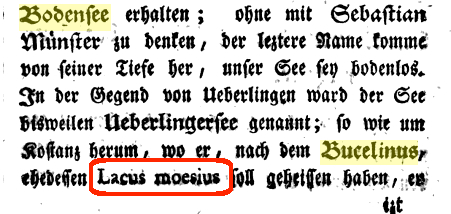
PART THREE: ON BUCELINUS OF THE BENEDICTINE ORDER AND HIS WRITINGS

bucelinus

From Ueber den Bodensee. Ein Versuch By Georg Leonhard Hartmann

PART FOUR: IN WAIT FOR THE COUP DE GRÂCE

moreducktape

More Duck Tape!

We’re not quite serious…

or are we?

Copyright ©2015 jassa.org All Rights Reserved

May 21, 2015

On the Danube Theories and the Suavi – Part II

Published Post author

We decided to break up these posts and after a brief Einfuehrung, continue with the additional sources separately.  Here we present Procopius.

It is not often mentioned in popular writing that the well-known word Suebi is more often than not spelled Suevi in actual sources.  It is, however, mentioned even less, and this even in scholarship, that another version that begins to appear in late sources is Suavi.  In fact, while various Slavicists have focused on the Slavs, Antes and the Venethi in the Getica work of Jordanes and the Slavs or Sporoi in the works of Procopius, the same authors also have interesting things to say about the Suavi.  Later writers add more.

Procopius History of Wars Book V – Gothic War, Chapter 12

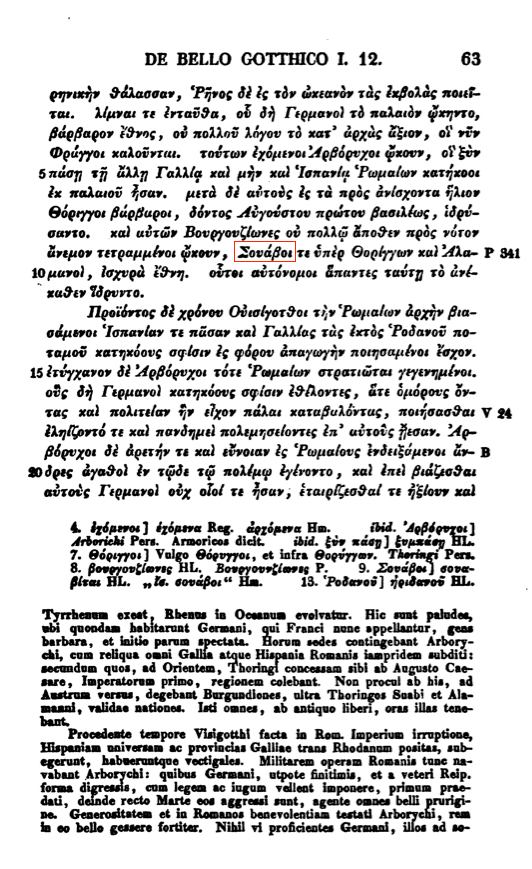
“And in Gaul there flow numerous rivers, among which are the Rhone and the Rhine.  But the course of these two being in opposite directions, the one empties into the Tuscan Sea, while the Rhine empties into the ocean. And there are many lakes in that region, and this is where the Germans lived of old, a barbarous nation, not of much consequence in the beginning, who are now called Franks.  Next to these lived the Arborychi, who, together with all the rest of Gaul, and, indeed, Spain also, were subjects of the Romans from of old.  And beyond them toward the east were settled the Thuringian barbarians, Augustus, the first emperor, having given them this country.  And the Burgundians lived not far from them toward the south, and the Suevi [but see below] also lived beyond the Thuringians, and the Alamani, powerful nations. All these were settled there as independent peoples in earlier times.”

This language comes from the H.B. Dewing English translation.  As with any translation, much is left to interpretation of the translator.  While a reader should have a right to rely on a translation not to make major conceptual errors, if a reader really cares about something that much, it behooves the reader to check…  This is especially since much of the Anglo-Saxon scholarship in this area at the turn of the century was merely a carbon copy of German scholarship (meaning not that it was necessarily incorrect or biased but rather that it wasn’t very original and, literally, frequently seemed like a copy of Mommsen and his ilk).  And if manuscripts are not easy to track down, there are at least original language editions.

Here is the same passage in the original Greek (and Latin below):

procopius1

Obviously, the Greek spelling – Σουάβοι – is with an “a” not with an “e”.  Thus, in Latin this reads Souavoi meaning, were we to remain honest to the format followed with Suevi, this would be shown as Suavi (the parallel translation running below not the page has Suabi but this is likely wrong since at the time the Greek β would have been pronounced as a “v”).  This, in Polish and other Lechitic languages (and Venetian!) would be written Soławoi.

Elsewhere in his works, when referring to south-eastern Slavs, Procopius writes (in most cases*) Σκλάβοι, Sklavoi.  The “k” was a Greek (the “c” in Sclaveni, a Latin) insertion to deal with the “l” following the “S”.  In Slavic, this would be written as Slawoi and, indeed, that is how it would be pronounced in Slavic – in East and South Slavic that is.  (Again, in Polish and other Lechitic languages the sound after the “S” is not an “l” but rather an “ł” which represents the “uo” sound.

(Again, in both cases, the β serves in for a “v” sound at that point in time)

But let us not waste more time and see what else these Suevi or, really, Suavi were up to in Procopius and others:

Procopius History of Wars Book V – Gothic War, Chapter 15

“But from the city of Ravenna, where the Ionian Gulf ends, to the Tuscan Sea is not less than eight days’ journey for an unencumbered traveller. And the reason is that the arm of the sea, as it advances, always inclines very far to the right. And below this gulf the first town is Dryus, which is now called Hydrus.  And on the right of this are the Calabrians, Apulians, and Samnites, and next to them dwell the Piceni, whose territory extends as far as the city of Ravenna. And on the other side are the remainder of the Calabrians, the Bruttii, and the Lucani, beyond whom dwell the Campani as far as the city of Taracina, and their territory is adjoined by that of Rome. These peoples hold the shores of the two seas, and all the interior of that part of Italy. And this is the country called Magna Graecia in former times. For among the Bruttii are the Epizephyrian Locrians and the inhabitants of Croton [Crotoniatae – Croatians anyone? Of course, that does not mean that Horvatoi was the same name] and Thurii. But north of the gulf the first inhabitants are Greeks, called Epirotes, as far as the city of Epidamnus, which is situated on the sea.”

“And adjoining this is the land of Precalis, beyond which is the territory called Dalmatia, all of which is counted as part of the western empire. And beyond that point is Liburnia, [modern Croatia] and Istria, and the land of the Veneti extending to the city of Ravenna. These countries are situated on the sea in that region.”

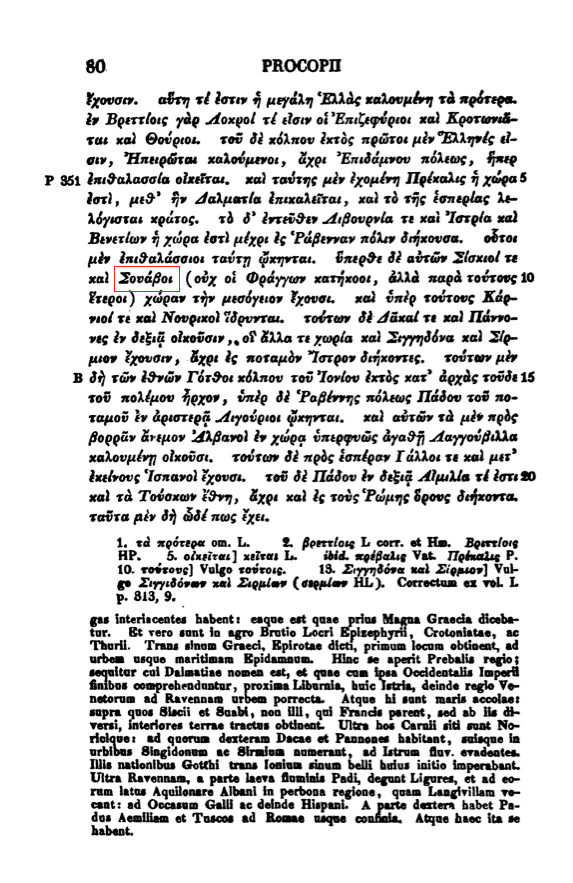
But above them are the Siscii and Suavi (not those who are subjects of the Franks, but another group), who inhabit the interior. And beyond these are settled the Carnii and Norici. On the right of these dwell the Dacians and Pannonians, who hold a number of towns, including Singidunum [Belgrade] and Sirmium [Sremska Mitrovica?], and extend as far as the Ister [Danube] River. Now these peoples north of the Ionian Gulf were ruled by the Goths at the beginning of this war, but beyond the city of Ravenna on the left of the river Po the country was inhabited by the Ligurians.”

[Denning states here: “Procopius seems to have erred: Liguria, as well as Aemilia (below), was south of the Po. Cf. chap. xii. 4, where Liguria is represented as extending to the Alps” Of course, one could also ask whether Procopius erred rather in spelling only and meant Liburnians not Ligurians with the consequence that the lands North of the Po would have been inhabited by the pre-“Croatians”]

“And to the north of them live the Albani in an exceedingly good land called Langovilla, and beyond these are the nations subject to the Franks, while the country to the west is held by the Gauls and after them the Spaniards. On the right of the Po are Aemilia and the Tuscan peoples, which extend as far as the boundaries of Rome. So much, then, for this.”

Now for the Greek version (with Latin text below):

procopius2

Again, we have our Σουάβοι.

Procopius History of Wars Book V – Gothic War, Chapter 16

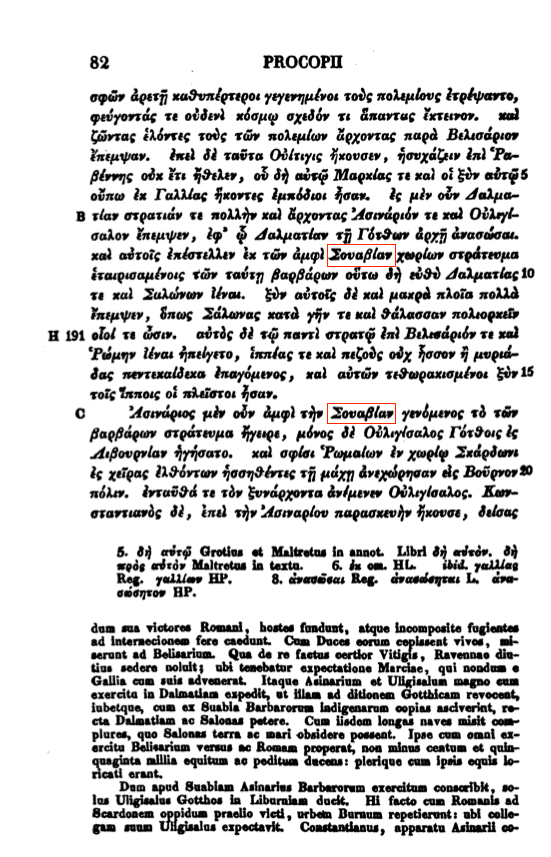
“Now when Vittigis heard this, he was no longer willing to remain quietly in Ravenna, where he was embarrassed by the absence of Marcias and his men, who had not yet come from Gaul. So he sent to Dalmatia a great army with Asinarius and Uligisalus as its commanders, in order to recover Dalmatia for the Gothic rule. And he directed them to add to their own troops an army from the land of the Suavi, composed of the barbarians there, and then to proceed directly to Dalmatia and Salones.

“And he also sent with them many ships of war, in order that they might be able to besiege Salones both by land and by sea. But he himself was hastening to go with his whole army against Belisarius and Rome, leading against him horsemen and infantry to the number of not less than one hundred and fifty thousand, and the most of them as well as their horses were clad in armor.”

So Asinarius, upon reaching the country of the Suavi, began to gather the army of the barbarians, while Uligisalus alone led the Goths into Liburnia. And when the Romans engaged with them at a place called Scardon, they were defeated in the battle and retired to the city of Burnus; and there Uligisalus awaited his colleague.”

And again we have the “α”

procopius3

These appear to be the only and last mentions of the Suevi in Procopius’ Wars.  At this point in his work (Book V, being the first of the Gothic War books) no mention was yet made of the Slavs either.  The Slavs first appear in Book V, Chapter 27 but the Suevi are not mentioned anymore after Chapter 16 as shown above.

All of this before we even get to other excellent sources.

Copyright ©2015 jassa.org All Rights Reserved

May 18, 2015

On the Vans of Germania

Published Post author

Tacitus in his Germania writes:

“In their ancient songs, their only way of remembering or recording the past, they [i.e., the Germans] celebrate an earth-born god, Tuisco [not Tuisto], and his son Mannus, as the origin of their race, as their founders. To Mannus they assign three sons, from whose names, they say, the coast tribes are called Ingævones; those of the interior, Herminones; all the rest, Istævones.  Some, with the freedom of conjecture permitted by antiquity, assert that the god had several descendants, and the nation several appellations, as Marsi, Gambrivii, Suevi, Vandilii, and that these are genuine old names.”

The Vans, Vanni or Venni seems to mean, basically, “people” (and opponents of the Scandinavian Assas) or at least people who live by certain types of waters (avas) and so the question arises what are the Suoæveanee or Suo-avones or Sou-aveane and whether that formulation has the same source-concept (whether that is based on the River Solawa (pron Souava, i.e., the Saale) or, perhaps, the River Sava).

Speaking of Vans, did you notice that many of the dwarfs names end in -in? (e.g., Balin), a “typically” Slavic ending?

Copyright ©2015 jassa.org All Rights Reserved

May 16, 2015